
Can Cats Eat Peaches? The Pit Danger Explained
Picture this: you’re slicing a ripe peach over the sink for a summer snack, and your cat hops up to investigate the sweet, fuzzy fruit like it’s the most interesting thing all week. If you’ve had a moment like that and found yourself wondering can cats eat peaches, here’s the bottom line: yes, cats can eat the fleshy part of a ripe peach in very small amounts, but the pit, stems, leaves, and skin are an absolute no.
For a broader look at what belongs on your cat’s safe list, our what can cats eat guide is worth a read before your next fruit-prep moment. Think of peaches strictly as an occasional treat, never a meal replacement, cats are obligate carnivores, and fruit was never meant to be a dietary staple for them.
Table of Contents
Anatomical Breakdown: What’s Safe and What’s Not
Only the soft, inner flesh of a fresh, raw peach is safe, nothing else. The pit is genuinely lethal: it contains amygdalin, a compound that converts to hydrogen cyanide when crushed or chewed. Stems and leaves carry the same cyanogenic glycosides and need to be avoided entirely. Even the skin is worth skipping, it’s hard to digest, the fuzzy texture can cause irritation, and it often carries pesticide residue that’s easy to overlook.
The Science of Peach Toxicity
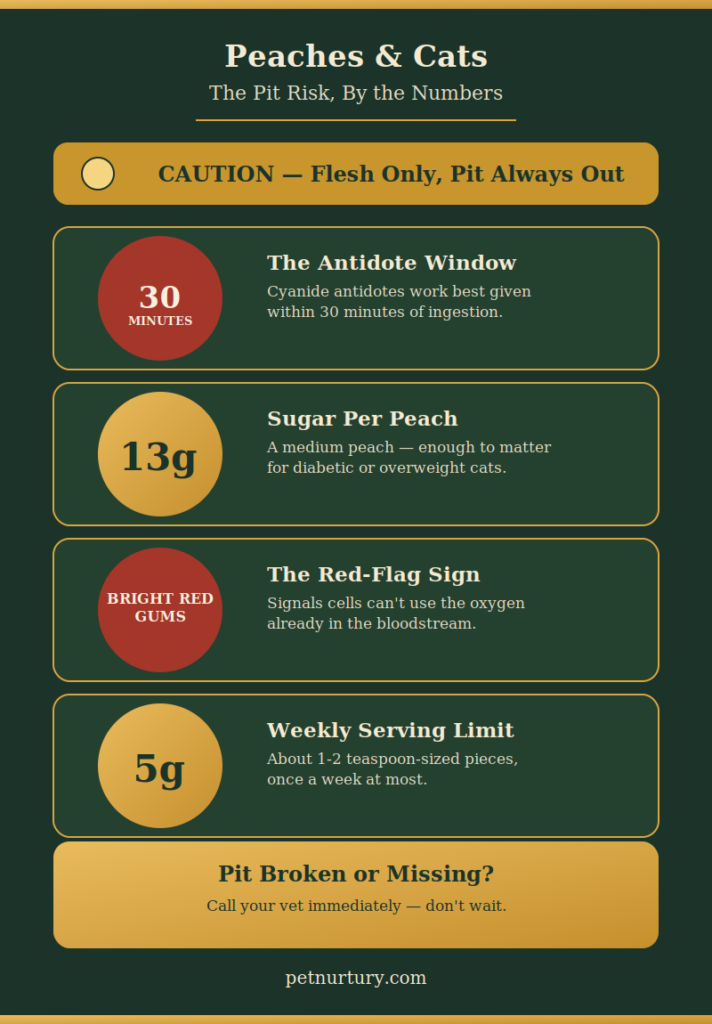
Here’s the unexpected fact most owners don’t know: cyanide poisoning doesn’t work the way most people assume. It doesn’t attack an organ directly, it interferes with your cat’s cells’ ability to actually use the oxygen already in their bloodstream, which is why the effects can escalate so quickly once they start.
Beyond the toxicity question, the pit is also a straightforward mechanical hazard, capable of lodging in the throat or digestive tract and requiring emergency surgery to remove. And even setting the pit aside, a medium peach contains about 13 grams of sugar, enough that regular feeding can contribute to obesity, dental decay, and complications for cats managing diabetes.
Do Cats Actually Benefit Nutritionally?
Peaches do contain real nutrients, Vitamin A for vision and immune support, Vitamin C as an antioxidant, potassium, and fiber. But here’s the carnivore caveat: cats synthesize their own Vitamin C internally and lack the enzymes to efficiently process plant-based nutrients in general, so most of this passes through without much benefit. The one genuine perk is hydration, peaches are high in water content, which can offer a minor boost during hot weather.
Emergency Protocol: Recognizing Poisoning
Are peaches toxic to cats in a way you’d notice quickly? Yes, and the signs are worth knowing cold. The clearest red flag is bright red gums and mucous membranes, which happens because the blood stays oxygenated even though the cells can’t actually use that oxygen. Other cat ate peaches symptoms to watch for include dilated pupils, difficulty breathing, tremors, vomiting, and lethargy.
Condition-specific warning: timing matters enormously here, cyanide antidotes are most effective when given within 30 minutes of ingestion, which means this isn’t a situation where you have hours to decide what to do. Senior cats and cats with existing heart or respiratory issues have even less margin for error, since their bodies already have reduced capacity to compensate for an oxygen-utilization problem.
If a cat ate peach pit and you can’t find the pit intact afterward, or if it’s visibly broken or cracked, contact your vet immediately rather than waiting to see if symptoms develop. My cat ate a peach pit what should I do is one of the most common panicked searches for good reason, the answer is always the same: call your vet or an animal poison hotline right away, and don’t try to handle it yourself at home.
How to Serve It Safely
Wash the peach thoroughly, remove the pit entirely, peel the skin completely, and cut the flesh into pea-sized or fingernail-sized pieces. Stick to the 10% rule, all treats combined should make up less than 10% of your cat’s daily caloric intake, and in practice, that means limiting peach to just 1 or 2 teaspoon-sized pieces, roughly 5 grams, once a week at most.
What About Peach-Flavored Products?
Canned peaches should be strictly avoided due to high sugar content, syrup, and preservatives. Peach-flavored foods are a separate concern entirely, since some may contain xylitol or other artificial sweeteners that are genuinely toxic to cats regardless of the peach flavor attached. Peach yogurt is also discouraged, both for its sugar content and the real possibility of lactose intolerance causing digestive upset.
Better Options for Your Cat
If you’re looking for lower-risk treats, blueberries offer high antioxidants with low sugar, and seedless watermelon or cantaloupe are both solid choices too. It’s also worth knowing that can cats eat cherries comes with a very similar pit-related warning as peaches, so the same “flesh only, pit always out” rule applies there as well.
For protein-based options that are actually closer to what your cat’s body wants, cooked, unseasoned chicken, turkey, or freeze-dried meat treats are hard to beat. For the complete safe list, our what fruits can cats eat guide rounds up every option in one place.
Always consult your veterinarian before introducing any new human food, especially for diabetic or obese cats. In the end, peaches offer more risk than reward, sticking to species-appropriate nutrition is almost always the better call.
FAQ
Are peaches toxic to cats? The pit, stems, and leaves are toxic due to cyanide-related compounds; the ripe flesh alone, in small amounts, is generally safe.
My cat ate a peach pit what should I do? Contact your vet or an animal poison hotline immediately, especially if the pit is broken or missing.
What are the symptoms if my cat ate a toxic part of a peach? Watch for bright red gums, dilated pupils, difficulty breathing, tremors, vomiting, and lethargy.
Can cats eat canned peaches? No, canned peaches are packed with added sugar, syrup, and preservatives that aren’t good for cats.
How much fresh peach can I give my cat? About 1 to 2 teaspoon-sized pieces, roughly 5 grams, once a week at most.
Are peaches safe for diabetic cats? It’s best to avoid them, the natural sugar content can complicate blood glucose management, so check with your vet first.