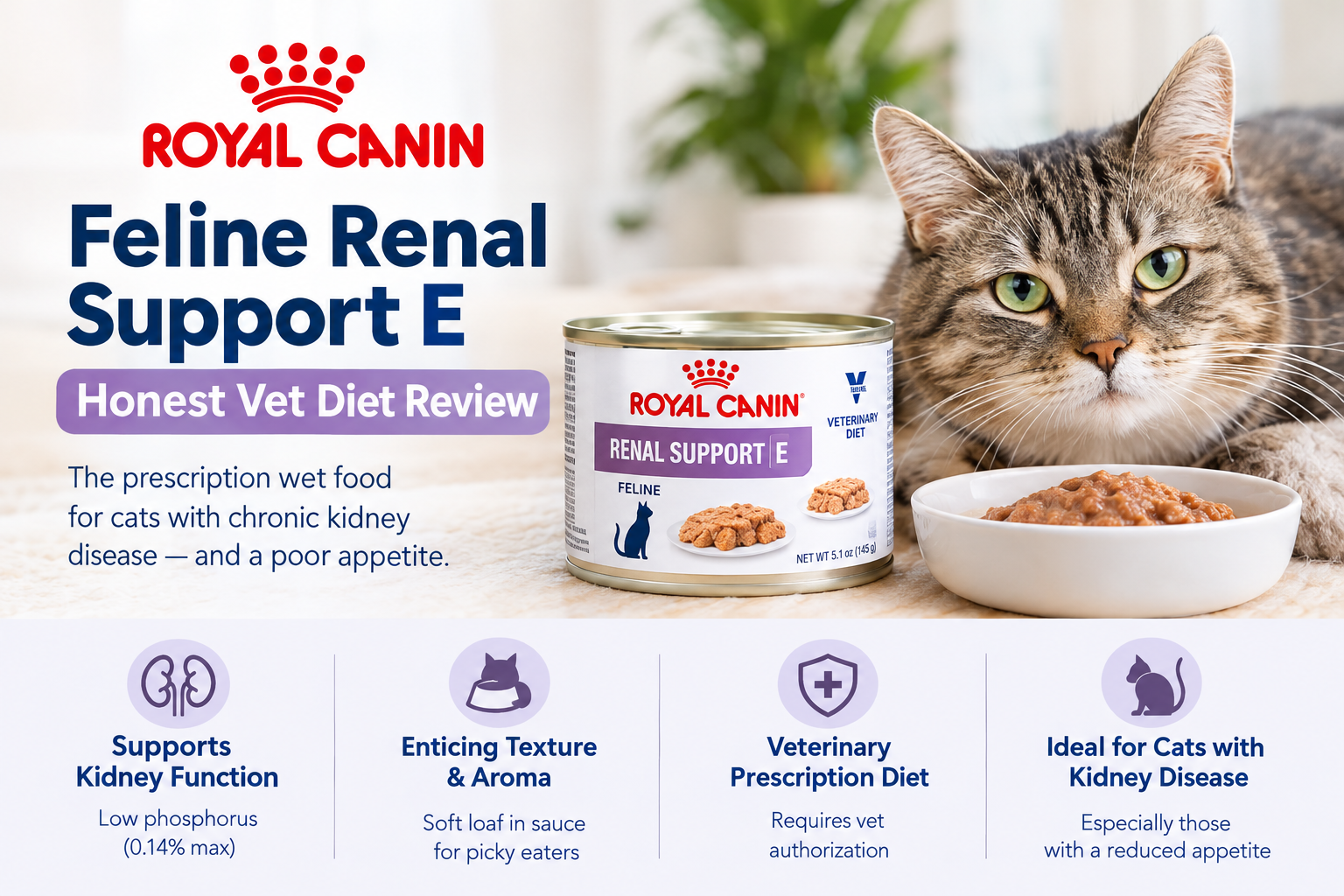
Royal Canin Feline Renal Support E: Honest Vet Diet Review
Quick answer: Royal Canin Feline Renal Support E is a prescription wet food for cats with chronic kidney disease. It combines restricted phosphorus (0.14% max), controlled protein, and a soft loaf-in-sauce texture designed for cats that have stopped eating well.
It suits cats with kidney disease and a poor appetite. It requires veterinary authorization, costs more than standard food, and isn’t right for every cat.
🩺 Veterinary Prescription Notice: This is a veterinary-exclusive diet. You need your vet’s authorization to buy it, and your vet should confirm your cat’s kidney stage first.
Already know it’s the one? [Check current price on Amazon ]
Table of Contents
When Your Cat Refuses to Eat: Managing Feline Kidney Health
You put down a fresh bowl, your cat sniffs it, walks away, and an hour later you’re back in the kitchen wondering what else to try. If your cat has kidney disease, this scene is common.
Cats with reduced kidney function often deal with nausea, a dull appetite, and sudden food aversions. When the kidneys can’t filter as well, waste products build up in the blood, and many cats feel queasy as a result. The cruel part is that the food that helps most, a kidney-supportive diet, does nothing if your cat won’t eat it.
That’s the gap Royal Canin Feline Renal Support E was designed to fill. The “E” stands for Enticing: a strong aroma and a soft loaf-in-sauce texture aimed at cats with a fading appetite. It’s a feline prescription kidney food formulated under veterinary supervision, and part of the wider category of veterinary diet cat food for kidney care.
If you’re still comparing options, our guide to the best cat food for kidney disease covers the whole landscape. This article focuses on one product.
How Royal Canin Feline Renal Support E Protects Kidney Function
Targeted Nutrition Built on 50+ Years of Feline Science
Royal Canin has developed renal diets for more than 50 years. This formula rests on four nutritional levers.
1. Low phosphorus (0.14% max). This is the most important feature. Damaged kidneys struggle to remove phosphorus, and high blood phosphorus is linked to faster disease progression. A low phosphorus wet cat food lightens that load. Phosphorus restriction is the cornerstone of nutritional management for feline kidney disease, as described by the Cornell Feline Health Center.
2. Controlled, high-quality protein (6.1% min / 9.6% max as fed). Many owners hear “kidney disease” and assume protein should be slashed. It’s more nuanced. Cats are obligate carnivores and need quality protein to keep lean muscle. The goal is enough protein to protect muscle while limiting the nitrogenous waste the kidneys must clear.
3. Omega-3 fatty acids and antioxidants. The formula includes fish oil (EPA and DHA) and an antioxidant complex to support ongoing kidney health.
4. Energy density (151 kcal per can). Cats with kidney disease often eat only a little. A calorie-dense can delivers more nutrition per bite, which matters when your cat manages just a few mouthfuls.
Real-life scenario: Picture a 14-year-old cat who used to clean her bowl and now eats a quarter of it. A perfect label isn’t the goal. The goal is getting enough calories and phosphorus control into the amount she’s actually willing to eat.
Palatability and Texture: What “E” Really Means
Overcoming Appetite Loss With an Enticing Texture
The best formula in the world is worthless if the bowl comes back full, so texture and aroma deserve their own section.
The texture. The renal support loaf in sauce is soft and pâté-style. It suits senior cats, cats with sore mouths, and cats that reject chunks or slices. Dental pain is common in older kidney cats, and a soft loaf asks less of the mouth.
The aroma. Cats choose food largely by smell, and nausea can make bland or cold food unappealing. A stronger scent profile helps this appetite stimulating wet cat food stand out for cats with food aversion.
Rotation within the Renal Support range. Royal Canin’s range includes D (morsels in gravy), T (thin slices in gravy), and a dry option (F). For cats at IRIS stage 2 or above, your vet may suggest rotating these to fight boredom. Confirm with your vet first, because the right plan depends on your cat’s bloodwork.
Honest caveat: No food works for every cat. Some love this loaf, and others refuse it. If yours won’t touch it, tell your vet instead of just offering it again. Appetite loss in a kidney cat can signal nausea that needs treatment. If cost is the obstacle, see our breakdown of prescription kidney food alternatives.
Product Specifications and Ingredient Highlights
Ingredients and Guaranteed Analysis at a Glance
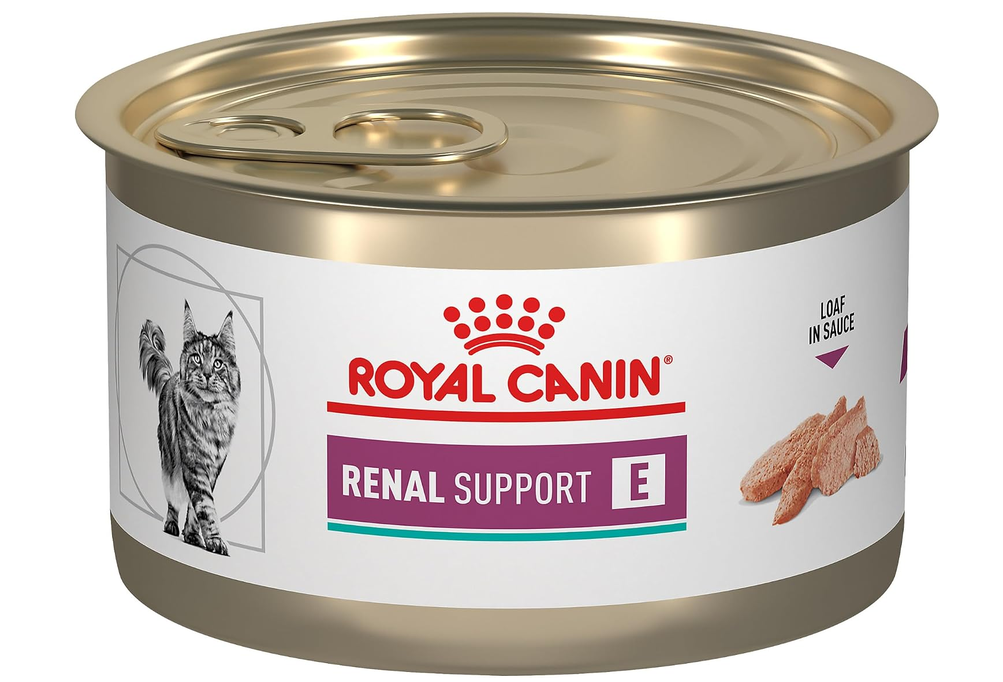
Packaging: 5.1 oz cans, sold individually or in 24-can cases.
| Nutrient | Guaranteed Analysis |
|---|---|
| Crude Protein | 6.1% min / 9.6% max |
| Crude Fat | 5.0% min |
| Crude Fiber | 1.7% max |
| Moisture | 79.5% max |
| Phosphorus | 0.14% max |
| Energy | 151 kcal per can |
Formulas change. Confirm figures against the current label before buying.
Key ingredients: water sufficient for processing, pork and chicken by-products, chicken liver, brewers rice, salmon, fish oil, potassium citrate, and marigold extract.
What to make of the label:
- By-products put some owners off, but in therapeutic diets, ingredients are chosen to hit nutrient targets like phosphorus control rather than for marketing appeal.
- Potassium citrate supports potassium balance and urinary pH, both relevant in kidney disease.
- The AAFCO statement matters most. Look for the nutritional adequacy statement on the label, which confirms the food is complete and balanced for the stated life stage under AAFCO standards.
Pricing and sourcing: Prescription diets cost more than regular cat food, and prices vary by retailer and pack size. Compare your vet’s pharmacy, online retailers, and autoship pricing, and expect to provide vet authorization wherever you buy.
Veterinary Transition Guide and Feeding Tips
How to Transition Your Cat to Royal Canin Renal Support E
Switching food abruptly can upset a cat’s stomach, and a nauseous cat may stop eating altogether. A gradual 7-day switch is standard:
| Days | Old Food | Renal Support E |
|---|---|---|
| 1–2 | 75% | 25% |
| 3–4 | 50% | 50% |
| 5–6 | 25% | 75% |
| 7 | 0% | 100% |
Practical tips:
- Serve at room temperature. Cold food from the fridge smells weaker. Let it sit out briefly, or stir in a splash of warm water.
- Offer small, fresh portions. Several small meals often work better than one big one.
- Don’t force it. Never push food on a nauseous cat. If she refuses for more than a day, call your vet.
- Keep fresh water available. Hydration is critical in kidney disease.
- Weigh her every couple of weeks. Weight loss is an early warning sign worth reporting.
Who this food is not for: Healthy cats, kittens, and cats with other conditions shouldn’t eat a renal diet without veterinary guidance. Restricted protein and phosphorus are meant for cats with confirmed kidney disease. For the full phosphorus picture, see our guide to low phosphorus cat food.
Pros and Cons at a Glance
| Pros | Cons |
|---|---|
| Low phosphorus (0.14% max) | Prescription required |
| Soft loaf suits senior cats | Costs more than standard food |
| Energy-dense for small appetites | Contains by-products |
| Omega-3s and antioxidants | Not every cat likes the taste |
| Part of a rotatable renal range | Not for cats without kidney issues |
[CTA 3 — short text link] If the trade-offs work for your cat, [see current Renal Support E pricing on Chewy →].
Give Your Cat the Kidney Care and Nutrition She Needs
Royal Canin Feline Renal Support E offers what many kidney cats need: a vet-backed formula, a kidney-support approach built on low phosphorus, targeted protein, and antioxidants, and a texture and aroma designed to get a reluctant cat eating. The trade-offs are cost, the prescription requirement, and the fact that taste varies from cat to cat. For the bigger picture across conditions, see our guide to the best cat food for every health condition.
Your next step: Talk to your veterinarian today to confirm your cat’s stage and get prescription authorization. Then use the convenient options below.
Ready to Choose the Right Renal Diet for Your Cat?
FAQ
Do I need a prescription for Royal Canin Feline Renal Support E?
Yes. It’s a veterinary diet, and retailers ask for your vet’s authorization before shipping.
What does the “E” in Renal Support E stand for?
“Enticing.” It refers to the aroma and soft loaf-in-sauce texture meant to stimulate appetite.
Can I mix Renal Support E with other Renal Support textures?
Often yes, since they’re in the same renal range, but check with your vet first, especially for cats at IRIS stage 2 or higher.
Is low protein always better for cats with kidney disease?
No. Cats still need quality protein to keep muscle. The aim is controlled protein, not extreme restriction, tailored to your cat’s bloodwork.
How long does it take to switch my cat to this food?
A 7-day transition is standard. Go slower if your cat gets an upset stomach.
What if my cat refuses it?
Contact your vet. They can check for nausea, dental pain, or other causes, and may suggest another renal diet.
Can healthy cats eat it?
It isn’t designed for healthy cats. Use it only under veterinary direction.