Can Cats Eat Chives? Chive Toxicity Explained
Picture this: you’re garnishing a baked potato with fresh chives from the little pot on your windowsill, a few tiny green pieces fall to the counter, and your cat, who’s been circling your ankles the whole time you were cooking, hops up and licks one off before you can stop her. It sounds harmless. It isn’t. If you’ve found yourself wondering can cats eat chives after a moment just like that one, the honest answer is no, not in any amount, not in any form.
Chives belong to the Allium family, the same plant group as onions, garlic, and leeks, and every member of that family is dangerous to cats, fresh, cooked, dried, or powdered. Here’s the fact that surprises most owners: cats are actually the most sensitive domestic species to Allium poisoning, more so than dogs eating the same relative amount. And because chive toxicity in cats often doesn’t show up right away, a cat can look completely fine for a day or more after eating something they shouldn’t have.
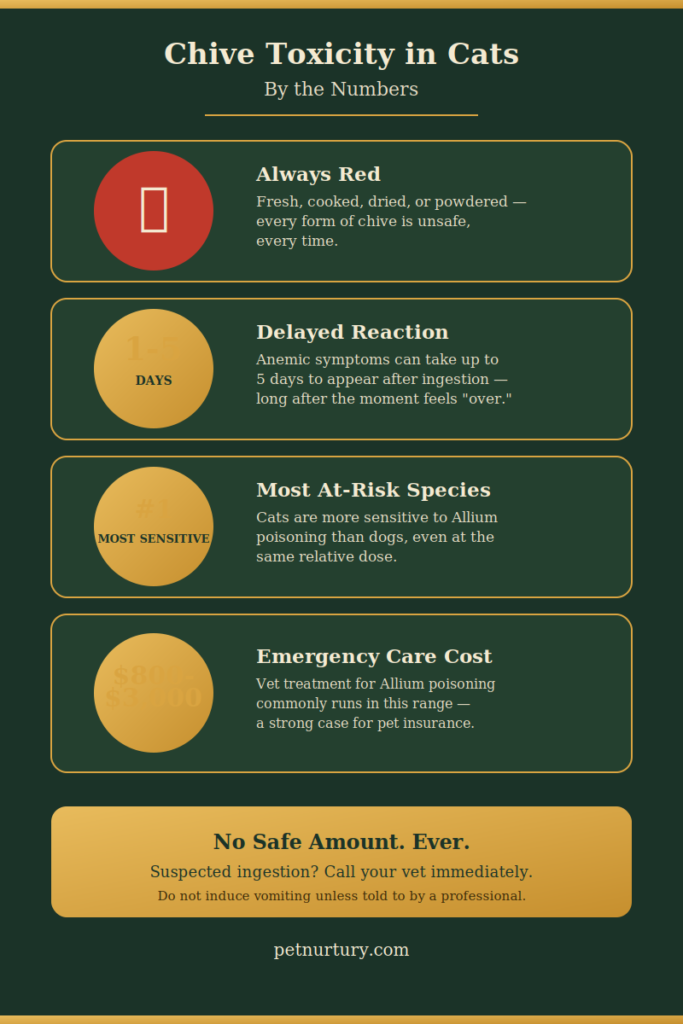
Table of Contents
The Science: Why Chives Attack Red Blood Cells
Chives contain thiosulfates, organosulfoxides, and N-propyl disulfide, compounds that cause oxidative damage to red blood cells. This damage leads to the formation of Heinz bodies, which are essentially clumps of damaged hemoglobin, and triggers hemolytic anemia, a condition where red blood cells rupture faster than the body can replace them.
Cats are especially vulnerable because they lack the specific liver enzymes needed to process these compounds efficiently. Veterinary toxicology resources like the ASPCA Animal Poison Control Center and Cornell University’s veterinary program both classify the entire onion-garlic-chive-leek family as hazardous for this exact reason.
Symptoms of Allium Poisoning: What to Watch For
Early gastrointestinal signs typically show up within hours: vomiting, diarrhea, excessive drooling, and abdominal discomfort. This is often mistaken for a minor stomach upset, which is part of what makes chive poisoning so easy to miss.
The more serious anemic signs tend to develop 1 to 5 days later, which is a wide and unpredictable window. Watch for pale or yellow (jaundiced) gums, dark-colored urine that can look red, brown, or almost like cola, panting or rapid breathing, an increased heart rate, and marked lethargy or weakness that can progress to collapse.
A note for higher-risk cats: senior cats, kittens, and cats with existing kidney disease or diabetes tend to handle this kind of toxic and metabolic stress far worse than an otherwise healthy adult cat.
If your cat falls into one of those groups, treat any suspected exposure as more urgent, not less, their bodies have less reserve capacity to compensate while red blood cells are being destroyed.
Emergency Protocol: What To Do Right Now
If you know or suspect your cat has eaten chives, follow this triage:
- ER Level (go now): Your cat ate concentrated chive powder or seasoning, or is already showing collapse, trouble breathing, or extreme weakness.
- Urgent Level (call today): Your cat ate any amount of fresh or cooked chives, or is a kitten or senior cat.
- Monitor Level (call for guidance): You’re not sure exposure happened at all, because symptoms can be delayed for days, a vet can advise on watching and testing rather than waiting it out blind.
Remove any remaining plant material immediately and call your vet or an animal poison control line right away. Do not induce vomiting at home unless a veterinary professional specifically tells you to, done incorrectly, it can cause additional irritation or aspiration risk.
At the clinic, treatment often includes activated charcoal to absorb remaining toxins, IV fluids for hydration, oxygen therapy if breathing is affected, and blood transfusions in cases of severe, life-threatening anemia.
It’s worth knowing upfront that emergency poisoning care commonly runs anywhere from $800 to $3,000 or more depending on severity, which is one of the reasons a lot of owners end up looking into pet insurance after a scare like this.
Prevention: Keeping Chives Out of Reach
A few habits make accidental exposure far less likely. Store fresh and dried herbs in high, secure cabinets or sealed containers rather than open countertop pots. Be cautious with table scraps, since chives hide in seasonings, soups, dips, and sauces more often than people expect.
If you grow herbs outdoors, fence off the area or use a cat-safe deterrent spray, since an outdoor chive patch is just as risky as one in the kitchen.
Safe Herb Alternatives
The good news is there are plenty of cat-safe ways to satisfy a cat’s curiosity about greens. Wheatgrass or oatgrass (often sold as “cat grass”) gives cats a safe outlet for their natural plant-chewing instinct.
Catnip is non-toxic and doubles as mental stimulation, parsley is safe in small amounts and may even support digestion, and basil and rosemary are generally safe if you want to add a little aroma or variety to your cat’s environment.
FAQ
Is a tiny taste of chives really dangerous? Yes. Because chive toxicity is dose-dependent but cumulative, even small repeated tastes can add up, and there’s no officially “safe” amount.
How long after eating chives will my cat show symptoms? Early stomach upset can appear within hours, but the more dangerous anemic symptoms often take 1 to 5 days to show up.
Are dried or powdered chives more dangerous than fresh? Dried and powdered forms are more concentrated, so a small amount can pack a bigger toxic dose than the same amount of fresh chive.
Can chive plants in my garden hurt my cat? Yes — the toxic compounds are present in the whole plant, not just the parts used for cooking, so outdoor chive plants pose the same risk.
What should I do if I only suspect exposure but didn’t see it happen? Call your vet anyway. Given how delayed symptoms can be, guidance now is safer than waiting to see what develops.
Are other Allium plants like leeks just as risky? Yes, if you’ve also wondered can cats eat leeks, the answer follows the same “never” rule, since leeks share the same toxic compounds as chives.
For more on which produce is genuinely cat-safe, our guide on what vegetables can cats eat breaks down every common option, and our full what can cats eat pillar page covers safety across every food category.