

What Fruits Can Cats Eat Safely : Vet-Approved List
You are slicing a watermelon on a hot afternoon, and your cat jumps up on the counter, nose twitching, clearly interested. You pause can cats even eat fruit? Is this safe?
The answer is more nuanced than a simple yes or no. Some fruits are genuinely fine in small amounts and offer real benefits. Others grapes being the most important example are capable of causing acute kidney failure from a single piece. Understanding what fruits cats can eat, and which ones belong nowhere near their bowl, is knowledge that can matter in a moment of uncertainty.
For everything beyond fruit, fish, meat, vegetables, grains, dairy, and more, our complete guide to every food category that is safe or dangerous for cats covers the full picture in the same depth.
Table of Contents
Why Do Cats Show Interest in Fruit at All?
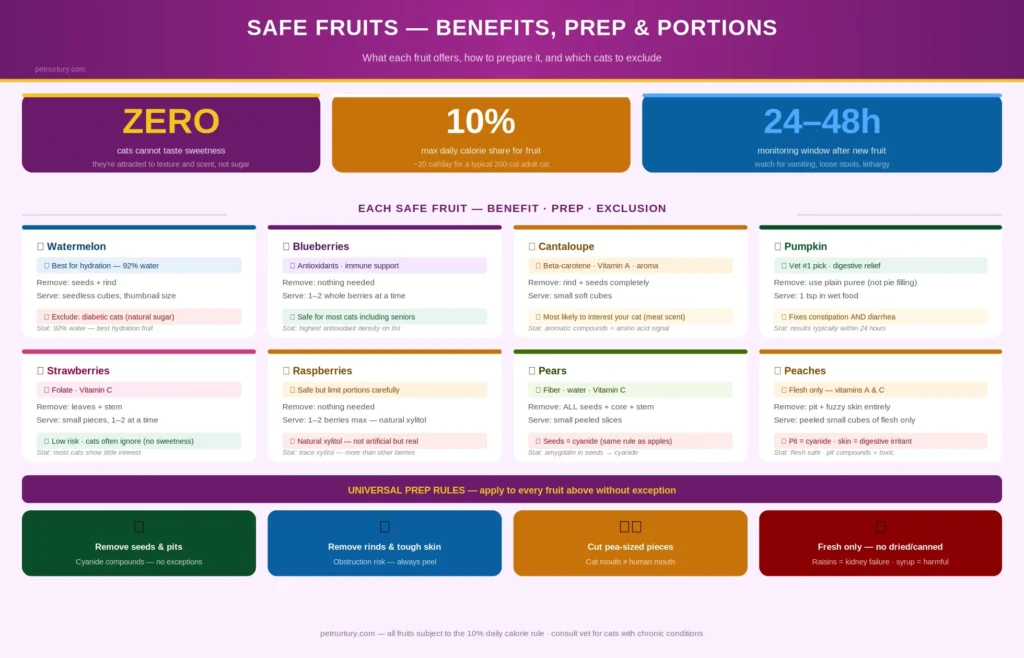
Here is the biological twist that surprises most cat owners: cats cannot taste sweetness. Research has confirmed that felines lack the Tas1r2 gene required to detect sugar. When your cat investigates a strawberry or melon slice, they are not drawn by sweetness, they cannot perceive it.
What draws them instead is texture, moisture, and scent. Cantaloupe is a well-known example: it produces aromatic compounds that chemically resemble the amino acid signatures found in meat protein, which explains why so many cats show intense interest in melon while ignoring other fruits entirely.
Cats are obligate carnivores. Their digestive systems evolved around animal protein, not plant matter. Fruit is a curiosity for them at best a sensory experience, not a nutritional need. That said, some fruits offer genuinely useful benefits when offered correctly. The key phrase is when offered correctly.
Two Rules That Apply to Every Fruit on This List
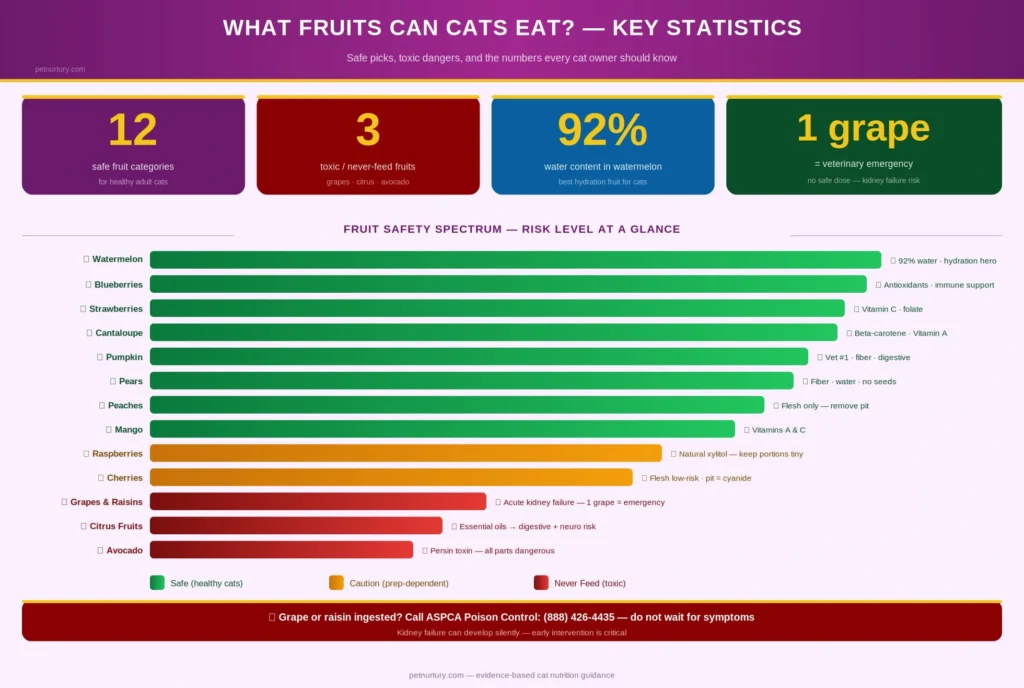
The 10% Rule. Any supplemental food fruit included must never exceed 10% of your cat’s daily caloric intake. The remaining 90% should come from a complete, balanced commercial cat food. A typical adult cat needs around 200 calories per day, which means the entire fruit budget is roughly 20 calories far smaller than most owners assume.
The Introduction Rule. Always introduce one new fruit at a time, starting with a thumbnail-sized piece. Monitor for 24 to 48 hours for any signs of digestive upset: vomiting, loose stools, lethargy, or behavioral changes. If anything looks off, stop immediately and do not retry.
Any cat with diabetes, kidney disease, or a chronic health condition should be cleared by a veterinarian before trying any new fruit, regardless of how safe it appears on this list.
What Fruits Can Cats Eat? The Safe List
Hydration-First Options
Watermelon is one of the most practical fruits on this list for exactly one reason: it is roughly 92% water. For cats who are reluctant drinkers which is common, given that cats evolved with a naturally low thirst drive a small cube of seedless watermelon can contribute meaningfully to daily fluid intake while delivering small amounts of vitamins A and B6. The preparation rule is strict: remove every seed and the entire rind before serving, as both carry risks the flesh does not.
Cantaloupe is the fruit most likely to genuinely interest your cat, for the amino acid-scent reason described above. It is high in water content and beta-carotene, which converts to Vitamin A and supports immune function and vision. Our guide to safely feeding cantaloupe to cats covers exactly how much to offer and which parts to remove.
Apples offer fiber and a satisfying crunch many cats find appealing. The safety rule here is absolute: apple seeds and the core contain amygdalin, which metabolizes into cyanide remove both completely before offering even a small slice. The flesh is safe. The seeds are not, under any circumstances.
Digestive Support
Pumpkin is botanically a fruit, and it is arguably the most useful one in any cat owner’s pantry. Plain 100% pumpkin puree not pie filling, which contains sugar and spices is one of the most consistently recommended supplemental foods in veterinary nutrition.
Its soluble fiber works in both directions: it firms loose stools during diarrhea and adds bulk when a cat is constipated. A teaspoon stirred into wet food is usually enough to make a measurable difference within 24 hours. Our complete pumpkin guide for cats covers dosing, frequency, and which commercial products to choose.
Papaya contains papain, a digestive enzyme that helps break down proteins efficiently. Safe in small amounts with skin and seeds fully removed, it is a reasonable occasional treat for cats with sensitive digestion. The preparation is non-negotiable papaya skin and seeds are not appropriate for cats even though the flesh is low-risk.
Mango is high in fiber and rich in vitamins A and C. The pit must be removed before offering any piece, it is both a choking hazard and contains trace cyanide compounds. Our mango safety guide for cats walks through the preparation steps and appropriate portion sizes.
Antioxidant and Immune Support
Blueberries are one of the most frequently recommended safe fruits for cats across veterinary nutrition resources. They are packed with antioxidants that support immune function and cellular health, and their small size makes them easy to serve without preparation. One or two at a time is sufficient there is no meaningful benefit to offering more. If you want to know whether blueberries are actually beneficial or just harmless for cats, our guide distinguishes between the two.
Strawberries are safe with leaves and stems removed. Most cats show little interest which makes sense given the sweetness-blindness, but for cats that do investigate, a small piece cut to a manageable size is harmless. The full strawberry guide for cats covers the preparation steps and what to watch for on first introduction.
Raspberries contain antioxidants and are safe in small quantities. They also contain small amounts of naturally occurring xylitol not at levels that cause the acute toxicity associated with artificial xylitol in manufactured products, but a meaningful reason to keep portions genuinely small. Our raspberry safety breakdown for cats explains the xylitol context and what “small” actually means in practice.
Small amounts of fresh coconut flesh are not toxic to cats but coconut milk and coconut oil are high in saturated fats that can trigger digestive upset and contribute to weight gain with repeated exposure. The flesh is the only part worth considering a thumbnail-sized piece occasionally, never the oil or milk in any meaningful quantity.
Plain olives pitted, unsalted, and unpickled are not toxic to cats. Some cats show interest
because olives contain compounds that produce effects similar to catnip in certain individuals. The danger is almost never the olive itself: jarred, brined, or stuffed olives carry sodium levels that stress feline kidneys with even occasional exposure. Fresh or water-packed, pitted, one piece at a time or skip them entirely.
Blackberries are another antioxidant-rich option, safe in small quantities, with high water content and easy preparation. Halving them reduces any choking risk for smaller cats. The complete blackberries guide for cats covers portion limits and which cats to be more cautious with.
Urinary Health Support
Cranberries contain polyphenols with antimicrobial properties that may help reduce the risk of urinary tract infections in cats a consideration worth noting for cats with a history of UTIs. The critical preparation note: only fresh or plain cooked cranberries are appropriate, never juice, dried cranberries, or versions with added sugar. The concentration of sugar in processed cranberry products outweighs any urinary benefit.
Other Safe Options
Pears are similar to apples in water content and fiber profile. The same cyanide warning applies remove all seeds, the core, and the stem completely before offering any piece. The flesh is safe in small amounts; the seeds are not.
Peaches are safe in the flesh only. The pit contains amygdalin, the same cyanide precursor found in apple seeds, and the fuzzy skin can be a digestive irritant for some cats. The pit and skin should always be removed before offering any piece, however small.
Pineapple flesh is safe for cats in very small amounts and contains bromelain, a digestive enzyme with
anti-inflammatory properties. The preparation rule is non-negotiable: the tough outer skin and the
spiky crown contain compounds that irritate feline mouths and digestive systems significantly.
Only the soft inner flesh belongs in a cat’s bowl even then, the high natural sugar content means
very small, occasional pieces only.
How to Prepare Any Fruit Safely
Remove seeds, pits, stems, and cores: These parts of many fruits, apples, pears, cherries, mangoes and peaches, contain compounds that convert to cyanide or pose choking hazards. This is not optional.
Remove all rinds, tough skins, and outer layers: Pineapple skin, mango skin, melon rind, and similar outer layers are difficult to digest and carry obstruction risk. Always peel before serving.
Cut to cat-sized pieces: A cat’s mouth is not a human mouth. What seems like a small piece to you may be a choking risk for them. Aim for pieces no larger than a pea.
Choose fresh over processed: Canned fruits are frequently packed in syrup, contain preservatives, or have added sugar. Fresh fruit is always the correct choice. Dried fruit is almost always the wrong one concentrated sugar, often preservatives, and in the case of raisins, acute toxicity.
Fruits Cats Can Never Eat
Grapes and Raisins The Most Critical Warning
Grapes and raisins are the most dangerous common fruit for cats, and the mechanism is still not fully understood, which makes them more dangerous, not less. The toxic compound has not been conclusively identified, which means no dose has been established as safe.
One grape can trigger acute kidney failure in a small cat. If your cat eats a grape or raisin, call your veterinarian or the ASPCA Animal Poison Control Center at (888) 426-4435 immediately, before any symptoms appear.
Citrus Fruits Digestive and Neurological Risk
Oranges, lemons, limes, and grapefruit contain essential oils and psoralens that irritate the feline digestive system. In larger amounts, these compounds can cause central nervous system depression. Most cats will actively avoid citrus due to the scent, but if a cat does ingest any, digestive upset is the expected outcome at minimum.
Avocado Persin Toxicity
Avocado contains persin, a fungicidal toxin that causes vomiting and diarrhea in cats. The pit is a separate hazard: large enough to cause serious obstruction and containing its own toxic compounds. Every part of an avocado flesh, skin, and pit poses some level of risk, making it one of the cleaner never-feed entries on this list.
Cherries The Pit Problem
Cherry flesh in very small amounts is not highly toxic but the pit and leaves, and stem contain cyanide compounds at meaningful concentrations. Given that preparing a cherry for a cat requires removing every trace of pit and stem and given that the flesh offers nothing nutritionally, the risk-to-benefit ratio makes cherries a skip for most owners.
Frequently Asked Questions
What is the safest fruit to give a cat for the first time? Watermelon (seedless, rind removed) or a single blueberry are the most practical starting points. Both require minimal preparation, are unlikely to cause digestive upset, and are widely considered among the safer options in veterinary nutrition contexts.
Can cats eat fruit every day? No. Even safe fruits should remain occasional treats, not daily additions. Daily fruit displaces the balanced nutrition that should come from commercial cat food, and even safe fruits add natural sugars that have no place in a carnivore’s regular diet.
Can cats eat dried fruit? Generally no. Dried fruits are concentrated in sugar, frequently contain preservatives, and raisins, dried grapes are acutely toxic. Fresh fruit only.
My cat ate a grape. What do I do? Call your veterinarian or the ASPCA Animal Poison Control Center at (888) 426-4435 immediately. Do not wait for symptoms. Grape toxicity can progress to kidney failure, and early intervention changes outcomes significantly.
Can kittens eat fruit? Best avoided. Kittens have very specific caloric and nutritional requirements for growth, and any displacement of nutritionally complete kitten food creates unnecessary risk. Wait until adulthood and consult a veterinarian before introducing anything new.
Is canned fruit safe for cats? No. Canned fruit is typically packed in syrup or contains added sugar and preservatives inappropriate for cats. Fresh fruit is the only appropriate option.
Conclusion: Fruit as Occasional Enrichment, Not Nutrition
The mental model that serves cat owners best here is this: fruit is an occasional curiosity, not a dietary component. Watermelon, blueberries, pumpkin, cantaloupe these can add a small amount of variety and enrichment to a cat’s experience without displacing what actually matters, which is a complete, balanced commercial cat food.
The dangerous entries grapes, raisins, citrus, avocado are worth knowing by name rather than by vague category, because the difference between a harmless piece of watermelon and a grape that triggers a veterinary emergency is not obvious without specific knowledge.