

Can Cats Eat Raspberries? Yes Full Safety Guide
Picture this: you’re rinsing a carton of fresh raspberries for your morning yogurt, and your cat hops onto the counter to sniff at the little red berries rolling around the colander. If you’ve had a moment like that and found yourself wondering can cats eat raspberries, here’s the bottom line: yes, in small amounts, as an occasional treat.
They’re non-toxic, but they’re not a biological necessity either, cats are obligate carnivores, so raspberries are a nice-to-have, not a need-to-have. For a broader look at what belongs on your cat’s safe list, our what can cats eat guide is worth bookmarking.
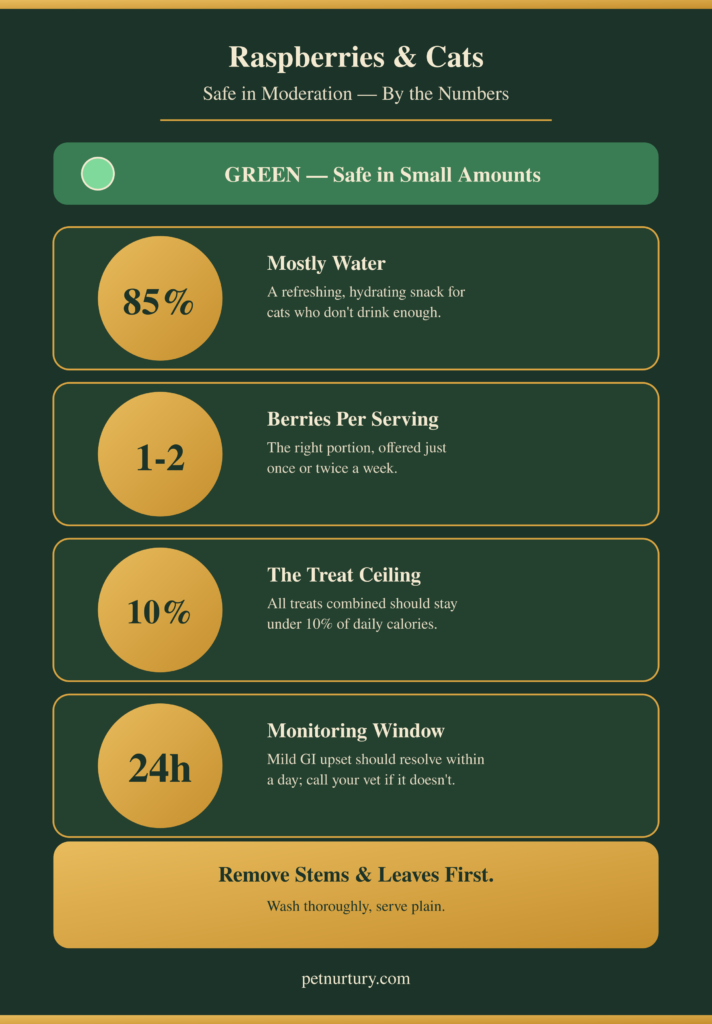
Quick summary: safety rating is safe, frequency should stay rare to occasional (about 1-2 times per week), and portion size should be just 1-2 berries at a time.
Table of Contents
Real Nutritional Perks Worth Knowing
Raspberries bring more to the table than you’d expect from a “just a treat” fruit. The high fiber content acts almost like nature’s broom, helping with constipation and playing a small supporting role in preventing hairballs. They contain Vitamin C for immune support and Vitamin K for healthy blood clotting, along with manganese, which supports bone growth and helps the body convert food into energy.
At roughly 85% water, raspberries also make a refreshingly hydrating snack for cats who aren’t big water drinkers. They’re rich in antioxidants called anthocyanins too, which help fight free radicals and reduce inflammation.
Here’s the unexpected fact most owners don’t know: your cat’s interest in raspberries has nothing to do with them tasting sweet. Cats lack the taste receptors for “sweet” flavors entirely, what’s actually drawing them in is the texture or the scent, not the sugar content humans find so appealing.
Critical Risks: The Xylitol Question
Are raspberries safe for cats in every circumstance? Mostly, but a few risks are worth understanding. Excessive fiber or a sudden diet change can lead to vomiting, diarrhea, gas, or a generally sensitive stomach, cat ate raspberries diarrhea vomiting is a common concern for exactly this reason, and it’s almost always a portion-size issue rather than a sign of toxicity. Natural sugars and extra calories can also be a real problem for overweight or diabetic cats specifically.
Here’s a detail worth flagging directly: raspberries contain natural xylitol, a compound that’s highly toxic to dogs. Current research suggests cats are considerably more resistant to xylitol’s effects than dogs are, but caution is still the smart move here, sticking to small portions keeps this a non-issue either way. Separately, even though raspberries are small, they can still pose a choking hazard if given whole to a cat who tends to gulp food rather than chew it.
Condition-specific warning: senior cats and cats managing kidney disease or diabetes should have raspberries introduced more conservatively than a healthy young adult cat, since their systems have less capacity to handle even minor digestive disruption or added sugar load, checking with your vet first is a smart move for any cat in these groups.
How to Feed Raspberries Safely
Always wash berries thoroughly to remove pesticide residue or dirt. Serve them plain, either fresh or frozen. never with added sugar, cream, or syrup mixed in. Use the “tester” method for a cat’s first taste: offer just one tiny piece and monitor for any allergic reaction or intolerance before offering more.
Can cats eat raspberries leaves is a related question worth answering directly, no, remove all stems, leaves, and seeds before serving, since these can cause digestive irritation or add unnecessary choking risk.
Kitten caution: don’t feed raspberries to kittens under one year old, their developing bodies need specific, calorie-dense nutrients for growth that fruit simply can’t provide.
What About Raspberry Recipes?
If you want to get a little creative, a raspberry sorbet made from ripe raspberries blended with a small amount of orange and lime juice and unsweetened almond milk, then frozen in molds, can make a fun warm-weather treat.
Raspberry hearts, baked treats using coconut flour, eggs, frozen raspberries, cranberries, and unsweetened applesauce, are another option some owners enjoy making at home.
A frozen raspberry-pineapple treat, pureed with a cat-safe digestive supplement and water, is a third option worth trying if your cat likes variety. As always, treat any homemade recipe as an occasional extra, not a regular addition.
Products to Avoid
Strictly avoid raspberry jams, syrups, and flavored desserts, these are loaded with added sugar and may contain artificial sweeteners that are genuinely toxic to cats, regardless of the raspberry flavor attached. Keep the 10% rule in mind here too: treats of any kind, raspberries included, should never exceed 10% of your cat’s daily caloric intake.
If you’re looking to round out the treat rotation with something different, can cats eat cantaloupe is worth checking out, since it offers a similarly hydrating, low-risk profile with its own unique appeal. For the complete safe list, our what fruits can cats eat guide covers every option in one place.
FAQ & When to Call the Vet
My cat ate too many raspberries what should I do? Monitor closely for the next 24 hours; mild vomiting or diarrhea usually resolves on its own, but contact your vet if symptoms persist or worsen.
When should I actually call the vet? Reach out if you notice lethargy, loss of appetite, abdominal discomfort, or persistent vomiting or diarrhea lasting more than 24 hours. Keep the Pet Poison Helpline (855-764-7661) handy for cases involving large quantities or toxic additives like xylitol-containing products.
Are raspberries safe for cats with diabetes? Use extra caution, the natural sugar content can complicate blood glucose management, so check with your vet before offering any.
Can cats eat raspberry leaves or stems? No, remove all stems, leaves, and seeds before serving, since they can cause digestive irritation and add choking risk.
How many raspberries can I give my cat? Just 1-2 berries, once or twice a week at most, staying within the broader 10% treat rule.
Can kittens eat raspberries? It’s best to wait until they’re at least one year old, since their developing bodies need calorie-dense, nutrient-specific food for proper growth.
The Expert Verdict
While raspberries offer some genuine minor health perks, they’re not a substitute for high-quality, meat-based cat food, and expert consensus is clear on that point. Always consult your veterinarian before introducing any new food into your cat’s diet, even one as generally low-risk as raspberries.