

Can Cats Eat Cherries? The Pit Danger Explained
Picture this: you’re pitting a bowl of fresh cherries for a summer pie, and a stem or two falls to the floor before your cat swats one across the kitchen tile like a tiny toy. If you’ve had a moment like that and found yourself wondering can cats eat cherries, here’s the honest answer: the flesh alone, in a tiny amount, isn’t likely to poison your cat, but cherries offer no essential nutrition and carry a genuinely high risk of accidental exposure to toxic plant parts. For a broader look at what’s actually safe, our what can cats eat guide is worth a read before your next fruit bowl mishap.
At a glance: the toxic parts are the pits, stems, leaves, flowers, and fruit of the broader Prunus plant family cherries, along with their botanical cousins like peaches and plums. The only safe part is ripe flesh with every trace of pit and stem completely removed, and even then, this should be never or strictly an occasional tiny taste rather than a regular treat.
Table of Contents
Why Cherries Are Actually Dangerous
Here’s the unexpected fact most owners don’t know: cherry plants contain cyanogenic glycosides, compounds that convert into genuine hydrogen cyanide when chewed or digested. This toxin interferes directly with your cat’s ability to use oxygen at the cellular level, damaging the brain, heart, and lungs in the process. This isn’t a mild stomach-upset risk, it’s a real toxicological threat when the wrong plant part is involved.
Risk varies significantly by part. Pits carry the densest concentration of toxins and represent the highest risk by far. Wilted or dried leaves are surprisingly high-risk too, since the toxic compounds actually become more concentrated as they dry out. Fresh stems, blossoms, and flowers carry moderate risk.
On top of the cyanide question, pits are also a serious physical choking and intestinal blockage hazard, particularly for smaller cats or kittens, and the fruit’s natural sugar content can contribute to obesity, dental problems, and complications for diabetic cats.
Recognizing an Emergency
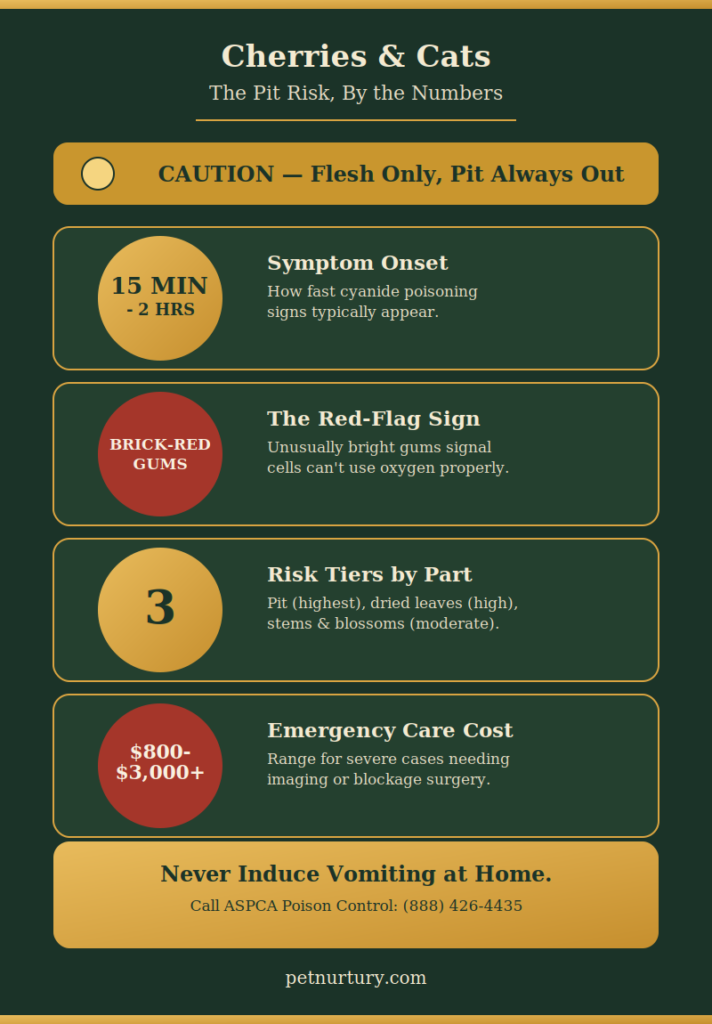
Are cherries toxic to cats in a way you’d actually notice quickly? Yes, symptoms tend to show up fast. Early warning signs include restlessness, hypersalivation (excessive drooling), and dilated pupils. One particularly distinctive red flag: unusually bright red or “brick-red” gums, which happens because cyanide poisoning leaves the blood highly oxygenated even though the cells can’t actually use that oxygen. Clinical signs typically appear within 15 minutes to 2 hours of ingestion, which is a genuinely narrow window to act in.
Condition-specific warning: senior cats and cats with existing heart or respiratory conditions have less physiological reserve to handle a toxin that interferes with oxygen use at the cellular level, so any suspected exposure in these cats should be treated with extra urgency rather than a wait-and-see approach.
Emergency Protocol: What to Do If Ingested
If your cat gets into cherries, remove any remaining fruit from reach immediately, and try to determine how much was eaten and whether any pits were chewed, that detail matters for how your vet assesses risk. Call your veterinarian or a 24/7 poison hotline right away: ASPCA Animal Poison Control at (888) 426-4435 or the Pet Poison Helpline at (855) 764-7661 are both good numbers to have saved in your phone before you ever need them.
Never attempt to induce vomiting at home unless a professional explicitly tells you to, pits can cause additional esophageal damage on the way back up, making the situation worse rather than better.
If a cat ate cherry pit whole without chewing it, the cyanide exposure is typically much lower, but it’s still a real blockage risk that needs veterinary monitoring and possibly imaging to confirm it passes safely.
Cherry pit cat poisoning cases that do require treatment sometimes call for specialized antidotes like sodium nitrite and sodium thiosulfate, alongside supportive care such as oxygen therapy and IV fluids to stabilize your cat.
Cost transparency, since this matters for planning ahead: a poison control consultation typically runs $85 to $95, an urgent in-person exam often starts between $75 and $150, and full emergency care involving imaging or surgery for a blockage can range from $800 to over $3,000 depending on severity.
Why Cherries Add Nothing Nutritionally Anyway
Cats are obligate carnivores, biologically designed to get everything they need, taurine, arachidonic acid, preformed vitamin A exclusively from animal tissue. Cherries do contain Vitamin C, fiber, and potassium, but your cat gets all of that more effectively through a complete, balanced, meat-based diet formulated for their actual metabolic needs. There’s no nutritional case to be made for cherries specifically.
Safer Treats Worth Trying Instead
If your cat likes fruit as an occasional treat, 2-3 blueberries offer real antioxidant value, 1-2 small watermelon cubes work well once seeds and rind are removed, and a thin slice or two of banana is fine used sparingly given its sugar content. If you’re curious about other stone fruits, can cats eat peaches comes with a similar pit-related caution as cherries, so the same “flesh only, pit always out” rule applies there too.
For species-appropriate rewards, small pieces of plain cooked chicken or turkey are genuinely better suited to your cat’s diet, and cat grass gives cats who enjoy nibbling on plant textures a completely safe outlet. For the full safe list, our what fruits can cats eat guide rounds up every option in one place.
FAQ
Are cherries toxic to cats? The pits, stems, leaves, and flowers are toxic due to cyanogenic compounds; the ripe flesh alone, in a tiny amount, is unlikely to cause poisoning.
My cat ate a cherry pit what should I do? Call your vet or a poison hotline immediately, note whether the pit was chewed, and never induce vomiting at home without professional guidance.
What if the pit was swallowed whole without being chewed? It releases less cyanide than a chewed pit, but it’s still a real blockage risk that needs veterinary monitoring, possibly with imaging.
Are processed cherries like maraschino or dried cherries safe? No, they’re heavily processed, high in sugar, and may contain harmful additives or leftover stem fragments.
Can kittens eat cherries? No, kittens have highly sensitive digestive systems and should stick to kitten-specific food until at least one year old.
How fast do symptoms of cherry poisoning appear? Typically within 15 minutes to 2 hours of ingestion, so quick action matters more than waiting to see what happens.