can cats eat potatoes? Cooked vs. Raw Guide
There’s a familiar scene in a lot of households: you’re peeling potatoes for dinner, and your cat suddenly appears at your feet, deeply invested in whatever’s happening on the counter. Cats are curious about almost anything involving food prep, and starchy staples like potatoes are no exception. So can cats eat potatoes? The short answer is yes, but with real conditions attached, small amounts of plain, fully cooked potato are fine as an occasional bite, while raw potatoes, green skins, and anything seasoned are genuinely dangerous.
That “yes, but” is worth sitting with, because the exceptions here carry more weight than the yes does.
Table of Contents
The Biological Conflict: Carnivore vs. Carbohydrate
Cats are obligate carnivores, meaning their bodies are built to run primarily on animal protein. That’s where they get essential amino acids like taurine and arginine, nutrients a potato simply can’t supply. Unlike humans, cats have very little biological need for carbohydrates at all, which puts potatoes in an odd spot nutritionally.
There’s an ongoing debate about what role potatoes actually play in feline diets. Some see them as little more than a “filler”, used in commercial kibble mainly to provide structure and crunch rather than meaningful nutrition. Others point out that potatoes do offer complex carbohydrates that provide a steady, slow-release source of energy. Both things can be true at once: potatoes aren’t harmful in the right form, but they’re also not doing any heavy lifting nutritionally the way a piece of chicken would.
The Danger Zone: When Potatoes Are Toxic
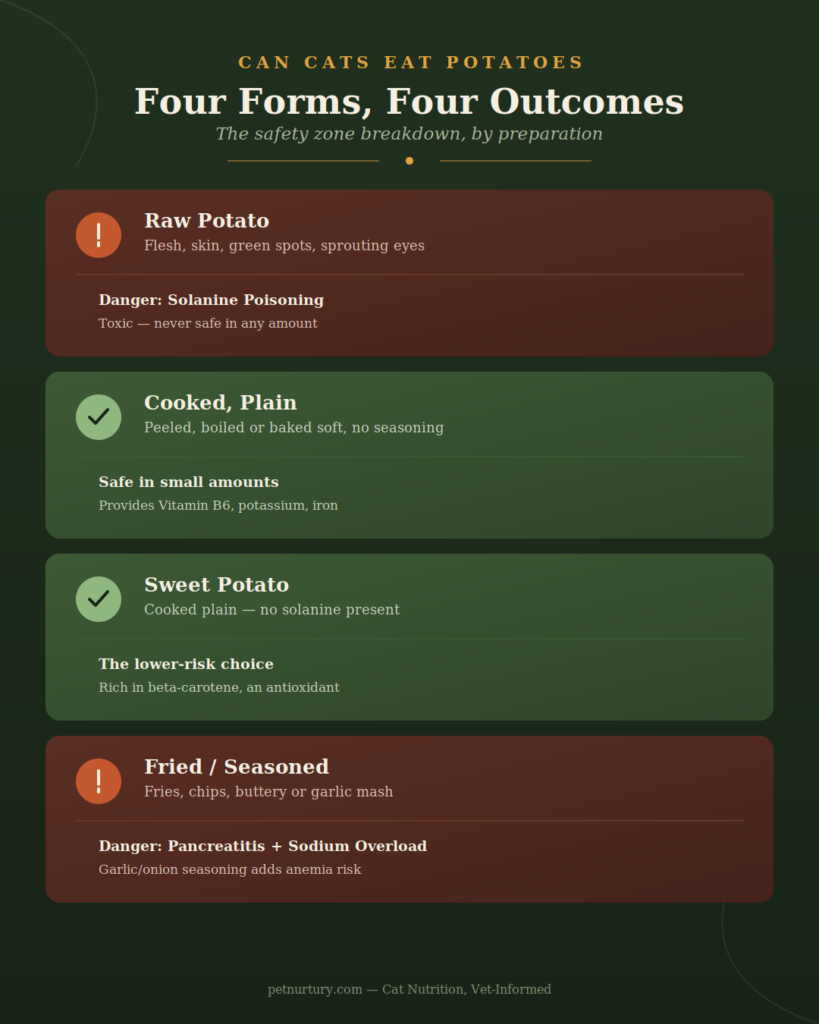
This is the section that matters most. Raw potatoes, the flesh, the skin, and especially any green spots or sprouting eyes, contain solanine, a toxic compound that’s genuinely poisonous to cats. Cooking reduces solanine levels significantly, which is why plain cooked potato is treated differently than raw.
Seasoning is its own separate hazard. Garlic, onions, and chives, common in mashed potatoes, potato salad, and seasoned roasted potatoes, are highly toxic to cats and can cause a serious anemia, regardless of how small the amount seems. And then there’s the fried and processed side of the potato world: French fries, potato chips, and buttery mashed potatoes carry enough fat and sodium to trigger pancreatitis or sodium-related illness in a cat’s much smaller body. None of that is about the potato itself, it’s about what commonly comes attached to it.
White vs. Sweet Potatoes: A Real Nutritional Difference
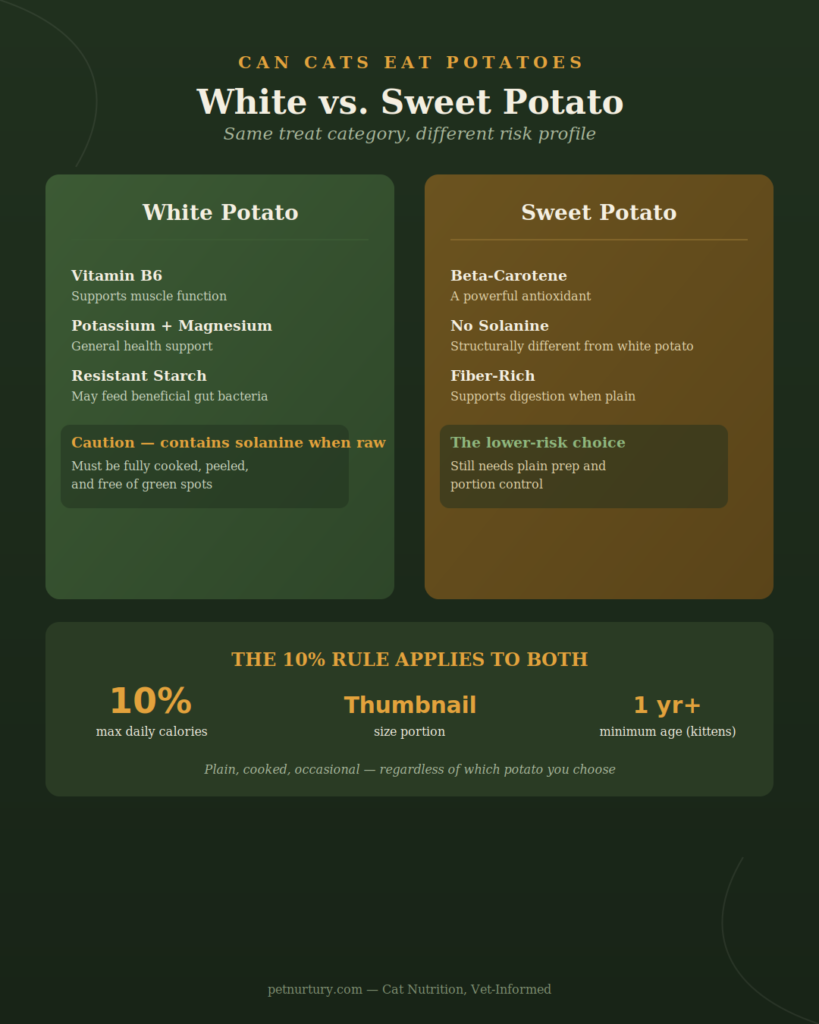
Plain cooked white potato does offer something, Vitamin B6, potassium, magnesium, and iron, all of which support muscle function and immune health in small amounts. There’s also some prebiotic fiber and resistant starch in cooked potato, which can support gut bacteria and contribute to a feeling of fullness that’s occasionally useful for weight management.
Sweet potatoes come out ahead on the safety side specifically because they don’t contain solanine at all. They also bring beta-carotene, an antioxidant with real health benefits, into the mix. If you’re choosing between the two for an occasional treat, sweet potato is generally the lower-risk option, though the same “plain and cooked” rules still apply.
How to Prepare Potatoes Safely
Wash and peel thoroughly. Remove all skin, green spots, and any sprouting roots, these are where solanine concentrates.
Cook until fully soft. Roasting, baking, or boiling all work, as long as the potato is cooked all the way through.
Serve it plain. No butter, no salt, no seasoning of any kind. This applies just as much to potatoes as it does to any vegetable you might be considering, the same logic that governs what vegetables cats can eat safely applies here: plain preparation is non-negotiable.
Stay inside the 10% rule. Potatoes, like any treat, should never make up more than 10% of a cat’s daily calories. A thumbnail-sized piece, offered occasionally, is plenty.
When Something Goes Wrong
Watch for vomiting, diarrhea, lethargy, confusion, or tremors, these are the classic signs of solanine poisoning or general digestive upset. If your cat gets into raw potato, green skins, or a meaningful portion of seasoned or buttery mashed potato, call your vet immediately. If a vet isn’t reachable right away, the Pet Poison Helpline is a solid backup resource for urgent guidance.
Quick-Reference Safety Table
| Form | Safe for Cats? | Primary Danger | Notable Nutrients |
|---|---|---|---|
| Raw potato | No (toxic) | Solanine poisoning | N/A |
| Cooked, plain | Yes (small amounts) | Digestive upset | Vitamin B6, iron |
| Sweet potato | Yes | High carbs if overfed | Beta-carotene |
| Fried / seasoned | No (high risk) | Pancreatitis | None meaningful |
Frequently Asked Questions
Can kittens eat potatoes? No. Kittens need specialized, growth-focused nutrition, and potatoes should wait until they’re at least a year old.
Are mashed potatoes safe? Only if made without milk, butter, salt, or garlic. Most cats are lactose intolerant, so dairy alone is enough to cause an upset stomach even before you factor in the seasoning.
Is potato a better treat than meat? No. Cooked chicken, turkey, or fish are far better choices nutritionally, they align with what can cats eat as obligate carnivores, while potato is, at best, a neutral extra.
The Bottom Line
Can cats eat potatoes? In small, plain, fully cooked amounts, yes, but the margin for error is slim. Raw potato, green skin, and anything seasoned move quickly from “harmless curiosity” to genuine emergency. If you’re already exploring can cats eat broccoli, pumpkin, carrots, potatoes fit into that same category: occasional, plain, and never a stand-in for the animal protein your cat actually needs.