

Can Cats Eat Watermelon? Expert Guide to Safety, Hydration & Portions
Picture this: it’s a hot afternoon, you slice into a cold watermelon on the kitchen counter, and your cat suddenly appears out of nowhere, sniffing at the cut edges like a tiny food inspector on duty. If you’ve had a moment like that and found yourself wondering can cats eat watermelon, here’s the direct answer: yes, watermelon is a non-toxic fruit that’s generally safe for healthy cats as an occasional treat. The core caveat is important, though, the flesh is fine, but the seeds and rind are not, and fruit should never replace your cat’s balanced, meat-based diet.
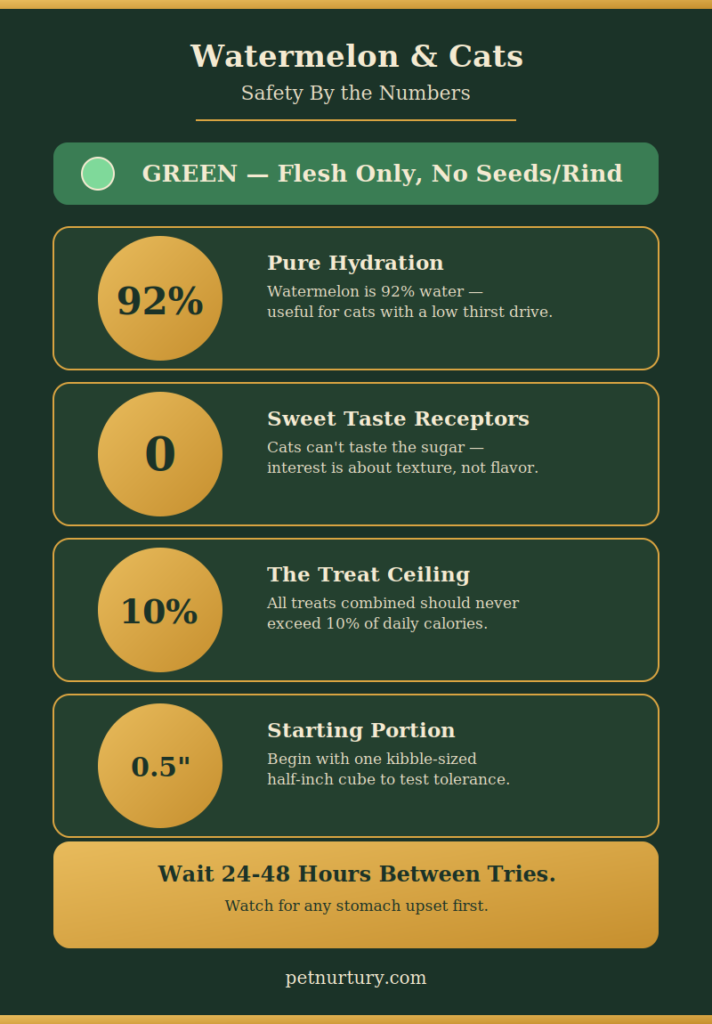
Table of Contents
Does Your Cat Actually Need Watermelon?
Cats are obligate carnivores, biologically designed to thrive on animal protein with no real requirement for carbohydrates or plant-based snacks. Here’s the unexpected fact most owners don’t know: unlike humans, cats lack the taste receptors to perceive sweetness at all. That means your cat isn’t drawn to watermelon because it tastes sweet, the sugar content is essentially invisible to them.
Where watermelon does offer something useful is hydration. Since it’s roughly 92% water, it can be a helpful supplement for cats with a low thirst drive, potentially supporting kidney and urinary health as an occasional boost alongside regular water intake. It also contains Vitamin A, Vitamin C, and lycopene, though cats don’t metabolize these plant-based nutrients nearly as efficiently as humans do, so think of them as a minor bonus rather than a meaningful nutritional contribution.
The Danger Zone: Seeds and Rind
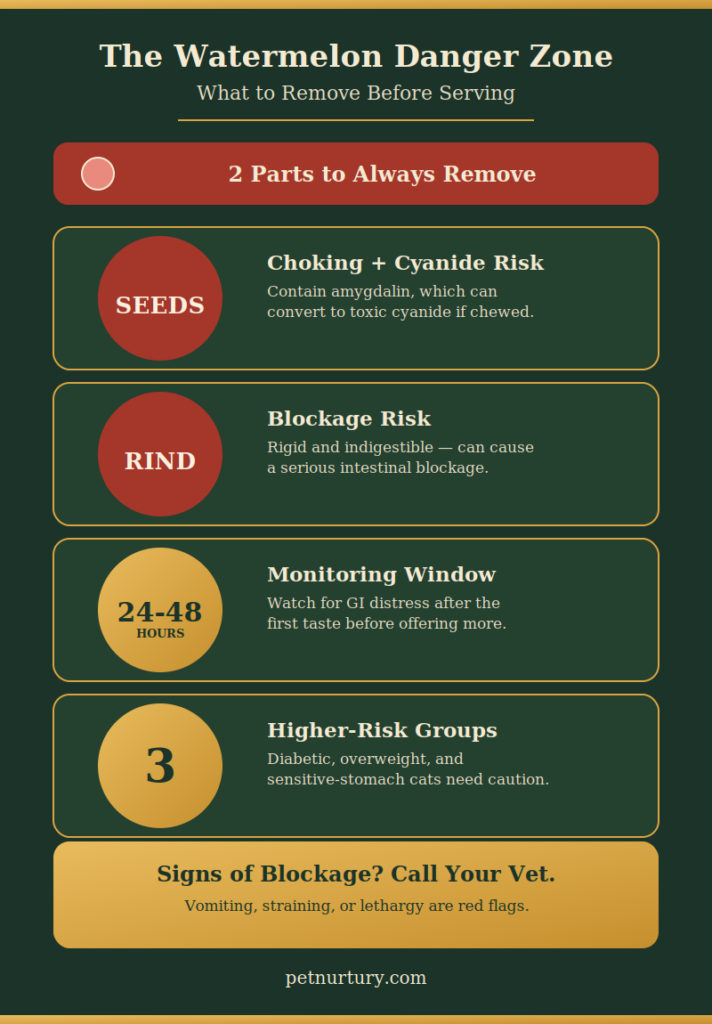
This is where most of the real risk lives. Watermelon seeds are a choking hazard on their own, and they also contain amygdalin, a compound that can convert into toxic cyanide if chewed. The rind is a separate problem, it’s rigid and essentially indigestible, which can lead to a serious intestinal blockage or a choking incident if a cat manages to swallow a piece.
A few groups of cats need extra caution beyond the seeds and rind. Diabetic cats should skip watermelon entirely, since the natural sugars can spike blood glucose even though your cat can’t taste them. Overweight cats need treats strictly limited, since the extra calories add up quickly on top of an existing weight concern. And cats with sensitive stomachs or seniors managing other health issues may experience vomiting or diarrhea from the fiber and sugar content, so it’s worth introducing slowly and watching closely.
If your cat swallows a large piece of rind or several seeds and shows signs of vomiting, straining, lethargy, or a bloated abdomen, treat it as an emergency, these are signs of a possible intestinal blockage, and you should contact your vet or an emergency animal clinic right away rather than waiting to see if it passes on its own.
The 10% Rule and How to Prep It Safely
All treats combined, watermelon included, should never exceed 10% of your cat’s total daily caloric intake. Start small: a single kibble-sized piece, roughly a half-inch cube, is plenty for a first try.
To prep it properly, wash the fruit thoroughly to remove surface contaminants, remove every seed, black or white, along with all traces of rind, and cut the flesh into tiny, manageable chunks. After the first taste, wait 24 to 48 hours to make sure there’s no gastrointestinal upset before offering it again.
Why Your Cat Might Just Walk Away
Interestingly, plenty of cats sniff watermelon out of pure curiosity and never actually eat it. Feline behavior observations show many cats will essentially “judge” a piece of fruit and reject it in favor of literally anything meat-based instead. If your cat does end up enjoying watermelon, it’s very likely the refreshing moisture and crisp texture doing the work, not the flavor, since sweetness isn’t something they can perceive in the first place.
Safe vs. Toxic Fruit Cheat Sheet
If your cat takes to watermelon, other safe options in small, seedless portions include blueberries, bananas, cantaloupe, and honeydew, can cats eat strawberries is another common follow-up question, and the answer there is also yes, in moderation, with the same seed/stem caution. On the flip side, grapes and raisins are strictly prohibited and can cause kidney failure, and citrus fruits, cherries, and avocados should also stay off the menu entirely.
For a broader look at fruit safety, our what fruits can cats eat guide breaks down the full list in one place, and our what can cats eat page covers guidance across every food category.
FAQ
Is watermelon toxic to cats? No, the flesh is non-toxic and generally safe in moderation, but the seeds and rind need to be removed first.
Can cats eat watermelon seeds? No, they’re a choking hazard and contain amygdalin, which can convert into cyanide if chewed.
How much watermelon can I give my cat? Start with a single half-inch cube and stay within the broader 10% treat rule going forward.
Can diabetic cats eat watermelon? It’s best avoided, the natural sugar content can spike blood glucose even though your cat can’t taste the sweetness.
Why does my cat sniff watermelon but not eat it? Curiosity, not hunger, many cats investigate fruit and then walk away in favor of meat.
What should I do if my cat eats the rind? Watch closely for vomiting, straining, or lethargy, and contact your vet immediately if you see any of these signs, since it can indicate a blockage.