
Can Cats Eat Tomatoes? Complete Safety Breakdown
Picture this: you’re making a Sunday pasta, tomatoes sizzling in the pan, and your cat is weaving between your ankles with an expression that suggests they deserve a taste. The kitchen smells amazing, garlic, herbs, simmering sauce, and your cat seems convinced this is relevant to them.
The question of whether can cats eat tomatoes is one of those deceptively simple ones. The actual answer has at least three different layers depending on which part of the tomato you’re talking about, and one of those layers genuinely matters for your cat’s safety.
Table of Contents
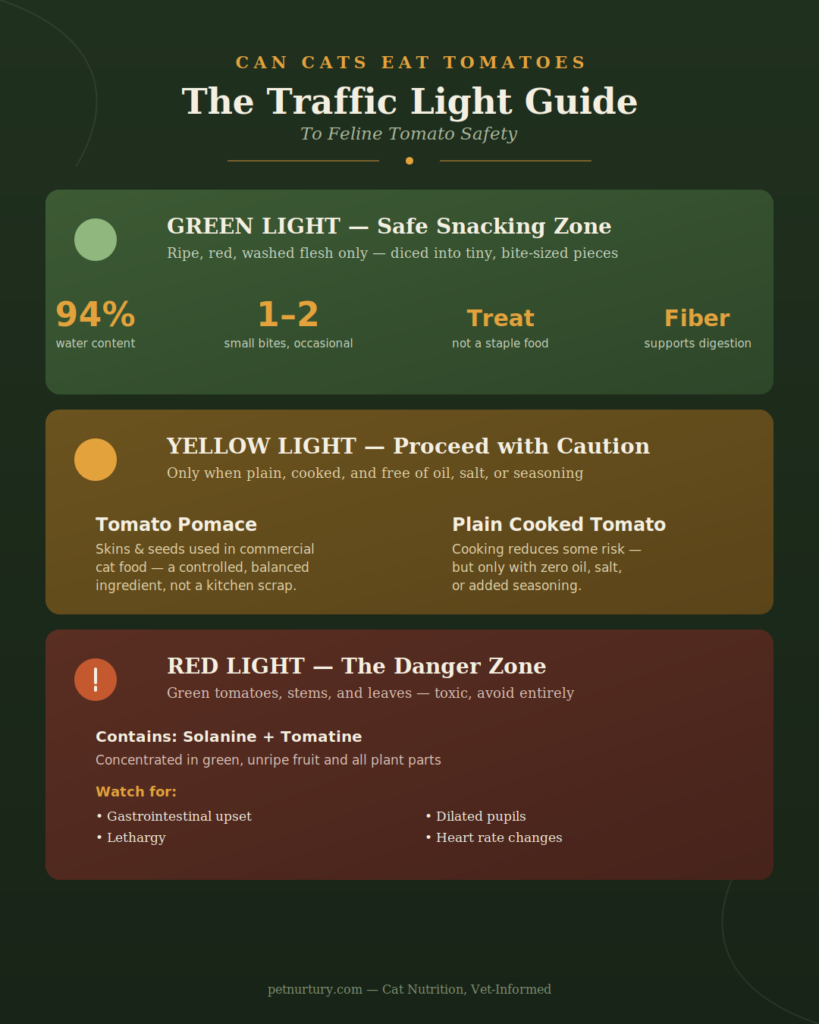
The Traffic Light Guide to Feline Tomato Safety
🟢 Green Light: The Safe Zone
Ripe, red tomato flesh, in very small amounts, is considered low-risk for most healthy adult cats. The key word is ripe, fully red, soft, and at peak maturity.
The case for occasional ripe tomato flesh is modest but real: tomatoes are roughly 94% water, which means a small piece contributes to hydration in a meaningful way for cats who don’t drink enough. There’s also a fiber component, though not remarkable compared to something like pumpkin.
If you’re going to offer it, here’s how: wash the tomato thoroughly, remove all skin, seeds, and any green parts, and dice the flesh into pieces no larger than a pea. One or two pieces on an occasional basis is the appropriate dose. This is a curiosity treat, not a dietary component, cats are obligate carnivores and have no biological need for tomatoes whatsoever.
🟡 Yellow Light: Proceed with Caution
Two situations here worth understanding rather than dismissing:
Tomato pomace in commercial cat food. If you’ve checked an ingredient label and seen “tomato pomace,” that’s a processed form of tomato skin and pulp used as a fiber source in formulated pet foods. In that context, it’s considered safe, it’s been processed and balanced within a complete diet. This is different from fresh tomato, and the two shouldn’t be treated interchangeably.
Plain cooked tomatoes. Cooking reduces solanine and tomatine content compared to raw, green, or unripe tomatoes. Plain cooked ripe tomato flesh, no oil, no seasoning, no garlic, no onion, is lower risk than many owners assume. But the preparation requirement is strict enough that in practice, it’s rarely worth the effort when there are safer treat options available.
🔴 Red Light: The Danger Zone
This is where the question “can cats eat tomatoes” needs a firm no: green tomatoes, stems, and leaves are toxic.
The entire green part of the tomato plant, including unripe fruit, all stems, and all leaves, contains high concentrations of solanine and tomatine, alkaloids that cause real toxicity in cats. Symptoms of plant poisoning include gastrointestinal upset, lethargy, dilated pupils, drooling, and in significant exposures, heart rate abnormalities.
If you grow tomatoes, the plant itself is a meaningful hazard. Cats who nibble leaves or chew on stems are at risk regardless of how healthy the rest of their diet is.
The Real Danger: What’s in the Sauce
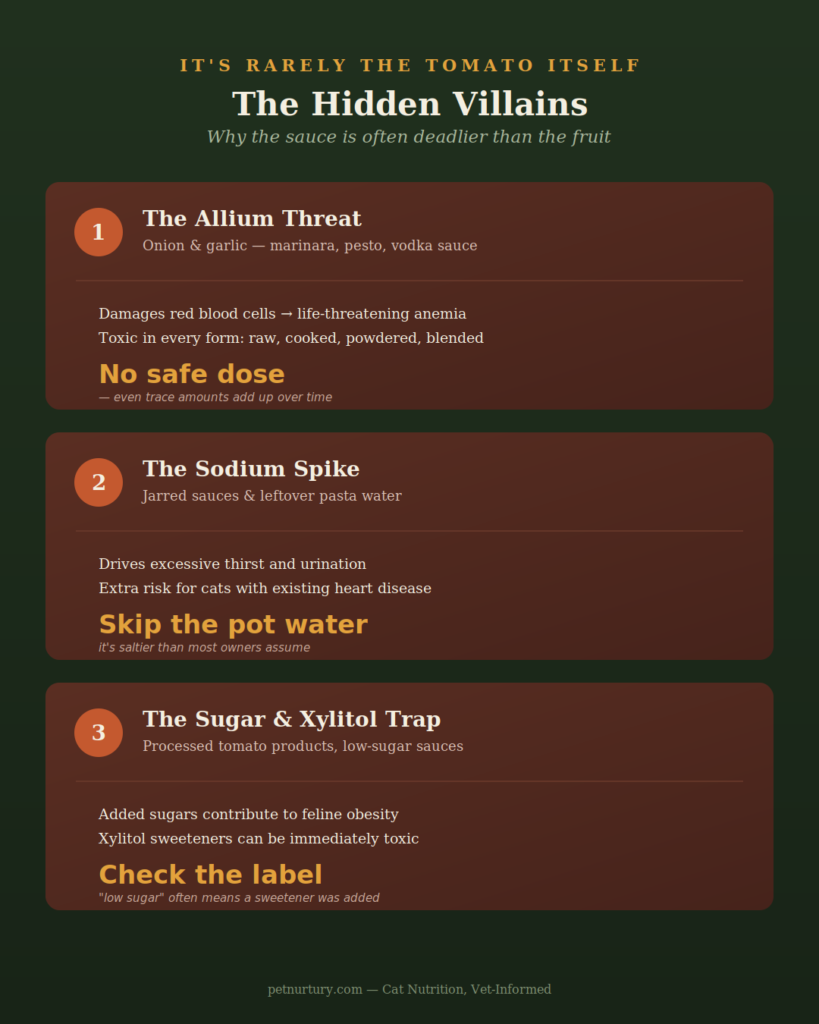
Here’s the detail most guides miss entirely: the tomato itself is rarely the biggest problem on pasta night. The sauce is.
Virtually every tomato-based sauce, marinara, pesto, vodka sauce, arrabiata, contains garlic and onion at some level. Both belong to the allium family, and both are genuinely toxic to cats. Organosulfide compounds in alliums damage feline red blood cells over time, causing hemolytic anemia. The damage is cumulative and often delayed. A cat who licks garlic-seasoned sauce from your bowl isn’t going to collapse immediately, but repeated exposure builds to a clinical problem.
Beyond alliums, jarred pasta sauces typically carry high sodium levels inappropriate for cats, and some processed tomato products contain sweeteners including xylitol, which causes blood sugar crashes and liver damage in cats even in small amounts.
The sauce is almost always the issue, not the tomato.
Pasta Night for Two, The Smart Compromise
You don’t have to change your dinner on your cat’s behalf. You just need a two-minute adjustment:
The noodle: A single plain boiled pasta shape, farfalle, fusilli, a piece of penne, is a low-risk texture experience for cats curious about the dinner table. No sauce, no salt, no butter. One piece, occasionally.
The protein strategy: If you’re grilling chicken or shrimp for a pasta dish, set aside a small unseasoned piece before it touches the sauce. Plain cooked chicken or plain cooked shrimp are among the safest human foods cats can eat, and far more nutritionally appropriate than anything tomato-based.
Safe sauce alternatives: Plain pumpkin puree (a teaspoon, unseasoned) serves the same fiber function without any of the risk. Warm plain bone broth contributes to hydration in a way cats genuinely enjoy.
The 72-Hour Watch: Monitoring After Ingestion
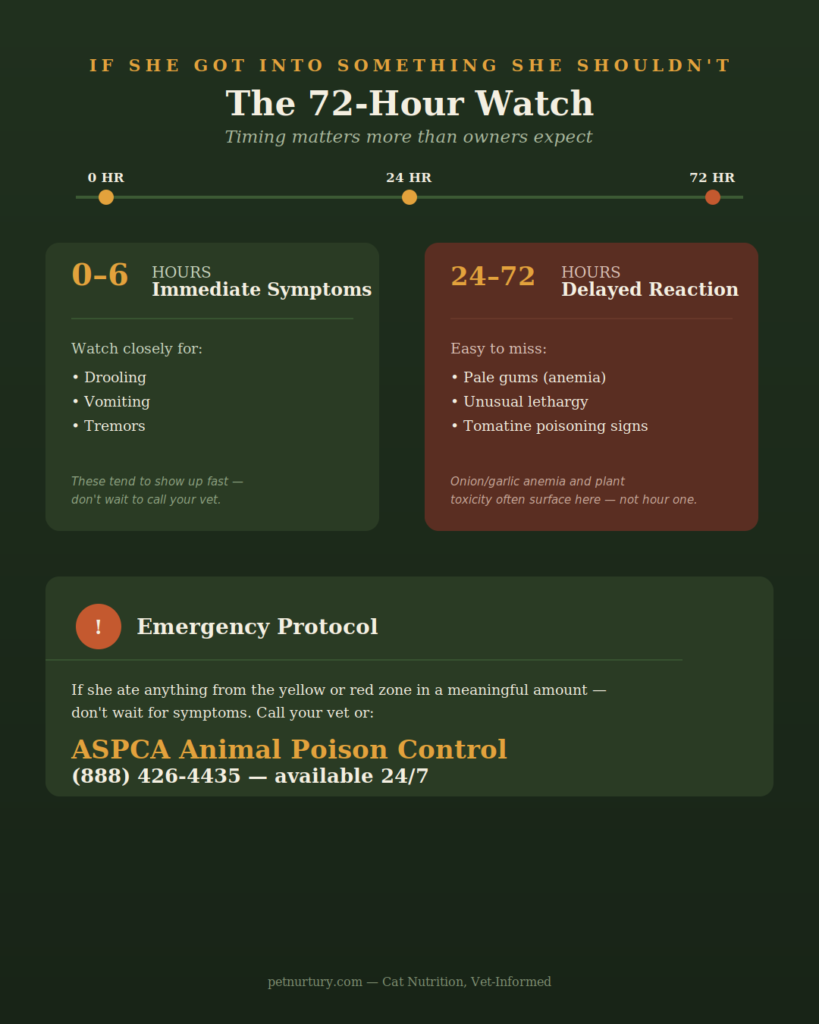
If your cat eats something tomato-adjacent and you’re uncertain what it contained, here’s how to approach monitoring:
Hours 0–6: Watch for immediate signs, vomiting, drooling, tremors, or obvious distress. These suggest significant exposure to green tomato parts or toxins from sauce ingredients.
Hours 24–72: Delayed reactions are the trickier scenario. Pale gums, weakness, and unusual lethargy developing in the day or two after exposure can indicate allium-related anemia or tomatine accumulation.
Emergency protocol: If you’re seeing any of the above, or if you know your cat ate garlic or onion sauce in any amount, contact your veterinarian or the ASPCA Animal Poison Control Center at (888) 426-4435 immediately. Don’t wait to see if it resolves.
Conclusion: Enjoy Your Pasta, Keep Their Bowl Plain
Can cats eat tomatoes? Ripe flesh, occasionally, carefully, yes. Green parts, stems, leaves, or anything combined with garlic or sauce, no, and that second category deserves to be taken seriously.
The fuller picture of safe and unsafe vegetables for cats is covered in our dedicated guide to what vegetables can cats eat. And for the complete breakdown of everything cats can and can’t safely eat across all food categories, see our main guide on what can cats eat.
If you’re curious about other options, like whether can cats eat carrots is a yes or a no, it’s worth checking each vegetable individually, since safety guidelines can vary quite a bit from one to the next.