can cats eat carrots? Complete Nutrition Guide
If you’ve ever caught your cat sniffing curiously at a carrot on the cutting board, you’ve probably wondered: can cats eat carrots? The short answer is yes, cats can eat carrots, but only when they’re cooked, plain, and served in small amounts. Carrots aren’t dangerous the way onions or grapes are, but they’re not a natural part of a cat’s diet either, so a little context goes a long way before you start sharing.
Table of Contents
Why a Carrot Will Never Be a “Meal” for Your Cat
Here’s the thing about carrots specifically: your cat’s body has zero biological demand for them. A carrot won’t supply the taurine, arachidonic acid, or animal-based amino acids that actually keep a cat’s heart, vision, and coat healthy, those only come from meat.
So when a cat nibbles a carrot, it’s purely recreational. There’s no nutritional gap it’s filling. That’s an important mental shift from how we think about vegetables in our own diets, where they’re often central to health.
For a cat, a carrot is closer to a crunchy toy with a side of fiber than an actual food group, which is exactly why portion control matters more than nutrient content when you’re deciding what can cats eat beyond their regular meals.
The Vitamin A Myth
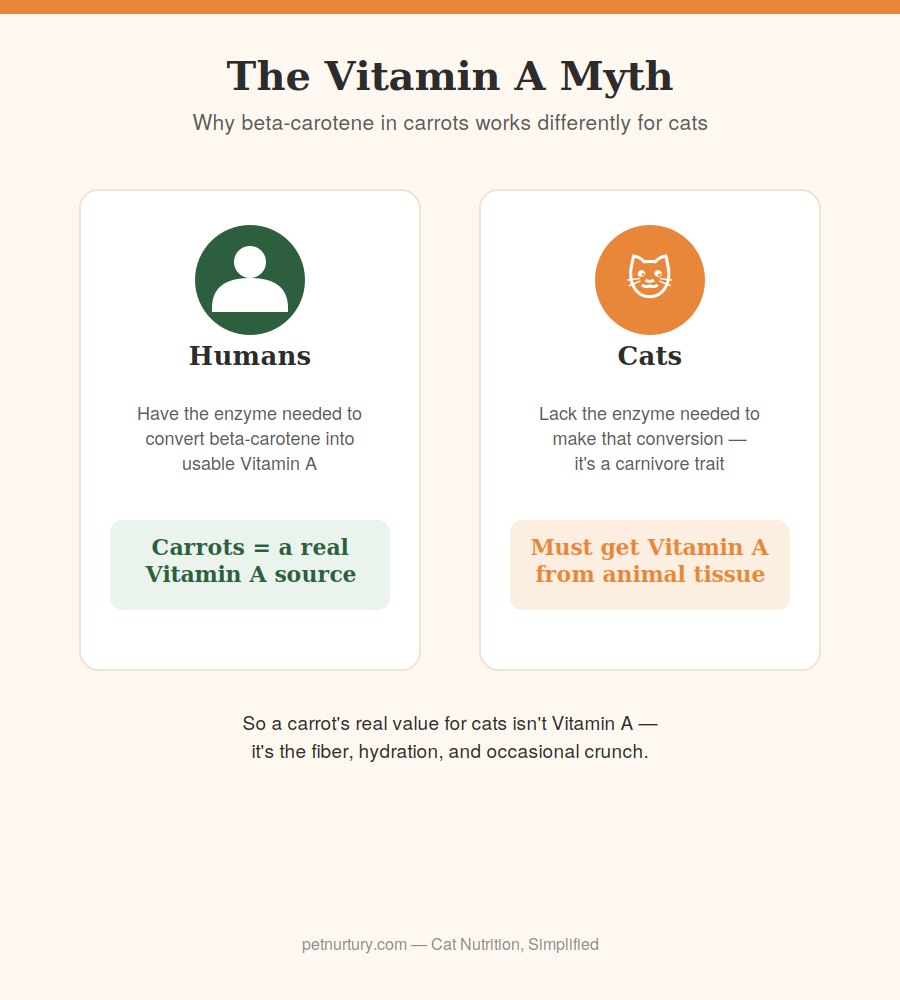
Carrots are famous for their beta-carotene content, which humans convert into Vitamin A. Cats, however, lack the enzyme needed to make that conversion efficiently. So while carrots look like a vitamin powerhouse on paper, your cat isn’t getting much of that benefit, they get their Vitamin A directly from animal tissue, like liver.
That said, carrots aren’t nutritionally useless for cats. In small amounts, they offer:
- Fiber that supports healthy digestion and can help with both constipation and mild diarrhea
- A feeling of fullness, which can be useful for cats who need help managing their weight
- Trace minerals like potassium and magnesium that support general wellness
Why Raw Carrots Are Risky
This is where a lot of well-meaning owners go wrong. Raw carrots are hard and fibrous, and cats, who don’t chew the way we do, can struggle to break them down. That creates a real choking hazard, especially with larger chunks.
Carrots also carry more natural sugar than most vegetables cats might sample, so overdoing it can contribute to weight gain or complicate conditions like diabetes.
And as with any human food you’re considering sharing, never season it. Garlic, onion, chives, salt, butter, or sweeteners like Xylitol can range from upsetting your cat’s stomach to genuinely toxic, so anything you offer should be completely plain.
How to Prepare Carrots Safely
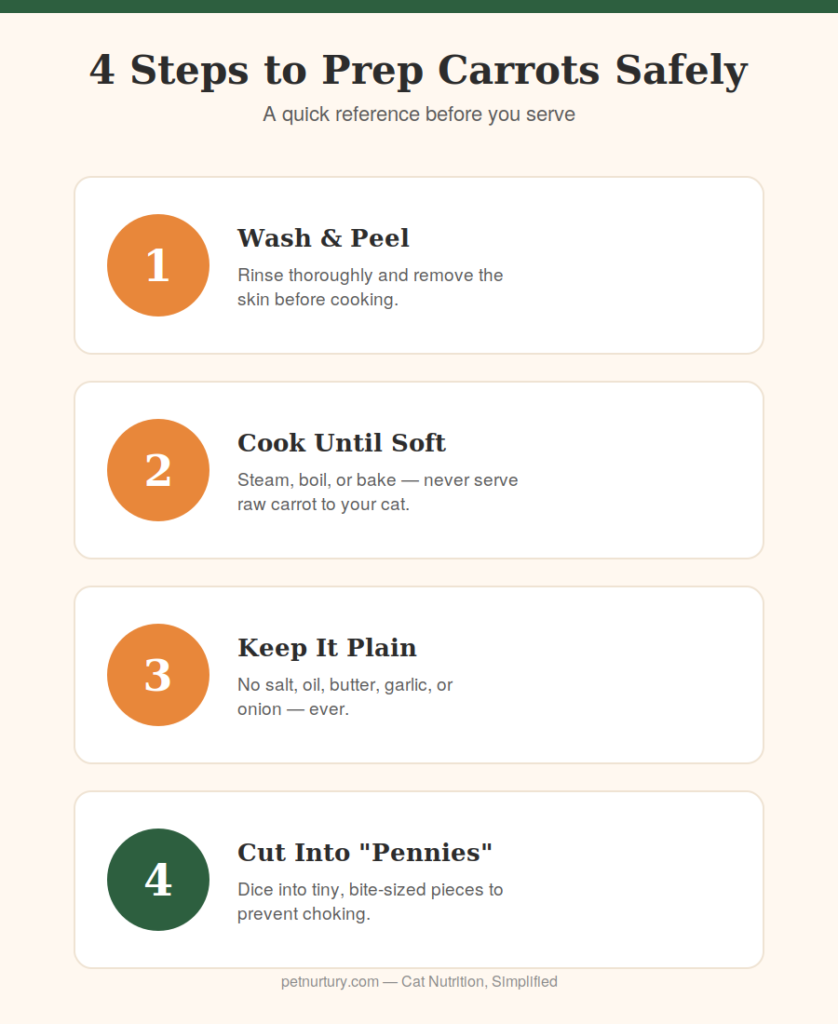
If you want to give your cat a taste of this crunchy vegetable, follow a simple routine:
- Wash and peel the carrot thoroughly.
- Cook it, steaming, boiling, or baking all work, until it’s soft enough to mash with a fork.
- Skip the seasoning entirely. No oil, no salt, no spices.
- Cut the softened carrot into tiny pieces, sometimes called “carrot pennies,” so it’s easy for your cat to chew and swallow safely.
How Much Is Too Much? The 10% Rule
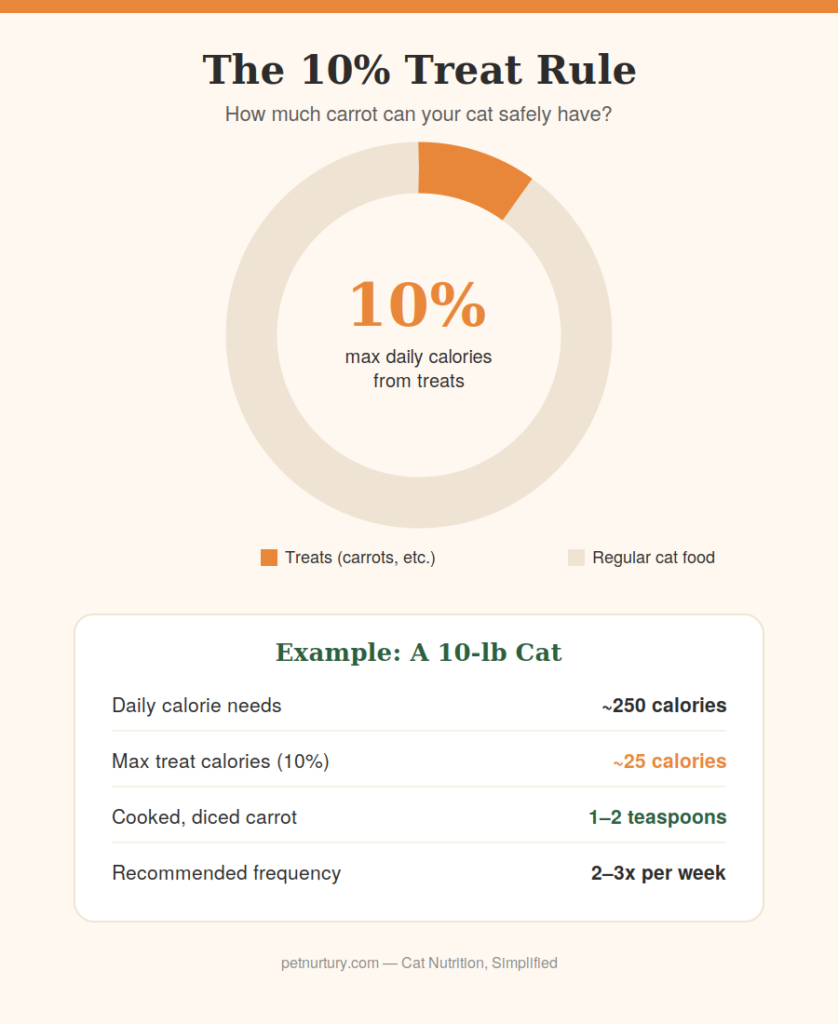
Treats, carrots included, should never make up more than 10% of your cat’s daily calories. For a typical 10-pound cat eating around 250 calories a day, that works out to roughly 25 calories from treats, or about 1–2 teaspoons of cooked, diced carrot, offered just a couple of times a week. It’s a helpful mental shortcut whenever you’re deciding what human food is safe to share, not just for carrots.
Carrot Tops and a Look-Alike Worth Knowing About
The leafy green tops from garden carrots are generally fine if cooked and chopped, though a few cats may get mild stomach upset from them.
Far more important: never let your cat near Queen Anne’s Lace, a wild plant that looks almost identical to carrot tops but is toxic, potentially causing skin irritation or vision problems.
Kittens and Senior Cats Need Different Approaches
Kittens have sensitive digestive systems, so it’s best to wait until they’re at least six months old before offering carrots, and even then, stick to tiny pureed amounts.
Senior cats, on the other hand, often benefit from the fiber in cooked carrots, which can support more regular digestion as their metabolism slows down.
When to Call the Vet
Keep an eye out for vomiting, diarrhea, gas, or lethargy after your cat tries carrots for the first time.If you notice excessive thirst or frequent urination, that could point to a blood sugar issue worth mentioning to your vet, especially if carrots have become a regular habit rather than an occasional treat.
The Quick Checklist
- Cook it, never serve carrots raw
- Cut it small, tiny pieces or purée only
- Keep it plain, no seasoning, ever
- Stick to moderation, treats stay under 10% of daily calories
Carrots are just one small piece of the puzzle when it comes to figuring out what vegetables can cats eat safely.
If you’re curious about other options, like whether can cats eat tomatoes is a yes or a no, it’s worth checking each vegetable individually, since safety guidelines can vary quite a bit from one to the next.