
Can Cats Eat Cantaloupe? Safety & Hydration Benefits
It’s a Tuesday evening, and your cat is perched on the kitchen counter, eyes locked on the cantaloupe you’re slicing for dinner. Her nose twitches. She meows. And you pause, spoon in hand, wondering: Is it safe to share?
The short answer: Yes, plain ripe cantaloupe is non-toxic and generally safe for healthy adult cats in small, carefully prepared portions.
But before you start cutting up melons, there’s important context. Cats are obligate carnivores, meaning their bodies are biologically designed to thrive on animal protein alone. They have zero nutritional need for fruits or carbohydrates. This doesn’t mean cantaloupe is harmful, it just means it should never replace their primary diet. Think of it as an occasional treat, not a staple.
The key word here is occasional. We’re talking once or twice a week, in tiny amounts, for cats without underlying health conditions.
Understanding what can cats eat helps you make informed decisions about every human food your cat encounters.
Table of Contents
II. The Science of Attraction: Why Cats Crave Melon
Here’s something most cat owners don’t realize: your cat isn’t attracted to cantaloupe the same way you are.
Cats absolutely cannot taste “sweet.” They lack the functional taste receptors (T1R2/T1R3) that allow humans and many other mammals to perceive sweetness. So why does your cat go crazy for a cantaloupe slice?
The answer lies in aroma, not flavor.
Cantaloupe releases volatile organic compounds, aromatic molecules that mimic the amino acid profile found in meat. To your cat’s highly sensitive nose (which contains roughly 30 times more olfactory receptors than humans), these molecules smell meaty. It’s a sensory trick of nature.
The fruit’s texture, soft, easy to mouth, slightly fragmented, also triggers a cat’s hunting instincts. She’s not thinking, “Mmm, fruit!” She’s thinking, “This smells like prey, and I can break it apart.”
This explains why some cats obsess over cantaloupe while completely ignoring lettuce or carrots. It’s pure biochemistry, not preference.
Fun fact: This same aromatic mimicry is why some cats are drawn to tuna-scented items or plants like catnip—they’re detecting compounds their brains interpret as relevant to hunting.
III. Nutritional Benefits and Drawbacks
The Pros: What Cantaloupe Can Offer
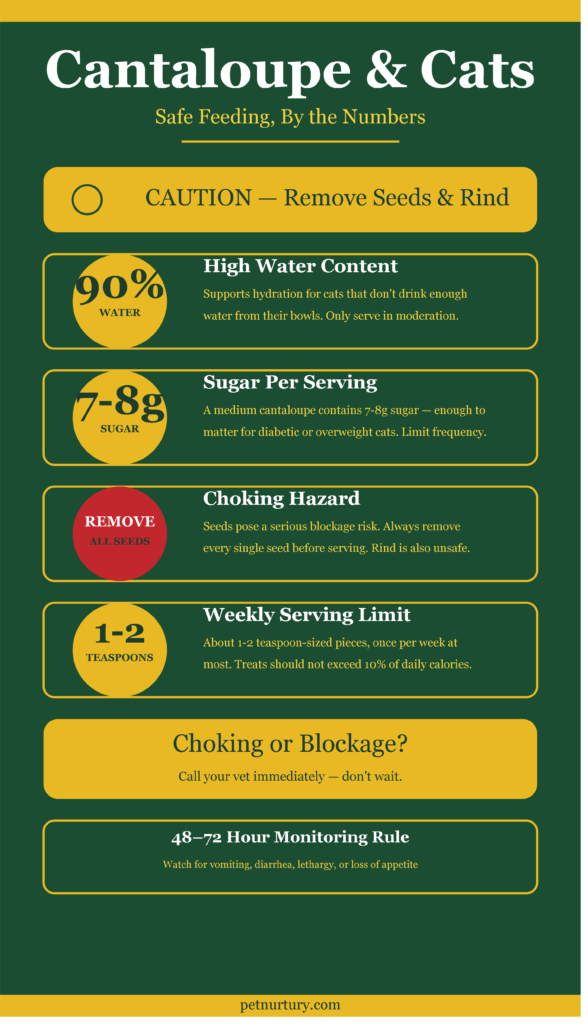
Hydration Support Cantaloupe is roughly 90% water. For cats who are chronic under-drinkers, and many indoor cats are, this moisture can help. If your cat refuses to drink from her bowl but will nibble cantaloupe, the added hydration is beneficial.
This is especially true for cats prone to urinary issues or kidney disease (though always consult your vet first in these cases).
Vitamins and Antioxidants
- Vitamin A: Supports eye health and immune function
- Vitamin C: Supports immune response (though cats synthesize their own, supplemental amounts don’t hurt)
- B-complex vitamins: Assist with energy metabolism
- Beta-carotene and other polyphenols: Combat free radicals and reduce oxidative stress
For a healthy adult cat eating a balanced diet, these nutrients are redundant, but they’re not harmful.
The Cons: Real Concerns
High Natural Sugar Content This is the biggest drawback. Cantaloupe contains 7-8 grams of sugar per 100 grams. While that’s not dangerous in tiny quantities, regular consumption can contribute to weight gain and metabolic issues. Cats with diabetes or pre-diabetes should never eat cantaloupe. The fructose can destabilize blood glucose levels.
Digestive Sensitivity New foods often cause mild gastrointestinal upset, vomiting or diarrhea, in cats with sensitive systems. This is especially true for senior cats or those with IBS-like conditions. Introduce cantaloupe extremely gradually and watch for signs of distress.
Lack of Biological Necessity Plain truth: cantaloupe provides nothing your cat needs. A high-quality cat food already contains everything. Treats should be occasional novelties, not dietary staples.
IV. Critical Safety Warnings
Choking and Blockage Hazards
Seeds and rinds are dangerous.
Cantaloupe seeds are small, hard, and easily lodged in a cat’s esophagus or digestive tract. Even though some sources claim seeds “may pass safely,” the risk isn’t worth it. Remove every single seed. The rind, while technically safe if swallowed, poses aspiration risks and contains pesticides and bacteria on its outer surface.
Always: Remove seeds and rind completely. Dice the flesh into pea-sized or 1-inch cubes.
Bacterial Contamination
The porous outer rind of cantaloupe harbors Salmonella and E. coli. Even though you’re not feeding your cat the rind, bacteria can transfer to your hands during prep and contaminate the flesh.
Wash the exterior thoroughly under running water before cutting. Use a vegetable brush if available. Handle the melon like you’re prepping for human consumption, because you should be.
The 48–72 Hour Monitoring Rule
After your cat eats cantaloupe for the first time, observe her behavior for 72 hours. Watch for:
- Vomiting or retching
- Diarrhea or constipation
- Lethargy or unusual hiding
- Loss of appetite
- Abdominal distension or restlessness
These signs could indicate blockage, intolerance, or infection. If any occur, contact your veterinarian immediately.
Emergency Protocol (if suspected blockage):
- Stop feeding solid food
- Contact your vet within 2 hours
- Do NOT delay; blockages can become life-threatening within 12-24 hours
- Your vet may recommend imaging (X-ray or ultrasound) to confirm
V. Expert Preparation and Serving Guide
Step-by-Step Preparation
- Wash the exterior rind under running water with a brush
- Cut the cantaloupe in half; remove all seeds with a spoon
- Remove the rind completely, don’t leave any attached
- Dice the flesh into pea-sized or 1-inch cubes (smaller for kittens or seniors)
- Serve at room temperature; refrigerated melon can upset sensitive stomachs
- Discard uneaten portions after 2 hours to prevent bacterial growth
Portion Control Chart
| Cat Type | Serving Size | Frequency |
|---|---|---|
| Kittens (under 1 year) | Avoid entirely | N/A—digestive systems too sensitive |
| Adult Cats (8–12 lbs) | 1–2 teaspoons or 1–2 cubes | Once or twice weekly maximum |
| Large Adult Cats (13+ lbs) | 1 tablespoon or 2–3 cubes | Once or twice weekly maximum |
| Senior Cats (10+ years) | 1 teaspoon | Once weekly; monitor for digestive strain |
Remember: These portions assume the cantaloupe is in addition to regular meals, not replacing them. Treats (including cantaloupe) should make up no more than 10% of daily caloric intake.
VI. Health Exclusions: Who Should Avoid Cantaloupe
Cats That Should Skip Cantaloupe Entirely
Diabetic or Pre-Diabetic Cats Sugar destabilizes glucose levels. No exceptions.
Obese Cats Even small amounts of fruit contribute unnecessary calories. These cats need calorie-controlled diets focused on protein.
Cats with Chronic Digestive Issues IBS, IBD, pancreatitis, or sensitive stomach? New foods, especially sugary ones, can trigger flare-ups.
Cats with Kidney Disease High potassium content in cantaloupe may complicate kidney management. Always consult your vet.
Post-Surgical Cats (within 2 weeks) Avoid any new foods until digestive function fully normalizes.
Intolerance Red Flags
Stop feeding cantaloupe immediately if you notice:
- Excessive drooling or lip smacking
- Loss of appetite or food refusal
- Lethargy or hiding for extended periods
- Diarrhea lasting more than 24 hours
- Vomiting
VII. DIY Kitchen: Feline-Safe Cantaloupe Treats
If you want to get creative with cantaloupe, here are three vet-approved treat ideas:
Frozen Cantaloupe Cubes
The simplest option. Dice cantaloupe into small pieces, freeze on a parchment-lined tray, then transfer to an airtight container. Perfect for hot summer days. Most cats love the texture and cooling sensation.
Cantaloupe & Plain Yogurt “Ice Cream”
Blend pureed cantaloupe with plain, unsweetened yogurt (Greek yogurt is higher in protein). Freeze in an ice cube tray. Note: Only use if your cat isn’t lactose intolerant; many adult cats are.
Frozen “Paw Treats”
Combine pureed cantaloupe and plain Greek yogurt, freeze in paw-print silicone molds. A fun presentation cats and owners alike enjoy. Store in the freezer for up to 2 weeks.
Important: These treats should still follow your portion control guidelines. One frozen cube = one serving.
VIII. Conclusion & Veterinary Consultation
Cantaloupe is safe for most healthy, adult cats in tiny, occasional amounts. It’s hydrating, contains beneficial vitamins, and satisfies some cats’ curious nature.
But here’s the professional truth: Fruits should never replace a balanced, high-protein, meat-based diet. Your cat doesn’t need cantaloupe to be healthy. It’s a bonus, not a necessity.
Before introducing cantaloupe or any new human food to your cat’s diet, have a quick conversation with your veterinarian. They know your cat’s individual health status, pre-existing conditions, and nutritional needs. A 30-second question could prevent hours of worry or an emergency vet visit.
Explore more nutritional topics: Learn what fruits can cats eat to expand your knowledge of feline-safe treats, or check out our guide on can cats eat raspberries for other fruity options.
FAQ Section
Q1: My cat ate a small piece of cantaloupe, should I be worried?
A: A single small piece is extremely unlikely to cause harm. Monitor her for the next 48 hours for signs of vomiting, diarrhea, or lethargy. If she shows no symptoms, she’s fine. This is a good reminder to keep treats portioned and controlled going forward.
Q2: What if my cat ate cantaloupe seeds?
A: Small amounts of cantaloupe seeds are unlikely to cause immediate harm, but they pose a blockage risk. Watch your cat closely for the next 3 days. Signs of blockage include vomiting, lack of appetite, abdominal pain, or inability to defecate. If you notice any of these, contact your vet immediately. Don’t wait, blockages can become life-threatening.
Q3: Can kittens eat cantaloupe?
A: No. Kittens’ digestive systems are sensitive and still developing. Their caloric needs are also extremely high, they need protein-dense food, not low-calorie fruits. Wait until your kitten is at least one year old and fully developed before offering any human foods. Even then, consult your vet first.
Q4: Is cantaloupe better or worse than other melons for cats?
A: Cantaloupe is among the safer melons due to its lower sugar content compared to honeydew. Watermelon is also acceptable but higher in water (which is good for hydration but provides fewer nutrients). Avoid any melon with artificial sweeteners or added sugars. Always remove seeds and rind from any melon variety.
Q5: Can cats eat cantaloupe, if they have kidney disease?
A: Not without veterinary approval. Cantaloupe’s potassium content can complicate kidney disease management. Your vet may recommend avoiding it entirely or allowing it only under specific conditions. Never introduce new foods for cats with chronic health conditions without professional guidance.
Q6: How often can I safely give my cat cantaloupe?
A: For healthy adult cats, once or twice weekly is the maximum. A single 1-2 teaspoon serving is appropriate. If your cat already eats other treats (dental chews, freeze-dried meat, etc.), reduce cantaloupe frequency to maintain the 10% treat-calorie rule. Think quality over quantity, occasional treats strengthen your bond more than frequent ones.