
Can Cats Eat Avocado? The Real Risk, Explained
Picture this: you’re making guacamole for a Sunday get-together, mashing up ripe avocado on the counter, and your cat hops up to investigate the green mush like it’s the most interesting thing all week. If you’ve had a moment like that and found yourself wondering can cats eat avocado, the honest answer is: technically yes, in the smallest of amounts, but it’s genuinely not worth the risk for most owners.
Cats are obligate carnivores with a limited biological ability to use plant-based nutrients, and most veterinary experts simply recommend sticking to a balanced commercial diet instead, since it already covers everything your cat needs.
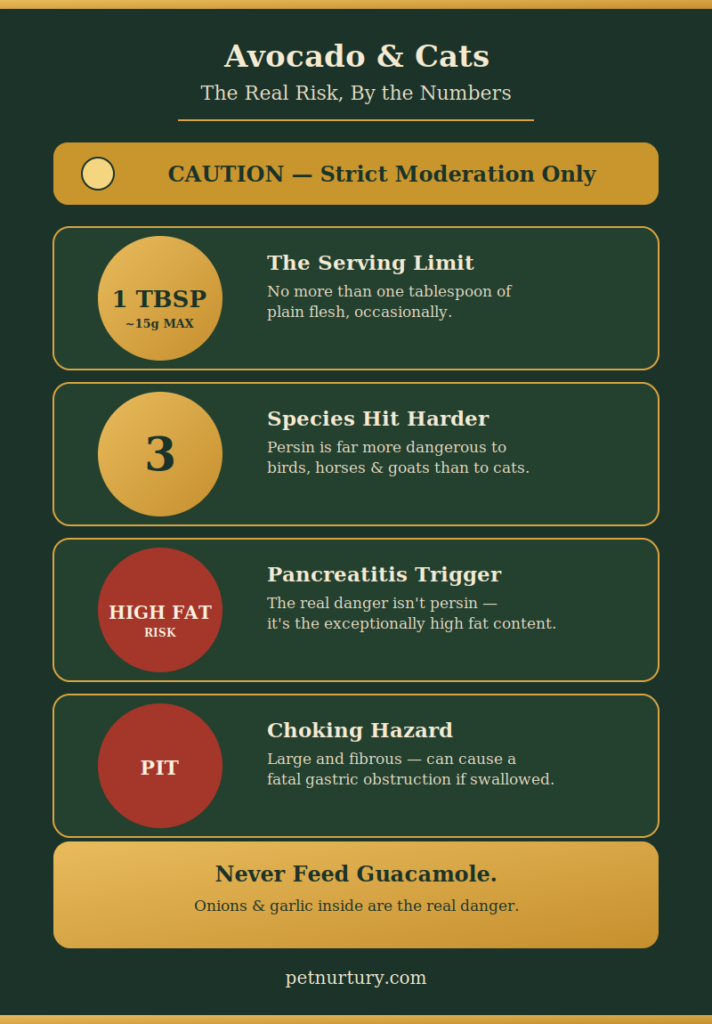
Table of Contents
What’s Actually in an Avocado (And Why It Doesn’t Translate Well to Cats)
Avocados are genuinely nutrient-dense, they contain 18 essential amino acids that support muscle development, organ function, and immunity, along with healthy monounsaturated fats often linked to a shiny coat and heart health in humans. The problem is that the fat profile in avocado differs from the animal fats your cat’s body is actually adapted to process.
Avocados also contain antioxidants like lycopene and beta-carotene, concentrated mostly in the dark green flesh near the skin, plus a good amount of fiber, which can help with mild constipation but tips into diarrhea fast if you overdo it.
The Unexpected Part: Persin Isn’t as Scary for Cats as You’d Think
Here’s the fact that surprises most owners: avocados contain a natural toxin called persin, and it’s genuinely dangerous to birds, horses, and goats, but it generally only causes mild to moderate gastrointestinal distress in cats specifically.
Persin is most concentrated in the skin, pit, leaves, and bark, with Guatemalan avocado varieties noted for carrying particularly high levels. So while avocado toxicity headlines can sound alarming, the actual risk profile for cats is different from what you’d expect from those warnings aimed at other animals.
The Real Risks Worth Taking Seriously
If persin isn’t the primary concern for cats, what is? Mostly the fat content. Avocado’s exceptionally high fat level can trigger pancreatitis, a painful, potentially life-threatening inflammation of the pancreas, and this risk is worth taking especially seriously in senior cats or cats with a history of pancreatitis or existing digestive sensitivity, since their systems have less capacity to handle a sudden fat load. Overconsumption in any cat can also cause vomiting, diarrhea, and abdominal pain.
Separately, the large, fibrous pit is a genuine mechanical hazard, it’s a significant choking risk and can cause a fatal gastric obstruction if swallowed. Allergic reactions are rare but possible too, showing up as difficulty breathing, swelling, or skin irritation.
How to Serve It Safely, If You Choose To
If you decide to offer a small taste, follow the “one tablespoon” rule, no more than about 15 grams, and only occasionally. Peel the skin thoroughly, remove the pit completely, and cut the flesh into very small, manageable pieces.
Serve it plain, with no salt or seasoning added. One detail worth knowing: refined avocado oil used in some commercial cat foods, like AvoDerm®, is generally considered safe, since the refining process removes or significantly reduces the persin content, that’s a different situation from feeding your cat fresh avocado flesh at home.
The Guacamole Warning
This one’s worth its own callout: never feed a cat guacamole, even a “just this once” taste. The avocado itself is the smaller concern, guacamole typically contains onions, garlic, chives, and peppers, all of which are genuinely toxic to cats and can cause severe anemia or red blood cell damage. If you’re already familiar with why can cats eat grapes has such a hard “no” answer, guacamole deserves that same level of caution, just for different underlying reasons.
Emergency Action Plan
Watch for lethargy, persistent vomiting, diarrhea, or a rapid heartbeat after any avocado exposure. If your cat eats the pit or skin, or consumes a larger amount of flesh than intended, contact your veterinarian immediately rather than waiting to see if symptoms resolve on their own.
It’s worth keeping the number for the Pet Poison Helpline or a local emergency vet clinic saved somewhere easy to find, since a fast call can make a real difference if pancreatitis or an obstruction is developing.
For more on which fruits are genuinely safe for cats, our what fruits can cats eat guide breaks down the full list, and our what can cats eat page covers guidance across every food category.
FAQ
Is avocado toxic to cats? Not in the same dramatic way it affects birds or horses, for cats, the bigger risks are the pit (choking/obstruction) and the high fat content (pancreatitis), not persin itself.
Can cats eat avocado skin or pit? No, both should always be removed, since the pit is a serious choking and obstruction hazard and the skin carries the highest persin concentration.
How much avocado can I give my cat? No more than about one tablespoon of plain flesh, occasionally, and many owners choose to skip it entirely given the risk-to-benefit ratio.
Is avocado oil in cat food safe? Generally yes, refined avocado oil used in commercial pet food has most of its persin removed during processing, which is different from fresh avocado flesh.
Can cats eat guacamole? No, guacamole usually contains onions, garlic, and other genuinely toxic ingredients well beyond the avocado itself.
What should I do if my cat eats an avocado pit? Contact your vet immediately, this is a real choking and obstruction risk that needs prompt attention, not a wait-and-see situation.