Are Roses Toxic to Cats? A Complete Pet Safety Guide
Roses have enchanted homeowners and gift-givers for centuries. Whether adorning a wedding ceremony, celebrating an anniversary, or simply brightening a living room, these elegant flowers bring color and fragrance into our spaces. Many pet owners, however, face a common concern when roses arrive at their homes: are roses toxic to cats? The answer requires nuance—and understanding the difference between what’s technically poisonous and what actually poses real danger to your feline friend.
Table of Contents
Are Roses Toxic to Cats? The Short Answer
The good news is straightforward: roses are not toxic to cats. The Rosa genus, which includes all true rose varieties, is classified as non-toxic by veterinary toxicology standards. Your cat won’t suffer poisoning from nibbling on rose petals or leaves. However, this doesn’t mean roses are entirely risk-free in a home with curious cats. The distinction between “non-toxic” and “completely safe” is important for pet owners to understand.
Understanding True Roses vs. Imposters
One of the most critical distinctions pet owners need to make involves plants with “rose” in their common names. Just because a plant has “rose” in its name doesn’t mean it’s actually a rose—or that it’s safe for cats.
True roses (Rosa genus) are safe. These include garden roses, florist roses, miniature roses, and climbing roses. You can bring these home without toxicity concerns.
Plants with “rose” in their names that are NOT safe require caution:
- Desert Rose (Adenium obesum) contains cardiac glycosides and is toxic to cats
- Christmas Rose (Helleborus niger) contains ranunculin and is poisonous
- Marsh Rose and other toxic lookalikes exist
If you’re purchasing or receiving floral arrangements, verify you’re receiving actual roses (Rosa genus) and not these harmful imposters. Ask the florist specifically if you’re unsure.
The Real Dangers: What Actually Threatens Your Cat
While roses themselves aren’t poisonous, several genuine hazards exist in your home when roses are present. These non-toxic dangers deserve serious attention from responsible pet owners.
Thorns: Nature’s Sharp Threat
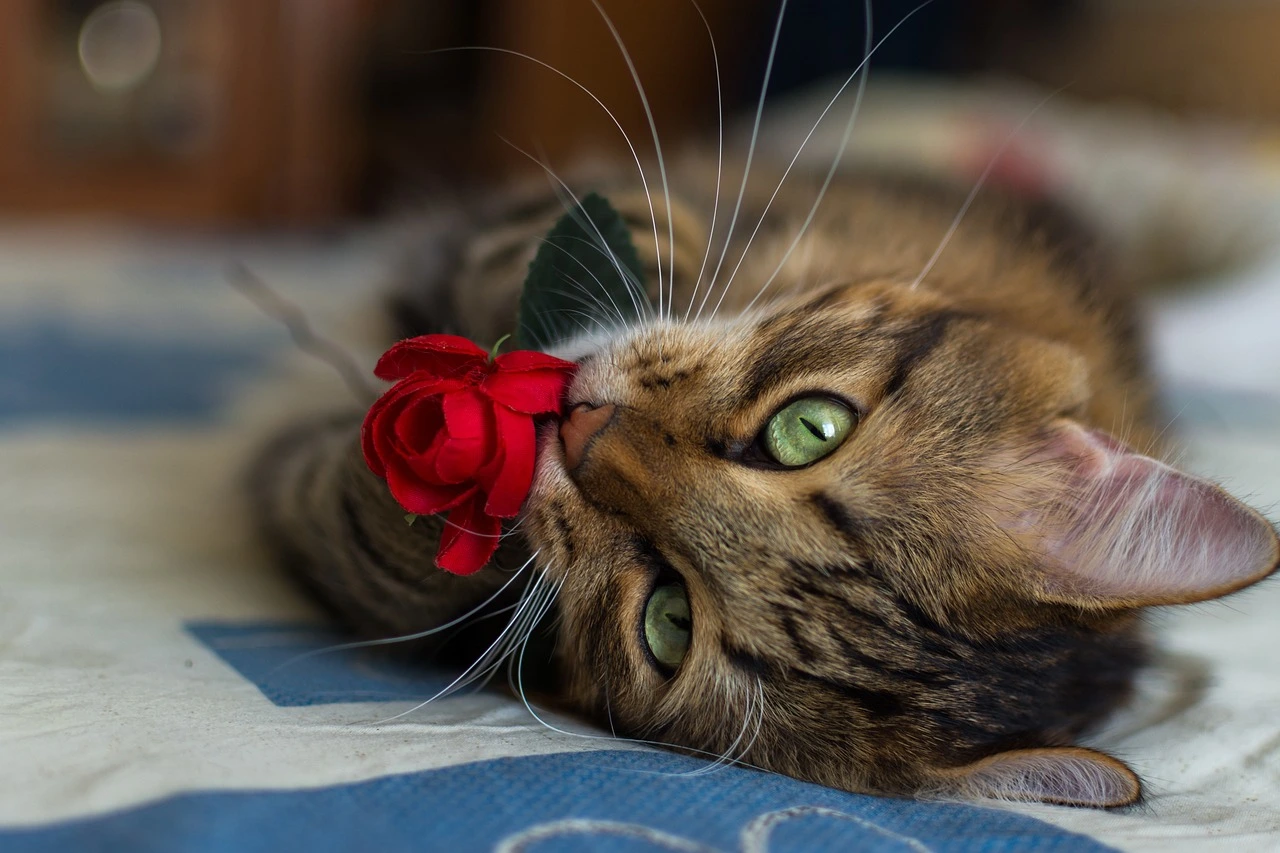
Rose thorns pose the most immediate physical risk. Cats are playful, curious creatures that may bite, paw, or chew on flowers. Thorns can cause several types of injury:
- Oral lacerations: Cuts inside the mouth from chewing or playing with thorned stems
- Esophageal damage: Thorns can scratch the throat or esophagus if swallowed
- Skin punctures: Paws and faces can be pierced by thorns, creating wounds prone to infection
These injuries might seem minor but can become serious if bacteria enters the wound or if internal damage occurs. A cat limping, drooling excessively, or showing reluctance to eat warrants veterinary attention.
Pesticides and Fertilizers: The Hidden Chemical Risk
This is where store-bought roses become problematic. Commercial florist roses are often treated with pesticides, fungicides, and other chemicals designed to keep them vibrant during transport and storage. Garden roses may have been sprayed with fertilizers or pest-control products.
When cats chew on treated flowers, they’re potentially ingesting these chemicals. Symptoms of chemical exposure can include:
- Drooling or mouth irritation
- Vomiting or diarrhea
- Lethargy or behavioral changes
- Respiratory issues (if pesticide residue is inhaled)
Homegrown roses you’ve personally cultivated without chemicals are significantly safer than commercial varieties. If you must have store-bought flowers, rinse them thoroughly and keep them away from your cat’s reach.
Choking Hazards from Plant Material
Cats that consume large pieces of rose stems, leaves, or petals risk choking or intestinal blockages. While small amounts of plant matter typically pass through the digestive system without issue, larger pieces can lodge in the throat or intestines.
Signs of a choking hazard or blockage include:
- Gagging or difficulty swallowing
- Loss of appetite
- Constipation or inability to defecate
- Abdominal pain or distension
- Lethargy
If you suspect your cat has a blockage, seek veterinary care immediately.
Symptoms to Watch For After Rose Exposure
Even though roses aren’t toxic, monitoring your cat after any contact with them is wise. Watch for these warning signs:
Gastrointestinal upset from consuming plant material manifests as vomiting, diarrhea, or reduced appetite. Most cases resolve independently, but persistent symptoms warrant veterinary evaluation.
Physical injury symptoms include limping, excessive licking of paws, swelling around the mouth, difficulty eating, or drooling. These suggest thorn injuries or cuts.
Chemical poisoning symptoms vary based on the pesticide but commonly include tremors, excessive salivation, dilated pupils, muscle weakness, or behavioral changes. These require immediate veterinary attention.
Allergic reactions, while rare, may manifest as itching, facial swelling, or respiratory difficulties.
What to Do If Your Cat Ingests a Rose
Stay calm and assess the situation. If your cat has eaten a small amount of rose petals or leaves:
- Monitor closely for the next 24 hours, watching for vomiting, diarrhea, or difficulty eating
- Remove access to the roses immediately
- Rinse the mouth gently with water if thorns may have caused cuts
- Note the time and amount consumed for reference
If your cat ingested pesticide-treated roses, chemical fertilizers, or large quantities of plant material, contact your veterinarian or the Pet Poison Helpline (855-764-7661) immediately. They can assess the specific risk based on your cat’s weight, age, and health status.
Seek emergency care if your cat shows signs of choking, severe distress, inability to eat, or poisoning symptoms.
Cat-Safe Floral Alternatives
If you love flowers but want to eliminate risk entirely, choose from these cat-safe options:
- Sunflowers (remove the stem if it has thorns)
- Zinnias
- Cornflowers
- Snapdragons
- Camellias
- Gardenias
- Orchids
- Hibiscus
These provide beauty without the hazards associated with roses.
The Bottom Line: Roses and Your Cat
Roses themselves are not toxic to cats, but the circumstances surrounding them—thorns, chemicals, and choking risks—warrant caution. If you choose to keep roses in your home, place them in secure locations your cat cannot access. Remove thorns if possible, rinse store-bought varieties, and monitor your pet closely.
Your cat’s safety remains paramount. When in doubt about any plant’s safety or if your cat shows concerning symptoms, contact your veterinarian immediately. A quick call might prevent a serious health issue, and your vet’s guidance is always more valuable than internet research when your pet’s wellbeing is at stake.
FAQ
Are roses toxic to cats?
The ASPCA says true roses are safe for cats. But, there are risks like getting hurt by thorns. Also, eating a lot of rose plant can upset a cat’s stomach.
Can cats get hurt by rose thorns?
Yes, rose thorns can hurt cats. They might get cuts, scratches, or even internal injuries if they swallow thorns. Keep roses away from cats to avoid harm.
What symptoms might a cat experience after interacting with roses?
Cats might feel a bit sick in their stomach if they eat rose petals or leaves. They could also get minor cuts or scratches from thorns. If the symptoms don’t go away, see a vet.
Are store-bought roses safe for cats?
Roses are not toxic, but store-bought ones might have harmful chemicals. Clean them well and keep them away from pets.
How can I create a cat-safe garden with roses?
Place roses where cats won’t go near them. Use barriers and safe plants together. Make sure to remove thorns and watch your cat around roses.
Are all plants with “rose” in their name safe for cats?
No, many plants called “rose” are actually toxic. Always check the plant name and use resources like the ASPCA to make sure it’s safe for cats.
What should I do if my cat ingests rose material?
Watch your cat for any strange signs. For mild cases, look out for stomach problems. If symptoms last or get worse, call your vet or the ASPCA Animal Poison Control Center right away.
Are rose water and flower food safe for cats?
Rose water is usually okay, but flower food can be bad for cats. Don’t use commercial flower additives where cats live. Choose safe alternatives instead.
How can I prevent rose-related injuries to my cat?
Remove thorns and put roses where they can’t reach. Use barriers and watch your cat around plants. Make a safe space to lower risks.
Can cats have allergic reactions to roses?
It’s rare, but cats might have mild allergies to rose pollen or plant parts. Look out for breathing problems or skin issues. If you’re worried, talk to your vet.