

Can Cats Eat Mango? Safety Guide + Feeding Tips
Picture this: you’re peeling a ripe mango over the sink, and your cat hops up onto the counter to investigate the sticky, fragrant mess like it’s the most fascinating thing that’s happened all day.
If you’ve had a moment like that and typed can cats eat mango into a search bar with a little worry, here’s the direct answer: mango is non-toxic and safe for cats in small, infrequent amounts, though it’s not a species-appropriate staple by any means.
For a broader look at what belongs on your cat’s safe list, our what can cats eat guide is a good place to start. Cats aren’t drawn to mango the way we are, either, while humans love that sweet scent and flavor, your cat is likely motivated by pure food curiosity, an interesting texture, or just watching you eat and wanting in on whatever’s happening.
Table of Contents
Why Mango Is Basically “Empty Calories” for Cats
Cats are obligate carnivores, biologically built to thrive on animal protein and fat, and they simply lack the enzymes needed to efficiently process plant-based carbohydrates. Here’s the unexpected fact most owners don’t know: cats experience what’s sometimes called “sweet blindness”, they physically lack the taste receptors to perceive sweetness, so the sugary flavor that makes mango so appealing to us is completely lost on them.
Mango does contain vitamins A, B6, and C, but here’s the catch: cats actually produce their own Vitamin C internally and get all the fiber and nutrients they need from a balanced, meat-based diet. So is mango safe for cats nutritionally speaking? Sure, in the sense that it won’t hurt them in small amounts, but it’s not adding anything their diet is actually missing.
The Hidden Dangers Beyond Toxicity
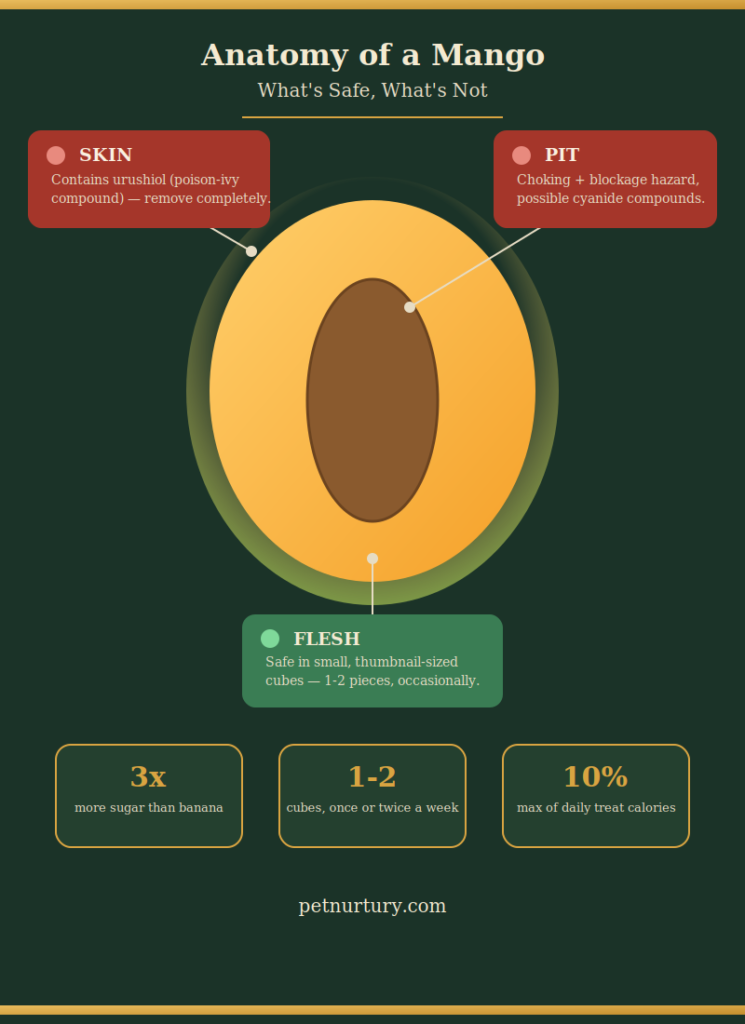
Mango toxic cats searches usually turn up more nuance than a flat yes or no, and that’s because the real risks aren’t really about the flesh itself. The mango pit, or stone, is the biggest concern, it’s a major choking hazard and intestinal blockage risk, and if chewed or splintered, it can damage your cat’s mouth and may contain cyanide-related compounds. If you’re ever worried about a mango pit cat exposure, treat it seriously and don’t wait to see what happens.
The skin is a separate issue: it’s difficult to digest, and it may contain urushiol, yes, the same irritant found in poison ivy, which can cause a skin reaction called mango dermatitis in sensitive cats. And then there’s the sugar content itself: mango actually contains roughly three times more sugar than a banana, so excessive intake can contribute to obesity, diabetic complications, and genuine gastrointestinal distress. If you’re dealing with cat mango diarrhea after a treat session, that sugar and fiber load is almost always the culprit.
Condition-specific warning: diabetic cats should avoid mango entirely, since the natural sugars can interfere meaningfully with blood glucose management. Overweight cats are better off skipping it too, since the extra sugar and calories add up quickly, and kittens have sensitive digestive systems that need calorie-dense protein for growth, not fruit sugar.
The “Thumbnail” Rule for Safe Prep
Wash the fruit thoroughly to remove pesticide residue, peel the skin completely, and remove the central pit without exception. Cut the flesh into very small, thumbnail-sized cubes, bite-sized, nothing bigger. Limit servings to just one or two small cubes, once or twice a week at most, and remember the broader 10% rule: all treats combined, mango included, should make up less than 10% of your cat’s total daily caloric intake.
What About Mango Products?
Not all mango-flavored things are created equal. Mango sorbet is acceptable in very small amounts if the sugar content is kept minimal, and mango yogurt is generally fine in small quantities as long as your cat doesn’t have a significant lactose intolerance.
Mango ice cream, on the other hand, should be avoided, most cats are lactose intolerant and lack the enzymes to digest dairy properly, which leads to vomiting and stomach upset, on top of the same cold-sensitivity discomfort humans get from eating something too fast.
Dried mango is also a no: the drying process concentrates the sugar, it often contains preservatives that aren’t cat-friendly, and the chewy texture is a choking hazard.
Interestingly, some high-quality commercial cat foods do include mango deliberately, as a natural flavor or supplemental fiber source, Farmina’s N&D Tropical Selection uses dried mango in certain dry recipes, and Almo Nature’s HQS Complete line includes it in some wet food formulas.
That’s a very different context from feeding fresh mango at home, since those products are formulated and balanced specifically for feline nutrition.
Safe Alternatives and What to Avoid
If your cat enjoys mango, it’s worth checking out can cats eat pineapple too, since it shares a similar tropical appeal with a comparable safety profile once properly prepped. Other good options in small amounts include seedless apples, blueberries, bananas, and seedless watermelon.
On the toxic side, never feed grapes or raisins, which can cause liver and kidney damage, along with citrus fruits and cherries, which carry their own separate risks. For the full rundown, our what fruits can cats eat guide covers the complete safe list in one place.
FAQ
Is mango toxic to cats? No, the flesh itself is non-toxic in small amounts, but the pit and skin carry real risks and should always be removed.
What happens if my cat eats a mango pit? Contact your vet right away, it’s a genuine choking and blockage hazard, and splintered pieces can also cause mouth injuries.
Why did my cat get diarrhea after eating mango? Cat mango diarrhea usually comes from too much sugar or fiber at once, stick to thumbnail-sized portions and offer it infrequently.
Is mango safe for diabetic cats? No, the natural sugar content can interfere with blood glucose management, so it’s best avoided entirely.
Can cats eat mango skin? No, it’s hard to digest and may contain urushiol, the same compound found in poison ivy, which can irritate sensitive cats.
How much mango can I give my cat? One to two small, thumbnail-sized cubes, once or twice a week, staying within the broader 10% treat rule.