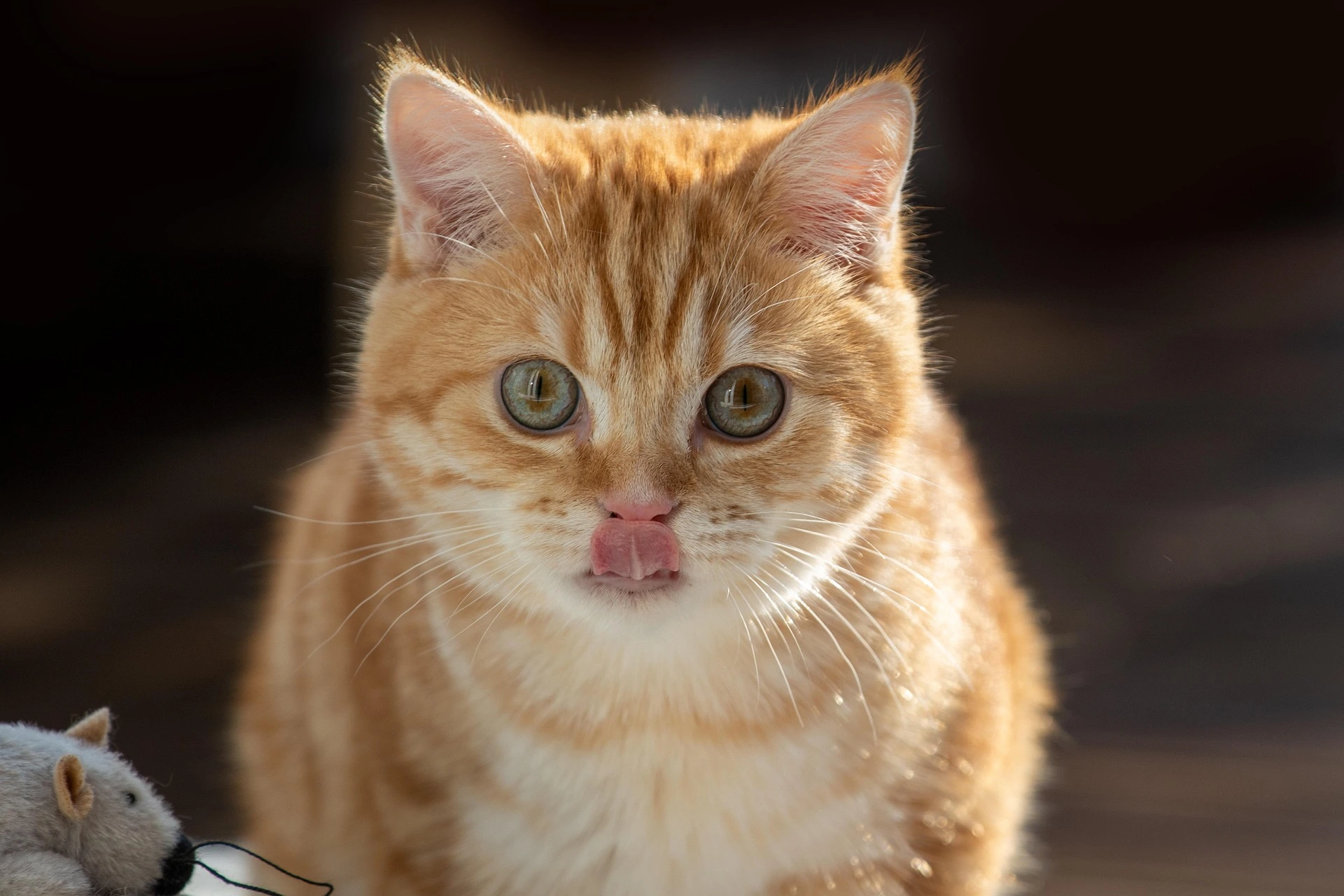
Can Cats Eat Pineapple? Yes, Full Safety Guide
Picture this: you’re cutting up a fresh pineapple for a smoothie, and your cat suddenly appears, sniffing intently at the cut rings like they’ve never smelled anything so interesting. If you’ve had a moment like that and typed cat ate pineapple into a search bar in a slight panic, you can relax, the direct answer to can cats eat pineapple is yes, fresh and ripe pineapple is non-toxic and safe in small amounts. For the full picture of what else belongs on the safe list, our what can cats eat guide is worth bookmarking, and we’ll dig into pineapple specifically here.
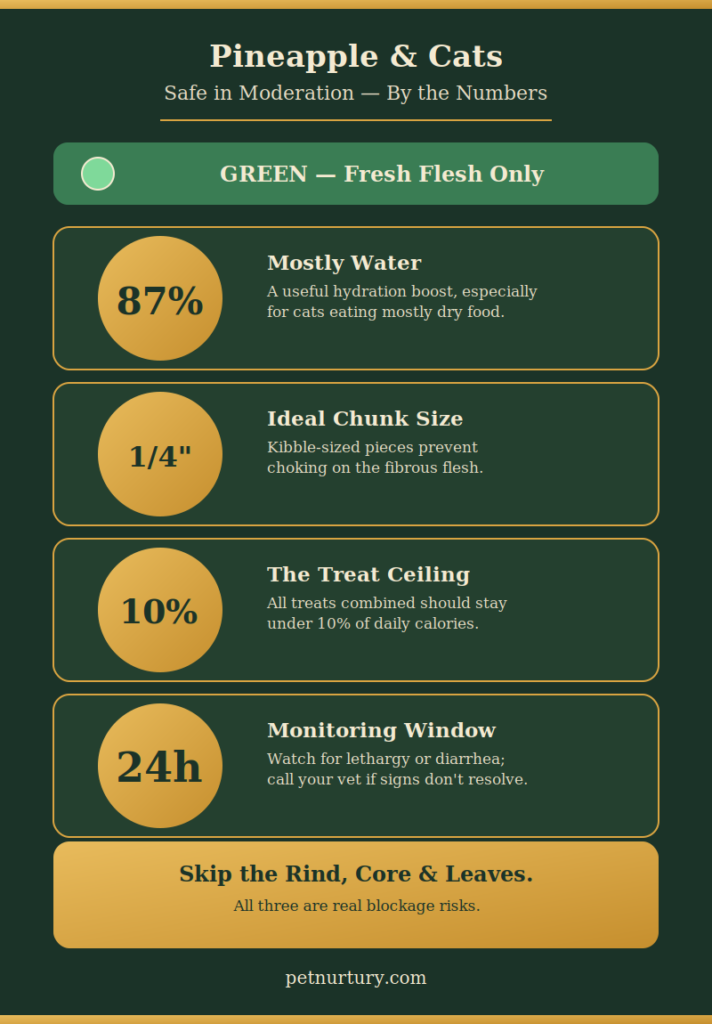
Table of Contents
Does Your Cat Actually Need Pineapple?
Cats are obligate carnivores, so pineapple isn’t a necessary part of their diet no matter how many vitamins it contains. Here’s the unexpected fact most owners don’t know: most cats lack the taste receptors to perceive sweetness at all, so if your cat is genuinely interested in pineapple, it’s almost certainly curiosity or that distinctive fibrous texture drawing them in, not the sugar.
That said, pineapple does bring some real nutritional perks. It’s a genuine vitamin source, containing Vitamin A, B6, and C, along with folate, magnesium, and manganese. At roughly 87% water, it can offer a small hydration boost, especially useful for cats who mostly eat dry food.
The fiber content can support healthy digestion and may even help with mild constipation, and fresh pineapple is naturally low in fat compared to a lot of other human snacks you might be tempted to share.
The Enzyme Question: Is Pineapple Toxic to Cats?
Short answer: no, pineapple toxic to cats is a myth as far as the fruit itself goes, but there’s real nuance worth understanding. Pineapple contains bromelain, an enzyme that helps break down protein and may actually benefit cats with sensitive stomachs in small doses.
In larger amounts, though, bromelain can cause a tingling sensation or oral irritation, and it can upset the digestive system if your cat overdoes it. Pineapple also contains actinidin, an enzyme that’s a known allergen for some cats, so it’s worth watching for any unusual reaction the first time you offer a taste.
Real Risks Worth Knowing About
Is pineapple safe for cats in every form and amount? Not quite, a few risks are worth flagging. The natural sugar content, if given frequently, can contribute to obesity, diabetic complications, and tooth decay over time. Too much fiber or sugar in one sitting is the most common cause of cat pineapple diarrhea, along with vomiting if your cat’s system reacts poorly.
The rind, hard core, and leaves are all difficult to digest and pose a real intestinal blockage risk if swallowed. And if you’ve ever grabbed an unripe piece by mistake, know that unripe pineapple is highly acidic and can cause genuinely severe gastric distress.
Condition-specific warning: diabetic cats should never eat pineapple due to the risk of dangerous blood glucose spikes. Obese cats are better off skipping fruit treats entirely to avoid unnecessary calories, kittens have developing digestive systems that are often too sensitive for high-fiber treats like this one, and cats managing inflammatory bowel disease may find that the fiber and acidity trigger a flare-up.
Processed Pineapple: The Big No List
Fresh is the only form worth offering. Canned pineapple often comes packed in heavy syrup with added sugar and preservatives that aren’t good for your cat. Pineapple juice is too sugar-concentrated and lacks the fiber that makes the whole fruit worthwhile in the first place.
Dried pineapple is both a choking hazard and a concentrated sugar bomb. And pineapple found in pizza, cake, smoothies, or yogurt should be avoided entirely, since those come loaded with butter, flour, dairy, and other additives that cause their own problems.
How to Serve It Safely
Wash the exterior thoroughly before cutting, and remove all leaves, skin, thorns, and the tough inner core completely, none of that is digestible. Dice the flesh into kibble-sized chunks, roughly a quarter-inch, to prevent choking.
Stick to the 10% rule: all treats combined should make up less than 10% of your cat’s daily caloric intake. Start with just one or two small pieces and monitor your cat closely before offering more.
Monitoring and Emergency Care
Watch for lethargy, decreased appetite, bloating, or persistent diarrhea after your cat’s first taste. As a general rule, monitor for 24 hours, and if symptoms haven’t resolved by then, contact your veterinarian.
Seek immediate emergency help if your cat consumes the rind, core, or a large quantity of leaves, these are genuine blockage risks that need prompt attention rather than a wait-and-see approach.
Safer Fruit Alternatives
If you’re looking for lower-sugar, less acidic options to round out the treat rotation, blueberries, cantaloupe, and seedless watermelon are all solid choices. It’s also worth checking out can cats eat mango, since it shares a similar tropical appeal with a comparable safety profile once peeled and pitted. For the complete rundown, our what fruits can cats eat guide covers the full safe list in one place.
FAQ
Is pineapple toxic to cats? No, fresh, ripe pineapple flesh is non-toxic in small amounts, though the rind, core, and leaves should always be avoided.
Why did my cat get diarrhea after eating pineapple? Cat pineapple diarrhea usually comes from too much fiber or sugar at once, stick to small portions and introduce it gradually.
Is pineapple safe for cats with diabetes? No, the natural sugar content can cause a dangerous blood glucose spike, so diabetic cats should avoid it entirely.
Can kittens eat pineapple? It’s best to wait, their digestive systems are often too sensitive for high-fiber treats like this one.
What happens if my cat eats the pineapple core or rind? Watch closely and contact your vet, since both are difficult to digest and pose a real intestinal blockage risk.
Can cats eat canned pineapple? No, canned versions typically contain added sugar and syrup that aren’t good for cats; fresh is always the better choice.