
Can Cats Eat Strawberries? Yes, Here’s How Much
Picture this: you’re hulling a bowl of fresh strawberries for a Saturday morning smoothie, and a stray slice rolls off the cutting board. Before you can grab it, your cat pounces, sniffs it, and gives it a curious lick. If you’ve found yourself in a moment just like that one, wondering can cats eat strawberries, you can breathe easy, the quick verdict is yes.
Strawberries are officially listed as safe for cats by the ASPCA, though they come with a “treat” caveat: safe doesn’t mean species-appropriate, so they should stay an occasional reward rather than a diet staple.
Table of Contents
Why Cats and Berries Are an Odd Match
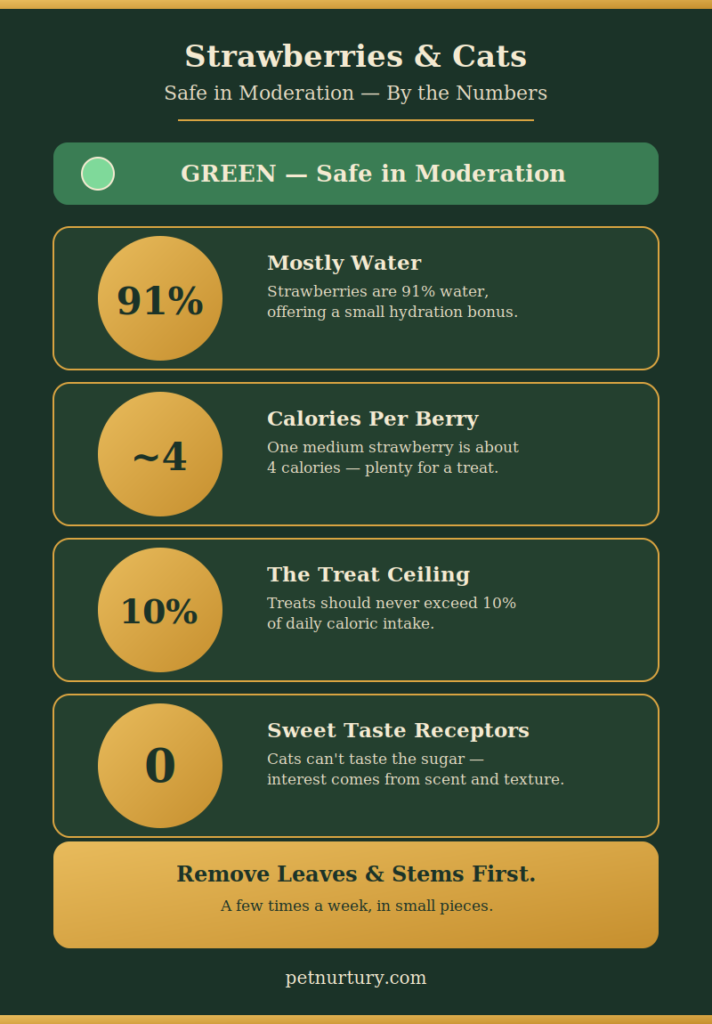
Cats are obligate carnivores, meaning their bodies are built to get essential nutrition from animal protein, not fruit. Here’s the unexpected fact most owners don’t know: cats physically lack the taste receptors to detect sweetness.
That strawberry flavor you love is completely lost on your cat, so if your cat is interested, it’s not because of a sugar craving. It’s usually the smell, the texture, or simple curiosity about whatever you’re eating that draws them in.
What’s Actually in a Strawberry (And Why It Doesn’t Matter Much)
Strawberries do contain genuinely good nutrients, Vitamin C, folate, potassium, manganese, fiber, and antioxidants, plus they’re about 91% water, which offers a small hydration bonus. But here’s the reality gap: a cat simply can’t eat enough strawberries to absorb a meaningful amount of these nutrients. Your cat’s regular commercial diet is already formulated to meet their nutritional needs, so think of any benefit here as a nice bonus, not a reason to offer more.
Risks Worth Knowing About
Strawberries are generally safe, but that doesn’t mean risk-free. Too much fiber or natural sugar can cause gastrointestinal upset, diarrhea, vomiting, abdominal pain, or gas. Even though your cat can’t taste the sugar, it still affects their body, contributing extra calories and potentially impacting blood sugar.
The leaves and stems are a separate hazard entirely: they’re difficult to digest and can pose a choking or obstruction risk, which is why prepping strawberries properly matters. Allergic reactions are rare but possible, watch for hives, itching, swelling, or difficulty breathing after a first taste, and stop offering strawberries immediately if you notice any of these.
If you ever see swelling, labored breathing, or repeated vomiting after your cat eats a strawberry, treat it as urgent and call your vet or an emergency animal clinic right away, allergic reactions can escalate quickly even though they’re uncommon.
When to Skip Strawberries Entirely
A few groups of cats are better off avoiding strawberries altogether. Diabetic cats should skip them, since even natural sugar can interfere with glucose management. Obese cats don’t need the extra treat calories on top of an existing weight concern.
Kittens need nutrient-dense growth food rather than fruit taking up room in a small stomach. And cats with generally sensitive stomachs are often better off skipping fruit entirely rather than risking a GI flare-up for a treat with no real nutritional necessity.
How to Serve Strawberries Safely
If your cat’s a good candidate for the occasional strawberry, keep it simple: wash the berry thoroughly to remove pesticide residue, remove all the green leaves and stem, and cut it into small, pea-sized pieces to prevent choking.
Stick to the 10% treat rule, treats of any kind shouldn’t exceed 10% of your cat’s daily calories, and in practice, that usually means one medium strawberry (roughly 4 calories) or less, offered a few times a week at most.
Processed Strawberry Products to Avoid
Fresh is the only form worth offering. Strawberry jam or jelly is loaded with added sugar, and dairy-based strawberry products like yogurt or ice cream can cause problems for cats who are lactose intolerant, on top of any artificial additives mixed in.
Never offer anything containing xylitol, chocolate, or artificial sweeteners, these are genuinely toxic regardless of the strawberry flavor attached. Canned or frozen strawberries packed in syrup should also stay off the menu.
Safer Alternatives Worth Trying
If you’re looking to round out your cat’s occasional treat rotation, watermelon (seedless) and cantaloupe are both good fruit options, or you could skip fruit entirely and offer cubed cooked chicken or turkey, a snack that’s actually closer to what your cat’s body is designed to eat.
On the flip side, it’s important to remember that not every fruit is automatically safe: can cats eat watermelon is a question that needs a more careful look, since even though watermelon isn’t toxic like some fruits, it still requires moderation and proper preparation before offering it to your cat.
FAQ
Are strawberries toxic to cats? No, strawberries are non-toxic and considered safe in moderation by the ASPCA.
Can kittens eat strawberries? It’s best to skip fruit for kittens, since their diet needs to stay focused on nutrient-dense growth food.
How many strawberries can my cat have? About one medium strawberry or less, a few times a week, staying within the broader 10% treat rule.
Can cats eat strawberry leaves or stems? No, remove them completely before offering any strawberry, since they’re a choking and digestion hazard.
My cat has diabetes, can they still have strawberries? It’s best avoided, since even natural sugar can complicate glucose management; check with your vet first.
What if my cat has an allergic reaction? Watch for hives, swelling, or difficulty breathing, and contact your vet or an emergency clinic right away if you see any of these signs.
If you’re exploring more fruit options, our what fruits can cats eat guide breaks down safety across the full list, and our what can cats eat page covers guidance across every food category.