Can Cats Eat Cucumbers? Benefits, Serving Ideas & Safety
If you’ve spent any time online, you’ve probably seen the videos, a cat eating peacefully, someone sneaks a cucumber onto the floor behind them, and the cat leaps sideways like the vegetable personally offended them.
It’s funny, it’s viral, and it’s also a completely different question from the one that actually matters here: can cats eat cucumbers? Yes, they can. Cucumbers (Cucumis sativus) are non-toxic and genuinely safe for cats in moderation, the internet’s startled-cat trend has nothing to do with the vegetable’s safety, and everything to do with instinct we’ll get into shortly.
Cucumber is just one small piece of the much bigger question of what can cats eat safely day to day. Worth saying upfront: cats are obligate carnivores, so cucumbers were never going to replace meat in their diet. What they can do is function as a light, occasional supplement, mostly valuable for one very specific reason.
Table of Contents
More Than Just Hydration
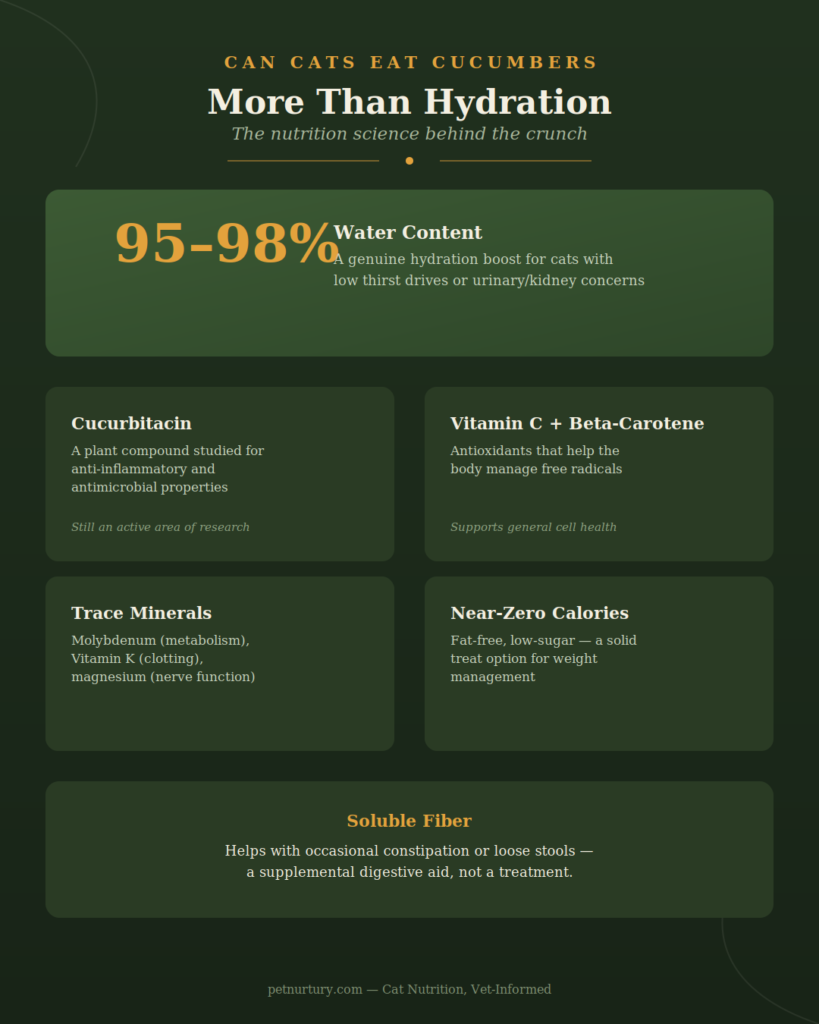
Cucumbers are roughly 95–98% water, which makes them one of the more genuinely useful vegetables for cats with a weak thirst drive, or those managing kidney or urinary issues where extra moisture actually matters clinically. A few thin slices mixed into a meal can nudge total water intake up without a cat even noticing they’re being hydrated.
There’s more going on chemically than most owners expect, too. Cucumbers contain cucurbitacin, a plant compound being studied for potential anti-inflammatory and antimicrobial properties, along with antioxidants like Vitamin C and beta-carotene that help the body manage free radicals.
They also carry trace minerals worth knowing about, molybdenum supports metabolic function, Vitamin K plays a role in blood clotting, and magnesium supports nerve function. None of this makes cucumber a superfood, but it does mean the vegetable is doing more than just sitting there being watery.
The fiber content is genuinely useful, too, enough to help with occasional constipation or loose stools. And because cucumber is nearly calorie-free, fat-free, and low in sugar, it’s a solid option if you’re managing a cat’s weight and want to offer something that feels like a treat without the caloric cost of richer alternatives.
Creative Ways to Serve It
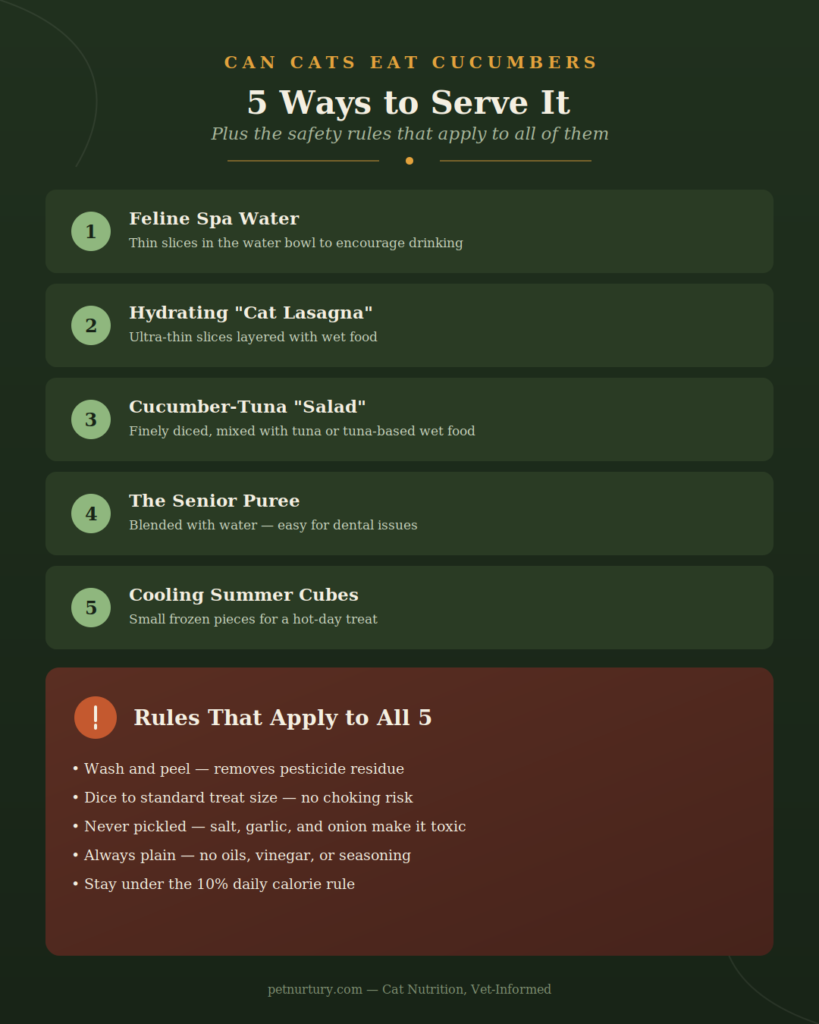
A few owners have found genuinely clever ways to work cucumber into a cat’s routine beyond just handing over a slice:
Feline spa water. Drop a few thin cucumber slices into the water bowl. The subtle taste and scent can make some cats more interested in drinking, which matters more than it sounds for cats who chronically under-drink.
Hydrating “cat lasagna.” Layer ultra-thin cucumber slices with a spoonful of high-quality wet food. It adds moisture and a bit of textural interest to a meal that might otherwise get eaten too fast to enjoy.
Cucumber-tuna “salad.” Finely dice cucumber and mix it with a small amount of canned tuna or tuna-based wet food, a savory combination a lot of cats respond to more readily than plain cucumber alone.
Purees for seniors. Blending cucumber with a little water makes a smooth, easy-to-eat option for older cats or those with dental issues.
Frozen summer cubes. Small frozen cucumber pieces make a refreshing, low-effort treat on hot days, cats who like batting things around sometimes enjoy the texture as much as the taste.
Why Cats Get So Startled by Cucumbers
The viral videos deserve a real explanation, because the reaction is more interesting than just “cats are funny.” One theory holds that a cucumber’s shape and coloring vaguely resemble a snake, potentially triggering a hardwired instinct to avoid reptilian predators.
A simpler explanation is just the anatomy of a startle response, a cat deeply focused on eating suddenly notices an unfamiliar object has appeared right behind them, and reacts the way most animals do to a sudden, unexplained presence.
Either way, it’s worth saying plainly: intentionally scaring a cat with a cucumber for the sake of a video isn’t harmless fun. Repeated startling causes real, chronic stress and can damage the trust between a cat and their owner. If you’re curious about the effect, satisfy that curiosity by reading about it, not by staging it.
The Safety Protocol
Wash and peel. This removes pesticide residue on non-organic skins and makes the cucumber easier to digest, especially for cats with sensitive stomachs.
Dice precisely. Cut pieces to a standard treat size, small enough to eliminate any choking risk.
Skip the pickles entirely. Pickled cucumbers are a hard no, the salt content alone is a problem, and most pickling recipes include garlic or onion, both genuinely toxic to cats regardless of the small amount typically present.
Keep it plain. No oils, vinegars, or seasoning of any kind. Cucumber’s appeal to a cat is in its texture and mild taste, not in anything added to it.
Stick to the 10% rule. Cucumbers, like any supplemental treat, should stay under 10% of daily caloric intake. Given how low-calorie cucumber already is, this is one of the easier rules to follow.
Bringing It All Together
Start any new food with a single bite-sized piece and watch for 24 hours, mild digestive upset or a lack of interest is normal, but repeated vomiting or diarrhea means it’s time to stop and check with your vet.
Beyond cucumber, plenty of owners exploring what vegetables can cats eat also look into watermelon, blueberries, cooked carrots, or whether cats can eat pumpkin, another famously gut-friendly option that pairs well with cucumber in a rotating lineup of safe, hydrating treats.
Cucumber isn’t going to transform a cat’s diet, and it was never meant to. What it offers is a low-risk, high-water way to add a little variety to an otherwise meat-focused life, which, for an obligate carnivore, is really all a vegetable needs to do.