Can Cats Eat Leeks? Leek Poisoning Explained
Picture this: you’re making a pot of potato-leek soup on a Sunday afternoon, and a few chopped rings of leek land on the floor while you’re transferring them to the pot. Your cat, always hovering during dinner prep, sniffs one and gives it an exploratory lick before you can scoop it up.
It’s a five-second moment that a lot of owners wouldn’t think twice about. But if you’ve ever found yourself wondering can cats eat leeks after a scene just like that, the honest verdict is no, leeks are categorically toxic and unsafe for cats in every form: raw, cooked, dried, or powdered.
This is one of those situations where the “golden hour” really matters. If ingestion is suspected, contact a veterinarian immediately rather than waiting to see if symptoms show up, because by the time they do, meaningful damage may already be underway.
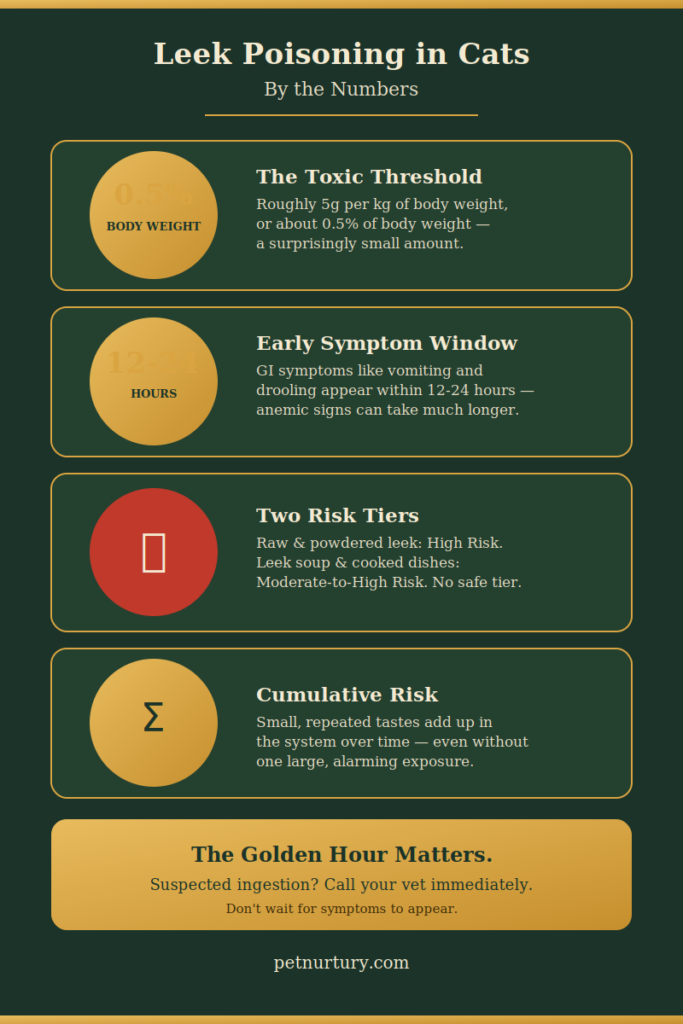
Table of Contents
The Science: How Leek Poisoning in Cats Actually Works
Leeks belong to the Allium family, the same group that includes onions, garlic, and chives, all of which share the same underlying danger. Leeks contain thiosulfates and N-propyl disulfide, compounds that cause oxidative damage to red blood cells.
That damage leads to Heinz body anemia, a form of hemolytic anemia where red blood cells are destroyed faster than a cat’s body can replace them. Cats are more sensitive to this than most other animals because of their unique metabolism, they lack the specific enzymes needed to break these toxins down efficiently.
This is exactly the mechanism that veterinary toxicology resources like the ASPCA Animal Poison Control Center and AVMA point to when they list the entire onion-garlic-leek-chive family as hazardous for cats.
The Unexpected Part: How Little It Actually Takes
Here’s the fact that catches most owners off guard: toxicity can occur at roughly 5 grams per kilogram of body weight, or as little as 0.5% of a cat’s body weight, which, for an average cat, is a surprisingly small amount of leek. And it doesn’t have to happen all at once.
Are leeks toxic to cats even in small, repeated tastes? Yes, this kind of poisoning is cumulative, meaning small amounts eaten over days or weeks can build up in the system and still cause significant blood changes, even if no single incident seemed alarming at the time.
Kittens and smaller cats face even higher risk here, simply because their lower body mass means the same amount of leek represents a proportionally larger dose. If you have a kitten, a senior cat, or a cat managing diabetes or kidney disease, treat any suspected exposure as more urgent than you would for an otherwise healthy adult, those cats have less physiological reserve to absorb the added stress of toxin exposure and anemia.
Symptom Roadmap: Early Signs to Critical Failure
In the first 12 to 24 hours, watch for drooling, vomiting, diarrhea, abdominal pain, and nausea. These early signs are often mistaken for a routine stomach bug, which is part of what makes leek poisoning so easy to miss early on.
As things progress into the intermediate stage, look for lethargy, weakness, pale or white gums, and an increased heart or respiratory rate. Left unaddressed, this can advance to late-stage, critical symptoms: discolored reddish or brown urine, jaundice, difficulty breathing, and collapse. This is a genuine emergency at that point, not a wait-and-see situation.
Emergency Protocol
If your cat has eaten leek in any form, remove any remaining plant material from their reach right away, and if possible, bring a sample of the food to the clinic, it helps your vet assess exposure quickly. Call your vet or animal poison control immediately.
At the clinic, treatment often includes inducing vomiting and administering activated charcoal to absorb remaining toxins, along with supportive care like IV fluids and oxygen therapy. In cases of severe anemia, a blood transfusion may be necessary. Cats are frequently hospitalized for a period afterward so vets can run ongoing blood work and confirm red blood cell levels are stabilizing before sending them home.
Fact-Checking the “Benefits” Myth
You may come across sources online pointing out that leeks contain Vitamin K, Vitamin C, and fiber, technically true, and genuinely healthy for humans. But the veterinary consensus is clear: whatever nutritional upside leeks might offer, the toxicity risk for cats completely outweighs it. Cats are obligate carnivores; they don’t need plant-based fiber or vitamins from leeks to thrive, so there’s no nutritional trade-off worth making here.
Safe Snack Alternatives and Prevention
For safer options, small amounts of cooked, plain pumpkin, carrots, or cucumber are good choices, along with unseasoned cooked chicken, turkey, or fish as high-protein treats. A balanced commercial cat food should remain the core of your cat’s diet either way.
To prevent accidental exposure, store Allium vegetables in sealed containers or cupboards your cat can’t access, fence off any home vegetable patch where leeks are grown, and make sure everyone in the household, including guests and pet sitters, knows to avoid sharing table scraps that might contain leek powder or seasoning.
FAQ
Are leeks toxic to cats even in small amounts? Yes, toxicity is dose-dependent but cumulative, so repeated small exposures can add up over time.
How quickly do symptoms of leek poisoning appear? Early gastrointestinal signs often show up within 12 to 24 hours, but more serious anemic symptoms can take longer to develop.
Is leek soup safer than raw leek? No, cooked leek dishes like soup are still considered Moderate-to-High Risk, since cooking doesn’t neutralize the toxic compounds.
Can one bite of leek really hurt my cat? It depends on the amount relative to body weight, but there’s no officially “safe” amount, so it’s best treated as a real risk every time.
What should I do if my cat just licked a leek and seems fine? Call your vet anyway, symptoms can be delayed, so early guidance is safer than waiting to see what develops.
Are leeks more or less dangerous than onions or chives? All Allium family members, including can cats eat chives questions, carry the same core toxicity mechanism, none of them are safer alternatives to each other.
If you’re building out a full picture of safe produce, our guide on what vegetables can cats eat covers every common option in detail, and our what can cats eat pillar page rounds up safety guidance across every food category.