Can Cats Eat Pumpkin? Expert Guide to Benefits, Digestion & Dosage
If you’ve spent any time in cat forums or vet waiting rooms, you’ve probably heard someone recommend pumpkin for a cat’s upset stomach. It’s not an old wives’ tale, plain pumpkin has genuine backing from veterinary nutrition.
So can cats eat pumpkin? Yes, and it’s one of the rare vegetables that actually earns the reputation it has. Some vets describe it as close to a gastrointestinal wonder food for cats, which is a strong claim for something that started out as an ordinary garden squash.
Pumpkin has been part of human diets for roughly 9,000 years, originating in Mexico, and despite how it’s used in cooking, it’s botanically a berry from the squash family.
For cats, what matters most is anatomy: the flesh (or pulp) is the useful, digestible part, while the rind, stem, and raw seeds fall into a completely different category of risk. Understanding that distinction is most of what you need to use pumpkin well.
Table of Contents
The Micronutrient Case for Pumpkin
Pumpkin flesh carries a genuinely useful nutrient profile. Vitamin C and beta-carotene function as antioxidants, helping protect cells from damage over time. Vitamin A supports eyesight and bone growth, while zinc and vitamin E contribute to skin and coat quality.
Potassium supports heart, nerve, and muscle function, a detail that matters more than usual for cats managing kidney disease, where maintaining electrolyte balance can be a real challenge. Iron, folate, and magnesium round things out, supporting blood cell production and nerve health.
None of this makes pumpkin a multivitamin replacement, but it does explain why it shows up so consistently in conversations about what vegetables can cats eat as a genuine value-add rather than just a novelty treat.
Why Pumpkin Is So Good for Digestion
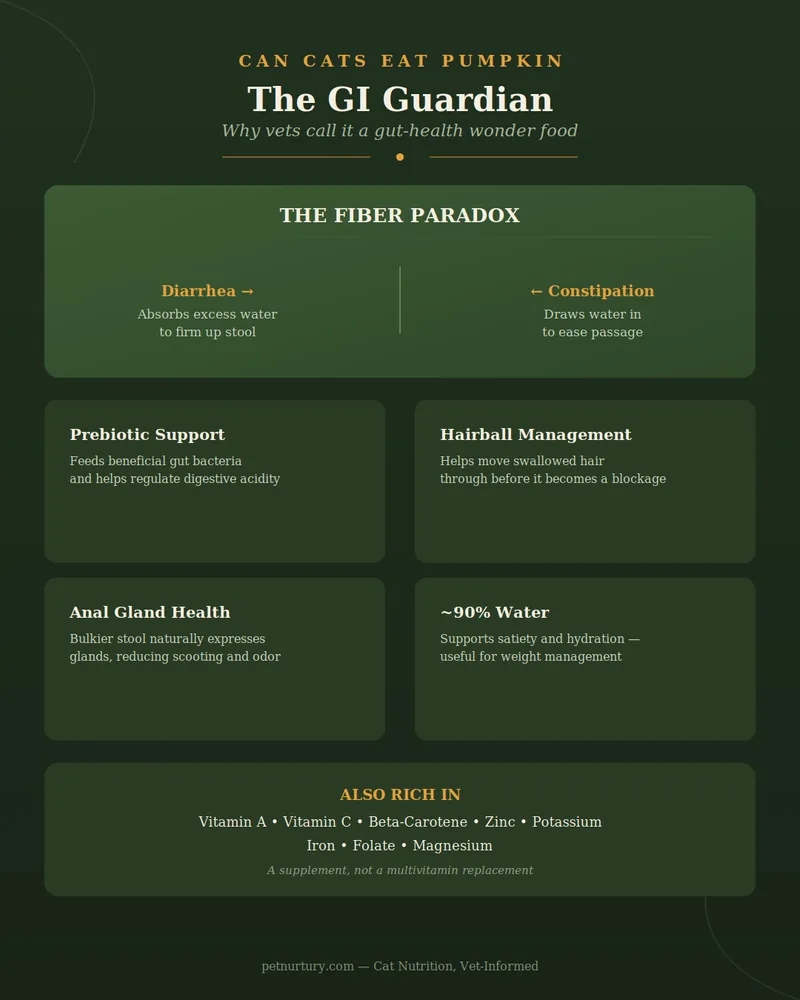
The real reason pumpkin gets recommended so often comes down to its soluble fiber, which works in both directions depending on what a cat needs. It absorbs excess water to help firm up diarrhea, and it draws water into the intestines to help ease constipation, the same ingredient solving two opposite problems depending on the situation.
That fiber also acts as a mild prebiotic, feeding the beneficial bacteria in a cat’s gut and helping regulate digestive acidity. It plays a physical role too, helping move swallowed hair through the digestive tract before it can turn into a hairball or, worse, a blockage.
There’s a less-discussed benefit as well: bulkier stool helps naturally express anal glands during normal bowel movements, which can reduce the scooting and odor issues some cat owners deal with regularly.
A Tool for Weight Management
Pumpkin is roughly 90% water and high in fiber, which makes it genuinely useful for satiety, cats can feel fuller on fewer calories. For cats working on weight loss under veterinary guidance, substituting a small portion of regular food with plain pumpkin is a common, low-risk strategy to help manage intake without leaving a cat feeling shortchanged at mealtime.
If you’re building out a rotation of low-calorie treats, the answer to can cats eat cucumbers is also yes, cucumber brings similar hydration benefits with even fewer calories, making the two a natural pair for weight-conscious feeding.
The Seeds Deserve Their Own Mention
Pumpkin seeds carry compounds, including cucurbitacin, that have been studied for their ability to disrupt intestinal parasites like tapeworms, though seeds shouldn’t be treated as a substitute for actual deworming treatment. They’re also rich in oleic and alpha-linolenic acids, which support skin, coat, and immune health.
The catch: whole seeds are a choking hazard and shouldn’t be given as-is. If you want to offer them, they need to be rinsed, roasted, and ground into a fine powder before going anywhere near your cat’s food.
Where Pumpkin Turns Risky
Pie filling is off-limits, always. Canned pumpkin pie filling typically contains nutmeg, which is toxic to cats, and sometimes xylitol, an artificial sweetener that’s lethal even in small amounts. Plain canned pumpkin puree, nothing else on the label, is the only version that belongs anywhere near a cat’s bowl.
Rinds, skins, and stems are physical hazards, not nutritional ones. Raw rind is indigestible and can cause choking or blockage, and stems are covered in small, sharp hairs capable of causing micro-cuts inside a cat’s digestive tract.
Kittens under 16 weeks should skip it entirely. Their gut microbiome is still developing, and introducing extra fiber too early can do more harm than good.
How Much to Actually Feed
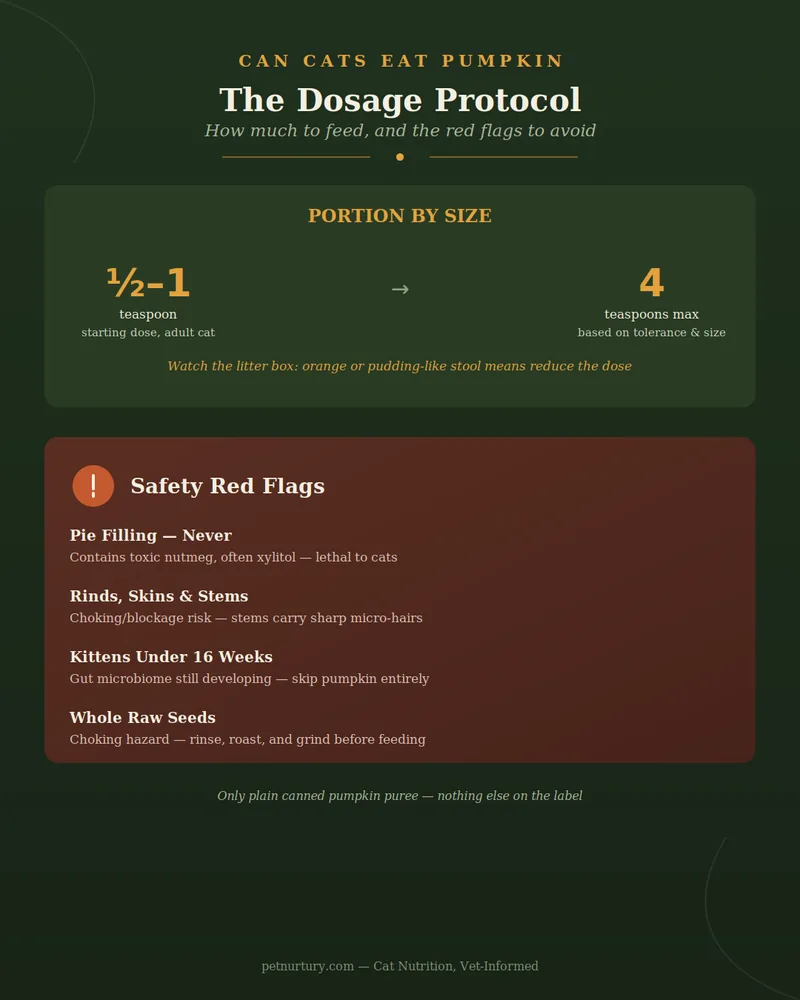
Start small, half a teaspoon to one teaspoon for an adult cat, and increase gradually up to about four teaspoons based on tolerance and size. Watch the litter box as your guide: if stool turns orange or takes on a pudding-like consistency, that’s a sign you’ve exceeded your cat’s fiber tolerance, and it’s time to scale back.
Plain canned pumpkin puree can be fed straight off the spoon, mixed into wet food, or blended with a little plain Greek yogurt and frozen into small cubes for a warm-weather treat. Extra canned pumpkin keeps well refrigerated or frozen, so there’s no need to waste an open can.
The Bottom Line
Pumpkin is one of the more genuinely useful answers to the broader question of what vegetables cats can eat, but it’s still a supplement, not a substitute for a complete, balanced diet.
If your cat has an existing condition like diabetes or kidney disease, or if you’re generally still sorting out what can cats eat safely alongside their regular food, loop in your veterinarian before adding pumpkin into the rotation.
For most healthy adult cats, though, a small spoonful of plain pumpkin is about as close to a genuine home remedy as the vegetable world gets.