How Do Dogs Mate? The Complete Guide to Canine Reproduction
If you’re a pet owner, breeder, or simply curious about canine biology, understanding how do dogs mate is essential knowledge. How do dogs mate might seem like a straightforward biological question, but the process is far more complex and fascinating than many people realize. From the initial hormonal triggers to the copulatory tie that leaves owners puzzled, how do dogs mate involves intricate biological systems working in perfect harmony.
Whether you’re planning to breed your dog responsibly or simply want to understand how dogs mating actually works, this comprehensive guide will walk you through every stage of the process. Understanding how do dogs mate helps responsible pet owners make informed decisions about their dogs’ reproductive health and care.
Table of Contents
The Biological Framework: How Dogs Mate at the Cellular Level
Hormones Orchestrating the Mating Dance
How do dogs mate begins long before physical contact—it starts with powerful hormonal signals. Understanding how dogs mating begins requires knowing the hormones that drive the entire process.
Testosterone in males initiates the cascade. This powerful hormone drives sexual motivation, triggers mounting behaviors, and creates the intensity that characterizes male pursuit during how do dogs mate. When a male dog detects a female in heat, testosterone surges, making him restless, obsessed with tracking the female’s scent, and determined to locate her.
Estrogen in females creates the opposite effect: receptivity. This hormone transforms the female dog’s behavior and body, preparing her for successful mating. Estrogen triggers the initial stages of the heat cycle and makes dogs mating possible by creating both the physical and behavioral changes necessary for how do dogs mate to succeed.
Luteinizing Hormone (LH) surges at the peak of the female’s fertile window, triggering ovulation. This timing is crucial—it determines the exact window when dogs mating will result in successful fertilization.
Progesterone rises after ovulation, preparing the female’s body for potential pregnancy. Understanding these hormones explains why dogs mating follows such a specific, predictable pattern.
Specialized Anatomy: The Physical Foundation
Understanding how do dogs mate requires understanding specialized reproductive anatomy. The male’s bulbus glandis—a unique bulbous structure at the base of the penis—is the key to explaining how dogs stuck together during the copulatory tie. This gland swells with blood during arousal, eventually swelling to 2-3 times its normal size. When penetration occurs, this enlarged structure gets locked inside the female’s vagina, creating the famous “tie” that characterizes how dogs mating appears to observers.
The female’s reproductive anatomy is equally specialized. Her vaginal muscles contract rhythmically during mating, further securing the tie and helping transport seminal fluid toward the cervix. This is how dogs mating ensures maximum reproductive success—the physical mechanism works in tandem with hormonal signals.
The Heat Cycle: When Dogs Are Ready to Mate
Understanding Female Fertility Cycles
How do dogs mate is tightly controlled by the female’s heat cycle. Females don’t mate randomly throughout the year; instead, they enter predictable fertility cycles. Most females experience heat twice yearly, though frequency varies by breed and individual.
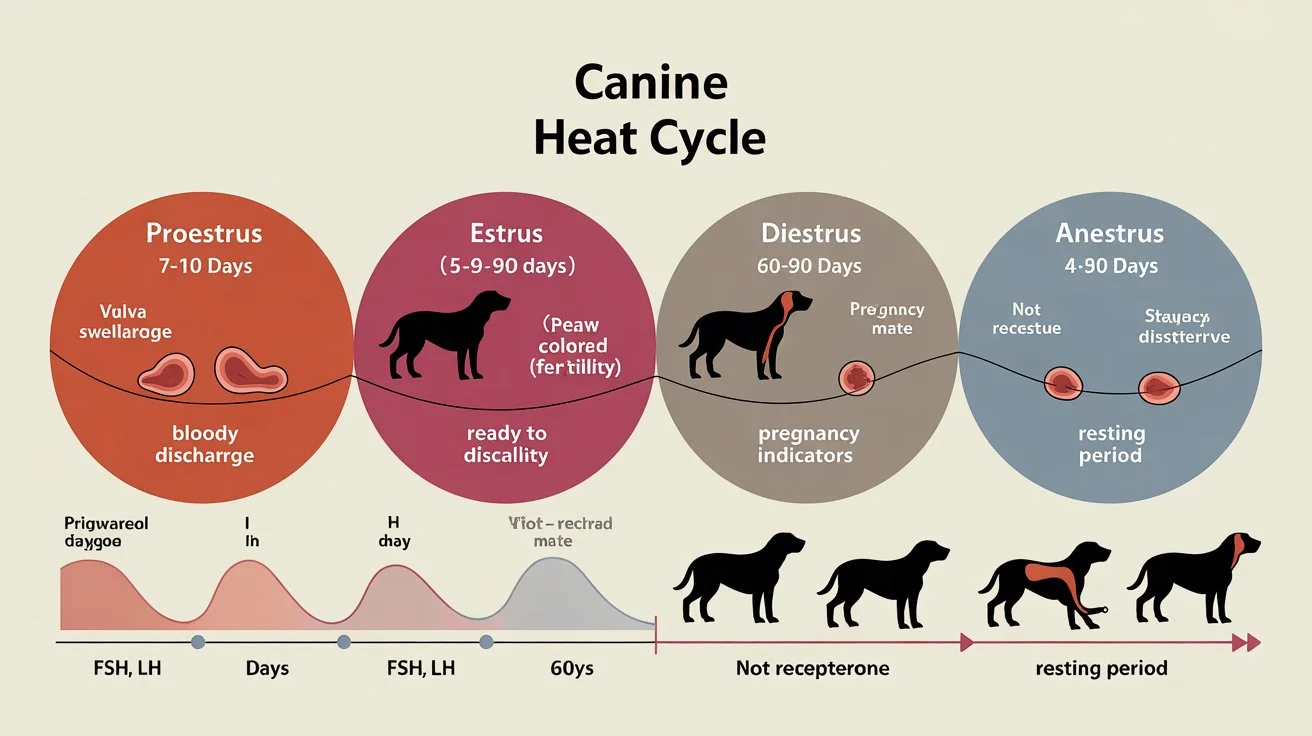
The heat cycle consists of four distinct stages:
Proestrus (Days 0-10): The female’s vulva swells and she experiences a bloody discharge. During this stage, males are intensely interested, but the female isn’t ready to mate yet. She’ll reject mounting attempts. This is nature’s way of ensuring how do dogs mate occurs at the optimal time.
Estrus (Days 10-14): This is the peak fertility window when dogs mating actually occurs. The discharge changes from bloody to straw-colored or clear. The female becomes receptive and will allow males to mount. This is when how do dogs mate successfully results in conception. Most matings happen during this 4-5 day window.
Diestrus (Days 14-100+): The female either becomes pregnant or enters a recovery period. During diestrus, the female firmly rejects mating attempts. She’s no longer interested in how dogs mating works because the fertile window has passed.
Anestrus: The rest period between heat cycles, typically lasting several months.
Understanding this cycle is crucial for anyone wondering how do dogs mate because timing determines everything—whether mating happens, whether conception occurs, and whether dogs mating results in healthy puppies.
Recognizing Mating Readiness: Physical and Behavioral Signs
Female Indicators: “Flagging” and Other Signals
When females are ready to mate, their bodies send unmistakable signals that explain how do dogs mate so effectively in nature. The vulva becomes dramatically enlarged—swelling to 2-3 times its normal size. This visual cue, combined with the change in discharge color from red to pale pink or straw-colored, signals that the female is fertile.
The most critical sign is called “flagging”—when the female is truly ready for how do dogs mating to occur, she’ll pull her tail to one side, exposing her vulva. This isn’t a random behavior; it’s the female’s biological invitation to mate. When you observe flagging, you’re witnessing the precise moment when how do dogs mate can successfully result in conception.
Females in heat also show behavioral changes: increased restlessness, frequent urination, and heightened affection toward their owners. These behavioral shifts accompany the physical changes that make how dogs mating possible.
Male Indicators: Driven by Scent and Instinct
Males read these signals with remarkable precision, explaining why how do dogs mating works so reliably in nature. A male can detect a female in heat from incredible distances—sometimes over a mile away. Once he detects the scent, his behavior changes dramatically.
The male becomes obsessive about the female’s location. He’ll mark territory with urine more frequently, become restless, refuse food, and single-mindedly pursue the female. When he finally locates her, he’ll engage in intense sniffing and licking of her vulva, stimulating further arousal. This courtship period, though brief, is essential to understanding how do dogs mate—it builds arousal and ensures timing is correct when dogs mating finally occurs.
The Mating Process: Step-by-Step
Courtship: The Prelude to Mating
Before how do dogs mate actually occurs, there’s a courtship phase. The female releases pheromones through her urine and vaginal secretions. These chemical signals attract males and communicate her fertility status—essentially announcing “this is the optimal time for how do dogs mating.” The male, detecting these pheromones, becomes intensely focused on the female.
When the male approaches, mutual investigation occurs. They sniff each other, and the male becomes increasingly aroused. This is nature’s way of ensuring how do dogs mate happens when conditions are optimal.
Mounting and Penetration: The Physical Act
When the female is receptive (flagging), the male positions himself behind her, placing his front legs on her back. He adjusts his position, seeking alignment. Penetration follows, and he begins thrusting. This is where how do dogs mating transitions from courtship to the actual reproductive act.
The male’s thrusts are rapid and intense—serving to stimulate the female’s vaginal muscles and position his penis for optimal sperm delivery. During penetration, the bulbus glandis begins to swell, creating the mechanism that leads to the copulatory tie.
The Copulatory Tie: How Dogs Get Stuck Together
This is the most distinctive and commonly misunderstood part of how do dogs mate. After several minutes of thrusting and ejaculation, the male’s bulbus glandis becomes fully engorged—swollen to several times its normal size. Simultaneously, the female’s vaginal muscles contract involuntarily around the male’s penis.
The result? Dogs stuck together in what’s called the copulatory tie or “lock.” This isn’t an accident or injury—it’s a crucial part of how do dogs mating evolved to ensure reproductive success. The tie locks the male in place, preventing withdrawal and ensuring seminal fluid remains in the female’s reproductive tract.
Duration: The tie typically lasts 10-45 minutes, though occasionally extends longer. During this time, how do dogs mate continues to work—the male continues to ejaculate while locked with the female, maximizing the chances of successful conception.
Critical Safety Note: Never attempt to separate dogs stuck together. Pulling can cause severe injury to both dogs’ reproductive organs. Instead, stay calm, keep the environment quiet, and allow the tie to release naturally.
Essential Health Considerations for Breeding
Pre-Breeding Health Requirements
Before how do dogs mate occurs responsibly, both dogs must be thoroughly evaluated. Responsible breeding means how do dogs mating should only happen between healthy, genetically screened dogs.
Genetic screening tests for breed-specific conditions. Both dogs should have results proving they don’t carry genes for hip dysplasia, elbow dysplasia, eye diseases, or heart conditions.
Physical exams ensure both dogs are in excellent health. The female should be at her ideal body weight—neither overweight nor underweight—as these conditions can interfere with how do dogs mate successfully.
Breeding age matters significantly. Females should be at least 2 years old and fully mature before how do dogs mating is attempted. Males should similarly be mature and physically developed.
Optimal Mating Environment
How do dogs mate successfully requires the right environment. Here’s what responsible breeders know:
- Choose a quiet, familiar location where the female feels secure. Stress and “performance anxiety” can prevent how do dogs mate from happening naturally.
- Maintain comfortable temperatures. Extreme heat or cold disrupts mating behavior and can make dogs mating difficult or impossible.
- Limit observers. A quiet environment encourages natural how do dogs mating to proceed smoothly.
- Allow adequate time. Don’t rush the process. How do dogs mate can’t be hurried.
Post-Mating Care and What to Expect
Immediate Aftercare
After the tie releases and dogs stuck together are finally separated, both dogs need rest and recovery. Provide access to fresh water immediately—both dogs will be thirsty after the physical exertion of mating.
Separate the dogs and allow them to rest in cool, comfortable areas. The male should be returned to his normal environment. The female should rest quietly—movement and activity immediately post-mating can interfere with conception.
Monitoring for Pregnancy
After how do dogs mate has occurred, monitor the female for early pregnancy signs:
- Loss of appetite within 3-7 days
- Changes in behavior—some females become more affectionate, others more reserved
- Breast development after 3-4 weeks
- Abdominal enlargement visible by week 4-5
A veterinary consultation within two weeks of mating is recommended. Ultrasound can confirm pregnancy and help estimate litter size.
Managing First-Time Females
Inexperienced females may become anxious during the tie, thrashing or trying to escape. This can cause serious injury to both dogs. If your first-time female becomes panicked:
- Stay calm—your calm demeanor helps her stay calm
- Keep the environment quiet—minimize stimulation
- Reassure her gently—talking in soft tones can help
- Never pull the dogs apart
Understanding how do dogs mate includes recognizing that first-time females need patience and reassurance.
Responsible Breeding Standards and Ethics
Age and Frequency Guidelines
Responsible breeders understand that how do dogs mating should be carefully controlled and limited. Females shouldn’t breed until at least 2 years old. More importantly, how do dogs mate should be limited in frequency.
Optimal recommendations:
- Limit females to 3-4 litters in their lifetime
- Allow 1-2 years between litters to let the female’s body recover
- Retire females after age 7-8, regardless of how many litters she’s produced
How do dogs mate when limited responsibly ensures the health and longevity of breeding dogs.
The Ethics Beyond Biology
Understanding how do dogs mate biologically is just the starting point. Responsible breeding means:
- Genetic diversity over aesthetic preferences
- Health testing before how do dogs mating is attempted
- Proper vetting of prospective buyers
- Health guarantees for puppies
- Willingness to take back any dog if the situation changes
Breeding should never be about profit. How do dogs mating should only occur within the context of a genuine commitment to improving the breed and ensuring healthy, happy puppies.
Conclusion: Knowledge Supports Responsible Ownership
How do dogs mate is far more than a simple biological process—it’s a complex interplay of hormones, anatomy, behavior, and timing that has evolved over thousands of years. Understanding how do dogs mating works, recognizing the signs that indicate fertility, and knowing how to support the process safely are essential skills for anyone responsible for a dog’s reproductive health.