
Best Cat Food for Kidney Disease with Low Phosphorus: A Vet-Backed Feeding Guide
It’s 2 AM on a Tuesday, and you’re staring at your veterinarian’s bloodwork summary. Your eight-year-old tabby, Whiskers, has been drinking more water lately and visiting the litter box constantly and now you know why. Chronic kidney disease (CKD). Your first thought: Is this the end?
Here’s what your vet might not emphasize enough: it’s not.
While kidney disease cannot be reversed, it can be managed sometimes remarkably well. Cats diagnosed with CKD and switched to a specialized renal diet often live 2-3 additional years with a good quality of life, compared to those continuing standard diets. This isn’t wishful thinking; it’s documented in veterinary literature and confirmed by thousands of cat owners who’ve navigated this journey.
The single most powerful tool you control at home isn’t medication or supplements, it’s nutrition.
The cornerstone of kidney disease management is phosphorus restriction. When kidney function declines, your cat’s body loses the ability to filter excess phosphorus from the bloodstream. This mineral buildup triggers a cascade of problems: increased uremia (toxin buildup), loss of appetite, lethargy, and accelerated kidney deterioration. A diet formulated with controlled phosphorus levels can interrupt this cycle and dramatically slow disease progression.
This guide walks you through choosing the best cat food for kidney disease with low phosphorus, comparing prescription and over-the-counter options, and implementing feeding strategies that actually work because understanding the why behind the recommendation helps you stick with it when your cat pushes back.
Table of Contents
Why Phosphorus Restriction is the 1 Priority in Kidney Management
The Biological Crisis: Understanding Phosphorus Buildup
A healthy kidney filters waste products, including excess minerals like phosphorus. But in CKD cats, the nephrons (functional kidney units) gradually fail. As filtration capacity drops, phosphorus accumulates in the bloodstream a condition called hyperphosphatemia.
This isn’t just a lab number. High blood phosphorus feels awful to your cat:
- Nausea and appetite loss
- Bone pain and lethargy
- Mental confusion (“Why is my cat staring at the wall?”)
The Accelerating Cascade: Renal Secondary Hyperparathyroidism
Here’s where it gets worse. Elevated phosphorus triggers the parathyroid glands to overproduce parathyroid hormone (PTH), which strips calcium from bones and further damages kidney tissue. This creates a vicious cycle: higher phosphorus → more PTH → faster kidney destruction → even higher phosphorus.
Phosphorus control breaks this cycle.
Clinical Targets: What Your Vet Is Aiming For
- Early-stage CKD (IRIS Stage 2): Below 0.6% phosphorus (dry matter basis)
- Advanced CKD (IRIS Stages 3-4): Below 0.5% phosphorus
- Prescription therapeutic diets: Often formulated to 0.2-0.3% phosphorus, roughly 1/3 the minimum standard pet food level
This is why comparing your cat’s current food to a “kidney-friendly” option matters. Standard premium cat foods even high-quality ones, typically contain 0.6-0.8% phosphorus. The difference between standard and therapeutic isn’t marginal; it’s often 50-70% lower in therapeutic formulations.
Modern Protein Guidelines: Debunking the Starvation Myth
The Old Veterinary Approach (And Why It Was Incomplete)
For decades, protein restriction was gospel in kidney disease management. The logic: lower protein intake = less nitrogen waste = lower blood urea nitrogen (BUN) = less work for failing kidneys.
It made sense until vets noticed something troubling. Cats on severely protein-restricted diets developed severe muscle wasting, weakness, and faster overall decline. The disease was being “managed” while the patient was slowly starving.
The Modern Evidence: High-Quality Protein is Essential
Today’s nephrology literature shows that moderate protein with exceptional digestibility and biological value preserves muscle mass while minimizing toxic nitrogenous waste.
The key: source matters as much as quantity.
- Protein from whole animal sources (chicken, eggs, fish) is highly digestible and complete in essential amino acids like taurine
- Plant-based protein is less digestible and produces more nitrogen waste per gram consumed
- Protein at 26-40% (on dry matter) is appropriate for CKD cats higher than historically recommended, but sourced from animal proteins
This is why therapeutic renal diets often list chicken, pork, or fish as the first ingredient rather than grains or plant meals. Your cat gets the protein it needs to maintain lean body mass without overwhelming already-compromised kidney filtration.
Wet vs. Dry Food: The Hydration Game-Changer
Why CKD Cats Can’t Concentrate Urine
A normal cat’s kidney can concentrate urine to 1.5-2 times blood plasma concentration. This is part of feline evolution, cats evolved from desert ancestors with minimal water access.
In kidney disease, the kidneys lose this concentrating ability. CKD cats urinate frequently and excessively, losing body water constantly. Many cat owners describe this as “drinking more” but actually, the cat is compensating for excessive urination.
The Wet Food Advantage
Wet food is typically 70-80% moisture. Switching an entire CKD cat to canned food can increase daily water intake by 4-6 ounces, equivalent to a standard subcutaneous fluid injection.
Benefits:
- ↑ Hydration supports kidney perfusion and toxin clearance
- ↓ Urinary concentration (less acidic urine = easier on kidneys)
- ↑ Appetite stimulation (warmth and aroma from canned food appeals to nauseous cats)
- ↓ Nausea and vomiting (better hydration reduces uremic symptoms)
If your CKD cat will eat wet food, this single change often produces noticeable improvement within 1-2 weeks.
When Dry Food is Appropriate
If your cat absolutely refuses canned food (some senior cats have lifelong kibble preferences), a therapeutic dry renal diet is far superior to switching to standard wet food. The controlled phosphorus in prescription kibble still provides critical benefit, even without the hydration boost.
Beyond Phosphorus: The Complete Renal Nutrition Picture
Omega-3 Fatty Acids (EPA & DHA)
Marine-source omega-3s reduce kidney inflammation and slow the progression of proteinuria (protein in urine). Clinical studies show cats on omega-3 supplemented diets have slower CKD progression. Most prescription renal diets include fish oil; some OTC premium options do as well.
B-Vitamin Fortification
CKD cats lose water-soluble B vitamins (B6, B12, thiamine) through excessive urination. Therapeutic diets are heavily fortified to replace this loss. Low B12 specifically contributes to appetite loss and nausea, addressing it often improves eating behavior.
Sodium & Potassium Balance
- Sodium: Moderately restricted (0.3-0.5%) to prevent hypertension, which accelerates kidney decline
- Potassium: CKD cats often lose potassium; diets are formulated to prevent dangerous hypokalemia (low blood potassium)
Alkalizing Agents
Kidney disease causes metabolic acidosis (blood becomes too acidic). Some therapeutic diets include buffering agents to maintain a more neutral pH, reducing the severity of uremic symptoms.
Top Prescription Renal Diets: What Vets Actually Recommend
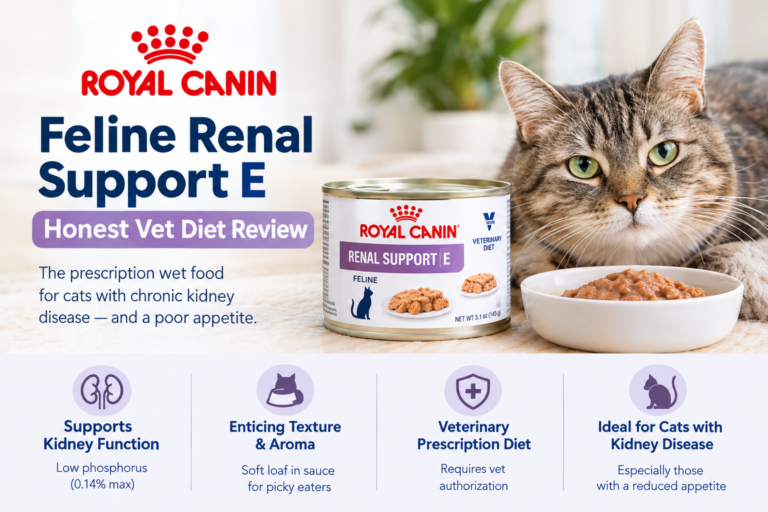
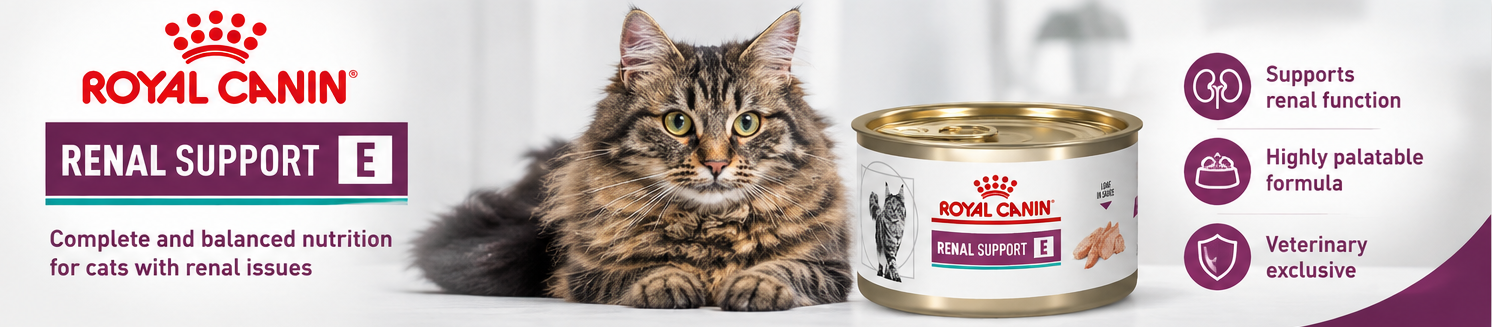
Royal Canin Veterinary Diet Renal Support
Why Vets Love It: Engineered for maximum palatability. CKD cats often have nausea-driven appetite loss; Royal Canin’s texture combinations, aroma profiles, and varied shapes (pâté, chunks in gravy) stimulate eating.
Key Features:
- 0.3-0.4% phosphorus (dry matter)
- High caloric density (small portions = full nutrition)
- Available in wet, dry, and prescription raw-frozen formulas
Check price on Amazon: Royal Canin Veterinary Diet Renal Support (canned)
Hill’s Prescription Diet k/d Kidney Care
Why It Works: Formulated with Hill’s proprietary “Enhanced Appetite Trigger” (E.A.T.) technology. Proven track record spanning 30+ years of clinical use.
Key Features:
- 0.4% phosphorus; restricted sodium (0.3%)
- Ultra-high digestibility (excellent for sensitive CKD stomachs)
- Fortified with B vitamins and omega-3s
Check price on Amazon: Hill’s Prescription Diet k/d Kidney Care
Purina Pro Plan Veterinary Diets NF (Kidney Function)
Why Vets Choose It: Offers “Early Care” and “Advanced Care” formulations tailored to different CKD stages, avoiding over-restriction in early disease and maximizing support in advanced stages.
Key Features:
- Stage-appropriate phosphorus and protein levels
- Chicken-based protein source
- Added antioxidants (vitamins C & E)
Check price on Amazon: Purina Pro Plan Veterinary Diets NF Early Care
Best Over-the-Counter (Non-Prescription) Alternatives
Not every cat owner has immediate access to prescription diets, or their cat refuses them. These OTC options offer legitimate nephro-support without a veterinary prescription.
Weruva Wx Phos Focused Series
Phosphorus Content: 0.4-0.45% (dry matter), up to 50% lower than standard premium foods.
Why It’s Different: Uses egg whites (exceptionally low phosphorus) and chicken in a savory gravy. Extremely palatable for cats with reduced appetite.
Limitation: Not labeled for long-term exclusive feeding; marketed for intermittent use. Ideal for early-stage CKD.
Check price on Amazon: Weruva Wx Phos Focused Chicken
Weruva TruLuxe Steak Frites
Phosphorus Content: 0.57% (dry matter) on par with many prescription options.
Best For: Healthy senior cats or early-stage CKD cats that need a nutritious, tasty option.
Real User Experience: Many owners report CKD cats that reject prescription formulas will eat TruLuxe consistently.
Check price on Amazon: Weruva TruLuxe Steak Frites
Forza10 Active Kidney Renal Support
Unique Angle: Uses wild-caught fish, lamb lung, and therapeutic botanicals (phyllanthus and astragalus) with demonstrated anti-inflammatory properties.
Phosphorus: 0.42% (dry matter)
Use Case: When prescription lines are backordered or your cat has specific aversions to chicken-based diets.
Check price on Amazon: Forza10 Active Kidney Renal Support
The Homemade Diet Trap: Why DIY Kidney Recipes Are Dangerous
You might stumble across homemade kidney diet recipes online. Avoid them without professional oversight.
Balancing phosphorus, calcium, taurine (essential amino acid for cats), potassium, and micronutrients requires expertise. Studies show that >90% of homemade kidney diets are nutritionally imbalanced in ways that worsen CKD outcomes.
If you want a homemade diet: Work with a board-certified veterinary nutritionist (ACVN) to formulate a proper meal plan tailored to your cat’s specific values.
Mastering the Dietary Transition: Avoiding Food Strikes
Your kidney cat finally has a prescription diet and refuses to eat it. This is heartbreaking and common. Here’s how to prevent or overcome it.
The Slow-Blend Method (2-4 Week Transition)
- Week 1: 75% old food + 25% new food
- Week 2: 50% old food + 50% new food
- Week 3: 25% old food + 75% new food
- Week 4: 100% new food
This gradual shift prevents gastrointestinal upset and builds acceptance without triggering food aversion (where cats permanently refuse a food associated with digestive discomfort).
Warming & Scent Enhancement
- Warm canned food to 98-101°F (cat body temperature) to release aromas
- Warming also mimics the temperature of freshly-killed prey, triggering predatory eating instincts in low-appetite cats
- Never use microwaves (hot spots); use a warm water bath instead
Treating Nausea First
If your cat is nauseated from uremia, they’ll refuse any food. Manage nausea before pushing the new diet.
Ask your vet about:
- Maropitant (Cerenia) – anti-nausea injection
- Ondansetron (Zofran) – anti-nausea oral medication
- Mirtazapine – appetite stimulant (mild sedative effect; use cautiously)
Once nausea is controlled, food acceptance improves dramatically.
The Golden Rule: A Kidney Cat Must Eat
Starvation accelerates CKD decline more than any other factor. If your cat refuses therapeutic food after 2-3 weeks of transition, consult your vet about alternatives.
Options:
- Switch to a different prescription brand
- Use an OTC low-phosphorus alternative paired with a phosphate binder supplement (Aluminum hydroxide)
- Extend the transition period to 6-8 weeks
- Add a small amount of low-sodium broth or tuna juice to increase palatability
Remember: Imperfect feeding is better than no feeding.
Traffic Light System: Safe, Moderate, and High-Risk Foods
🟢 SAFE (Appropriate for CKD Cats)
- Prescription renal diets (Hill’s k/d, Royal Canin Renal Support, Purina NF)
- Weruva Wx Phos Focused, TruLuxe low-phosphorus lines
- Forza10 Active Kidney
- Cooked chicken or turkey (home-prepared, phosphorus-free)
- Canned pumpkin (fiber, hydration, low phosphorus)
🟡 MODERATE (Use Cautiously; Monitor Bloodwork)
- Premium non-therapeutic wet foods with <0.6% phosphorus
- Darwin’s raw-frozen formulas (excellent but require safe handling)
- Home-prepared diets formulated by ACVN nutritionists
- Kidney-support supplements (phosphate binders, omega-3s) as adjuncts to a therapeutic diet
🔴 AVOID (High Phosphorus; Accelerates Decline)
- Standard dry kibble or wet foods (typically 0.6-0.8% phosphorus)
- Foods high in organ meats, bone meal, or fish meal
- Homemade recipes without veterinary nutritionist oversight
- Low-quality “senior” foods marketed for kidney support but lacking controlled phosphorus
FAQ: Common Questions from Kidney Cat Owners
Q1: How long can a cat live with kidney disease?
A: Median survival after CKD diagnosis is 1-2 years on standard food, but 3-5+ years on a therapeutic renal diet, depending on disease stage at diagnosis. IRIS Stage 2 cats often live 3-5 years; IRIS Stage 4 cats, 1-3 months to 1 year. Early detection and aggressive dietary management make a profound difference.
Q2: Can my cat’s kidney disease go into remission?
A: No. Kidney tissue damage is permanent. However, CKD progression can be slowed dramatically, sometimes to nearly imperceptible rates with proper nutrition and veterinary management. Some cats reach a stable baseline and maintain it for years.
Q3: My vet says my cat isn’t yet IRIS Stage 2. Should I start a renal diet now?
A: Not necessarily. If bloodwork shows normal creatinine and phosphorus levels, a standard high-quality diet is sufficient. However, if your cat is a senior (10+) or has rising creatinine trends, discussing early therapeutic diet introduction is reasonable.
Q4: What if my cat won’t eat any kidney food?
A: Work with your vet on a combination approach:
- Phosphate binders (aluminum hydroxide, lanthanum carbonate) reduce intestinal phosphorus absorption allowing flexibility with food choice
- Try multiple brands/formats (different prescription brands, OTC alternatives like Weruva)
- Appetite stimulants (mirtazapine, maropitant) can bridge feeding gaps
[Check price on Amazon for Rx Vitamins Aluminum Hydroxide Phosphate Binder]
Q5: Is wet food really better than dry for kidney disease?
A: Yes, significantly. Wet food’s high moisture content increases hydration, reduces urine concentration, and often improves appetite, critical for CKD management. If your cat absolutely refuses wet food, a therapeutic dry renal diet is the second-best option, but wet is superior.
Q6: Can supplements replace a therapeutic diet?
A: No. Supplements (phosphate binders, omega-3s, probiotics like Azodyl) support a therapeutic diet but cannot replace phosphorus control achieved through food formulation. Think of supplements as adjuncts, not alternatives.
Q7: When should I start subcutaneous fluids?
A: Usually when dehydration is evident (skin tenting, lethargy) or bloodwork shows significantly elevated creatinine and/or BUN despite dietary management. Your vet will recommend timing based on your cat’s specific values and clinical presentation. Fluids work alongside diet, not instead of it.
Conclusion: Your Roadmap to Extended Quality of Life
A chronic kidney disease diagnosis is life-changing but not life-ending. The best cat food for kidney disease with low phosphorus, paired with a consistent feeding strategy, can extend your cat’s life by years and preserve quality of life.