Can Cats Eat Peas? Benefits, Safe Varieties & Prep Guide
If you’ve ever dropped a pea on the kitchen floor and watched your cat bat it around before eating it, you already know cats are curious about them. Can cats eat peas? Yes, they’re non-toxic and genuinely safe for healthy cats in small amounts, which puts them among the more low-stress answers in the world of what vegetables can cats eat.
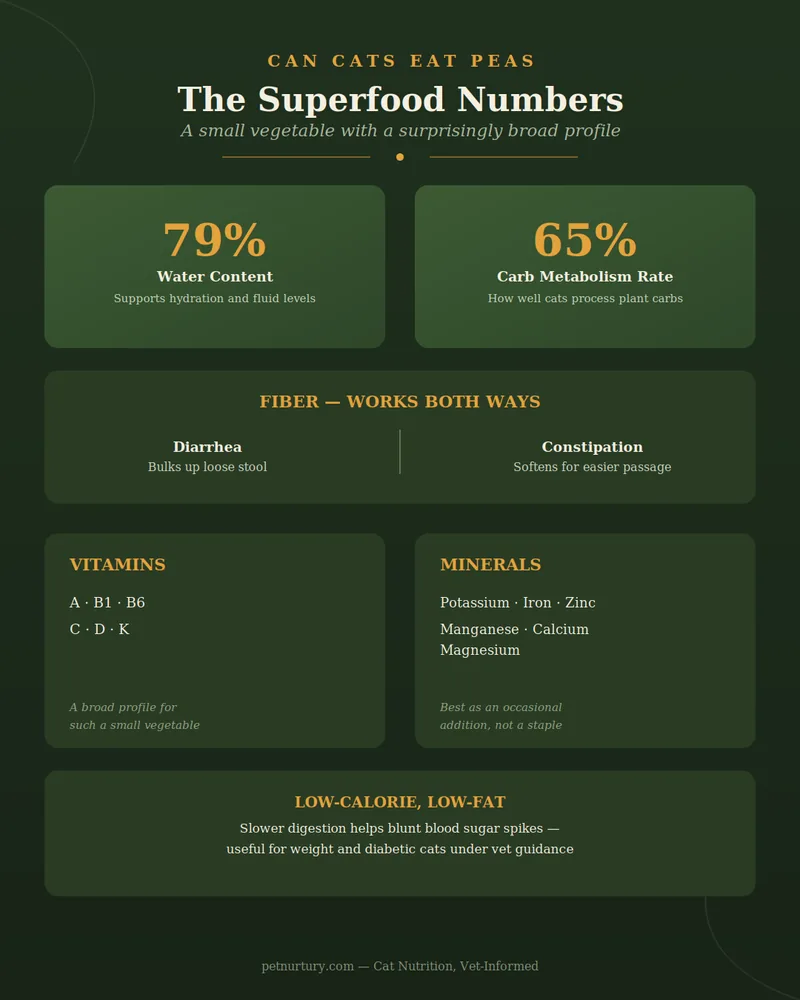
Worth framing this correctly from the start: cats are obligate carnivores, and nothing about peas changes that. What’s interesting is that cats can actually metabolize plant-based carbohydrates reasonably well ,up to about 65% efficiency, which is more than people usually assume. Still, that efficiency doesn’t make carbohydrates a foundation. Animal protein remains the core of a cat’s diet; peas are a genuinely useful add-on, not a food group.
Table of Contents
Why Peas Get Called a Feline “Superfood”
It’s a strong label, but peas earn a fair amount of it.
Digestive support. The fiber in peas works in both directions, it bulks up loose stool to help with diarrhea, and softens things enough to ease occasional constipation. That dual function is unusual and genuinely useful.
Weight and blood sugar management. Peas are low-calorie and low-fat, making them a solid alternative to calorie-dense commercial treats.
The same fiber that helps digestion also slows the rate of digestion overall, which can help blunt blood sugar spikes, a detail that matters more than usual for diabetic cats under veterinary supervision.
Hydration. Peas are roughly 79% water, which adds a small but real contribution to a cat’s fluid intake, especially useful for cats who don’t drink enough on their own.
Vitamins and minerals. Peas bring a genuinely broad profile, vitamins A, B1, B6, C, D, and K, plus potassium, iron, zinc, manganese, calcium, and magnesium. No single vegetable should be relied on for all of this, but as an occasional addition, it’s a meaningfully diverse nutrient contribution for something so small.
Not All Peas Are the Same
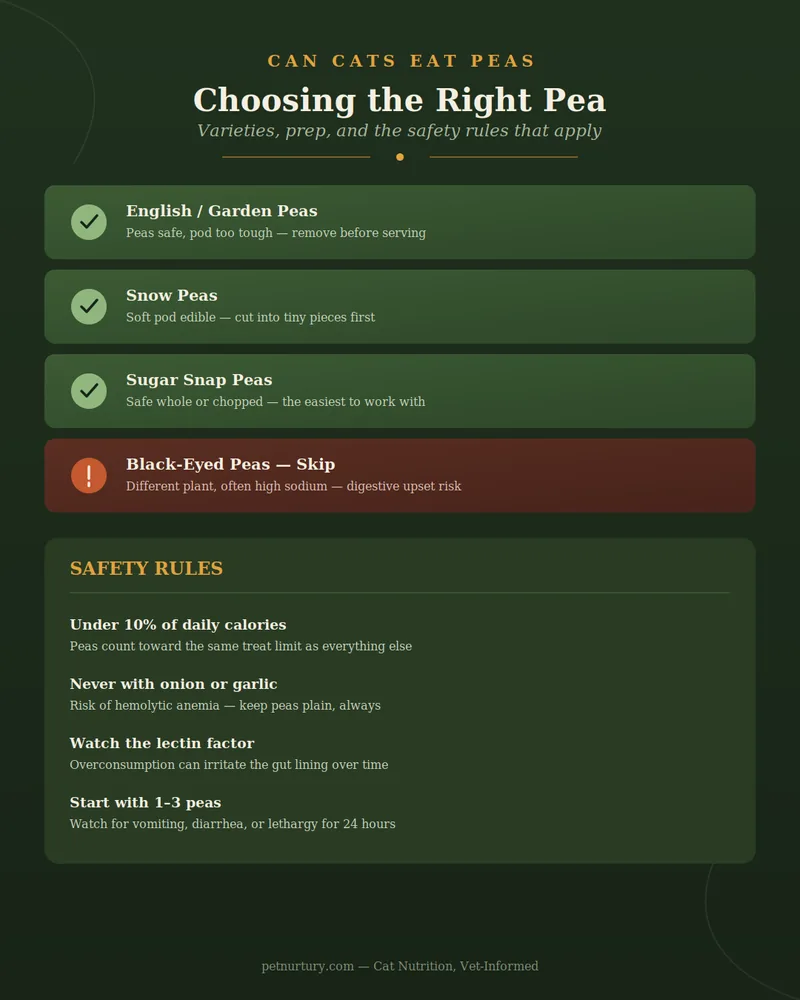
English or garden peas are the most common variety, and the peas themselves are safe, but the pod is too tough for a cat to digest and should be removed before serving.
Snow peas have a soft, edible pod, but it still needs to be cut into small pieces to avoid any choking risk.
Sugar snap peas are safe served whole or chopped, making them one of the easier varieties to work with.
Black-eyed peas are the one to skip. They’re technically a different plant from garden peas, and they tend to run high in sodium, which can cause digestive upset in a cat’s much smaller system.
How to Prepare Them Properly
The golden rule here is the same one that governs almost every vegetable a cat eats: plain and unseasoned, always. No salt, butter, oil, or spices of any kind.
Steamed or boiled peas are the easiest to digest, cook them until soft. Frozen peas need to be fully thawed before serving; frozen straight from the bag is a choking and dental risk. Mashed peas work well for kittens or senior cats managing dental issues, since there’s nothing left to chew.
Canned peas deserve a specific warning: skip them. They’re frequently loaded with excess sodium and preservatives that undo any nutritional benefit peas would otherwise offer.
Serving Sizes and Safety Rules
| Guideline | Detail |
|---|---|
| Daily limit | Under 10% of total daily caloric intake |
| Preparation | Plain, steamed/boiled, or mashed — never seasoned |
| Never combine with | Onions or garlic (hemolytic anemia risk) |
| First-time serving | Watch for vomiting, diarrhea, scratching, or lethargy |
| Portion to start | 1–3 peas as an initial trial |
One detail worth knowing: peas contain lectins, natural plant compounds that function a bit like a built-in insecticide. In small, occasional amounts, this isn’t a concern. But regular overconsumption can irritate the intestinal lining and interfere with nutrient absorption over time, another reason peas stay in the “occasional treat” category rather than becoming a daily habit.
Rounding Out the Picture
If peas go well, there’s a reasonable list of other vegetables worth trying as part of a broader rotation of what can cats eat safely, cooked and softened carrots, broccoli, zucchini, and winter squash all fall into similarly low-risk territory.
On the legume side specifically, it’s worth knowing that can cats eat beans comes with more caveats than peas do, beans require more careful prep and carry a few genuinely toxic look-alikes (raw kidney beans, for instance), so peas are generally the gentler starting point if you’re exploring legumes for the first time.
On the other end of the spectrum, the never-feed list is worth memorizing regardless of how the vegetable experiments go: grapes, raisins, chocolate, alcohol, caffeine, and dairy products all carry real risk, the last one mostly due to lactose intolerance rather than outright toxicity.
Getting Started
Start small, one to three peas is plenty for a first trial, and watch your cat for 24 hours before making peas a regular thing. And if your cat has an underlying condition like kidney disease or diabetes, loop in your veterinarian before adding peas or any new food, even one as generally low-risk as this.
The Bottom Line
Can cats eat peas? For most healthy cats, yes, and with fewer caveats than a lot of other vegetables carry.
They’re hydrating, fiber-rich, and nutritionally diverse for their size, genuinely one of the easier yeses in the broader conversation about what vegetables cats can eat.
Keep the portions small, the preparation plain, and peas can be a perfectly reasonable addition to an otherwise meat-focused diet.