What Human Foods Can Cats Eat? 15 Safe Foods and 8 to Avoid
I. The Feline Digestive System: Why This Conversation Matters
Cats are obligate carnivores, every system in their body evolved around hunting and consuming animal prey. Their digestive tracts are shorter than those of omnivores like dogs or humans. Their livers lack certain enzymes that would allow them to process plant-based nutrients efficiently. And unlike most mammals, they have no biological requirement for carbohydrates whatsoever.
This matters because it shapes every answer to the question of what human foods cats can eat. Animal protein is always the safest category. Plant-based foods can be safe in small amounts, but they are extras, not essentials. And some foods that are perfectly harmless for humans interact with feline metabolism in ways that range from uncomfortable to fatal.
One more thing worth saying clearly: no human food replaces a complete and balanced commercial cat food. Whatever treats you offer, however nutritious they may be, they are supplements to a proper diet, not substitutes for one.
Table of Contents
II. The Three Golden Rules Before You Share Anything
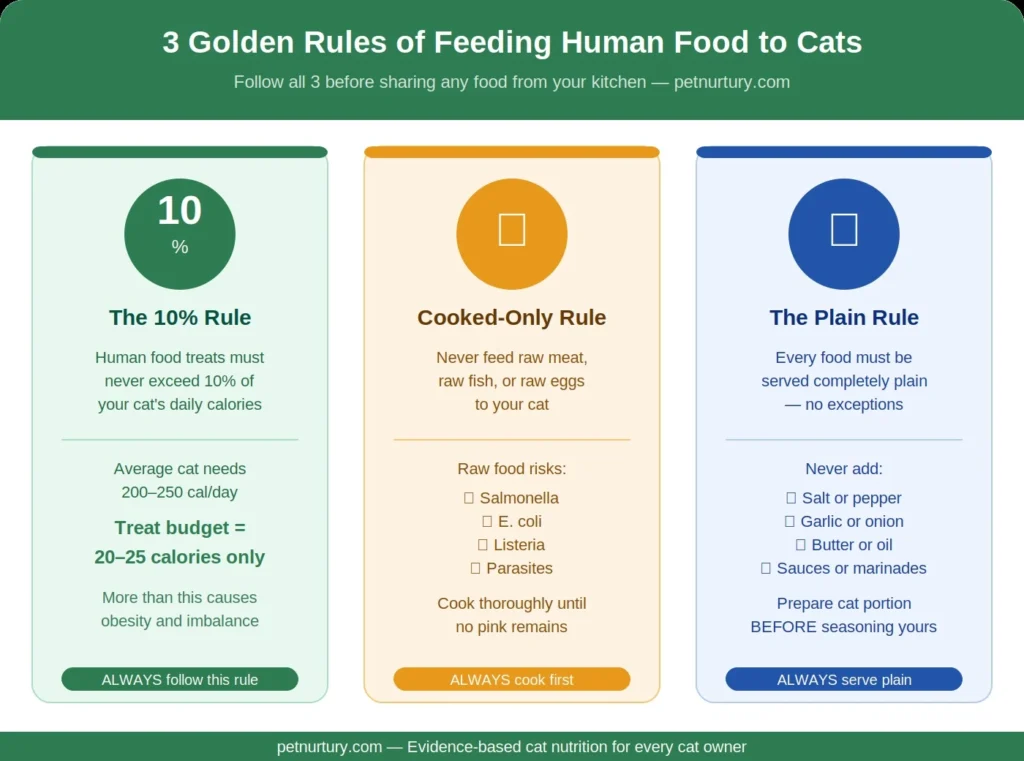
Before we get into specifics, every answer to “what human foods can cats eat” must be filtered through three non-negotiable rules.
Rule 1, The 10% Rule Treats, table scraps, and supplemental human foods must never exceed 10% of your cat’s total daily caloric intake. A typical adult cat needs roughly 200–250 calories per day. That means the treat budget is approximately 20–25 calories, less than you think.
Rule 2,The Cooked-Only Rule Never feed raw meat, raw fish, or raw eggs. Raw proteins carry genuine risks: Salmonella, E. coli, Listeria, and parasites including Toxoplasma gondii. Cooking eliminates these hazards. The “raw is natural” argument ignores the fact that cats in the wild have dramatically shorter lifespans than domestic cats, partly because of exactly these pathogens.
Rule 3, The Plain Rule Every food must be served completely plain. No salt. No pepper. No butter. No garlic. No onion. No sauces or marinades. No seasoning blends. This rule is not optional, many of the seasonings that make human food delicious are genuinely toxic to cats.
III. What Human Foods Can Cats Eat? The Approved List
High-Quality Proteins
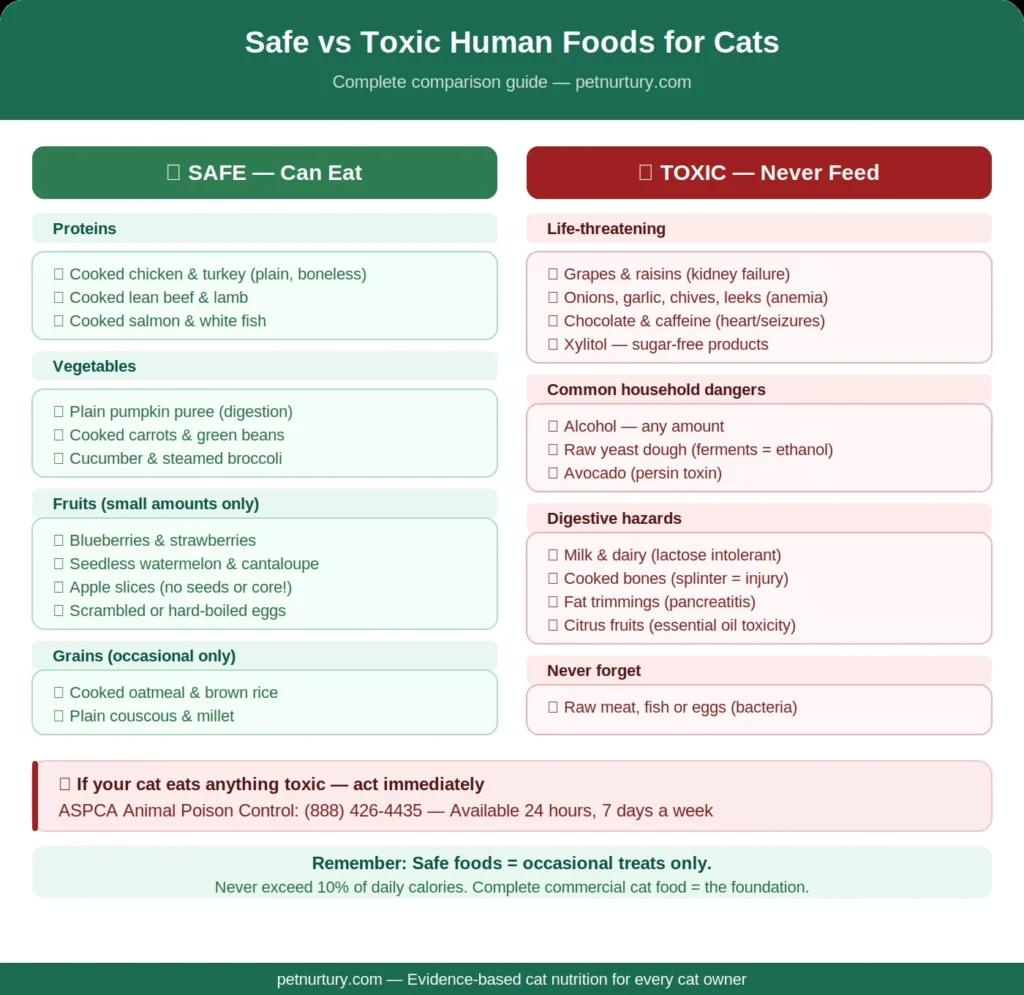
Cooked chicken and turkey are the gold standard. Plain, skinless, boneless, thoroughly cooked, these are among the safest and most nutritionally appropriate human foods cats can eat. Most cats find them irresistible, which makes them ideal for hiding medication or rewarding good behavior. Set aside your cat’s portion before any seasoning touches the rest.
Cooked lean beef and lamb are equally safe when prepared plain. Avoid fatty cuts and anything marinated. Lean ground beef, cooked through and drained of fat, works well in small quantities.
Cooked salmon and white fish offer the added benefit of omega-3 fatty acids, which support eye health, joint function, and coat quality. Tuna in spring water is acceptable occasionally, but not daily, due to mercury accumulation risk over time.
Scrambled or hard-boiled eggs are a protein powerhouse. Easy to prepare, highly digestible, and most cats find them genuinely appealing. Always fully cooked, never raw.
Nutrient-Dense Vegetables
Cucumber is one of the most hydrating vegetables you can offer a cat, roughly 96% water. Slice it thin and serve it raw. Many cats enjoy the cool crunch.
Steamed broccoli, cooked carrots, and green beans are safe in small amounts and occasionally useful as a low-calorie treat option for cats managing their weight. Always serve soft and plain.
Plain pumpkin puree (100% pure, no spices) deserves its own mention. This is one of the most veterinarian-recommended supplemental foods for cats, its soluble fiber content makes it highly effective for managing both constipation and diarrhea. A teaspoon stirred into wet food is often enough to make a measurable difference.
What Fruits Can Cats Eat?
Blueberries and strawberries are safe, antioxidant-rich, and easy to serve. One or two pieces at a time is enough, remember that cats can’t taste sweetness, so these work better as texture treats than flavor treats.
Seedless watermelon and cantaloupe are hydrating and safe. Cantaloupe in particular often appeals strongly to cats because its aromatic compounds chemically resemble the amino acids found in meat protein, which explains why some cats obsess over it.
Deseeded apple slices are safe when every seed and the entire core are removed. Apple seeds contain amygdalin, which converts to cyanide. The flesh is harmless.
Bananas are safe in tiny amounts, but their high sugar content means they should be genuinely rare treats, offered perhaps once a week at most.
Whole Grains
Cooked oatmeal, brown rice, and plain couscous are safe and occasionally recommended by vets as gentle options during digestive upset. They offer no real nutritional value to an obligate carnivore, but they’re harmless and can help settle an upset stomach.
IV. The Red List: What Human Foods Cats Cannot Eat
Knowing what human foods cats can eat is important. Knowing what can kill them is essential.
The Allium family, onions, garlic, shallots, leeks, chives, is highly toxic in all forms. The compounds in alliums damage feline red blood cells and cause hemolytic anemia. Powdered forms are the most concentrated and therefore the most dangerous. Even a small amount of garlic powder in a broth your cat licks from a bowl can cause cumulative damage.
Grapes and raisins cause acute kidney failure in cats. There is no established safe dose. One grape is enough to warrant an emergency call.
Chocolate and caffeine contain methylxanthines, compounds cats cannot metabolize. Even small amounts cause rapid heart rate, tremors, seizures, and in sufficient quantities, death. Dark chocolate is the most dangerous, but all chocolate is off-limits.
Xylitol, found in sugar-free gum, certain peanut butters, dental products, and many “health foods”, causes severe hypoglycemia and liver failure in cats.
Alcohol and raw yeast dough are acutely toxic. Raw dough ferments in a cat’s stomach producing ethanol, causing alcohol poisoning from the inside.
The dairy myth: The image of a cat happily lapping up a bowl of milk is one of the most enduring pet care clichés, and one of the most misleading. Most adult cats are lactose intolerant. Milk, cheese, cream, and ice cream will likely cause vomiting, diarrhea, and gas. Small amounts of hard cheese are tolerated by some cats, but it’s a poor treat choice given the fat and salt content.
Cooked bones and fat trimmings round out the danger list. Cooked bones splinter into sharp shards. Fatty trimmings are a reliable trigger for pancreatitis.
V. Behavioral and Health Considerations
The Obesity Problem
One ounce of cheddar cheese contains approximately 115 calories. For a 10-pound cat whose daily caloric need is around 200 calories, that single piece of cheese represents over 50% of their daily energy requirement, in one treat. Understanding calorie density changes how you think about what human food can cats eat everyday.
The Finicky Feline Effect
Regularly feeding table scraps has a predictable behavioral consequence: cats learn that begging works. Once that lesson is learned, they will beg, counter-surf, and increasingly refuse their commercial food in hopes of getting something better. This cycle is much easier to prevent than to break.
Food Puzzles and Mental Enrichment
Used thoughtfully, safe human foods make excellent puzzle toys. Stuffing a small piece of cooked chicken into a food puzzle gives your cat both the treat and the mental stimulation of working for it. This is a far healthier relationship with human food than feeding from your plate.
VI. Emergency Protocol: When Things Go Wrong
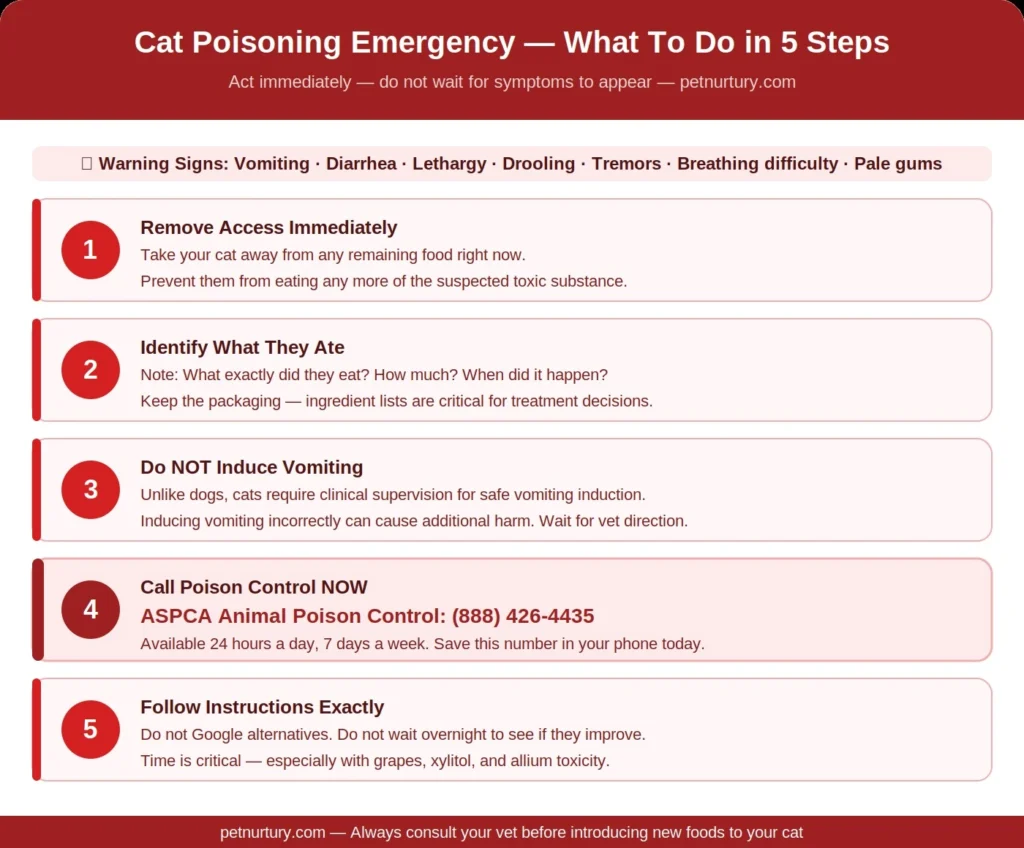
Even careful cat owners face emergencies. Know these warning signs.
Signs your cat may have eaten something toxic:
- Repeated vomiting or retching
- Diarrhea (especially bloody)
- Excessive drooling or lip licking
- Lethargy or sudden weakness
- Tremors, seizures, or loss of coordination
- Difficulty breathing
- Pale or yellowish gums
What to do immediately:
- Remove your cat from any remaining food
- Note what they ate, how much, and when
- Do NOT induce vomiting unless directed by a vet
- Call ASPCA Animal Poison Control: (888) 426-4435, available 24/7
- Follow their instructions exactly
VII. Conclusion: Every Cat Is Different
The question of what human foods cats can eat has a general answer, but the right answer for your specific cat depends on their age, weight, health history, and any underlying conditions they may have.
A cat with kidney disease has different dietary constraints than a healthy two-year-old. A diabetic cat needs careful carbohydrate management. A senior cat may have dental issues that make certain textures problematic. These nuances matter.
Before introducing any new food into your cat’s regular rotation, even foods on the safe list, a brief conversation with your veterinarian is always worth the effort. They know your cat’s full health picture. General guidelines are a starting point. Personalized veterinary advice is the destination.
Your cat’s bowl is one of the most direct expressions of how much you care about them. Make it count.
Frequently Asked Questions
What human food can cats eat everyday safely? The safest daily addition is a small amount of plain cooked chicken or turkey, no larger than a thumbnail, provided it doesn’t exceed the 10% daily calorie limit. Avoid rotating through multiple human foods daily, as this can create nutritional imbalances over time.
Can cats eat rice? Yes, plain cooked white or brown rice is safe in small amounts. It offers no real nutritional value for an obligate carnivore but is gentle on the digestive system and occasionally recommended by vets during gastrointestinal upset.
What is the best cat food substitute in an emergency? If you’ve run out of commercial cat food, the safest emergency substitute is plain cooked chicken breast or cooked white fish, no seasoning, no bones. This will cover their protein needs short-term. Do not rely on this beyond one or two meals.
Can cats eat peanut butter? Not recommended. Many peanut butters contain xylitol, which is acutely toxic to cats. Even xylitol-free versions are high in fat and offer no nutritional benefit. Avoid it entirely.
Can cats eat bread? Plain baked bread in tiny amounts is not toxic, but it’s also pointless, it offers nothing a cat needs and the carbohydrate load is unnecessary. Raw bread dough, however, is dangerous. The yeast ferments in a cat’s stomach producing ethanol. Never feed raw dough.
Can cats eat cucumber? Yes, cucumber is one of the safer vegetable options, with high water content and very low calories. Serve it plain and sliced thin. Some cats find the texture interesting; others will ignore it completely.
Is tuna good for cats? Occasional tuna in spring water (not oil, not brine) is safe. Daily tuna is not recommended, it lacks essential nutrients cats need and carries mercury accumulation risk over time. Treat it like a weekly indulgence, not a daily staple.