Why Do Cats Lick Each Other’s Bums? Explaining Normal Cat Behavior
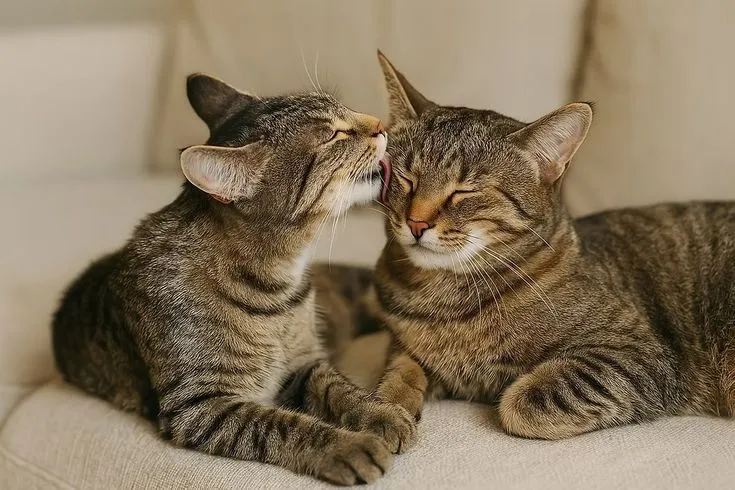
You’ve probably seen your cats grooming each other. One cat leans in, and the other stays still. They focus on spots that might seem strange to you. This is a common scene in many homes.
Many cat owners wonder why their pets lick each other’s bums. It looks unusual to us. But, it’s just a natural part of being a cat.
This behavior is called allogrooming. Cats spend a lot of time grooming, up to half their day. This includes grooming themselves and each other. It’s a big part of their daily routine.
Cat grooming serves many purposes. It helps them bond and stay clean. It also shows trust and follows their instincts. Knowing this makes what you see more meaningful.
This article will explain why your cats groom each other. You’ll learn about allogrooming and how common it is. You’ll also understand the science and instinct behind it. By the end, you’ll know your cats are perfectly normal and healthy.
Table of Contents
Understanding Allogrooming: The Science Behind Mutual Cat Grooming
Watching your cats lick each other is fascinating. Scientists call this allogrooming in cats. It’s not just about keeping fur clean. It’s a complex social behavior with deep meaning.
Animal behaviorists have studied this across many species. From cows to deer to cats, it’s a normal part of their social life. When cats groom each other, they strengthen their bonds and keep the group harmonious.
What Is Allogrooming in Cats
Allogrooming in cats means one cat grooms another. It comes from animal behavior science. Unlike self-grooming, it involves two or more cats cleaning each other’s fur.
This behavior does more than keep fur clean. Your cats use it to:
- Build and maintain social connections
- Share scent and group identity
- Reach spots they cannot clean themselves
- Show affection and trust
- Establish social bonds
How Common Is This Behavior Among Felines
Allogrooming is common among cats who live together and get along. Cats who live together spend a lot of time grooming each other. The frequency depends on how close they are.
| Relationship Type | Grooming Frequency | Behavior Indicator |
|---|---|---|
| Close bonded cats | Multiple times daily | Strong positive relationship |
| Friendly housemates | Several times weekly | Comfortable coexistence |
| Neutral cats | Rarely or occasionally | Minimal social connection |
| Conflicting cats | Very rarely or never | Poor relationship dynamics |
Cats learn allogrooming from their mothers as kittens. They watch and copy this behavior as they grow. Cats raised together groom more than those introduced as adults.
In multi-cat households, grooming is a sign of positive social health. It shows your cats feel safe and connected.
Why Do Cats Lick Each Others Bums
Watching cats lick each other’s bums might make you curious. It’s all about instinct, body structure, and how they communicate. Your cats aren’t being weird; they’re just following their natural instincts.
Cats’ rear ends are different from ours. Their anal area has fewer folds and is more exposed. This means waste doesn’t stick around like it does for humans. Cats don’t need to “wipe” after using the litter box. Their bodies are built for self-cleaning in ways that ours simply aren’t.
The magic happens through scent. When your cats sniff or lick each other’s rear ends, they’re using the Flehmen response. This is a scent-analysis tool that helps them read pheromones and gather important information about each other. The anal area contains scent glands that work like a personal ID card for cats. These glands tell stories about identity, health, emotional state, and group membership.
Why do cats lick each others bums? Your cats do this for three main reasons:
- Cleaning and hygiene assistance for hard-to-reach spots
- Building social bonds and trust between cats
- Exchanging scent information to strengthen group identity
Understanding feline butt licking behavior helps you see your cats in a new light. What seems odd to humans is actually a sophisticated communication system. It keeps your cats healthy, connected, and socially organized.
Bonding and Social Connection Through Grooming
When cats lick each other, they’re doing more than just cleaning. This act shows deep emotional bonds between them. It’s a way for cats to show trust and feel like they belong together.
Steve Dale, a certified animal behavior consultant, says cats groom each other to show love and trust. This act means, “I care about you and feel safe with you.” It shows how strong their relationship is.
Building Trust Between Cats
Mutual grooming is a sign of trust between cats. They wouldn’t do this unless they felt completely safe. This behavior gets stronger as they build their relationship.
Cats who groom each other have positive relationships and true friendships. You might see this after they nap or play together. These moments show they have a bond based on trust and comfort.
- Grooming occurs most often between cats with established friendships
- Trust-building happens gradually through repeated positive interactions
- Cats demonstrate vulnerability by allowing others to groom sensitive areas
- Regular grooming sessions indicate a harmonious multi-cat household
Scent Sharing and Group Identity
Cats use scent as their main way of communicating. When they groom, they share scents. They have scent glands all over their bodies, including near their anus.
This scent sharing creates a “colony scent” or shared smell. It’s like a family signature. This smell helps your cats know who belongs in their group. It tells them who they can trust and who is not part of their group.
| Aspect of Scent Sharing | Purpose for Cats | Benefit to Your Home |
|---|---|---|
| Scent Gland Transfer | Marks cats as belonging to same group | Reduces stress in multi-cat homes |
| Colony Scent Creation | Establishes shared family identity | Promotes harmony between cats |
| Olfactory Communication | Reinforces social bonds and safety | Strengthens feline social bonding |
Understanding why cats lick each other through scent sharing gives us insight into their social world. It’s not just grooming; it’s about building relationships and creating a unified household. This behavior reduces anxiety and makes your home safer for all your cats.
Maternal Instincts and Learned Behavior
Watching your adult cats groom each other is fascinating. It all started when they were kittens. Mother cats start licking their kittens right after birth. It’s not just for cleanliness—it’s crucial for their survival.
Newborn kittens can’t urinate or defecate on their own. Their mother’s tongue is needed to help them with these important functions in the first weeks of life.
Your kitten’s mother teaches them about grooming by example. She licks them all over, including sensitive areas, to keep them clean and healthy. This early lesson shapes their understanding of cleanliness for life. Kittens learn that grooming is a normal part of daily life.
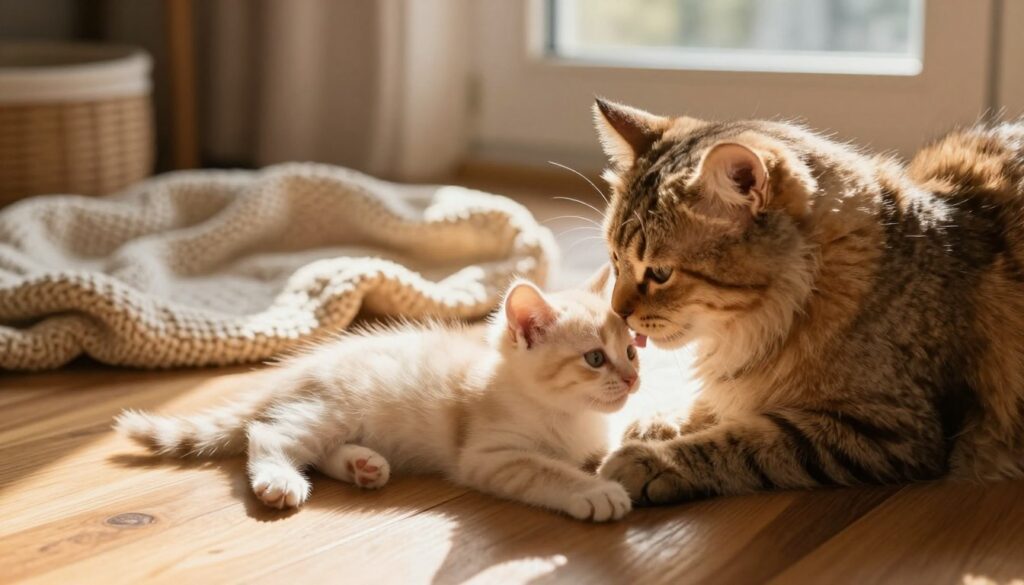
As kittens grow, they start grooming their mothers too. This is a sign of love and thanks. This mutual grooming continues into adulthood. Some adult cats keep this behavior as a way to feel secure and comforted.
Here’s what you should know about this learned behavior:
- Mother cats clean kittens to stimulate essential bodily functions
- Kittens internalize grooming patterns through observation
- Young cats reciprocate grooming as they mature
- Adult cats may continue grooming for emotional comfort
- This behavior reinforces social bonds between cats
Understanding these roots helps you see that your cats’ grooming habits are linked to their early experiences and natural instincts.
Hygiene Help: Reaching the Hard-to-Clean Spots
Cats work hard to stay clean every day. They spend hours licking and grooming to keep their fur clean and healthy. But, some spots on their bodies are hard for them to reach alone.
This is why grooming each other is so important. It helps them stay healthy and clean.
Anatomical Differences That Make Cats Self-Cleaning
Your cat’s body is made for self-cleaning. Their tongue has backward-facing papillae that act like a comb. These tiny barbs help remove dirt and loose fur.
Their anal area is different from humans. It’s more exposed and has fewer skin folds. This makes it easier for cats to stay clean in sensitive areas.
Also, your cat’s flexible spine lets them twist and reach most parts of their body. They can turn their head almost 180 degrees and bend in ways that seem impossible.
Why Cats Need Grooming Assistance
Even with their flexibility, cats can’t reach every spot. These hard-to-reach areas include:
- The back of the head and skull
- Behind the ears and ear bases
- The back of the neck
- The base of the tail near the rear
When cats live together, they groom each other. This helps them clean these hard-to-reach zones. It’s a practical solution to their body’s limits.
Having a grooming partner is key to keeping cats clean. This partnership prevents matting and keeps their fur in good shape. When cats groom each other in these spots, they’re working together for their health and hygiene.
Social Hierarchy and Dominance Displays
In your multi-cat household, grooming is more than just keeping fur clean. When cats lick each other’s rear ends, they show their place in the group. This behavior helps cats set and keep their hierarchy without fighting.
Your dominant cat usually starts grooming others. This shows they lead the group. When a younger or more submissive cat accepts grooming, they show they trust and understand their place.
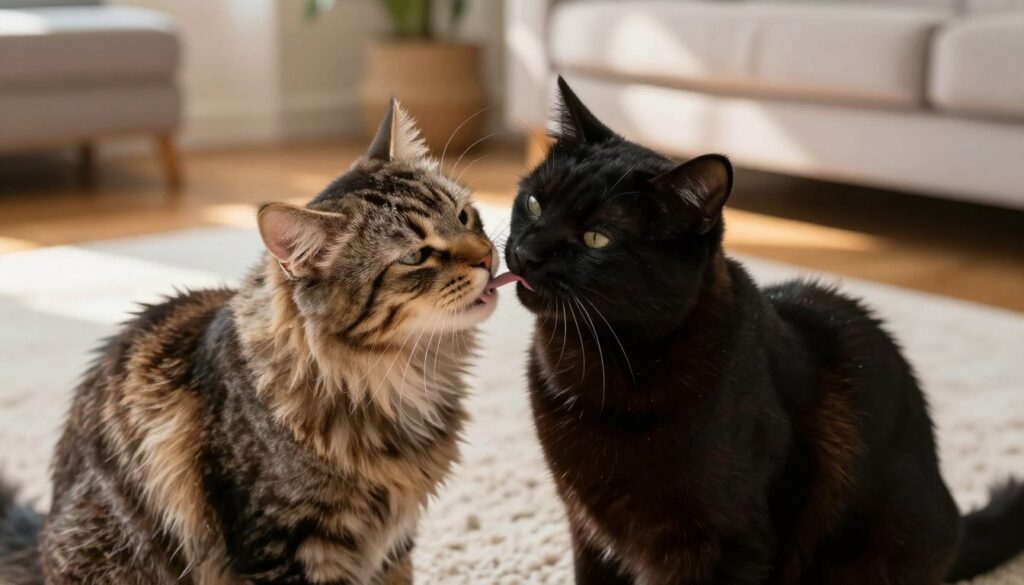
Grooming helps reduce tension between cats. Instead of fighting, they show respect and accept their roles through grooming.
How You Can Spot This Behavior
Watch which cat starts grooming in your home:
- The older or more confident cat usually starts grooming
- The younger or shyer cat usually gets groomed
- Cats groom those they trust completely
- Grooming patterns show who has more power
This grooming hierarchy keeps your cats’ social world peaceful. Understanding this helps you see that what looks like simple affection actually strengthens their bonds and reduces conflicts.
Stress Relief and Comfort Through Grooming
When cats groom each other, they’re doing more than just cleaning. It’s a way for them to relax and feel better. The act of licking releases chemicals in their brains that make them feel calm.
This shows grooming is a sign of emotional health in cats. It helps them stay balanced and happy.
How Grooming Releases Endorphins
Your cats’ brains make endorphins when they groom. These chemicals are like their own happiness pills. When one cat licks another, both feel happy and relaxed.
It’s like how petting a cat calms you. The gentle touch and rhythm soothe their nerves. Cats groom each other when they’re stressed or anxious. It’s their way of finding peace.
Creating a Calm Environment in Multi-Cat Homes
Cats groom more when they’re stressed. This can happen when you move, get a new pet, or hear loud noises. It’s their way of comforting each other.
Watch for grooming during stressful times:
- After vet visits or medical procedures
- During household changes or relocations
- When exposed to loud noises or unfamiliar sounds
- When new family members arrive
- During changes to daily routines
More grooming means your cats are coping well. It shows they’re supporting each other. A calm home is one where grooming is common and cats seem happy.
When Butt Licking Becomes Excessive: Health Warning Signs
Most of the time, cats licking each other’s butts is normal and healthy. It shows they care for each other and bond. But, if the licking is constant, rough, or makes one cat look distressed, it’s a problem.
Normal grooming is short and occasional. Cats clean each other in brief moments. But, if one cat is stuck on licking the same spot for a long time, it’s not normal. If the licking is aggressive or if one cat tries to get away, it’s a sign of trouble.
- Unusual or foul odors from the anal area
- Visible swelling, redness, or irritation around the rear
- Discharge of any kind from the area
- Your cat scooting its bottom across the floor
- Hair loss in the rear region
- Your cat crying out when the area is touched or licked
| Normal Grooming Signs | Excessive Licking Red Flags |
|---|---|
| Gentle, brief licking sessions | Constant, focused attention to one area |
| No visible skin damage | Redness, swelling, or hair loss |
| No unusual odors | Foul smell or discharge present |
| Cat shows no signs of pain | Cat vocalizes or tries to escape |
| Happens several times per day | Happens almost constantly |
Too much licking can make things worse. It can irritate the skin and lead to more licking. This creates a cycle of discomfort. If the skin gets raw or broken, infections can set in.
Cats lick to soothe themselves when they’re uncomfortable. If you see them licking a lot or roughly, it means they’re in pain. This behavior is a sign that they need help. Watch how often and how hard they lick. Keep track of when you see this behavior. This information will help your vet figure out what’s wrong.
Common Health Issues That Trigger Excessive Licking
If your cat is licking their rear end too much, it might mean they have a health problem. This behavior is different from their usual grooming. Knowing the reasons can help you know when to take them to the vet.
Cats usually groom themselves regularly. But, if they start grooming more or differently, it could mean they’re in pain. The rear end is a common problem area when something irritates the skin or tissues.
Anal Gland Problems and Irritation
Anal glands are small scent organs on each side of the anus. They release fluid that helps cats mark their territory. When these glands get impacted or infected, it hurts a lot.
Look out for these signs:
- Excessive licking and chewing of the rear area
- Scooting or dragging the bottom across the floor
- Visible swelling near the anus
- Foul fishy odor from the rear
- Pain or difficulty during bowel movements
- Reluctance to sit or jump
Some cats have trouble with their anal glands. Your vet can help by manually expressing these glands. This can make your cat feel better and help them groom normally again.
Parasites, Allergies, and Urinary Tract Issues
Many health problems can irritate the rear end. Intestinal parasites like tapeworms and roundworms make cats itch around the anus. You might see rice-like segments in their stool or litter box. Fleas also make cats itch, especially near the tail and rear.
Allergies can also affect a cat’s grooming. Both food and environmental allergies can cause inflammation and itching in the genital area. Cats lick a lot to try to feel better.
Urinary tract issues are very serious. Problems like bladder infections, stones, and blockages hurt and irritate. Watch for these signs:
- Frequent trips to the litter box with little urine
- Straining during urination
- Urinating outside the litter box
- Blood in the urine
- Excessive licking of the genital area
Other causes include diarrhea, wounds from fights, and skin infections. If your cat is licking too much, it’s important to take them to the vet. This way, you can find out what’s wrong and help them feel better.
How to Monitor and Manage This Behavior in Your Cats
Understanding why cats lick each other is key to managing it at home. Start by watching how your cats groom each other. See which cats do it, how often, and for how long. This helps you notice if something is off.
Keep an eye on these habits for a few weeks. This way, you can tell if something is different or too much.
Your cats need a good environment for healthy grooming. Make sure there are enough resources around the house. This reduces stress and competition.
Building the Right Environment
Make sure your cats have safe and comfy spots. Add cat trees and wall shelves for them to climb and watch. Also, have hiding spots and quiet places for each cat to have their own space.
- Place litter boxes in separate locations (rule of thumb: one box per cat, plus one extra)
- Set up multiple feeding and water stations
- Offer interactive toys and puzzle feeders to keep cats mentally active
- Use laser pointers for regular play sessions
- Provide scratching posts and climbing structures
Preventive Care and Health Maintenance
Regular grooming and cleanliness can prevent many problems. Brush your cats often to remove loose fur and prevent matting. Clean litter boxes at least twice a day and change the litter every week. Feed them high-quality, balanced food to keep their skin and digestion healthy.
If you see your cats licking too much, try to distract them with a toy or treat. Never punish them for licking, as it’s a natural behavior. Regular vet visits can help catch health issues early. Simple steps like brushing, proper nutrition, and a good environment keep your cats healthy and their grooming in check.
Conclusion
Understanding why cats lick each other’s bums shows a lot about their social lives. This act is crucial for their cleanliness, affection, and bond strengthening. When cats groom each other, it’s a sign of real care and trust.
Cats lick each other for many reasons, including hygiene, emotional connection, and communication. They share scents to identify their group and feel safe. Grooming also helps them manage stress and release calming chemicals.
Grooming is a way for cats to establish their social order and show trust. Since they spend a lot of time grooming, mutual grooming is just part of their daily routine.
This behavior is normal in healthy, multi-cat homes. It means your cats are bonding and feel comfortable with each other. But, watch out for signs of trouble like excessive licking or rough behavior.
These signs could mean health issues that need attention. If you notice any, it’s time to see your vet.
Learning about feline grooming habits gives you insight into their emotional lives and social structure. This knowledge helps you spot both normal and potential problems early. By understanding these behaviors, you can keep your cats healthy and happy.
Watching your cats’ interactions with fresh eyes, you’ll see their grooming rituals reveal deep bonds and important communication between them.