Healthiest Dog Food for Large Breeds & Puppies
Watching your large breed puppy grow is exciting. Their floppy paws and clumsy movements make you smile. What you feed them shapes their life.
Poor nutrition can lead to painful joint problems. These problems can last into old age.
Large-breed dogs like Golden Retrievers, German Shepherds, and Greyhounds grow fast. They can weigh between 50 and 100 pounds. Their rapid growth is a critical time for their diet.
What you choose today affects their future. It impacts their mobility, comfort, and lifespan.
Large-breed puppies need special care. Their bones and joints develop differently. They face risks from hip and elbow dysplasia if fed wrong.
These diseases cause pain and expensive vet bills. The right dog food prevents these problems.
Your puppy needs special puppy food for at least a year. Some may need it for two years. This is not just marketing.
This is biology. Their growth rate demands specific nutrients. The best nutrition for large breed dogs is made with their unique needs in mind.
This guide will teach you everything. You’ll learn what makes large breed formulas different. You’ll find the best options in the United States.
Feed your puppy right now. Prevent expensive problems later.
Table of Contents
What Makes Large Breed Dog Food Different from Regular Kibble
Large breed puppies need special food that’s different from regular dog food. Standard kibble is not enough for their growth. Choosing the right food is key to keeping their bones healthy during important growth times.
Good large breed dog food slows down growth instead of speeding it up. Many people think big dogs need more protein or calcium. But too much can hurt their joints and bones. The right food helps muscles and bones grow together.
Understanding the Calcium-to-Phosphorus Ratio
The calcium-to-phosphorus ratio is very important in large breed dog food. Your puppy’s bones grow fast, and these minerals control that growth. Too much calcium can make bones grow too fast without enough muscle support.
Look for a ratio of 1.2:1 to 1.8:1 calcium to phosphorus. Vitamin D helps with calcium absorption. This balance helps prevent bone and joint problems.
Why Protein Requirements Differ for Large Breed Puppies
Quality is more important than quantity when it comes to protein for large dogs. They need 18-24 percent protein, not the high amounts in regular puppy food.
Good protein sources help build strong muscles without growing bones too fast. Your puppy needs amino acids for muscle strength. Choose formulas with whole meat sources for better muscle development.
The Role of Controlled Growth in Preventing Joint Problems
Controlled growth is a key nutritional strategy. It slows down your puppy’s development to a healthy pace. This prevents joints from growing too fast and getting damaged.
- Slower growth allows skeletal structures to mature properly
- Adequate mineral balance supports bone density development
- Measured fat content provides energy without excess calories
- Balanced nutrition reduces stress on forming cartilage
Knowing how to read labels helps you choose the best food for your puppy. Look for scientifically-backed ingredients that support your puppy’s health.
Critical Nutrients Your Large Breed Puppy Needs for Healthy Development
Understanding what your growing puppy needs is key to their health. Large breed puppies need different nutrients than small breeds. They require specific compounds for strong bones, a sharp brain, and healthy joints.
When looking for food, check the label for these essential nutrients:
- DHA (docosahexaenoic acid) – This omega-3 fatty acid supports brain and eye development during your puppy’s critical first year
- Glucosamine and chondroitin – These compounds build healthy cartilage and protect joints from future problems
- Antioxidants – Vitamins E and C, along with selenium, strengthen your puppy’s developing immune system
- Prebiotics and probiotics – These support digestive health and nutrient absorption
Choosing the right protein is crucial for large dogs. Look for high-quality sources like chicken, beef, fish, and lamb. They provide all the amino acids needed for muscle growth. It’s important to find the right balance to avoid joint problems.
| Nutrient | Purpose | Food Sources |
|---|---|---|
| DHA | Brain and vision development | Fish oil, salmon, mackerel |
| Glucosamine | Joint cartilage support | Bone broth, shellfish |
| Antioxidants | Immune system strength | Blueberries, sweet potatoes, carrots |
| Probiotics | Gut health and digestion | Fermented foods, added cultures |
Choosing a fortified food with these nutrients means you likely don’t need extra supplements. Check the guaranteed analysis section to ensure the levels are right for your puppy’s age and size. This helps you find premium formulas and avoid wasting money on inferior products.
Healthiest Dog Food for Large Breeds
Choosing the right food for your large breed dog is more than just picking any premium formula. The best food combines whole food ingredients with science-backed nutrition. This supports proper growth and muscle development. Your large breed puppy needs meals made for their body, not generic kibble for all dogs.
Quality ingredients are key. Premium dog food for large breeds gives your dog bioavailable nutrients. Whole food sources give vitamins and minerals directly, unlike synthetic supplements that take longer to absorb.
Premium Whole Food Nutrition Options
Premium whole food nutrition means your dog eats ingredients that are minimally processed. These are recognizable as actual food. Brands using whole-prey nutrition mimic what dogs would eat in nature by combining muscle meat, organs, cartilage, and bone.
Orijen Original Large Breed Puppy Formula has 85% animal ingredients. These come from free-run chicken and turkey, wild-caught fish, and cage-free eggs. The formula uses whole-prey ratios and is made in Alberta’s DogStar Kitchens. This gives superior nutrient density and digestibility compared to grain-heavy alternatives.
Blue Buffalo Life Protection starts with real deboned chicken as the first ingredient. It excludes chicken by-product meals, corn, wheat, soy, and artificial flavors. Their LifeSource Bits technology features cold-formed kibble pieces. These were developed by veterinarians and animal nutritionists to deliver antioxidant-rich nutrition.
High-Quality Protein Sources That Support Muscle Development
Your large breed puppy needs a lot of protein for muscle development and bone strength. The quality of protein is as important as the quantity.
| Protein Source | Amino Acid Profile | Digestibility | Best For |
|---|---|---|---|
| Free-Run Chicken | Complete amino acids | Excellent (90%+) | Lean muscle development |
| Wild-Caught Fish | Omega-3 rich | Excellent (85%+) | Coat health and joints |
| Cage-Free Turkey | Complete amino acids | Excellent (90%+) | Sustained energy |
| Grass-Fed Beef | Complete amino acids | Very Good (85%) | Muscle and bone strength |
| Lamb | Complete amino acids | Very Good (80%) | Alternative protein option |
Look for whole meat first on ingredient labels. Fresh or raw meat has about 70% water. Meat meals are concentrated protein sources. The healthiest dog food for large breeds uses whole meat over by-product meals, which have less nutritional value.
- Fresh meat ingredients deliver bioavailable nutrients your puppy absorbs efficiently
- Multi-protein formulas provide diverse amino acid profiles for balanced development
- Organ meats supply essential vitamins and minerals not found in muscle alone
- Fish ingredients provide omega fatty acids for coat and joint support
Premium dog food for large breeds costs more upfront. But, it pays off through better nutrition per serving, smaller portions, and lower vet bills. Quality feeding prevents costly health issues later on.
Best Dry Dog Foods for Large Breed Puppies in the United States
Choosing the right food for your large breed puppy is crucial. It affects their bone growth, joint health, and overall well-being. High quality dog food for big dogs has the right mix of nutrients for healthy growth. The two formulas below are top choices in the United States.
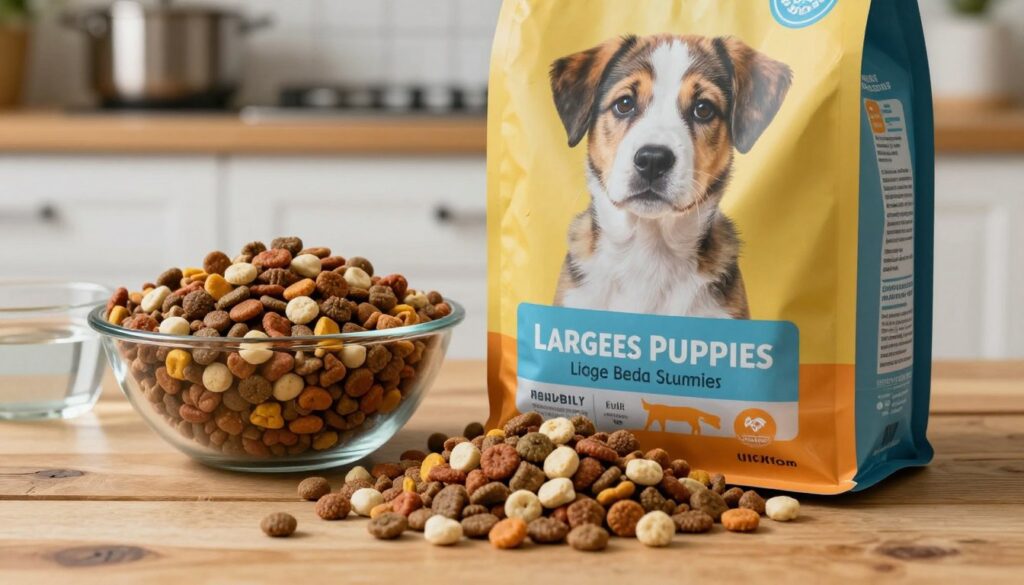
Orijen Original Large Breed Puppy Formula
Orijen makes premium dog food for large breeds in Alberta. Their kitchen is one of the most advanced in the world. This formula is special because it has 85% animal ingredients, one of the highest percentages in dry kibble.
Your puppy gets whole-prey nutrition. This means the food includes muscle meat, organs, cartilage, and bone. It also has fresh or raw chicken and turkey, wild-caught fish, and cage-free eggs for a protein-rich diet.
- Zero artificial preservatives, colors, or cheap fillers
- Ideal for active and athletic puppies
- Works well for picky eaters
- Supports high-protein, multi-meat diets
Blue Buffalo Life Protection Large Breed Puppy
Blue Buffalo offers high quality dog food for big dogs with LifeSource Bits technology. Veterinarians picked specific antioxidants, vitamins, and minerals. They are cold-formed to keep their potency.
Real deboned chicken is the first ingredient in this premium dog food. You won’t find chicken by-product meals, corn, wheat, soy, or artificial flavors in this formula.
- Dual-kibble system combines nutrition with great taste
- Cold-formed pieces preserve heat-sensitive nutrients
- No by-products or artificial ingredients
- Supports large breed growth and development
Both formulas help prevent expensive orthopedic problems later in your dog’s life. They provide the balanced nutrition your large breed puppy needs during critical growth stages.
Understanding Developmental Orthopedic Diseases in Large Breeds
Large-breed puppies grow fast, putting stress on their bodies. This fast growth is risky if they don’t get the right food. Developmental orthopedic diseases (DOD) affect their growing skeletons. These problems can cause pain and high vet bills if not fed correctly.
Bones in large-breed puppies grow faster than the soft tissues around them. The wrong diet can make bones grow too quickly. This leads to painful joint problems that might need surgery, costing $3,000 to $7,000 per joint.
Common Developmental Orthopedic Diseases
Three major conditions affect large-breed puppies:
- Hip Dysplasia – The ball-and-socket hip joint develops abnormally, causing arthritis and mobility problems
- Elbow Dysplasia – Improper elbow joint development leads to lameness and chronic pain
- Osteochondritis Dissecans (OCD) – Cartilage separates from bone, creating painful joint lesions
Warning Signs to Watch For
Watch your puppy closely for these behaviors:
- Limping or favoring certain legs
- Reluctance to play or exercise
- Difficulty standing or climbing stairs
- Changes in behavior or activity level
The Nutrition Connection
A balanced diet is key for large dogs. Too many calories make them grow too fast. The wrong amounts of calcium and phosphorus harm bone development. The right food slows growth to a healthy pace.
Choosing the right puppy food is more than saving money. Cheap brands might save $20 per bag, but treating DOD can cost thousands. Premium large-breed formulas protect your puppy’s health and save money in the long run.
Grain-Inclusive vs Grain-Free Diets for Large Breed Dogs
The pet food industry has changed a lot in recent years. Grain-free diets were popular for over a decade. But now, grain-inclusive formulas are back, thanks to new research. Your large breed dog needs a diet that supports their health and energy.
Many people think grains are bad for dogs. But, whole grains like oats and brown rice are good for them. It’s the low-quality grains that are the problem.
Why Whole Grains Support Digestive Health
High-quality dog food for giant breeds now includes whole grains. These grains are good for your dog’s health:
- Digestible fiber for a healthy gut
- Carbohydrates for energy all day
- B vitamins for metabolism and nerves
- Prebiotics for gut bacteria
Go! Solutions Skin + Coat is a great example of this. It uses oats, brown rice, and barley for nutrition. Studies show grain-inclusive diets may prevent heart problems linked to grain-free foods. Whole grains give your dog steady energy, not quick spikes.
When Grain-Free Formulas Make Sense
Only about 10% of dogs have grain allergies. Most dogs with food sensitivities don’t need to avoid grains. Dogs with certain health issues might need grain-free food.
Always talk to your vet before choosing grain-free food. They can help decide if it’s right for your dog. Quality is more important than whether it has grains. Unless your vet says your dog needs grain-free, grain-inclusive food is usually better.
Essential Supplements and Additives in Premium Large Breed Formulas
Choosing the right dog food for large breeds is crucial. It’s not just about proteins and fats. It’s about the special ingredients that help with brain growth, joint health, and more. These ingredients are key for large breed puppies during their growth.
DHA, an omega-3 fatty acid, is vital for your puppy’s brain and eyes. It helps with learning and problem-solving. Puppies with DHA in their diet do better in training and thinking.
Joint health is also important. Glucosamine and chondroitin help keep joints healthy. They prevent joint problems before they start.
Look for these supplements in good dog food for large breeds:
- Antioxidants like vitamin E, vitamin C, selenium, and beta-carotene that neutralize cell-damaging free radicals
- Probiotics (beneficial bacteria strains like Lactobacillus and Bifidobacterium) for gut health
- Prebiotics (fiber that feeds beneficial bacteria) for nutrient absorption
- Cold-formed nutrient blends that preserve heat-sensitive vitamins and minerals
Blue Buffalo’s LifeSource Bits show how good dog food includes these supplements. They have a special antioxidant blend for immune health. The cold-forming keeps nutrients fresh.
| Supplement | Primary Benefit | Food Source |
|---|---|---|
| DHA | Brain and eye development | Fish oil |
| Glucosamine | Cartilage building and repair | Fish meal, bone broth |
| Chondroitin | Cartilage elasticity and protection | Shellfish, animal cartilage |
| Vitamin E | Immune support and antioxidant protection | Plant oils, seeds |
| Probiotics | Digestive health and immune function | Fermented ingredients |
Choosing premium dog food with these supplements is convenient. It gives your puppy everything they need in one food. This saves money compared to buying separate supplements.
Investing in quality dog food for your puppy is worth it. It leads to better health, stronger joints, and a sharper mind. These supplements and additives support your puppy’s growth and long-term health.
How Long Should Your Large Breed Puppy Stay on Puppy Food
Deciding when to switch your large breed puppy to adult food is a big decision. Unlike small breed puppies, large breed puppies grow slowly and need special nutrition. They usually need puppy food for at least a year, and sometimes up to two years. This helps prevent serious bone and joint problems later on.
The right time to switch depends on your puppy’s breed and growth. Switching too early can harm their bones, while waiting too long can cause obesity and growth problems. Your vet can check if your puppy is ready through physical exams and X-rays.
Transitioning from Puppy to Adult Food
Changing from puppy to adult kibble should be done slowly. Sudden changes can upset their stomach, cause loose stools, vomiting, and less appetite. Instead, mix adult food with puppy food over seven to ten days.
Here’s a daily plan for a smooth transition:
- Days 1-2: Mix 75% puppy food with 25% adult food
- Days 3-4: Use a 50/50 blend of both formulas
- Days 5-6: Mix 25% puppy food with 75% adult food
- Days 7 and beyond: Feed 100% adult formula
Keep an eye on your puppy during this time. If they have digestive issues, slow down the transition. Choose the healthiest dog food for large breeds that they can tolerate during the change.
Breed-Specific Timeline Considerations
Different large breeds mature at different rates. This means their feeding timelines vary. Here’s a guide to help you understand when your breed needs the transition:
| Breed | Puppy Food Duration | Growth Plate Closure Age |
|---|---|---|
| Labrador Retriever | 12-15 months | 12-14 months |
| Golden Retriever | 12-18 months | 14-16 months |
| German Shepherd | 12-18 months | 13-15 months |
| Great Dane | 18-24 months | 18-20 months |
| Mastiff | 18-24 months | 19-22 months |
The size and growth rate of your puppy determine the best time to switch. Larger breeds like Great Danes and Mastiffs need more time on puppy food. Your vet can check your dog’s development to find the right time for adult nutrition.
Choosing the best nutrition for large breed dogs means working with your vet. Schedule a consultation before making any changes. This ensures your puppy gets the support they need during this critical growth phase.
Red Flags to Avoid When Choosing Large Breed Dog Food
Finding the right food for your large breed puppy can be tough. Pet stores are full of marketing tricks. Many think big dogs need lots of protein or calcium, but that’s not true. Knowing which ingredients are low quality helps keep your puppy healthy and saves money.
Checking ingredient lists is easy once you know what to look for. Your goal is to find high quality dog food for big dogs. Look for foods without cheap fillers and questionable additives.
Identifying Low-Quality Ingredients
Be careful of these bad items in the first five ingredients:
- Corn and corn meal
- Wheat and wheat gluten
- Soy products
- Generic by-product meals
- Artificial colors and flavors
These fillers are cheap but bad for your puppy’s diet. They make protein percentages look good but are hard for big dogs to digest.
Understanding Meat Meals vs. By-Products
Not all meals are the same. Meat meals like chicken or lamb are good protein sources. But generic by-product meals are low quality and not good for your puppy.
Artificial Preservatives to Reject
Avoid foods with BHA, BHT, and ethoxyquin. These preservatives can harm your puppy’s health. Instead, choose foods with natural preservatives like mixed tocopherols and rosemary.
| Ingredient Type | Red Flag Examples | Better Alternatives |
|---|---|---|
| Fillers | Corn, wheat, soy | Whole grains or grain-free bases |
| Protein Sources | By-product meal | Named meat meals |
| Preservatives | BHA, BHT, ethoxyquin | Mixed tocopherols, rosemary |
Calcium Content Matters for Large Breeds
Too much calcium is bad for growing large breed puppies. Foods with more than 1.8% calcium can cause bone problems. Always check the calcium percentage on the label.
Caloric Density and Growth Speed
Foods with over 400 calories per cup can cause too-fast growth. This can lead to joint problems. Look for foods with controlled calories for healthy growth.
Marketing Claims You Cannot Trust
Terms like “premium,” “gourmet,” and “natural” sound good but mean little. They’re not regulated. Look for AAFCO feeding trial statements for real quality.
Foods to Avoid Completely
- Adult formulas for puppies
- “All life stages” foods
- Brands with prices suspiciously low
Adult or all-life-stage formulas are not right for puppies. Cheap foods often cut corners. Quality foods have real costs.
With this checklist, you can quickly spot bad foods. This helps you choose the best for your dog’s health and happiness.
Feeding Guidelines and Portion Control for Growing Large Breed Puppies
Your large breed puppy grows fast, and feeding mistakes can be serious. The food bag gives starting points, not strict rules. Every puppy is different, based on metabolism, activity, and family genetics. Getting portion sizes right protects your puppy’s bones and joints and makes the most of quality nutrition.
Feeding your large dog right is more than just picking the right food. You must measure portions correctly and feed at the same time every day. This helps prevent orthopedic diseases common in large breed dogs.
Preventing Overfeeding and Rapid Growth
Overfeeding is a big mistake with large breed puppies. Owners might add extra food thinking it helps growth. But, it can lead to weak joints and developmental orthopedic disease.
Healthy large breed puppies should reach about 50% of their adult weight by five to six months. Faster growth can cause problems. Even protein-rich food for large dogs needs controlled portions because the issue is managing total calories and minerals.
Here are some practical feeding strategies:
- Measure food with a standard measuring cup (not a random scoop)
- Feed at the same times each day
- Never leave food out all day
- Keep treats to 10% of daily calories
- Weigh your puppy monthly and track growth
- Adjust portions based on body condition changes
Body condition scoring helps you assess your puppy properly. Feel the ribcage—you should feel ribs easily but not see them. Check the waist from above—it should be visible. Look for an abdominal tuck from the side.
| Puppy Age | Expected Adult Weight (70 lbs) | Daily Feeding Frequency | Approximate Daily Amount |
|---|---|---|---|
| 8-12 weeks | 7-15 lbs current | 4 meals daily | 1.5-2 cups |
| 3-6 months | 20-35 lbs current | 3 meals daily | 2-2.5 cups |
| 6-12 months | 40-60 lbs current | 2 meals daily | 2.5-3 cups |
| 12+ months | 65-70 lbs (adult) | 2 meals daily | 2-2.5 cups |
Feed younger puppies three to four times daily to prevent blood sugar swings and reduce bloat risk. Split meals give smaller portions that digest better. At six months, switch to two daily meals. This schedule matches adult feeding patterns and supports digestive health.
Portion control with quality nutrition delivers optimal developmental benefits while maximizing your investment in premium food.
Monitor your puppy’s growth curve monthly. If your puppy gains weight too quickly, reduce portions slightly. If ribs become too visible, increase portions. Adjust based on what you observe, not just what the bag recommends. This hands-on approach ensures your puppy develops strong bones and joints through proper feeding management.
Conclusion
Choosing the right dog food for large breeds is important. Your puppy needs a special formula with the right balance of calcium and phosphorus. It should also have moderate protein from good sources like chicken or fish.
The food should have fewer calories to avoid too much growth. This can hurt your puppy’s joints. Look for premium dog food with added DHA, glucosamine, and probiotics for better bone health and digestion.
Choosing premium dog food is more than just spending money. It’s an investment in your dog’s health. The puppy stage is critical for preventing skeletal damage. The food you choose now affects your dog’s whole life.
By choosing better food, you can save on vet bills and ensure a better life for your dog. This could mean years of happiness together.
Begin by talking to your vet about your puppy’s needs. Look at options like Orijen Original Large Breed Puppy Formula or Blue Buffalo Life Protection Large Breed Puppy. Choose based on your budget and your dog’s taste.
Use the right amount of food and check your puppy’s weight regularly. This helps your puppy grow well. Remember, feeding is a continuous process that needs watching and adjusting as your dog grows.
You now know how to pick the best dog food for your large breed. You can spot quality food beyond the marketing. Start your puppy on the right path today. Every day without the right food is a chance missed for your puppy’s best development.
Acting now protects your puppy’s future. It also gives you peace of mind, knowing you made the best choice for your dog’s health.