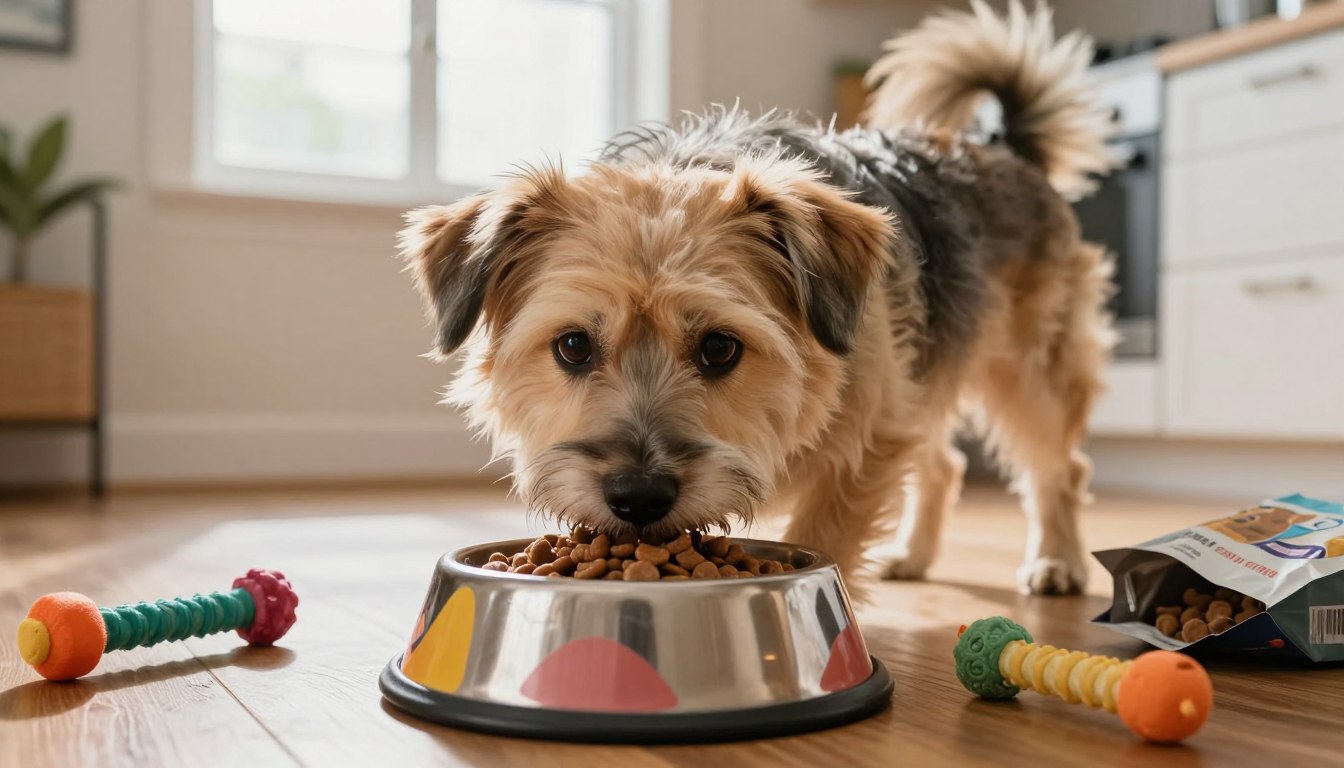
8 Tips for Managing a Fussy Eater Dog at Mealtime
You’ve prepared the meal with care. You set down the bowl. Your dog glances at it, then walks away. This feeling is tough when your pet won’t eat.
A fussy eater dog can test your patience and worry your heart. You want to feed your pet well. You want to see them eat with joy. When a picky eater dog turns away, it’s stressful for both of you.
The good news is that fussy eating in dogs is common and has solutions. Knowing why your picky eater dog won’t eat is key. Some reasons are medical, others are behavioral. Most can be fixed with the right approach.
This guide offers eight proven strategies to help your fussy eater dog eat well again. These tips work whether your dog has always been picky or recently stopped eating. You’ll learn how to find the cause of their behavior and make meals fun again.
Changing your dog’s eating habits takes patience and consistency. It won’t happen overnight. But with dedication and the right methods, most dogs start eating normally again. Your fussy eater dog can become excited about meals once more.
Table of Contents
Understanding Why Your Fussy Eater Dog Won’t Eat
Dogs won’t eat for many reasons. It could be health issues or behavior problems. Knowing why your dog is picky is the first step to help them.
There are two main reasons: health problems and environmental factors. Each needs a different approach. Let’s look into what might be wrong with your pet.
Health Issues That Can Reduce Your Dog’s Appetite
Medical issues are common reasons for a dog’s loss of appetite. Some are minor, while others need quick vet care.
- Stomach upset — Vomiting and diarrhea often signal food poisoning or digestive distress
- Gut dysbiosis — Bacterial imbalance in the digestive system causes inflammation and eating difficulties
- Dental problems — Sore gums, cavities, ulcers, or mouth injuries make chewing painful
- Recent vaccinations — Temporary malaise can suppress appetite for a day or two
- Infections or blockages — Intestinal obstruction causes pain during eating
- Serious diseases — Pancreatitis, liver disease, kidney disease, and cancer require urgent attention
If your dog’s appetite doesn’t return in a few days, see a vet. A Gut Health Test can find digestive problems.
Behavioral Reasons Behind Selective Eating
Stress and changes in life often cause picky eating in dogs. Dogs are sensitive and react to changes in their routine and feelings.
- House moves and new living spaces
- Travel to unfamiliar locations
- New visitors or other dogs in the home
- Loud arguments or noisy children
- Fireworks or thunderstorms
- Separation from their owner or caregiver
Anxiety from these changes makes your dog feel unsafe during meals. Once the stress is gone, your dog should start eating again. Knowing if it’s stress or illness helps you find the right solution.
When Your Dog’s Refusal to Eat Becomes a Concern
Not every skipped meal is a big deal. Some dogs just don’t like food as much. Small breeds eat less, and their eating habits might surprise you. It’s important to know when to worry and when to wait.
Looking at your dog’s weight is more telling than just counting meals. Feel their ribs and spine gently. If you can easily feel these bones, your dog is probably at a good weight. If your dog’s weight stays steady, they’re likely getting enough to eat. Tracking their weight monthly can help spot any issues early.
- Complete food refusal lasting more than 24 hours
- Rejection of all food types, including favorite treats and home-cooked meals
- No clear reason for the eating changes
- Sudden appetite loss in dogs that previously ate enthusiastically
- Prolonged eating problems in senior dogs
Older dogs need special attention. If older dogs stop eating, it could mean they’re not feeling well. Take them to the vet if they stop eating for a long time or if their appetite changes suddenly.
If your dog skips a meal but seems fine otherwise, keep an eye on them. Watch their energy, bathroom habits, and mood. Call your vet if your dog still won’t eat after a day or if you see other signs of trouble.
Breaking the Partial Anorexia Cycle in Picky Dogs
Partial anorexia in dogs is not about refusing all food. Instead, they picky eat only their favorite foods. This selective eating is a big nutrition problem. It usually starts because of too many treats and table scraps.
Dogs are clever and learn fast. They figure out that refusing their regular food might get them something better. But, you can fix this problem quickly. Most dogs start eating better in just a few days with the right feeding approach.
Recognizing Overfeeding and Treat Dependency
Take a close look at how much your dog eats every day. Ask yourself these key questions:
- Do you give treats when your dog begs at the table?
- How many family members have access to treats?
- Are you using treats to manage unwanted behaviors?
- Does your dog eat on a consistent schedule?
What seems like a small treat to you is a big deal for your dog. A 20-pound dog feels the effects of treats more than a 70-pound dog. Many owners don’t realize how much their dogs eat between meals. Treats add up quickly when many people feed them throughout the day.
Establishing Boundaries Around Table Scraps
Sharing table food might seem kind, but it messes with your dog’s mealtime. Scraps pile up from breakfast to dinner. Your fussy eater dog is already full by regular mealtime. Changing this needs everyone in the household to agree.
Call a family meeting and set clear boundaries. Here are some rules to follow:
- No treats between scheduled meals
- No one feeds the dog table scraps
- Keep all treats in one controlled location
- Cut treat amounts in half immediately
“When a dog realizes that their regular meal is the only food source available, they stop holding out for something better.”
This strict approach works because it takes away the choice. Your picky dog will start looking forward to mealtime again. Stop giving extra food, and your dog’s appetite will return to normal.
Creating the Ideal Feeding Environment for Your Fussy Eater Dog
Your dog’s eating habits are influenced by more than just the food. The place where they eat is crucial. Many pet owners forget this important detail when dealing with fussy eaters. The space, surface, and atmosphere around their meals affect their eating habits.
The spot where your dog eats is very important. Pick a quiet, low-traffic area away from the hustle and bustle. A bathroom or a secluded corner is ideal. Your dog needs a safe spot to eat without feeling rushed or scared by others.
Traditional bowls might not be the best for your dog. Some dogs struggle with concave bowls. Flat-faced breeds and large dogs have trouble with them. Small dogs get anxious because they can’t see their surroundings.
Flat feeding surfaces are a better choice. Natural materials like olive wood, bamboo, or Nevea hardwood are best. These materials are antibacterial and help calm your dog. Place flat boards in open areas so your dog can see everything around them.
The material of the bowl also matters. Some dogs don’t like the shiny surface of stainless steel bowls. Non-toxic plastic or ceramic bowls might be more appealing. Always wash feeding surfaces well after each meal to remove any soap residue. Dogs have a sensitive nose and can smell cleaning products, which might make them less likely to eat.
| Feeding Surface Type | Best For | Key Benefits |
|---|---|---|
| Flat Bamboo Board | All breeds, especially flat-faced dogs | Antibacterial, encourages natural licking, 360° visibility |
| Olive Wood Board | Large and medium breeds | Natural material, durable, calming effect |
| Nevea Hardwood Board | All breeds | Sustainable, antibacterial, long-lasting |
| Ceramic Bowl | Dogs sensitive to metal | Non-reflective, easy to clean |
| Plastic Bowl | Budget-conscious owners | Lightweight, non-toxic, various colors |
Making small changes to your dog’s eating area can make a big difference. Changing where and how your dog eats can improve their eating behavior quickly. The right surface and a calm location make mealtime better for your fussy eater.
The Natural Eating Routine Method
Your dog’s eating habits are linked to the emotions in the room. Dogs pick up on your stress and anxiety, making mealtime tough. When you stay calm, it becomes easier to encourage your dog to eat.
This method works with your dog’s instincts, not against them. It focuses on creating a peaceful space for your fussy eater. This space makes them feel safe and ready to eat.
Your emotional state is as important as the food you give your dog. Dogs sense your feelings and react to the energy around them. By staying relaxed during feeding, you signal to your dog that eating is safe and normal.
Step-by-Step Guide to Stress-Free Mealtimes
To start, plan a quiet time when your home is calm. Set aside about thirty minutes for this routine. Consistency is more important than the exact time of day.
Follow these steps for a relaxed eating environment:
- Choose a quiet, half-hour window when your home feels peaceful
- Call your dog into the food prep room and shut the door
- Refrain from interacting with your dog while they watch you prepare their meal
- Play calming music at low volume (soft rock, classical, or reggae work well)
- Warm the food slightly by adding a splash of bone broth if your dog needs extra encouragement
- Place food in small dollops across a flat feeding board
- Put the food down without asking anything of your dog
- Step four paces away and sit with your back facing your dog’s food
- Do something quiet to occupy yourself, like reading
- If your dog approaches you, turn your face away to avoid eye contact
- When your dog returns to food the second time, pick up the board after a set period
- Refrigerate any leftovers until the next meal
- Repeat this routine at every mealtime consistently
Most dogs start eating normal portions by the third day. Patience and repetition help reset their eating patterns. Skip treats and food-based enrichment until they eat well at regular mealtimes. When you do reintroduce treats, keep amounts small.
Understanding Your Dog’s Instinctual Eating Habits
Dogs evolved as opportunistic eaters who check their surroundings before eating. Your dog’s instincts tell them to assess safety before consuming food. They’re incredibly sensitive to the emotions and body language around them. Your relaxed presence communicates safety.
Different dogs have different feeding time preferences. Anxious dogs often eat better in the evening when the day winds down. Some dogs prefer eating after the family completes morning routines. Others do well with breakfast immediately upon waking. Watch your dog and work with their natural patterns rather than forcing a schedule that doesn’t fit them.
Sitting in the room with your dog matters for encouraging dog to eat successfully. Your presence prevents anxiety about you disappearing. Your dog stays relaxed knowing you’re nearby. This security allows them to focus on their meal. By understanding what makes your dog comfortable, you create mealtimes where eating feels natural and pressure-free.
| Dog Anxiety Level | Best Feeding Time | Environmental Approach | Expected Timeline |
|---|---|---|---|
| High Anxiety | Evening Meal | Dim lighting, soft music, owner present in room | 3-5 days to improvement |
| Moderate Anxiety | After Family Routine | Calm music, owner visible but occupied | 2-4 days to improvement |
| Low Anxiety | Morning Breakfast | Standard quiet space, relaxed owner nearby | 1-3 days to improvement |
| Routine-Dependent | Same Time Daily | Consistent location, familiar setup | 2-3 days to full adjustment |
Stick with your routine even when progress seems slow. Your dog’s nervous system needs time to reset. By the third day, most dogs respond better to encouraging dog to eat through this method. Within a few days of consistency, your fussy eater often eats more than before.
Choosing the Right Food and Feeding Surface
Finding the best food for picky dogs starts with understanding what makes certain foods more appealing. Your dog’s nutrition affects their willingness to eat. The quality and taste of food are key to whether your fussy eater will eat their meals.
High-protein foods are great for picky eaters because they match their natural diet preferences. Dogs naturally crave whole meat sources and concentrated nutrition. Proteins help build muscles and give energy in smaller portions, which is good for dogs with smaller appetites.
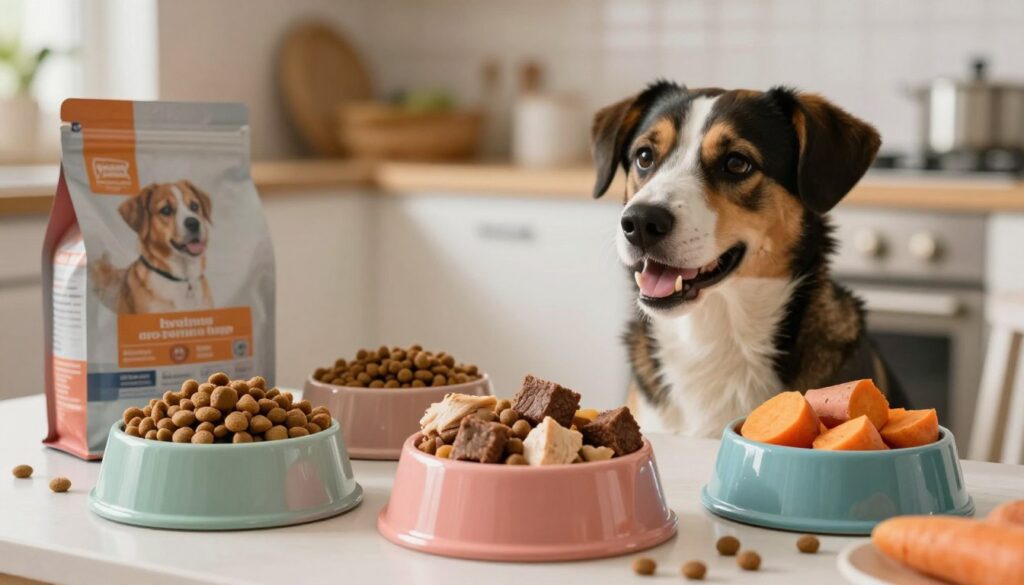
- High-protein kibble with whole meat as the first ingredient
- Grain-free formulas that reduce digestive sensitivity
- Hypoallergenic blends for dogs with food sensitivities
- Wet food for dogs who reject dry kibble
- Foods with added vitamins and mineral supplements
Switching foods needs careful planning. New food can upset your dog’s stomach if introduced too quickly. Start by mixing small amounts of new food into their current meal over 7 to 10 days. Gradually increase the new food ratio while decreasing the old food. This slow transition prevents digestive problems.
| Food Type | Palatability Level | Best For | Transition Time |
|---|---|---|---|
| Dry Kibble (High-Protein) | Medium to High | Cost-conscious owners | 7-10 days |
| Wet Food | High | Dogs rejecting kibble | 7-10 days |
| Grain-Free Formula | Medium to High | Sensitive stomachs | 7-10 days |
| Hypoallergenic Blend | Medium | Allergy-prone dogs | 7-10 days |
Talk with your veterinarian before making major food changes. Your vet can identify potential allergies or sensitivities affecting your dog’s eating habits. They recommend appropriate options based on your dog’s specific health needs.
The feeding surface matters as much as food quality. Your dog may reject even excellent nutrition if the bowl causes discomfort. Use stainless steel or ceramic bowls rather than plastic. Raise the bowl to mouth level to reduce neck strain. Keep the feeding area clean and quiet away from distractions.
Consistency builds good eating habits. Find one quality option and stick with it while implementing behavioral strategies from other sections. Constantly switching foods teaches picky dogs that refusing meals brings variety, reinforcing selective eating patterns.
Making Mealtime More Appealing Without Spoiling Your Dog
A picky eater dog often loses interest in meals for reasons beyond taste alone. Your dog’s sense of smell plays a much bigger role than taste buds in eating enjoyment. Dogs have far fewer taste buds than humans—about 1,700 compared to your 9,000. What they do have is roughly 300 million scent receptors. This means aroma matters more than flavor when you’re trying to encourage your picky eater dog to eat.
The key is making meals more appealing without creating unrealistic eating expectations. You can enhance your dog’s food in smart ways that encourage healthy eating patterns without reinforcing picky behavior.
Enhancing Dry Food Palatability
Dry kibble remains an economical choice for most dog owners, yet many picky eaters find it boring. You can transform regular kibble into something more enticing using simple methods.
Adding warm (not hot) water to kibble releases aromas that appeal to your picky eater dog. The warmth increases scent intensity and creates a gravy-like texture that many dogs prefer. Let the kibble soak for 5-10 minutes to soften it completely.
You can also use interactive feeding toys designed to dispense kibble. As your dog moves and plays with these toys, they receive food rewards. This approach taps into your dog’s natural foraging instincts and transforms eating from a mundane task into mental stimulation.
- Add warm water to kibble 5-10 minutes before serving
- Use slow-feeder or puzzle bowls for engagement
- Try interactive toys that dispense kibble during play
- Rotate between different kibble brands occasionally
- Serve food at room temperature rather than cold
Strategic Use of Treats and Food Toppers
Many picky eater dog owners notice their pet shows more interest in treats than regular meals. You can use this preference strategically without creating harmful eating patterns.
Mixing small amounts of high-value treats or canned food into regular meals works well. These additions provide just enough incentive for reluctant eaters without building dependency. Keep toppers to 10-15% of the total meal.
| Enhancement Method | Best For | How Much to Use | Frequency |
|---|---|---|---|
| Canned food mixed into kibble | Picky eater dogs resistant to dry food | 10-15% of meal | Every meal until eating improves |
| Commercial dog food sauce or gravy | Adding moisture and flavor quickly | 1-2 tablespoons per bowl | Consistently, then gradually reduce |
| Small pieces of high-value treats | Building interest in main meal | 5-10% of meal portion | Every meal, not just refusal times |
| Bone broth (low sodium) | Adding flavor and hydration | 2-3 tablespoons per bowl | Daily until appetite normalizes |
| Warm water alone | Budget-friendly palatability boost | Enough to soften kibble | Every meal as standard practice |
The critical distinction involves timing. Apply enhancements consistently at every meal rather than only when your picky eater dog refuses food. Inconsistent use teaches your dog that holding out leads to better options appearing—which reinforces picky behavior.
Quality matters when selecting commercial toppers. Choose products that add nutritional value rather than empty calories. Read ingredient lists carefully to ensure you’re not introducing excessive sodium or unnecessary fillers.
Dogs don’t need fancy meals—they need meals that smell appealing and feel rewarding to eat.
Your goal is gradually reducing these enhancements as normal eating resumes. Start with stronger additions, observe your picky eater dog eating consistently, then slowly decrease the amount. This bridges your dog back to regular kibble without creating escalating expectations.
Avoid patterns where increasingly appealing additions become necessary. This creates a cycle where your picky eater dog learns that refusing meals brings better options. Position all food enhancements as temporary tools to re-establish healthy eating rather than permanent meal components.
Establishing Consistent Feeding Schedules and Routines
Dogs love routine and predictability. A consistent feeding schedule helps solve eating problems. It tells your dog when to eat, which helps with hunger and digestion.
Knowing when meals come reduces anxiety. It makes your dog feel more confident at mealtime.
Adult dogs usually eat twice a day, about 12 hours apart. This signals to their body when to expect food. It prepares their digestive system.
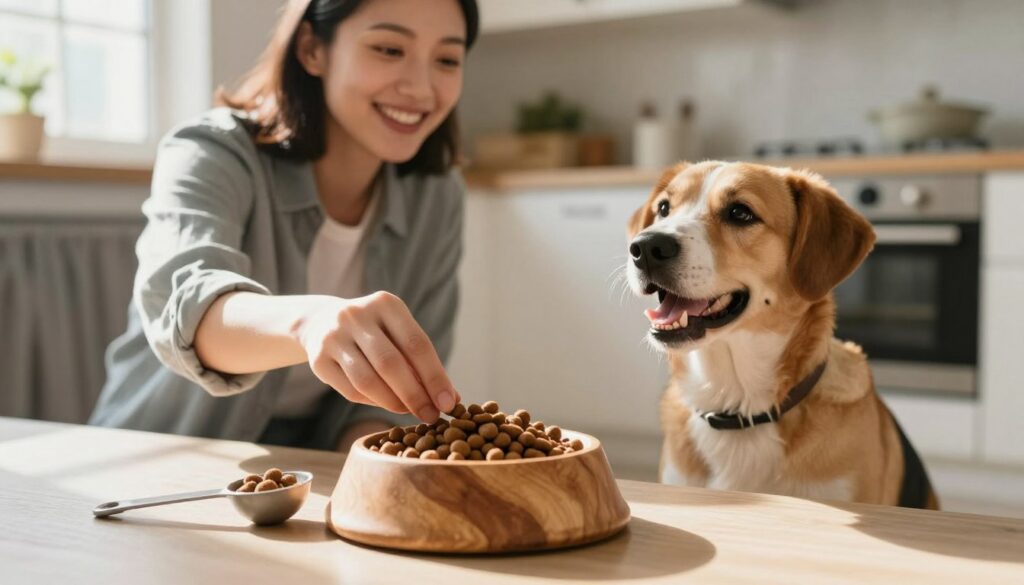
Try the meal window idea. Give your dog food for 15 to 20 minutes. Then, take the bowl away, even if they haven’t eaten.
This teaches them meals are limited. They learn to wait for the next meal if they miss one.
Consistency is key, not just in timing. Keep the following the same:
- Feeding location in your home
- Type of feeding surface or bowl
- Food preparation method
- Time of day for each meal
This routine reduces stress and helps your dog make fewer decisions. Use positive reinforcement when they eat. Praise and attention, not treats, are best.
Ignore begging to avoid rewarding bad behavior. This method helps your dog associate eating with positive things.
Everyone in the house must follow the routine. In 3 to 7 days, you’ll see better eating habits. Healthy dogs won’t starve, and missing meals during the adjustment is okay.
Recognizing When to Seek Veterinary Guidance
A finicky dog appetite can sometimes signal health issues beyond just being picky. Knowing when to call your vet is key for your dog’s health. Not every case of selective eating needs a vet, but some situations are urgent.
Take your dog to the vet if they won’t eat for more than 24 to 48 hours. This is crucial if they won’t eat even their favorite treats or homemade food. Also, sudden changes in appetite in a dog that usually eats well need quick vet attention.
- Complete food refusal lasting beyond one day
- Inability to identify behavioral or environmental triggers
- Eating problems paired with lethargy, vomiting, or diarrhea
- Weight loss or changes over consecutive months
- Age-related appetite decline in senior dogs
Your vet will ask about your dog’s recent activities, diet, and home changes. They’ll do a physical check for dental issues, belly pain, and other signs. They might suggest bloodwork, urinalysis, or imaging tests to find the cause.
Keep a feeding log of what you feed your dog, what they eat, when, and any unusual behaviors. This helps a lot during vet visits. If tests show nothing wrong, your vet might suggest a vet behaviorist or dietary trials to find what’s affecting your dog’s appetite.
Getting professional help isn’t giving up. It’s about finding and fixing the real problem, whether it’s health or behavior.
Conclusion
Managing a fussy eater dog needs patience, consistency, and knowing what makes them eat. This article shared eight strategies to tackle picky eating. These include finding the cause, getting vet care when needed, and breaking treat habits.
Also, making mealtime better, using the Natural Eating Routine, and choosing the right food and bowls. It’s important to mix these strategies for the best results.
Begin with simple changes to your dog’s eating routine and check with the vet. Your vet can check for health issues that might affect your dog’s appetite. Make the eating area calm and distraction-free.
Set regular eating times and stick to them. These basic steps can improve things in just a few days. If your dog still doesn’t want to eat after a week, try more changes like new food or fewer treats.
Most dogs need a few weeks to a couple of months to adjust to new routines. Remember, every dog is different. What works for one might not work for another.
Watch how your dog reacts to changes and adjust your approach. Keep to the core principles of consistency, setting boundaries, and making mealtime better. See mealtime struggles as a chance to bond and understand your dog better.
With patience and the strategies you’ve learned, your fussy eater dog can enjoy healthy, stress-free meals again.