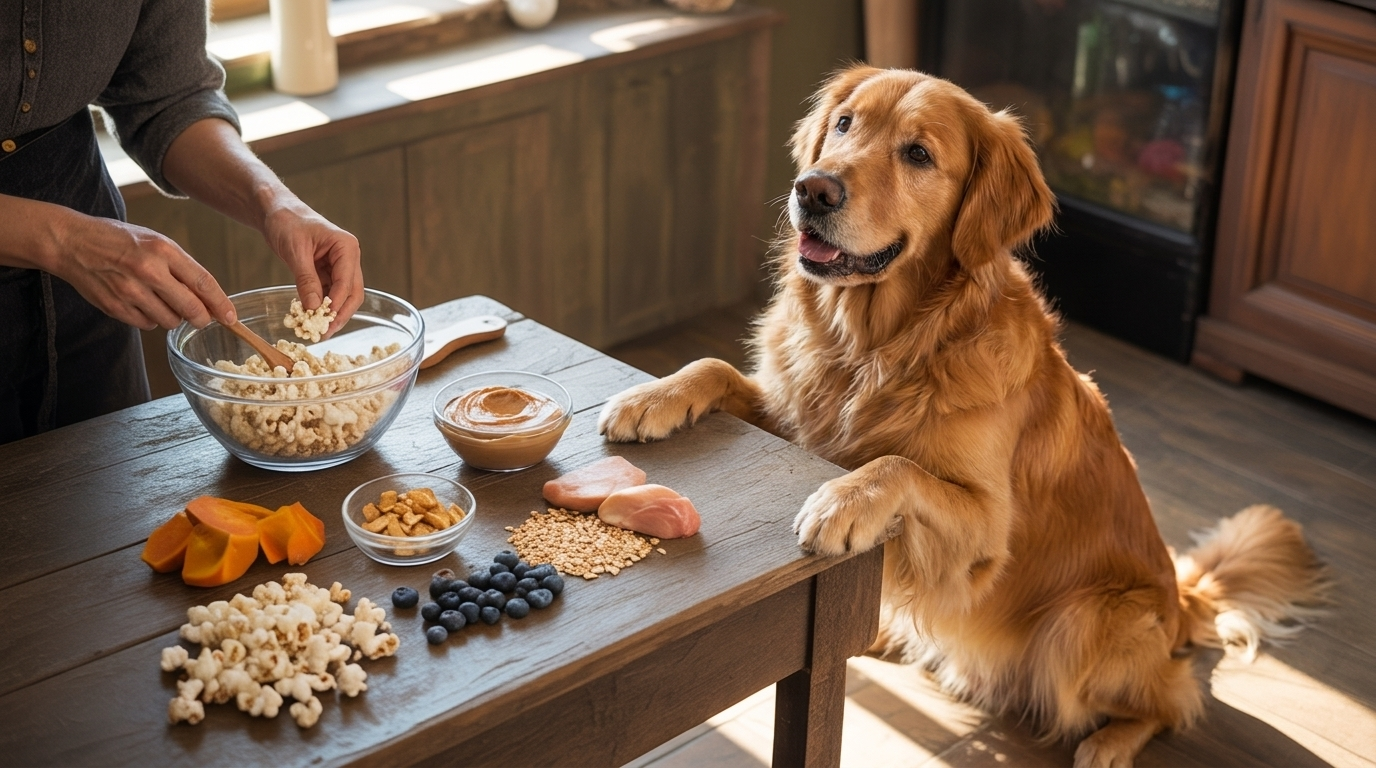
Homemade Dog Popcorn Treats: Safe, Simple Recipes Your Pup Will Love
Every Saturday morning at 8 AM, my neighbor Jennifer reaches for her air popper and her two rescue dogs immediately jump to attention. They know exactly what’s coming—homemade dog popcorn treats, made fresh and safely, just for them. This wasn’t always her routine. Two years ago, Jennifer made the mistake that countless pet parents make: she grabbed a bag of microwave popcorn and shared some with her anxious rescue, Daisy. Within hours, Daisy was experiencing severe digestive distress. The vet visit that followed taught Jennifer an expensive lesson: not all popcorn is safe for dogs, and commercial varieties often contain hidden additives that wreak havoc on canine digestive systems.
Today, Jennifer makes homemade dog popcorn treats from scratch, controlling every single ingredient. Her dogs are healthier, happier, and her peace of mind is priceless. If you’ve been wondering whether can dogs eat popcorn, the answer is yes—but only when prepared correctly at home. Store-bought options are simply too risky.
The question “can dogs eat popcorn” deserves a nuanced answer, and that’s exactly what this guide provides. Whether you’re asking “is popcorn bad for dogs” or “is popcorn bad for puppies,” the truth is that plain, air-popped popcorn prepared at home is safe for most dogs as an occasional treat. However, the commercial alternatives and flavored varieties are dangerous and should be avoided entirely. This is why making homemade dog popcorn treats is not just safer—it’s smarter, cheaper, and more rewarding for both you and your pup.
Table of Contents
Why Homemade Dog Popcorn Treats Beat Commercial Options
When you walk through a pet supply store, you’ll see endless shelves of commercial popcorn-based dog treats with fancy packaging and bold health claims. Brands promise “natural,” “healthy,” and “vet-approved,” but if you actually read the ingredient labels, a different picture emerges.
Most store-bought dog treats containing popcorn include preservatives like BHA and BHT, artificial flavoring compounds, added sugars, corn syrup, and binding agents that provide zero nutritional value. Some contain whey powder, which triggers digestive issues in lactose-sensitive dogs. Others contain xylitol—an artificial sweetener that is extremely toxic to dogs and can cause liver failure and hypoglycemia. When you ask “is popcorn bad for dogs,” the real culprit isn’t the popcorn itself; it’s what manufacturers add to it.
Can dogs eat skinny pop popcorn, a popular “diet” popcorn brand marketed to humans? Absolutely not. Skinny Pop contains artificial flavors and preservatives that aren’t formulated for canine consumption. This is why can dogs eat skinny pop popcorn is a resounding no—even though it’s marketed as a healthier option for humans.
The solution is simple: make homemade dog popcorn treats at home. You control every ingredient, eliminate all additives, and create treats that are genuinely safe for your dog. A batch of homemade dog popcorn treats costs pennies compared to commercial alternatives, yet delivers superior nutrition and peace of mind.
Can Dogs Eat Popcorn?
Before we dive into recipes, let’s address the fundamental question directly: can dogs eat popcorn?
The answer is conditional. Plain, air-popped popcorn—prepared without salt, butter, oils, or artificial seasonings—is safe for dogs in appropriate portions. However, is popcorn bad for dogs when it contains additives? Absolutely. And is popcorn bad for puppies specifically? Yes, puppies have even more sensitive digestive systems than adult dogs, making commercial or flavored popcorn particularly problematic for young pups.
The critical distinction here is this: can dogs eat popcorn depends entirely on how it’s prepared. Microwave popcorn, buttered varieties, salted snacks, and flavored options should never be given to dogs. This is where the confusion starts. Many people assume that if something is safe for dogs in plain form, any version of it is safe. This is false.
When you ask “is popcorn bad for dogs,” you’re really asking about the additions, not the kernels themselves. Plain popcorn contains B vitamins, fiber, and trace minerals. Is popcorn bad for dogs in its purest form? No. Is popcorn bad for puppies when it’s plain and air-popped? Not typically, though puppies should have smaller portions than adult dogs.
Choosing Quality Ingredients for Homemade Dog Popcorn Treats
Making homemade dog popcorn treats starts with selecting the right popcorn kernels. This is non-negotiable.
Organic vs. Conventional Kernels
Conventional popcorn is often treated with pesticides and fungicides during growth and storage. If you’re going to the effort of making homemade dog popcorn treats from scratch, why start with potentially contaminated kernels?
Organic popcorn kernels cost slightly more ($4-6 per pound) but eliminate pesticide residue entirely. Look for kernels labeled “non-GMO” and “pesticide-free.” Store them in an airtight container in a cool, dark place, and they’ll last for months.
Air Popper: The Only Safe Method
If you’re serious about making homemade dog popcorn treats regularly, invest in an air popper. Yes, you can pop kernels on the stovetop or in the microwave, but this defeats the purpose.
Stovetop popping requires oil, which adds unnecessary fat and calories to treats. Even minimal oil residue increases digestive upset risk in sensitive dogs.
Microwave popcorn bags are lined with perfluorinated compounds (PFCs) that can leach into kernels during heating. These chemicals are concerning for both human and canine health.
Air poppers use only hot air circulation—no oil, no chemicals, no additives. A quality model ($30-50) pays for itself within weeks if you make homemade dog popcorn treats regularly.
Recipe 1: Applesauce Popcorn Clusters for Dogs
This is the gateway recipe for making homemade dog popcorn treats. It’s simple, effective, and most dogs find it irresistible.
Ingredients:
- 3 cups plain air-popped popcorn (prepared without salt, butter, or oils)
- 1/2 cup unsweetened applesauce
- 1 tablespoon unsweetened pumpkin puree (optional, aids digestion)
- Pinch of cinnamon (optional, aids blood sugar regulation)
Instructions:
Pop your organic kernels in the air popper according to manufacturer instructions. Spread the popped kernels on a baking sheet and cool completely (at least 10 minutes). Critically, remove every single unpopped or partially popped kernel—these are choking hazards.
In a small bowl, combine unsweetened applesauce and pumpkin puree if using. Stir in a small pinch of cinnamon if desired. Place cooled popcorn in a large mixing bowl and drizzle the applesauce mixture gradually while tossing gently. You want light coating, not soggy kernels. Use about 80% of your mixture first, then add more as needed.
Spread the coated popcorn on parchment paper and let it dry at room temperature for 30 minutes to 1 hour. The kernels should be slightly sticky but not wet. Break apart clumps and store in an airtight container.
Serving Size:
- Small dogs: 5-10 pieces daily
- Medium dogs: 10-15 pieces daily
- Large dogs: 15-20 pieces daily
Storage: 7 days in airtight container, or freeze for up to 3 weeks
Recipe 2: Pumpkin & Peanut Butter Dog Popcorn Treats
This combination is a nutritional powerhouse. Pumpkin supports digestive health while peanut butter provides protein and healthy fats. This recipe creates the most popular homemade dog popcorn treats among my test group of dog owners.
Ingredients:
- 3 cups plain air-popped popcorn (no salt, butter, or oils)
- 1/4 cup natural peanut butter (xylitol-free—check labels carefully)
- 1/4 cup unsweetened pumpkin puree
- 1 tablespoon coconut oil (melted)
- 1/4 teaspoon vanilla extract (dog-safe, xylitol-free)
Instructions:
Warm peanut butter and coconut oil together until pourable (30 seconds in microwave or double boiler). Stir in pumpkin puree and vanilla extract. This creates a thick, pourable sauce.
Pour cooled air-popped popcorn into a large bowl. Drizzle the peanut butter mixture over it while tossing constantly. Every kernel should be coated, but not dripping wet.
Spread on parchment paper and allow to dry completely (1-2 hours). Once dry, break apart clusters. Store in airtight container.
Pro Tip: If mixture seems too thick, add warm water (1 teaspoon at a time) until you reach proper sauce consistency.
Serving Size:
- Medium dogs: 8-12 pieces daily
- Adjust based on your dog’s overall treat allowance
Storage: 10 days in sealed container, or freeze for 1 month
Recipe 3: Sweet Potato & Chicken Dog Popcorn Mix
If your dog prefers savory-sweet combinations, this recipe for homemade dog popcorn treats will become their favorite. Sweet potato provides fiber and natural sweetness, while chicken delivers lean protein.
Ingredients:
- 3 cups plain air-popped popcorn (no salt, butter, or oils)
- 1/2 cup cooked sweet potato (mashed)
- 1/4 cup plain cooked chicken breast (finely shredded)
- 1 tablespoon bone broth (low-sodium, no onion/garlic)
- 1/2 teaspoon dried parsley (optional, adds freshness)
Instructions:
Combine mashed sweet potato, shredded chicken, and bone broth in a bowl, stirring until you have a chunky paste. Add dried parsley if using. Pour cooled air-popped popcorn into a large mixing bowl.
Pour the mixture over popcorn, tossing gently but thoroughly. Spread on parchment-lined baking sheet and dry in a 200°F oven for 15-20 minutes, stirring halfway through. This recipe benefits from gentle heat drying due to higher moisture content.
Cool completely before storing.
Serving Size:
- 6-10 pieces daily (more calorie-dense than other recipes due to protein)
Storage: 5 days refrigerated, or freeze for 3 weeks
Recipe 4: Blueberry & Oat Dog Popcorn Treats
Blueberries are antioxidant powerhouses, making this recipe ideal for aging dogs or those with joint concerns. This version of homemade dog popcorn treats delivers genuine nutritional benefits beyond simple novelty.
Ingredients:
- 3 cups plain air-popped popcorn (no salt, butter, or oils)
- 1/2 cup fresh or frozen blueberries (thawed if frozen)
- 1/4 cup old-fashioned rolled oats
- 2 tablespoons natural almond butter (xylitol-free)
- 1 tablespoon raw honey
Instructions:
Mash blueberries thoroughly in a bowl, releasing their juice. Stir in oats, almond butter, and honey until combined into a thick, berry-studded paste.
Toss with cooled air-popped popcorn until evenly coated. Spread on parchment and dry at room temperature for 1-2 hours. The oats will absorb excess moisture.
Serving Size:
- 5-8 pieces daily for most dogs
Storage: 6 days refrigerated, or freeze for up to 3 weeks
The Critical Safety Question: “Is Popcorn Bad for Puppies?”
Many new dog parents ask: “is popcorn bad for puppies?” The answer requires more nuance than a simple yes or no.
Is popcorn bad for puppies when it’s plain and air-popped? Not inherently, but puppies have more sensitive digestive systems than adult dogs. Puppies also have smaller mouths and higher choking risk with kernel-based foods.
Is popcorn bad for puppies in terms of nutrition? Plain popcorn offers minimal nutritional value for growing dogs. Puppies need nutrient-dense foods, and popcorn is more filler than fuel.
Is popcorn bad for puppies when made into homemade treats? Only if portions are excessive or if puppies have sensitivities. Start with just 2-3 pieces for puppies under 6 months, and gradually increase only if digestive upset doesn’t occur.
The safest approach: for puppies, skip popcorn treats entirely for the first 6 months. After that, introduce homemade dog popcorn treats very gradually, with veterinary approval, and in tiny portions.
Safe Mix-Ins and Flavor Variations
Once you master the base recipes, experiment with these dog-safe additions to your homemade dog popcorn treats:
Protein Boosters: Finely shredded cooked turkey, salmon powder (unseasoned), or plain Greek yogurt
Digestive Aids: Ground flaxseed, chia seeds, or additional pumpkin puree
Joint Support: Bone broth powder, turmeric (small amounts only), or fish oil
Natural Flavor: Unsweetened banana powder, carob powder (never chocolate), or freeze-dried meat
Texture Enhancement: Ground sweet potato, rolled oats, or quinoa flakes
Always introduce new mix-ins gradually and watch for digestive reactions. Some dogs have sensitivities you won’t discover until you experiment.
Storage, Shelf Life, and Food Safety
Homemade dog popcorn treats lack commercial preservatives, which means shorter shelf life but superior freshness and nutrition.
At Room Temperature: Most recipes last 4-7 days in airtight containers away from direct sunlight.
Refrigerated: Store in sealed glass containers. Most recipes last 10-14 days when refrigerated.
Frozen: This is your best option for batch-making. Most homemade dog popcorn treats freeze beautifully for 3-4 weeks. Thaw at room temperature (approximately 30 minutes) before serving.
Freshness Indicators: If treats develop an off smell, visible mold, or feel slimy instead of crispy, discard immediately.
Understanding Portions: The 10% Rule
Here’s where many pet parents stumble: homemade dog popcorn treats are healthier than commercial varieties, but they’re still treats. They still count toward daily caloric intake.
The 10% rule is critical: treats should not exceed 10% of your dog’s daily calories. For a 50-pound dog eating 1,200 calories daily, that’s a maximum of 120 calories from treats—including homemade dog popcorn treats.
A single plain popcorn kernel contains roughly 3 calories. A piece with light applesauce coating contains 8-10 calories. Adding peanut butter or bone broth increases calories to 15-20 per piece.
Daily treat limit by dog size:
- Small dogs (under 20 lbs): 5-10 treats daily maximum
- Medium dogs (20-50 lbs): 10-15 treats daily maximum
- Large dogs (50+ lbs): 15-20 treats daily maximum
These are guidelines. Adjust based on your specific dog’s size, activity level, and existing diet. Always consult your veterinarian about appropriate caloric intake for your individual pet.
When NOT to Give Popcorn Treats: Health Considerations
Even with perfect homemade dog popcorn treats recipes, popcorn isn’t right for every dog.
Skip popcorn treats if:
- Your dog has a history of choking or esophageal issues
- They have severe grain sensitivities (popcorn is corn)
- They’re recovering from GI surgery
- They have severe dental disease and can’t chew firm kernels
- They’re on a restricted diet prescribed by your vet
Better alternatives for these dogs:
- Pumpkin puree frozen in ice cube trays
- Sweet potato chews (dehydrated)
- Banana slices (frozen)
- Plain cooked white fish
- Plain cooked chicken breast
Common Questions About Can Dogs Eat Popcorn
Can Dogs Eat Buttered Popcorn?
Absolutely not. Butter adds excessive fat and calories. More importantly, salted butter introduces sodium that can contribute to health problems over time. When making homemade dog popcorn treats, never add butter.
Can Dogs Eat Flavored Popcorn?
No. Commercial flavored popcorn varieties contain additives, artificial flavoring, and potentially toxic compounds. This is precisely why you make homemade dog popcorn treats at home—to avoid these dangers.
Can Dogs Eat Movie Theater Popcorn?
Never. Movie theater popcorn is drenched in butter, salt, and chemical flavoring. This is one of the most dangerous popcorn varieties for dogs.
Is Popcorn Bad for Dogs With Sensitive Stomachs?
Is popcorn bad for dogs with sensitive digestive systems? Plain, air-popped popcorn might be tolerable, but homemade dog popcorn treats with added ingredients could trigger issues. Start with tiny portions and monitor closely.
The Long-Term Benefits Beyond the Bowl
Making homemade dog popcorn treats might seem like extra effort, but the benefits extend far beyond nutrition.
Building Nutritional Transparency: You know exactly what your dog consumes—no hidden additives or mystery ingredients.
Supporting Digestive Health: Fresh, additive-free treats are easier for your dog’s system to process, often resulting in better digestion and healthier skin and coat.
Strengthening Your Bond: The act of preparing treats specifically for your dog reinforces your role as their caregiver. Many dogs recognize the sounds of preparation and anticipate good things.
Creating Cost Efficiency: Homemade dog popcorn treats cost one-tenth of premium commercial options while being nutritionally superior.
Enabling Customization: As your dog’s needs change, you can adapt recipes. Add joint support for aging dogs, increase protein for active adolescents, or adjust fiber for digestive issues.
Final Thoughts: From Fear to Confidence
Jennifer’s Saturday morning ritual has become cherished tradition. Her dogs associate the air popper sound with love, attention, and a treat made specifically for them. Daisy, the anxious rescue who triggered Jennifer’s original research into can dogs eat popcorn, has blossomed into a confident dog with a healthy digestive system and particular fondness for the pumpkin and peanut butter variety.
When you ask “can dogs eat popcorn,” the answer is yes—but only when you’ve made informed choices about preparation. When you ask “is popcorn bad for dogs,” the real answer is: commercial popcorn is bad; homemade dog popcorn treats are safe and beneficial.
Making homemade dog popcorn treats isn’t complicated or time-consuming. It’s a tangible way to show your dog they matter—that their health and happiness are worth the minimal cost of quality ingredients. Your pup doesn’t need fancy branding or marketing. They just need to know you’re thinking of them.
Start simple with plain preparation. Master one recipe. Then branch out. Your dog will thank you with every enthusiastic munch.