Can Cats Eat Potato Chips? Ingredients & Health Risks
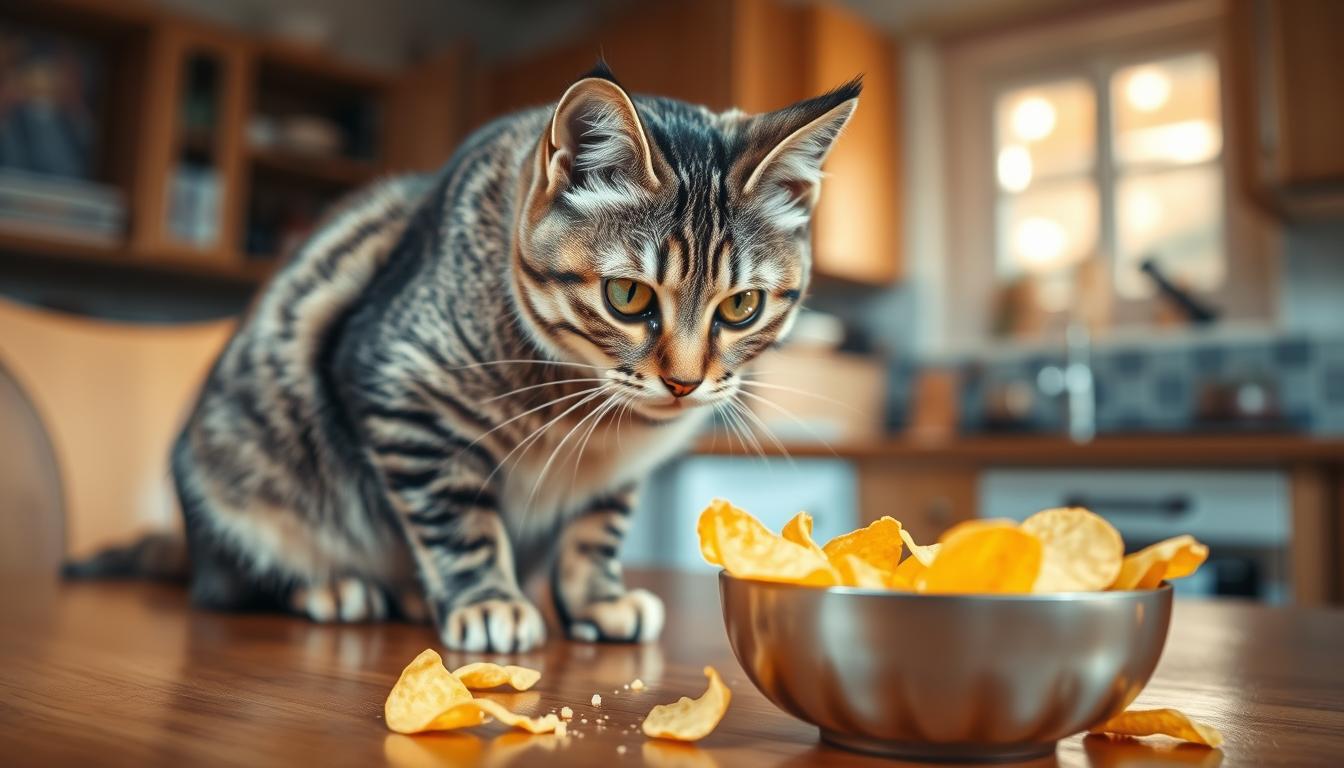
You grab a handful of potato chips for a cozy evening. Your cat jumps up, attracted by the smell and sound. You think about sharing a chip, but it’s not a good idea.
Wondering if cats can eat potato chips is a big deal for their health. Vets and experts say no, it’s never safe. Even one chip can be risky for your pet.
It’s important to know why potato chips are bad for cats. They can harm your cat’s organs and cause discomfort. Cats can’t digest human snacks like we do.
This guide explains the dangers of potato chips for cats. You’ll learn about salt, fats, seasonings, and choking risks. You’ll also find out what to do if your cat eats chips and get safer snack ideas.
Can Cats Eat Potato Chips
Is it safe for cats to eat chips? The answer is no. Cats and humans have different bodies. Knowing how cats digest food is key.
Cats are built to eat meat, not human snacks. They have evolved over thousands of years for this purpose.
Understanding Your Cat’s Natural Dietary Needs
Your cat is an obligate carnivore. They need animal protein to live and be healthy. Cats can’t make some amino acids on their own.
They need taurine, found in animal tissues, for heart health and vision.
Cats’ digestive systems are made for meat. They have stronger stomach acid and shorter intestines than humans. This is for breaking down proteins, not carbs.
- Cats require high protein intake daily
- Cats need minimal carbohydrates to function
- Cats process fats differently than humans
- Cats lack certain digestive enzymes for starches
Why Potato Chips Don’t Fit a Feline Diet
Eating potato chips is not good for cats. Chips are mostly carbs and salt, wrapped in bad oils. They offer no nutritional value.
| Nutrient | What Your Cat Needs | What Chips Provide | Match? |
|---|---|---|---|
| Protein | 30-40% of diet | Less than 5% | No |
| Taurine | Essential amino acid | None | No |
| Fat (healthy) | Omega-3 and Omega-6 | Unhealthy trans fats | No |
| Carbohydrates | Minimal amounts | 60-70% of chips | No |
| Sodium | Small amounts only | Very high levels | No |
Cats eating chips get empty calories. They feel full but miss out on real nutrition. Cats can’t digest potato starch well.
Potato chips are not good for cats. They should eat whole meat proteins. Their ancestors hunted for meat, and their bodies still need it.
The Dangerous Ingredients in Potato Chips for Cats
When you’re eating potato chips, your cat might want some too. But these chips have ingredients that can harm your cat. Knowing what’s in potato chips can help keep your pet safe.
Potato chips have more than just potatoes and oil. They have harmful substances that cats can’t handle. Even a little bit can cause serious health problems over time.
Cats and humans have different digestive systems. Cats can’t break down many chip ingredients. This makes what’s safe for you toxic for your cat.
Primary Problem Ingredients You Should Know
Potato chips have several harmful ingredients:
- Salt – Each chip has about 150mg of sodium, but cats only need 21mg daily
- Vegetable oils – High in omega-6 fatty acids, leading to pancreatitis and obesity
- Onion powder – Destroys red blood cells in cats
- Garlic powder – Causes hemolytic anemia through toxin damage
- Artificial preservatives – BHA and BHT can damage organs
- Artificial flavors – Chemicals cats can’t metabolize
| Ingredient | Amount Per Chip | Cat’s Daily Need | Health Risk |
|---|---|---|---|
| Salt (Sodium) | 150mg | 21mg | Kidney damage, poisoning |
| Vegetable Oil | High concentration | None recommended | Pancreatitis, obesity |
| Onion Powder | Variable (flavored chips) | Zero tolerance | Hemolytic anemia |
| Garlic Powder | Variable (flavored chips) | Zero tolerance | Red blood cell destruction |
| BHA/BHT Preservatives | Small amounts | Zero tolerance | Organ toxicity, cancer risk |
Even “simple” or “natural” potato chips are bad for cats. They have too much salt and unhealthy fats. Flavored chips are even more dangerous because of added seasonings and preservatives.
No type of potato chip is safe for cats. The mix of salt, oil, and additives is harmful to their health.
Salt Toxicity: The Primary Threat to Your Cat’s Health
Salt is very dangerous for your cat. Cats can’t handle sodium like humans do. Their kidneys can’t process salt well, making even a little salt harmful.
Most potato chips are full of salt, which is bad for your pet. One chip has about 150mg of salt. Cats only need 21mg of sodium a day from their food.
This means one chip has more than seven times your cat’s entire daily salt requirement. Eating just two or three chips can be very dangerous for your cat.
How Much Salt Is Too Much for Cats
Cats under 10 pounds are at higher risk because of their small size. They can’t dilute sodium safely. Salt toxicity is a big problem for cats because they can’t regulate sodium like humans do.
| Factor | Amount | Risk Level |
|---|---|---|
| Daily sodium need for cats | 21mg | Safe |
| Salt in one potato chip | 150mg | Dangerous |
| Multiple of daily limit (one chip) | 7x over limit | Critical |
| Vulnerable cat weight | Under 10 pounds | High risk |
Symptoms of Sodium Poisoning in Felines
Symptoms of sodium poisoning can appear quickly. Look for excessive thirst and increased urination within 2-6 hours. Your cat might also vomit or have diarrhea.
Between 6-12 hours, symptoms get worse. Your cat may feel weak, tired, or lose their appetite. They might also have trouble moving, tremble, or seem confused.
Severe symptoms need immediate help. If your cat has seizures, collapses, or goes into a coma, call the vet right away. Salt toxicity can cause permanent kidney damage or even death if not treated.
- Excessive thirst and urination (early sign)
- Vomiting or diarrhea (early sign)
- Lethargy and weakness (progressive)
- Loss of appetite (progressive)
- Incoordination or tremors (progressive)
- Seizures or collapse (emergency)
Knowing these dangers helps keep your cat safe. Your pet relies on you to prevent them from eating salty snacks and to recognize the signs quickly.
Unhealthy Fats and Oils That Harm Cats
Potato chips are deep-fried in oils that contain dangerous fats your cat should never consume. When manufacturers cook these junk food snacks, they use vegetable oils like corn oil, sunflower oil, and canola oil. These oils get heated to extremely high temperatures, which creates oxidized fats that are particularly harmful to your feline friend.
Your cats have trouble processing large amounts of fat, especially the processed fats found in junk food products. When your cat eats potato chips, the high fat content can trigger immediate digestive problems like vomiting, diarrhea, and painful abdominal discomfort.
The most serious risk comes from pancreatitis. This condition occurs when digestive enzymes activate inside the pancreas itself, causing the organ to become severely inflamed. Your cat’s pancreas is an extremely sensitive organ that can take weeks to recover.
How Pancreatitis Affects Your Cat
When your cats develop pancreatitis from eating junk food like potato chips, they face these serious complications:
- Extreme pancreatic inflammation and pain
- Vomiting and loss of appetite
- Lethargy and weakness
- Hospital stays requiring fluid therapy and medication
- Extended recovery periods lasting days or weeks
Long-term exposure to unhealthy fats puts your cats at risk for obesity, fatty liver disease, and heart problems. Even if your cat seems fine after eating a chip, damage builds up over time. The fats in junk food damage your cat’s internal systems gradually.
Your veterinarian considers pancreatitis a potentially life-threatening emergency. Many cases require aggressive treatment, nutritional support, and intensive care to help your cat survive and recover.
Toxic Seasonings and Additives in Flavored Chips
Flavored potato chips are not just a danger because of salt and fat. They also contain harmful ingredients that can harm cats. Knowing about these dangers helps keep your pet safe from serious health issues.
Onion and Garlic Powder Dangers
Onion and garlic powder are big risks in many chip flavors. Chips like sour cream and onion or barbecue often have these seasonings. These ingredients can damage your cat’s red blood cells.
When cats eat these seasonings, it can lead to hemolytic anemia. This is because the red blood cells become fragile and break apart. This makes it hard for your cat’s blood to carry oxygen.
Even a little bit of onion or garlic in chips can be dangerous for cats. You might not see symptoms right away. But, over time, it can cause serious health problems.
Look out for these signs of onion or garlic poisoning in your cat:
- Weakness and lethargy
- Pale gums and tongue
- Rapid or difficult breathing
- Vomiting or loss of appetite
- Dark-colored urine
Artificial Flavors and Preservatives
Flavored potato chips also have artificial additives that can upset your cat’s stomach. Ingredients like artificial cheese flavoring, MSG, and synthetic colors can cause digestive issues or allergic reactions.
Preservatives like BHA, BHT, and TBHQ are also found in many chips. Cats have trouble processing these chemicals safely. Acrylamide, a neurotoxic compound, is another risk. Cats can’t break it down, so it builds up in their system.
The ASPCA warns that salty snacks, especially flavored ones, are dangerous for cats. “Natural flavoring” doesn’t tell you what’s in it, so it’s hard to know the risks when your cat eats flavored chips.
| Harmful Additive | Found In | Effect on Cats |
|---|---|---|
| Onion/Garlic Powder | Flavored chips | Red blood cell damage, anemia |
| Artificial Colors | Seasoned varieties | Digestive irritation, allergic reactions |
| BHA, BHT, TBHQ | Most commercial chips | Chemical toxicity in organs |
| Acrylamide | High-temperature cooked chips | Neurotoxic accumulation |
| MSG | Flavored snacks | Neurological sensitivity |
Keep flavored potato chips away from your cat. Plain chips are still risky because of salt and fat. But flavored chips add even more dangers. Your cat’s health is at risk from these harmful ingredients.
Physical Hazards: Choking and Digestive Risks
Beyond the toxic ingredients in potato chips, there are serious physical dangers. Potato chips can hurt your cat’s body from the moment they eat them. Knowing these risks helps keep your cat safe.
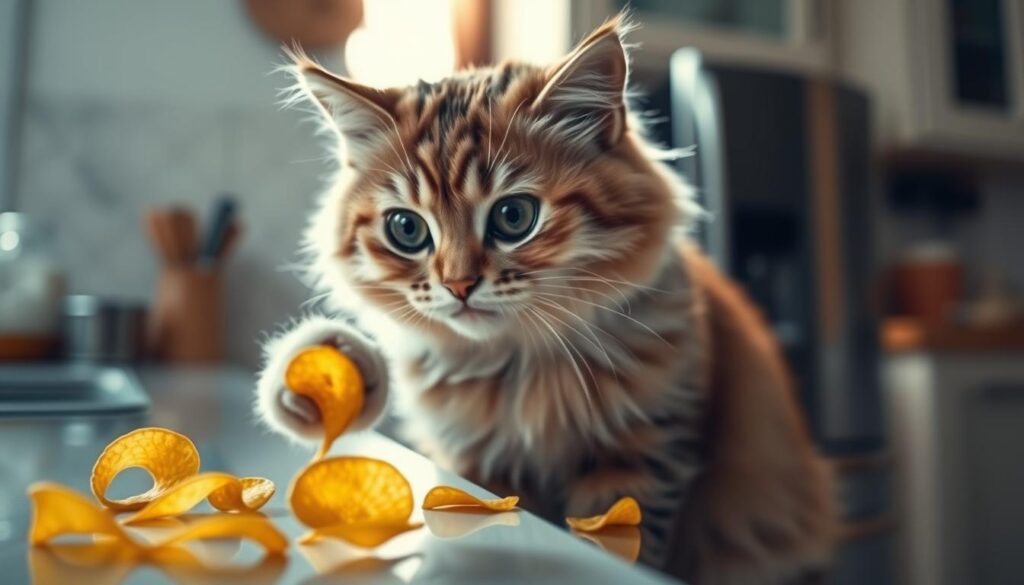
Potato chips are brittle and sharp. These sharp pieces can cut or scratch your cat’s mouth, throat, and esophagus. If your cat swallows chips without chewing, they might choke.
Larger chip pieces can block the airway. This is a serious problem that needs quick vet care.
Potato chips also cause digestive problems. Cats can’t digest starches well because they lack certain enzymes. This leads to gas, bloating, and cramping in the gut.
| Physical Hazard | Risk Level | Symptoms in Cats |
|---|---|---|
| Sharp Edges | High | Mouth bleeding, difficulty swallowing, drooling |
| Choking | High | Gagging, difficulty breathing, pawing at mouth |
| Intestinal Fermentation | Medium | Bloating, abdominal pain, diarrhea |
| Gut Obstruction | Medium | Constipation, vomiting, lethargy |
The fermentation process harms your cat’s gut bacteria. This can lead to diarrhea and digestive issues. Senior cats or those with dental problems may have trouble swallowing chips.
The salt and seasonings in chips can also irritate your cat’s mouth. This causes pain and discomfort.
So, even without toxic ingredients, potato chips are not safe for cats. The choking and digestive risks make them bad for your cat’s diet.
What Happens If Your Cat Eats Potato Chips
Discovering your cat ate potato chips can be scary. They might show signs within hours or over time. Knowing what to expect helps protect your cat’s health.
Immediate Symptoms to Watch For
Your cat may show signs soon after eating potato chips. These symptoms can appear in the first few hours or up to 12 hours later. Keep a close eye on your pet during this time.
Gastrointestinal issues often start first. Your cat might vomit, have diarrhea, or lose interest in food. They might also drool or show belly pain.
Neurological symptoms are more serious. Look for lethargy or weakness. Incoordination, tremors, or seizures mean your cat needs vet care fast.
Changes in urination and thirst are also warning signs. Your cat might drink a lot or pee more. Not being able to pee is a big emergency.
| Symptom Category | Specific Signs | Timeline | Severity Level |
|---|---|---|---|
| Gastrointestinal | Vomiting, diarrhea, loss of appetite, drooling | 1-4 hours | Mild to Moderate |
| Neurological | Lethargy, weakness, tremors, seizures | 4-12 hours | Moderate to Severe |
| Urinary | Excessive thirst, increased urination | 2-8 hours | Moderate |
| Cardiovascular | Rapid heart rate, irregular patterns | 3-6 hours | Severe |
The amount your cat eats matters a lot. One chip might not hurt a big cat, but two could harm a small one. Your cat’s size, age, and health affect how chips affect them.
Long-Term Health Consequences
Even if your cat seems okay after eating chips, they might still face health problems. Chronic kidney disease is a big risk. Your cat’s kidneys work hard to filter sodium, leading to damage.
Regularly eating unhealthy human snacks can cause pancreatitis. This causes pain and digestive issues. Your cat might also get fat, leading to diabetes and joint problems.
Fatty liver disease can sneak up on cats that eat bad snacks. It harms the liver and can be deadly if not treated.
- Nutritional imbalances from refusing cat food for human treats
- Deficiencies in taurine, needed for heart health
- Behavioral problems from begging for human food
- Progressive kidney damage from sodium
- Dental disease from processed chip ingredients
Salt poisoning can damage kidneys, cause coma, and be fatal. Symptoms like lethargy can appear hours after eating chips. One chip might seem safe, but regular snacking is dangerous for your cat’s health.
Why Cats Are Attracted to Potato Chips
Your cat might seem interested in potato chips at first. But it’s key to know why they like these snacks. Even though cats can’t eat potato chips, there are reasons they find them appealing.
The crunchy texture of chips is a big draw for cats. They enjoy the feeling of biting into something crispy. This is because it reminds them of the bones and cartilage in their natural prey. Remember, just because cats like the texture doesn’t mean it’s good for them.
Cats also love the salty and savory flavors of chips. They can’t taste sweetness, but they can sense salt and umami. The high sodium and seasonings in chips make them seem tasty to cats.
Your cat’s curiosity is another factor. The sound of a chip bag is very interesting to them. Cats learn from watching us and might think they’re part of the fun when we snack.
- Boredom-driven food seeking behavior
- Previous positive experiences with human food
- Desire for attention during snack time
- Novel sounds and textures in the environment
When you ask if cats can eat potato chips, knowing these reasons helps. It helps you keep your cat safe from bad foods.
Emergency Response: When Your Cat Consumes Chips
It’s scary when you find out your cat has eaten potato chips. Acting fast is key to keeping your pet safe. Knowing what to do right after your cat eats chips can really help.
Cats eating chips is a big deal because of the salt. Salt gets into your cat’s blood fast. Even a little salt can be harmful because cats process it differently than people do.
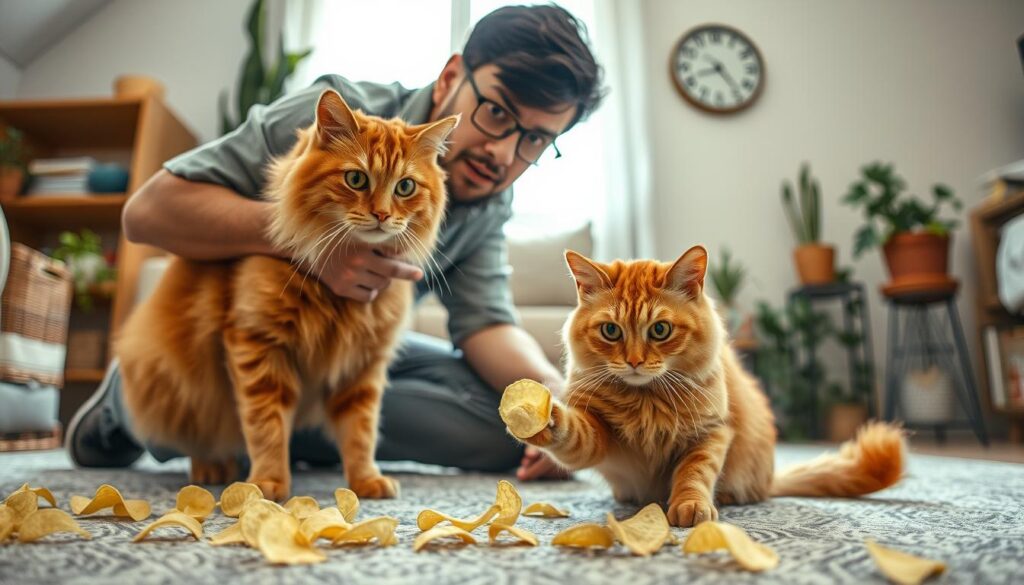
Step-by-Step Action Timeline
Here’s what to do quickly after your cat eats chips:
| Time Window | Your Actions | What to Monitor |
|---|---|---|
| 0-2 Hours | Call ASPCA Animal Poison Control at 888-426-4435 right away. Never induce vomiting without veterinary instruction. Remove remaining chips from your cat’s reach. Do not delay this step. | Watch for drooling or unusual behavior. Salt absorption starts immediately. |
| 2-12 Hours | Monitor your cat closely at home. Provide fresh water constantly. Watch for warning signs like excessive thirst, vomiting, or unsteady walking. Contact your vet if any symptoms appear or if your cat ate more than five chips. | Excessive thirst, increased urination, lethargy, vomiting, diarrhea, incoordination |
| 12+ Hours | Any symptoms appearing now mean emergency care is necessary. Go to an emergency vet clinic immediately. Your cat likely needs IV fluids to support kidney function. | Severe lethargy, tremors, seizures, inability to walk normally, refusal to eat |
When to Contact Your Veterinarian
You must contact your veterinarian immediately in these situations:
- Your cat ate heavily seasoned or flavored chips of any amount
- Your cat consumed more than five plain chips
- Your cat weighs under ten pounds
- Your cat has kidney disease or existing health problems
- Any symptoms appear, no matter how mild they seem
- You are unsure about the exact quantity your cat ate
Have this information ready when you call:
- The specific type and brand of chips consumed
- Your best estimate of how many chips your cat ate
- The exact time your cat consumed them
- Your cat’s weight in pounds
- Any current symptoms you have noticed
Your vet might suggest vomiting, activated charcoal, or IV fluids. In bad cases, your cat might need to stay in the hospital. Quick action and talking openly with your vet can help your cat recover.
Safe and Healthy Treat Alternatives for Your Cat
It’s important to know why potato chips are not good for cats. Instead, find treats that are healthy for your cat. Treats should not make up more than 10% of your cat’s daily calories. The rest should come from cat food made just for them.
So, are potato chips safe for cats? No, they are not. Look for treats that are high in protein, like your cat’s natural diet.
Best Protein-Based Treats
Your cat will enjoy these healthy treats:
- Plain cooked chicken – Boneless, skinless pieces with no seasonings
- Cooked fish – Small amounts of salmon, tuna, or whitefish without bones
- Cooked eggs – Scrambled or hard-boiled with nothing added
- Freeze-dried meat treats – Pure chicken, turkey, or fish with zero additives
Give these treats in small amounts. Always cook the meat fully and remove bones.
Crunchy Alternatives for Texture Lovers
Does your cat like crunchy treats like potato chips? Try these instead:
- Commercial cat treats designed for crunchiness
- Freeze-dried meat treats that satisfy the need for texture
- Catnip-infused biscuits that combine crunch with natural appeal
About Plain Cooked Potatoes
Plain, cooked, unseasoned potatoes are not toxic to cats. But, they don’t offer much nutrition. Only give them rarely. Never give raw potatoes to your cat because they have harmful solanine.
Introduction Tips
When introducing new treats, do it slowly. Give one new food at a time over several days. Watch for any signs of upset stomach or allergies.
Non-Food Bonding Ideas
There are many ways to bond with your cat without treats:
- Interactive play sessions with wand toys
- Puzzle feeders for mental stimulation
- Dedicated one-on-one attention time
These activities will strengthen your bond without the risks of human snacks. Your cat will be happier and healthier with the right choices.
Preventing Access to Potato Chips and Human Snacks
The best way to keep your cat safe is to stop them from eating potato chips. It’s better to prevent problems than to treat them after they happen. By managing your home and training your family, you can keep your cat healthy.
To stop your cat from eating chips, you need a complete plan. Secure your snacks, manage your behavior, and teach your family about the dangers. This will keep your pet safe from poisoning.
Cat-Proofing Your Kitchen and Snack Areas
Your kitchen is key to preventing chip eating. Keep all snacks in sealed plastic containers in closed cabinets. Cats can open bags and smell food through thin packaging. Use child-proof latches if your cat can open doors.
Empty chip bags are dangerous. Throw them away in sealed trash cans right away. Cats might lick or eat the bag, which can harm them.
- Store snacks in airtight containers on high shelves
- Use child-proof latches on all cabinet doors
- Place sealed trash cans in a closed pantry or garage
- Clean countertops and tables right after eating
- Keep snack bowls out of reach during parties
Keep your cat in another room during snack time. Use puzzle feeders with vet-approved treats. This keeps your cat busy and safe while you snack.
Teach your family and guests not to share human food. Give them a list of safe treats for your cat. This keeps your cat healthy and follows clear rules.
Ignore your cat when they beg for food. Never give in to their requests. Set regular treat times to keep them happy. Give them toys and play with them often to prevent boredom.
Conclusion
Cats can’t safely eat potato chips. Whether it’s Lay’s, Doritos, or any other brand, they pose serious health risks. These risks include salt toxicity, pancreatitis, and damage from toxic seasonings like onion and garlic powder.
Physical hazards like choking are also a concern. Even a single chip can harm a small cat or one with health issues.
Sharing treats with your cat comes from love and a desire to connect. But, there are safer ways to bond without risking your cat’s health. Vet-approved treats in small amounts are both nutritious and enjoyable.
These options respect your cat’s biology and support their long-term health. It’s not about depriving them but about providing the care they deserve.
Preventing accidental poisoning is key. Keep potato chips and similar foods out of reach. Educate family and visitors about the dangers of human food for cats.
These steps protect your pet from harm. Your choices affect your cat’s future health. By choosing safe treats, you’re investing in their well-being. Responsible pet ownership means making informed decisions every day.
FAQ
Can cats eat potato chips at all?
No, cats should never eat potato chips. They are bad for cats because of too much salt, unhealthy fats, and harmful seasonings. Even a small chip can harm a cat, especially if it’s small or has health problems. There’s no safe amount of potato chips for cats.
Why are potato chips so dangerous for cats specifically?
Cats are meant to eat meat, not chips. They can’t digest chips well because of their different body chemistry. Chips also lack important nutrients that cats need. Cats can’t handle the salt and fats in chips, and their kidneys can’t filter out the salt.
How much sodium is in a potato chip compared to what cats need?
A chip has about 150mg of sodium, but cats only need 21mg a day. This means one chip has more than seven times what a cat needs. Eating just two or three chips can be very dangerous for a cat.
What are the immediate symptoms of sodium poisoning in cats?
Symptoms of sodium poisoning can start within 2-6 hours. They include a lot of thirst, peeing a lot, vomiting, diarrhea, and not wanting to eat. Later, they might feel weak, have trouble moving, and tremble. Severe symptoms like seizures and coma are also possible.
Can flavored potato chips like sour cream and onion cause additional harm?
Yes, flavored chips are even more dangerous. They often have onion and garlic powder, which are toxic to cats. These can damage a cat’s red blood cells and cause anemia. Even a little bit can be harmful, and repeated exposure is especially dangerous.
What is the risk of pancreatitis from the fats in potato chips?
Chips are fried in unhealthy oils, which can cause pancreatitis in cats. This is a serious condition where the pancreas gets inflamed. It can be life-threatening and requires immediate medical attention.
What physical dangers do potato chips pose to cats?
Chips can also hurt cats physically. The sharp edges can cut their mouth, throat, or esophagus. Big pieces can get stuck in their airway or stomach. Chips can also cause bloating and discomfort in cats.
What should I do immediately if my cat eats potato chips?
If your cat eats chips, call the ASPCA Animal Poison Control at 888-426-4435 or your vet right away. Don’t try to make them vomit unless your vet tells you to. Keep your cat away from any more chips and make sure they have plenty of water. Watch for signs of trouble like too much thirst, peeing a lot, vomiting, and acting weak.
When is veterinary care necessary versus home monitoring?
You need to see a vet right away if your cat eats chips, especially if they’re seasoned or flavored. This is true for any amount of chips, especially if your cat is small or has health problems. If your cat shows any symptoms, even if they seem mild, get them to a vet.
What are the long-term health consequences of cats eating potato chips?
Eating chips can lead to serious health problems over time. Cats can get kidney damage, pancreatitis, and other issues. It can also make them more likely to get diabetes and fatty liver disease. It’s best to keep them away from chips to avoid these problems.
Why is my cat so interested in potato chips if they’re bad for them?
Cats like chips because of their taste and texture. They’re attracted to the salt and savory flavors. They also enjoy the sound of the bag and the excitement of getting something new. It’s important to keep them away from chips to keep them safe.
What safe alternatives can I give my cat instead of potato chips?
There are many safe treats for cats that you can give them instead of chips. Try plain cooked chicken, fish, eggs, or freeze-dried meat. You can also give them catnip-infused biscuits. Just remember to keep treats to 10% of their daily calories.
How can I prevent my cat from accessing potato chips and other human snacks?
To keep your cat safe, store snacks in sealed containers and keep them out of reach. Use child-proof latches on cabinets. Keep your cat busy with toys and activities to distract them from snacks. Teach your guests not to give your cat human food.
Are plain potato chips safer than flavored varieties?
No, plain chips are not safe for cats either. They still have too much salt and unhealthy fats. Flavored chips have added dangers like onion and garlic powder. All types of chips are bad for cats.
Can a cat die from eating potato chips?
Yes, cats can die from eating chips, especially if they have health problems. They can get salt poisoning, pancreatitis, or other serious issues. It’s very important to keep them away from chips.
How do I know if my cat’s symptoms are from potato chips or something else?
Symptoms from chips can look like other health problems. But if they happen soon after your cat eats chips, it’s likely from the chips. Your vet can do tests to figure out what’s wrong.
What if my cat accidentally ate potato chips weeks or months ago and seemed fine?
Even if your cat seemed okay after eating chips, it’s still a problem. Chips can cause damage over time, like kidney or pancreas problems. It’s best to keep them away from chips to avoid these issues.
Are there any breeds of cats that can safely eat potato chips?
No, all cats are at risk from eating chips, no matter their breed or size. Some cats may be more vulnerable, like small or older cats. But no cat should eat chips.
Can cats develop a preference or addiction to potato chips after trying them once?
Yes, cats can get hooked on chips after just one try. They remember the taste and may keep asking for more. It’s important to keep them away from chips to avoid this.
What’s the difference between the sodium in potato chips versus other salty human foods?
Chips are especially bad because they have a lot of sodium in a small package. Other salty foods are also bad for cats, but chips are worse. They also have unhealthy fats and toxic seasonings.