Why Do My Cats Lick Each Other and Then Fight? Behavioral Tips
You watch your cats grooming each other with tenderness. Their tongues move across each other’s fur in gentle strokes. Then, in what feels like a heartbeat, they’re wrestling on the floor. Your heart skips. Are they fighting? Should you step in? This sudden shift leaves many cat owners confused and worried about what their pets are doing.
The truth is simple. Cats grooming then fighting is completely normal behavior. Your cats are not in danger. What looks like aggression is usually playful wrestling or a sign of bonding. Understanding why your cats lick each other and then fight helps you relax and appreciate their relationship.
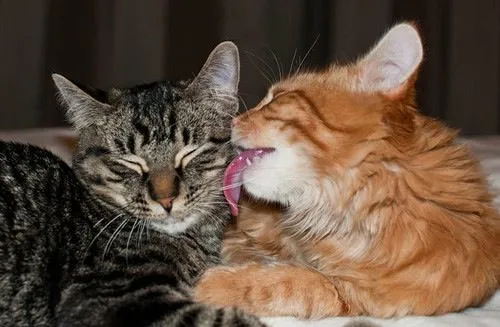
Cats spend roughly 30 to 50 percent of their day grooming. They groom themselves to stay clean. They also groom each other to build social bonds. This mutual grooming is called allogrooming. It serves many purposes beyond just hygiene. When your cats lick each other, they’re marking territory, showing affection, and establishing their place in the household hierarchy.
Dr. Kat Pankratz, a board-certified veterinary behaviorist, explains this behavior clearly. She describes what looks like fighting as a cuddle that went too far. Your cats don’t mean harm. Their excitement simply bubbles over into wrestling. This transition from grooming to play is a sign your cats have a healthy relationship.
This article breaks down everything you need to know about why cats lick each other and then fight. You’ll learn about allogrooming and its social benefits. You’ll discover the reasons grooming turns into play fighting or occasional conflict. You’ll also learn how to tell the difference between normal play and real aggression. By the end, you’ll have practical strategies to manage your cats’ behavior.
Table of Contents
Understanding Allogrooming in Cats
When your cats lick and groom each other, they’re showing a natural behavior called allogrooming. This mutual grooming comes from their early days with their mother. It helps you understand why they interact and what their actions mean.
Cats spend a lot of time grooming. They groom themselves or other cats for 30-50% of their waking hours. This grooming is key to their daily life and social interactions.
What Is Allogrooming and Why Do Cats Do It
Allogrooming is when cats groom each other. It starts when kittens are young and their mother cleans them. Many cats keep doing this with their friends as adults.
They groom each other for many reasons:
- Cleaning hard-to-reach areas like the head, neck, and ears
- Sharing scent and strengthening their bond
- Reducing stress through the release of natural endorphins
- Communicating trust and affection
Allogrooming is a way cats show trust and love. When you see them grooming each other, they’re showing they feel comfortable together.
The Social Bonding Function of Mutual Grooming
Mutual grooming creates a strong bond. It makes them share a scent that shows they belong together. This “family scent” makes them feel like one unit.
Closely bonded cats groom each other more. This shows they feel safe and secure. Experts say allogrooming is a sign of a healthy, positive relationship between your cats. It shows they enjoy each other’s company.
The endorphins from grooming make it a pleasurable experience. These hormones create positive feelings between your cats. Understanding cat allogrooming aggression becomes easier when you see grooming as a positive act before it can turn into conflict.
Seeing these bonding moments helps you appreciate your cats’ relationship. It also helps you know when their behavior changes from affection to something else.
Why Do My Cats Lick Each Other and Then Fight
Watching your cats go from gentle grooming to a fight can be confusing. This sudden change makes you wonder if they’re really fighting. It’s important to understand that cats don’t always show their boundaries in the way we expect.
Dr. Kat Pankratz says that why cats groom before fighting is more than just aggression. It’s like a cuddle that got too intense. A gentle lick can turn into a soft bite, which might seem aggressive but is actually normal for cats learning each other’s limits.
There are several reasons why cats might go from grooming to wrestling:
- Social bonding that naturally escalates into playful wrestling
- Dominance and hierarchy behaviors being established
- Overstimulation during extended grooming sessions
- Redirected aggression triggered by external stress
Missed body language signals often lead to tension after grooming. If one cat ignores signs like ears back or a twitching tail, conflict is likely. The groomer might not realize their buddy has had enough.
“It’s not just about the grooming at all. The mood changes when a lick turns into a soft bite, and missed signals such as ears back, tail twitching, or a tight body can lead to tensions after grooming.”
The shift from mutual grooming to fighting cats is common. Cats’ interactions range from tender care to playful wrestling to real conflict. Most of what you see falls in the middle. Your cats aren’t enemies just because they go from licking to swatting.
| Stage | Body Language Signs | What’s Happening |
|---|---|---|
| Gentle Grooming | Slow blinks, relaxed ears, soft licks | True bonding and affection |
| Overstimulation Beginning | Ears rotating back, tail base twitching | One cat reaching tolerance limit |
| Play Wrestling | Pouncing, soft batting, taking turns | Normal escalation that’s still playful |
| Actual Conflict | Hissing, claws out, ears flat, body rigid | Real aggression requiring intervention |
Knowing where your cats are on this spectrum helps you respond right. Most grooming that turns physical is a sign of a healthy cat relationship. Learning to read their subtle signals prevents unnecessary worry and helps you understand their unique language.
Social Bonding That Turns Into Playful Behavior
When cats groom each other, they show love and strengthen their bond. This closeness can quickly turn into play fighting, which is normal. Understanding this helps you feel confident about your cats’ interactions.
The physical stimulation from grooming activates their natural instincts. This includes their prey drive and playfulness. What starts as gentle licking can quickly turn into wrestling and chasing.
How Grooming Transitions to Play Fighting
Grooming touches sensitive areas on your cat’s body. This energizes them and triggers their desire to play. A lick turns into a soft bite, then a playful swipe follows.
Soon they’re rolling around the floor together. This natural progression shows healthy cat bonding to aggression that remains playful and harmless.
Play fighting helps your cats practice hunting skills and burn energy. During these sessions, cats reinforce their social bonds with each other. The transition from grooming to play is especially common between cats that trust one another.
This behavior demonstrates that your cats feel comfortable enough to engage in physical activities together.
Recognizing Normal Play Versus Aggression
Knowing the difference between playful behavior and real fighting gives you peace of mind. Use this guide to identify what’s happening with your cats:
| Play Fighting Signs | Real Fighting Signs |
|---|---|
| Silent or quiet vocalizations | Loud hissing, growling, or yowling |
| Relaxed body postures | Stiff or puffed-up body language |
| Role reversal between cats | One-sided aggression from one cat |
| Inhibited bites with no skin damage | Hard biting that causes injury |
| Both cats stay engaged and present | One cat tries to escape or hide |
Play fighting remains balanced and injury-free. When cats licking turning into biting occurs during play, those bites are gentle and don’t draw blood. Your cats take turns being the “winner” in their wrestling matches.
Neither cat shows fear or tries to run away.
Real aggression displays fear responses and causes harm. Watch for cats trying to escape the interaction or hiding afterward. If you see genuine signs of distress, hissing that indicates upset, or injury, you should intervene right away.
As long as there’s no hard biting, persistent hissing, or clear signs of fear, your cats are likely enjoying their playtime together.
Dominance and Hierarchy Through Grooming Behavior
Your cats’ grooming habits tell a lot about their social world. In homes with more than one cat, grooming helps them figure out who’s boss. It’s not always about showing love; sometimes it’s a way to say, “I’m in charge here.”
Studies show grooming shows who’s in charge in cat groups. The cat that starts grooming is usually the boss. Your cat might groom others to show they’re in charge at home.
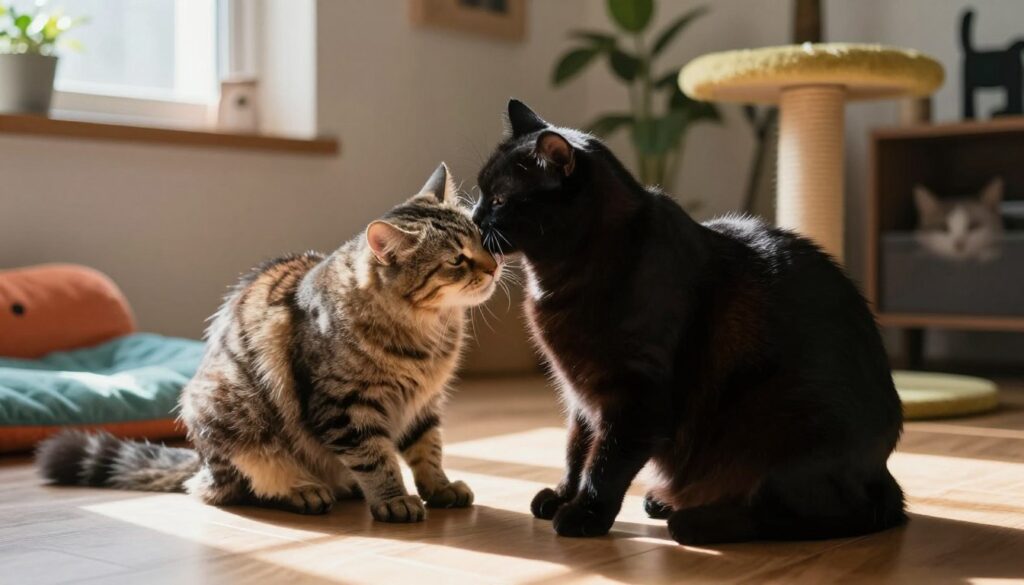
In cat groups, dominant cats groom subordinates more often. This helps keep the social order. Dominant cats groom the head and neck, showing they’re in control. Subordinate cats usually accept this, showing they know their place.
How to Spot Hierarchy in Your Home
Look for these signs of cat hierarchy:
- One cat always starts grooming the other
- The grooming cat uses body position to control
- The groomed cat seems okay but not happy
- Grooming focuses on the head, neck, and face
- One cat leaves when the other comes near
Conflicts can happen when a cat challenges the grooming order. Or if grooming gets too rough. Some cats don’t like being told who’s boss and may fight back. This is normal, but watch for signs of stress or fear.
Knowing about cat grooming helps you see it’s good for them. Make sure all cats have food, water, and safe places. Watch for bullying or intimidation that’s not just part of the hierarchy.
Overstimulation and Irritation During Cat Grooming
Cats groom each other as a way to bond. But, this can sometimes lead to frustration. Knowing when to stop helps avoid fights.
Cats have sensitive skin and nerves all over. Too much licking can become irritating. This leads to a defensive response.
Signs Your Cat Is Overstimulated
Your cat will show signs when grooming gets too much. Spotting these signs early can prevent aggression. Look for these body language cues:
- Tail twitching or rapid swishing
- Ears rotating backward or flattening against the head
- Skin rippling along the back
- Eyes dilating or widening
- Body stiffening or tensing
- Head turning toward the grooming cat
- Subtle vocalizations like soft growls
Well-socialized cats give warnings before getting physical. The tail twitch is often the first sign.
When Grooming Becomes Too Much
Grooming can become a problem in certain situations. If one cat keeps licking the same spot despite signs of discomfort, it’s a problem. Long grooming sessions or focusing too much on one area can cause harm.
| Grooming Concern | What It Looks Like | What You Should Do |
|---|---|---|
| Extended Sessions | One cat licks another for many minutes without stopping | Gently interrupt with a toy or treat |
| Focused Licking | Repeated licking of one specific spot | Separate the cats briefly |
| Compulsive Grooming | Obsessive behavior leading to hair loss or bald patches | Provide escape routes and elevated perches |
| Skin Irritation | Redness, rawness, or hair loss in groomed areas | Monitor closely and consult your veterinarian |
Act quickly if you see excessive grooming. Give your cat a safe place to go. Watch if the behavior stops or continues. This helps prevent fights and keeps your cat’s skin and coat healthy.
Redirected Aggression Between Cats
At times, your cats may groom each other peacefully, then suddenly one will attack the other without warning. This sudden change often has nothing to do with the grooming itself. External triggers can spark aggressive reactions that seem confusing and unprovoked. Understanding redirected aggression between cats helps you recognize this specific behavior pattern and respond appropriately.
Redirected aggression occurs when one cat becomes upset or stressed by something they cannot reach or control. A barking dog outside, an unfamiliar smell, or a loud noise can trigger your cat’s fight-or-flight response. Unable to address the actual source of their stress, your cat redirects that energy toward the nearest target—often the cat they were just grooming. The victim cat did nothing wrong. They simply happened to be nearby when their companion’s emotions shifted.
Your cat experiences a surge of adrenaline when triggered. Their body prepares for danger. This heightened state needs an outlet. The grooming companion becomes an unfortunate target for displaced aggression cat grooming situations. The attack feels intense and comes without the playful warnings that normal play fighting includes.
Recognizing the Signs of Redirected Aggression
You can identify redirected aggression through several key indicators. Look for these patterns in your cats’ interactions:
- The attack appears sudden with no warning signals
- Aggression intensity exceeds typical play fighting
- An identifiable external trigger preceded the attack
- The attacked cat looks confused or defensive
- The aggressive cat seems more aroused than normal
| Trigger Type | External Source | Cat’s Reaction |
|---|---|---|
| Auditory Stimuli | Barking dogs, loud noises, unfamiliar sounds | Sudden aggression toward nearby cats |
| Visual Stimuli | Outdoor animals through windows, moving shadows | Intense redirected energy toward companions |
| Olfactory Stimuli | Unfamiliar scents, other pets in the home | Heightened arousal and misdirected attacks |
| Environmental Changes | New people entering the home, door opening | Displaced aggression cat grooming turning aggressive |
Managing Redirected Aggression in Your Home
Separate your cats immediately when redirected aggression occurs. Give the aroused cat space to calm down. This process takes hours or sometimes days. Your cat’s nervous system needs time to return to normal. Keeping them apart prevents injury and allows their stress levels to decrease naturally.
Identify the trigger causing the reaction. Block access to windows if outdoor animals upset your cat. Move litter boxes or food bowls away from stressful areas. Reduce loud noises when possible. These changes help prevent future incidents. Reintroduce your cats gradually using positive associations. Feed them on opposite sides of a closed door. Play with each cat separately in neutral spaces. Build positive memories together before full reintegration.
Redirected aggression between cats can damage previously strong relationships if not handled carefully. The victim cat may develop fear responses toward their former grooming companion. Patient management and environmental adjustments help restore trust and prevent long-term behavioral problems.
How to Tell If Your Cats Are Playing or Fighting
It’s important to know the difference between play and real fights to keep your cats safe. Sometimes, what seems like aggression is just play. Other times, grooming can turn into real fights. Learning to read these signs helps you know when to step in and when to let them play.
Body Language Signals to Watch For
Start by watching how your cats move and sound. During play, they have relaxed bodies. They chase each other and take turns being the hunter and the hunted. Their tails move naturally or swish gently.
Their ears stay forward or in normal positions. The sounds they make are quiet or include gentle chirps and trills.
Real fights are different. Cats become stiff and tense. They growl, hiss, and yowl loudly. Their ears flatten against their heads. Tails puff up or thrash around.
Distinguishing play from fighting is easier when you watch their movements. In play, cats make big, bouncy movements. In fights, attacks are sharp, direct, and meant to cause harm.
| Play Behavior | Fighting Behavior |
|---|---|
| Loose, relaxed bodies | Stiff, rigid bodies |
| Quiet or soft sounds | Loud hissing, growling, yowling |
| Taking turns chasing | One-sided aggression |
| Forward ears | Flattened ears |
| Normal-sized pupils | Dilated pupils |
| Natural tail position | Puffed or thrashing tail |
| Gentle, inhibited biting | Hard biting with intent to injure |
When Grooming Behavior Becomes Concerning
Sometimes, grooming behavior can be a sign of trouble. Look out for red flags that mean you need to step in.
- Visible injuries like bite wounds, deep scratches, or missing fur patches
- One cat hiding or avoiding the other cat constantly
- Changes in eating, drinking, or bathroom habits due to stress
- One cat blocking access to food bowls, water, or litter boxes
- Excessive grooming creating bald spots or skin irritation
- Fear responses like hissing when the other cat approaches
- Aggression that gets worse over time instead of improving
If you see these warning signs, separate your cats right away. Place one in another room with the door closed until both calm down. Make sure each cat has their own food, water, and litter box in different areas. Talk to your veterinarian to rule out medical causes of aggression. A certified cat behaviorist can help with lasting issues.
Managing and Encouraging Positive Behavior Between Cats
Your cats may lick each other and then fight. This can happen because grooming can get too intense or start a play session that gets rough. But, you can make your home calmer for them. Start by looking at their environment and daily routine.
Creating a Resource-Rich Environment
Cats fight more when they’re stressed about sharing. The best way to stop this is to give each cat their own space and supplies. Follow the “one-plus-one rule”: give one litter box, food bowl, water dish, and sleeping spot per cat, plus one extra. This reduces competition and tension.
Add vertical spaces for your cats to climb and rest away from each other. Cat trees and wall shelves give them escape routes when they need space. Multiple pathways through rooms also help. Your cats should never feel trapped or cornered, as this makes them more likely to fight.
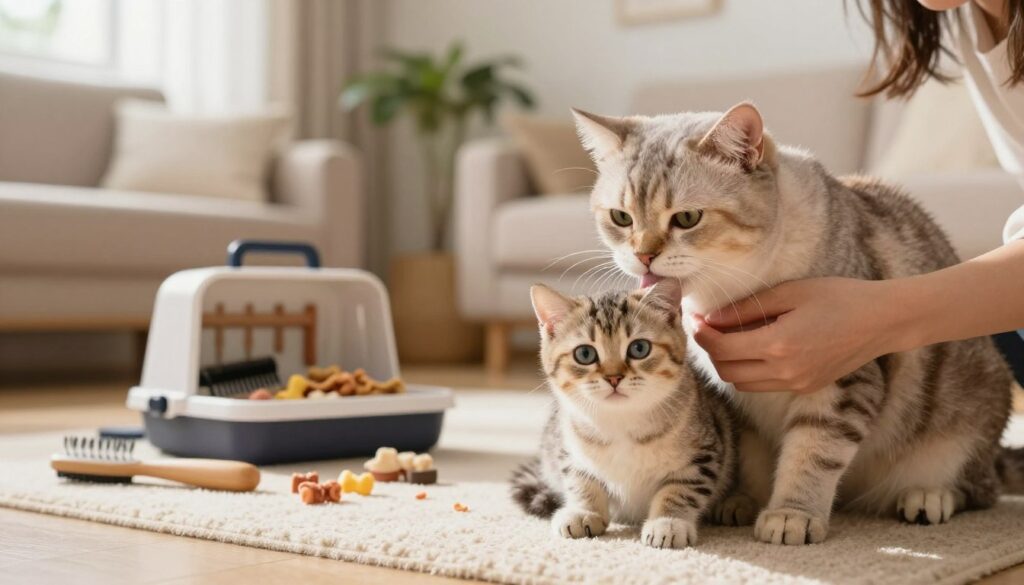
Using Play and Positive Reinforcement
Encourage positive cat interactions by giving them healthy ways to spend their energy. Play with them every day for at least 15 to 20 minutes, twice daily. Use feather toys, balls, or wand toys that let them chase and pounce. This activity tires them out and gives them an appropriate outlet for hunting instincts.
Reward good moments with treats and praise. When your cats groom each other gently or play without roughness, give them a reward right away. They learn that calm behavior brings good things. If grooming starts to turn aggressive, gently distract them with a toy or treat instead of scolding.
Tools for Managing Aggressive Behavior
Preventing cat fights after grooming gets easier with the right tools and techniques. Consider using a Feliway diffuser near your cats’ favorite spots. This synthetic pheromone product creates a calming environment and reduces tension between them.
Clicker training teaches your cats to respond to a sound that tells them to stop a behavior. When you hear grooming turn into rougher play, click and then redirect with a toy. Your cats learn that the click means a positive reward is coming.
| Strategy | How It Works | Best Time to Use |
|---|---|---|
| Environmental Resources | Multiple litter boxes, food bowls, and resting areas reduce competition stress | Before cats arrive or if fighting is frequent |
| Interactive Play Sessions | 15-20 minutes twice daily with wand toys burns energy and prevents rough play | Daily, especially before times when fighting typically happens |
| Feliway Diffuser | Releases calming pheromones that lower stress and tension between cats | Continuously in shared spaces |
| Clicker Training | Teaches cats to respond to a sound cue that interrupts escalating behavior | During or just before grooming that turns aggressive |
| Positive Reinforcement | Rewards calm grooming and play with treats or praise | Immediately after good behavior |
| Scent Swapping | Exchange bedding between cats to build comfort with each other’s scent | If cats need to be separated and reintroduced |
Reintroduction After Serious Fights
If your cats have had serious fights with injuries, you may need to start over. Separate them completely in different rooms for several days. Exchange their bedding so they get used to each other’s scent. Feed them on opposite sides of a closed door so they make good associations with each other’s presence.
Slowly increase visual contact through a cracked door or a baby gate. Watch for calm behavior before allowing them to be together again. This process takes patience, but rebuilding trust is worth the effort.
When to Seek Professional Help
Know when it’s time to call in an expert. If fighting causes injuries, if one cat shows persistent fear, or if behavior is getting worse despite your efforts, contact a certified cat behavior consultant. A veterinary behaviorist can assess your specific situation and provide customized guidance that works for your household.
- Schedule a consultation if fights result in wounds or bleeding
- Reach out if one cat hides constantly or shows signs of stress
- Get professional help if your interventions haven’t improved things after several weeks
- Contact an expert if you’re unsure about what you’re seeing between your cats
Managing cat grooming aggression takes time and consistency. Work on encouraging positive cat interactions through resources, play, and rewards. With patience and the right approach, you’ll reduce tension and help your cats enjoy a more peaceful relationship.
Conclusion
Learning about feline allogrooming behavior can ease worries for many cat owners. Seeing your cats lick each other and then fight is normal. It shows they are happy and comfortable together.
This behavior helps them bond, show love, and even manage stress. It also helps them figure out who’s in charge. This proves they feel safe and happy around each other.
When your cats switch from grooming to play fighting, it’s usually okay. They do this because they trust each other. Sometimes, too much grooming can lead to play. It’s important to watch for signs of real aggression.
Look for hard bites, loud hisses, or fear. If one cat always seems aggressive, it’s time to get help. A vet or cat behaviorist can offer advice. They can help you keep your cats happy and healthy.
Being able to understand your cats’ behavior strengthens your bond with them. Knowing about feline allogrooming behavior helps you care for them better. Most of the time, their grooming and play are just part of their special friendship.
Trust your instincts and watch for real warning signs. Enjoy seeing your cats’ unique friendship grow and thrive.