Why Do Cats Groom Each Other? Understanding Feline Social Behavior
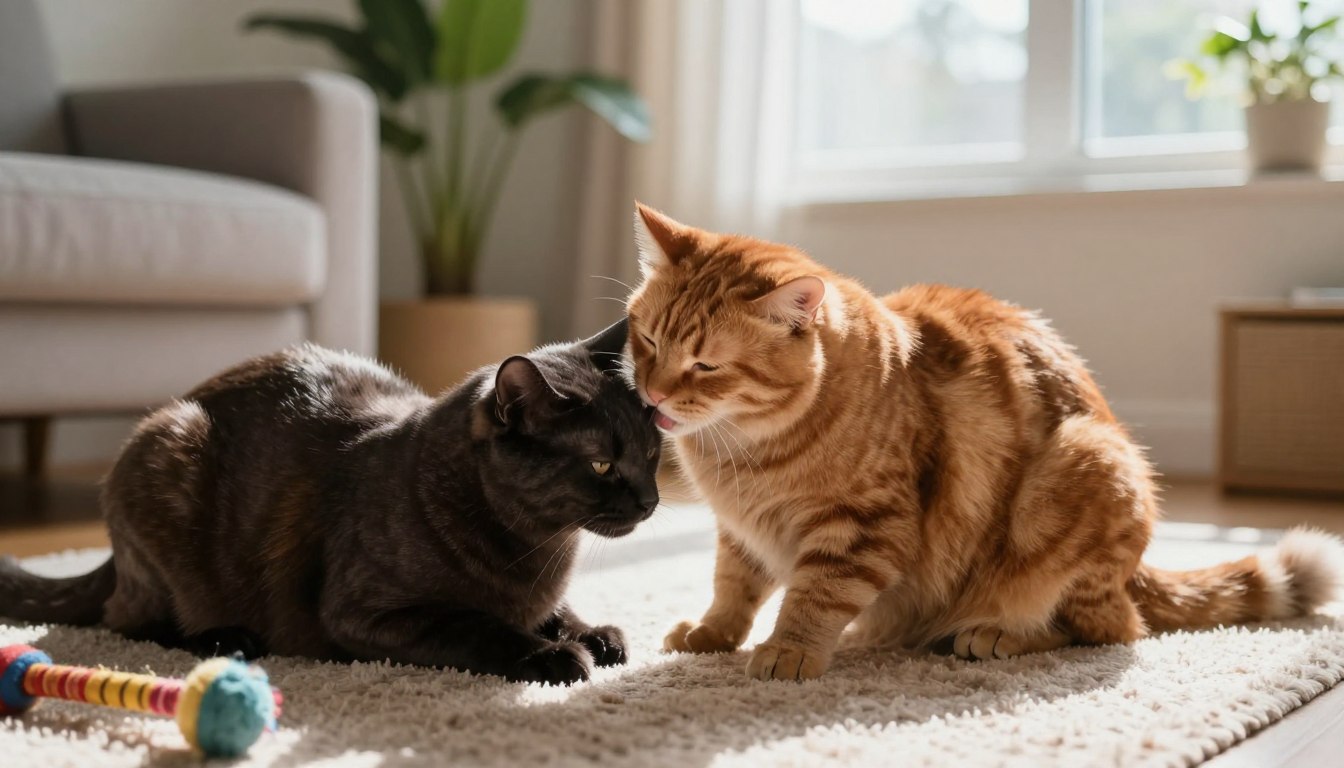
Have you ever watched your cats gently lick each other? It’s a beautiful moment that shows their deep bond. This act is more than just cleaning; it’s a sign of their emotional connection and social structure.
Cats spend 30-50% of their day grooming. Pamela Perry, DVM, says this shows grooming’s importance in their lives. They groom not just to stay clean but to strengthen their bonds with others in the house.
This behavior is called allogrooming. It’s a way for cats to communicate trust, affection, and social bonds. It’s a language that goes beyond simple grooming.
Rita Reimers, a Certified Cat Behaviorist, says grooming is a sign of affection between bonded cats. It shows their trust and deep emotional connection. Each lick tells a story about their social standing and bond.
Learning about feline grooming habits opens a window into their world. It shows how their actions are filled with communication, bonding, and survival instincts. Your curiosity about this behavior will help you understand what your cats are trying to tell you through their grooming.
Table of Contents
What Is Allogrooming in Cats?
Allogrooming is when one cat licks and grooms another. It’s a natural part of cat grooming. Your cats spend a lot of time grooming each other. This shows they have a healthy bond.
Cats have special tongues for grooming. Their tongues have tiny, comb-like structures called papillae. These tongues clean and bond cats together.
The Science Behind Mutual Grooming
Grooming triggers important chemical reactions in your cat’s brain. It releases endorphins, making your cat feel calm and happy.
Grooming has many purposes. It reduces stress and strengthens bonds. Cats often groom hard-to-reach areas like the head and ears.
- Tongue structure enables effective cleaning
- Endorphin release promotes relaxation
- Bonding chemicals strengthen relationships
- Hard-to-reach areas receive special attention
How Common Is This Behavior Among Cats?
Allogrooming is common among littermates and bonded pairs. Cats that trust each other groom each other often. The frequency depends on their personalities and bond.
| Cat Relationship Type | Allogrooming Frequency | Common Grooming Areas |
|---|---|---|
| Littermates | Very Frequent | Head, neck, ears, face |
| Bonded Pairs | Frequent | Head, neck, cheeks, ears |
| Recently Introduced Cats | Occasional | Limited to neutral areas |
| Cats Building Trust | Growing Frequency | Expanding to more areas |
Your cats spend 30 to 50 percent of their day grooming. This shows grooming is key in their lives. Seeing them groom each other is a sign of a strong bond.
Why Do Cats Groom Each Other
Your cats groom each other for many reasons. It’s important to understand why they do this. Steve Dale, a Certified Animal Behavior Consultant, says it’s about showing love and trust.
Grooming is more than just cleaning. It’s about emotional and social needs. Watching your cats groom each other is like seeing a deep conversation.
The Main Reasons Your Cats Groom Each Other
- Bonding and affection: Grooming strengthens their bond, like human touch does
- Hygiene assistance: They clean each other’s hard-to-reach spots
- Stress relief: It calms them down by releasing endorphins
- Scent sharing: They share scents to mark each other as family
- Social structure: It shows who’s in charge in the house
- Health monitoring: They groom more if they sense health issues
Grooming creates a shared scent among your cats. It makes them feel like they belong together. This scent helps them feel safe and connected at home.
Keep an eye on your cats when they groom. Regular and gentle grooming is a good sign. It shows they trust and care for each other deeply.
The Role of Bonding and Affection in Cat Grooming
When cats groom each other, they’re doing more than cleaning fur. This act shows trust, affection, and a deep emotional connection. Steve Dale, CABC, says it’s a way cats express social bonds and friendship.
Grooming requires cats to be vulnerable with each other. They must trust their grooming partner completely. This shows a strong bond in the household.
Building Trust Through Licking
Grooming is a way cats build trust over time. They start with short, careful licking sessions. As their bond grows, these sessions get longer and more frequent.
When a cat lets another groom sensitive areas, it shows deep trust. This trust is built because grooming releases endorphins. Both cats feel good, creating strong associations with each other.
Strengthening Social Connections
Regular grooming sessions strengthen the bond between cats. Each grooming moment says, “You’re part of my family.” This is especially true for littermates who grew up together.
Cats who aren’t related can also form strong bonds through grooming. This behavior becomes a regular ritual. The endorphin release makes both cats seek more grooming, feeling better in each other’s presence.
- Trust develops through repeated grooming sessions
- Sensitive areas like ears show deep trust when groomed
- Endorphins create positive associations between cats
- Littermates often groom frequently and naturally
- Unrelated cats can build strong bonds through grooming
Rita Reimers says grooming is a social bonding ritual. It reduces stress and builds positive relationships between cats. In most cases, it shows harmony and genuine affection between your feline friends.
How Grooming Establishes Hierarchy and Dominance
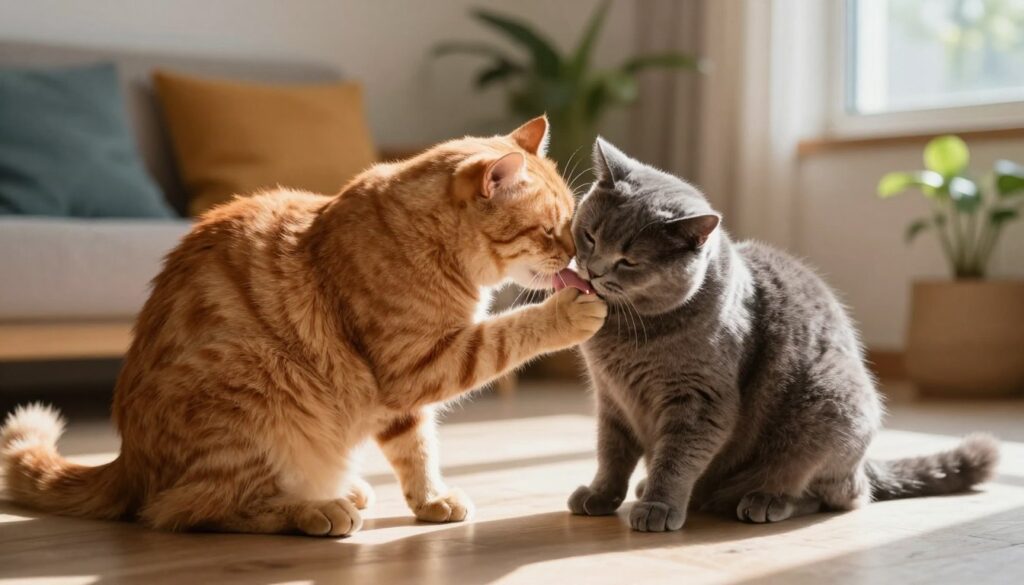
Your cats groom each other for more than just love. Grooming helps them show who’s boss in your home. When one cat grooms another but doesn’t get groomed back, it means the groomer is in charge. The groomed cat is seen as lower in rank.
Grooming shows who’s in charge and who’s not. Dominant cats groom to show they’re the boss. This helps keep peace and order in your home.
- One cat always starts the grooming session without reciprocation
- The grooming cat pins or restrains the other’s head during the interaction
- Your cat shows physical signs of discomfort like flattened ears or tense posture
- The groomed cat attempts to escape or shows annoyed body language
- Grooming escalates into nipping or biting when the subordinate cat tries to leave
- The dominant cat controls access to resources, food bowls, and favorite resting spots
Grooming can get more intense when things get stressful or change. Your cats may groom more to feel safe. This behavior also reminds them of their mom, making the groomer seem like a leader.
Even though dominant grooming is normal, watch how your cats react. Make sure it doesn’t upset the balance in your home.
Understanding Why Cats Groom Then Fight
Watching two cats groom each other can be peaceful. But then, they might start fighting. This sudden change can be scary. It shows how cats have different comfort levels with touch.
When these limits are crossed, things can get tense fast. Knowing the signs helps keep your home peaceful.
Recognizing Overstimulation Signals
Cats show signs when they’re getting too comfortable. Look for these signals:
- Ears rotating backward or flattening against the head
- Tail twitching, swishing, or lashing rapidly
- Body becoming tense or rigid
- Skin rippling across the back
- Pupils dilating wider than normal
- Vocalizations changing tone or becoming more frequent
These signs mean your cat wants you to stop. If the grooming cat ignores these cues, things can quickly turn physical.
Play Fighting Versus Real Aggression
It’s important to know the difference between play and real fighting. Play fighting is when cats take turns and it’s balanced. Real fighting is different and shows danger.
| Play Fighting | Real Aggression |
|---|---|
| Cats take turns attacking and defending | One cat pursues while the other flees |
| No injuries or minimal scratching | Visible scratches, bites, or fur loss |
| Quiet or playful vocalizations | Persistent hissing, growling, or yowling |
| Both cats appear relaxed between exchanges | One cat shows fear or pain signals |
Reasons for cats grooming each other include showing dominance. Grooming can also help them make peace after fights.
If tensions rise, distract them with a toy or treat. Separating them helps calm things down.
The Hygiene and Health Benefits of Mutual Grooming
Your cats groom each other as a team. This behavior is not just about friendship. It’s about keeping clean, especially in hard-to-reach spots like the head, neck, ears, and face.
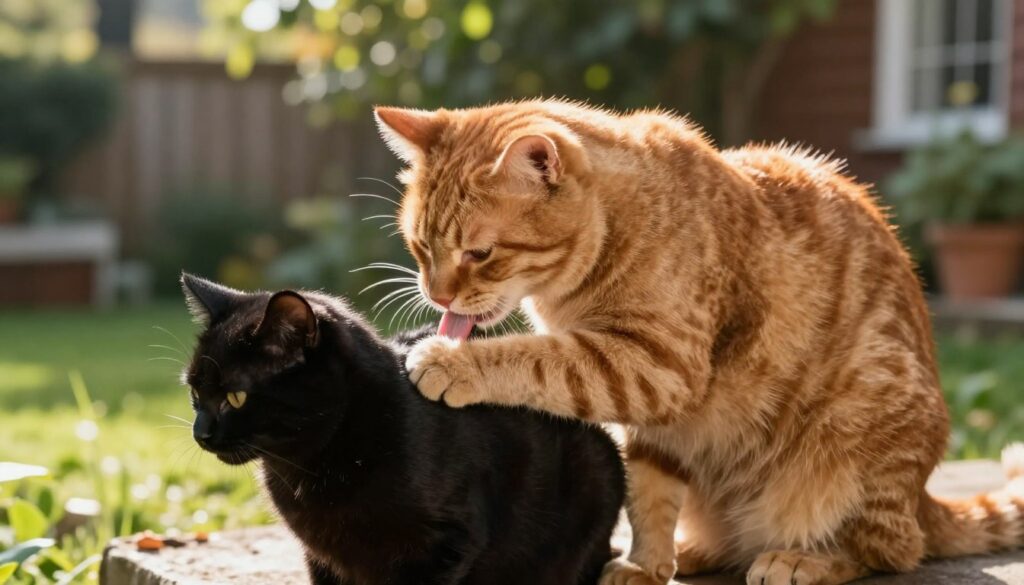
Grooming has many health benefits. It helps remove loose fur, debris, and parasites from places cats can’t reach. This keeps their skin healthy and prevents mats. It also spreads oils that protect their fur and skin.
Recognizing Health Signals Through Grooming
Your cats talk to you through grooming. If one cat has allergies, parasites, or skin issues, the other will groom that area more. This shows they care, but it’s a sign you should check on them.
- Watch for sudden increases in grooming frequency
- Look for bald patches or missing fur
- Notice skin irritation or redness
- Monitor obsessive grooming of one specific spot
Too much grooming can lead to infections. Excessive licking can irritate the skin and cause wounds. Knowing what’s normal helps you spot problems early. If you notice anything odd, call your vet. Tools like Petcube Cam let you watch your cats when you’re away, catching issues before they get worse.
Scent Sharing and Territory Marking Through Grooming
When cats groom each other, they do more than clean themselves. They share scents that tell each other about health, feelings, and status. This sharing is key to their social behavior and helps them know they belong together.
By exchanging scents, cats create a shared identity. This reduces stress in homes with more than one cat. It makes their social bonds clear and shows who’s part of the group.
How Cats Use Pheromones to Communicate
Cats have a strong sense of smell. They have scent glands on their faces, paws, and near their tails. These glands release pheromones that share important info about who they are and how they feel.
When cats groom, they use a special way to smell each other’s pheromones. This is called the Flehmen response. It looks funny, but they’re really checking out each other’s health and status.
- Pheromones communicate emotional state and stress levels
- Scent glands provide identity markers unique to each cat
- The Flehmen response enhances pheromone detection
- Chemical signals convey reproductive and health information
Creating a Unified Colony Scent
Cats who live together create a shared scent. This scent is a mix of their individual smells. It shows they all belong to the same group.
This shared scent helps cats recognize who’s in their group. It makes it clear who’s part of the family and who’s not. This reduces stress in homes with many cats.
Cats licking each other’s butts might seem odd. But it’s a way for them to share health and status info. This strengthens their bond and helps them know their place in the family.
When Cat Grooming Behavior Signals Health Issues
It’s key to understand cat grooming to spot health problems early. Cats may groom to show distress or find issues in their friends. This behavior is more than just bonding; it can show serious health issues.
Cats have amazing senses to detect changes in their friends’ bodies. If one cat keeps grooming the same spot, it might sense a skin issue, wound, infection, or parasite. Their sensitive noses pick up scent and temperature changes that signal trouble.
- One cat obsessively grooming the same spot on another cat
- Bald patches or thinning fur appearing
- Visible skin redness or lesions
- The groomed cat avoiding grooming or showing discomfort
- Discharge, odor, or swelling in groomed areas
While grooming helps clean an affected area, too much licking can harm. Cat saliva has bacteria that can cause or worsen skin infections. It’s important to watch this balance closely.
Excessive grooming can also mean anxiety, stress, or compulsive disorders. Both the groomer and the groomed cat might need vet or behavioral help.
| Warning Sign | Possible Health Issue | Action to Take |
|---|---|---|
| Intense grooming of one spot | Allergies or parasites | Schedule vet visit |
| Bald patches developing | Skin infection or mites | Call veterinarian immediately |
| Redness or discharge | Wound or bacterial infection | Seek urgent veterinary care |
| Frequent head shaking during grooming | Ear infection or mites | Contact your vet |
| Grooming avoidance behavior | Pain or severe discomfort | Emergency vet evaluation |
Know your cats’ normal grooming patterns to catch changes early. Watch how often they groom, which areas they focus on, and how long they groom. Tools like Petcube Cam help you monitor them when you’re away.
If you notice anything odd, call your vet. Spotting health problems early through grooming can prevent serious issues. Your quick action keeps your cats healthy.
Managing Multi-Cat Household Grooming Dynamics
Living with multiple cats is joyful and fulfilling. Yet, managing their grooming needs is crucial. Knowing your cats’ social behavior helps create a peaceful home for all.
Observe how your cats groom each other. Check if grooming is shared or if one cat does most of it. Look for signs of stress or discomfort. Your cats should seem relaxed and willing, not tense or trying to get away.
Healthy grooming should be natural and stress-free. If grooming turns into fights, you need to step in. Watch for these signs of trouble:
- One cat consistently avoids grooming sessions
- Grooming frequently escalates into fighting
- Visible skin irritation or bald patches appear
- One cat uses grooming to control or bully others
Create a calm environment to support positive grooming. Here are some tips:
| Management Strategy | Benefits | Implementation |
|---|---|---|
| Resource Abundance | Reduces competition and stress | Provide n+1 litter boxes, multiple food bowls, water stations, and resting spots |
| Environmental Enrichment | Redirects energy and builds positive bonds | Use interactive toys, puzzle feeders, cat trees, and rotate activities daily |
| Positive Reinforcement | Encourages gentle, reciprocal grooming | Reward calm grooming sessions with treats and praise |
| Temporary Separation | Allows stressed cats to recover | Separate cats when grooming becomes overwhelming without using punishment |
| Environmental Design | Provides escape routes and safe spaces | Create multiple pathways, hiding spots, and elevated perches throughout your home |
Play with your cats regularly to reduce stress. Interactive play helps them release tension. Use toys like wand toys, laser pointers, and puzzle feeders to keep them engaged.
Keep a close eye on your cats’ interactions. Some hierarchy and minor conflicts are normal. Your careful observation helps maintain peace while respecting their natural behavior. If conflicts worsen, seek help from a vet or certified cat behavior consultant.
Balance is essential for harmony. Your thoughtful actions and understanding of grooming habits ensure a happy home for all your cats.
Conclusion
Learning why cats groom each other opens a window into their complex world. Cat grooming is more than just staying clean. It’s a way they communicate and show affection.
When you see your cats grooming each other, it’s a sign of their bond and stress levels. It also shows their place in your home’s social structure. This behavior is a language all its own.
Cat social behavior is shown through allogrooming in many ways. They groom each other to build trust and show love. It’s a way to share scent and mark territory.
Grooming helps them establish hierarchy and dominance in your home. It also serves practical purposes like removing dirt and parasites. Stress relief is another reason why cats groom each other.
Pay attention to your cats’ grooming patterns. Most allogrooming is a sign of a healthy relationship. Watch for changes in how often or how gently they groom each other.
Notice if grooming turns into fighting or if one cat seems to avoid the other. These signs can point to health issues or social problems. Your awareness helps you catch problems early and keep your multi-cat household running smoothly.
By learning about cat grooming behavior and social behavior, you become a better cat parent. You can create an environment where your cats feel safe to express their natural instincts. You’ll know when to step in and when to let them bond on their own.
Understanding these behaviors strengthens your connection with your feline family. It helps them live their best lives together.