
Is Sausage Good for Dogs? Vet Nutrition Facts
Your dog loves the smell of sausage cooking. It fills your kitchen, and they beg for a taste. You might want to give in because they seem so eager.
Many pet owners have given their dogs a little sausage without issues. This makes you wonder: is sausage safe for dogs?
The answer is not simple. Veterinary science shows that dogs can eat sausage, but with caution. Even if they seem okay, it’s not always good for them.
This guide will tell you everything about sausage and your dog’s health. You’ll learn what’s in sausage and why vets are concerned. Most importantly, you’ll find out if sausage is safe for dogs based on science.
As a pet owner, you make choices about their diet. This article gives you the vet-approved info to decide if sausage is right for your dog.
Table of Contents
Understanding Your Dog’s Dietary Needs
Your dog’s diet is different from yours. While you might enjoy a sausage for breakfast, your dog’s body processes food in unique ways. Before feeding sausage to dogs, you need to understand what your pet actually needs to thrive. Dogs require a carefully balanced diet to maintain health and energy.
A dog’s diet depends on six essential nutrient categories. These nutrients work together to keep your dog healthy and active every day.
Essential Nutrients for Canine Health
Your dog needs specific nutrients to function properly. The main nutrient groups include:
- Proteins – Build and repair muscles and tissues
- Fats – Provide energy and support healthy skin and coat
- Carbohydrates – Supply energy and fiber for digestion
- Vitamins – Support immune function and metabolism
- Minerals – Strengthen bones and teeth
- Water – Essential for all body functions
Dogs need higher protein levels than humans do. Your dog also processes fats differently than you do. Commercial dog foods follow AAFCO standards, ensuring complete nutrition. When feeding sausage to dogs, you disrupt this carefully balanced diet.
How Dogs Process Different Foods
Your dog’s digestive system works differently than yours. Dogs have shorter digestive tracts that process meat quickly. They produce different enzymes for breaking down foods. This means your dog cannot handle certain ingredients well.
Your dog’s body reacts strongly to seasonings and additives. High-fat foods and excessive sodium can cause serious problems. Feeding sausage to dogs exposes them to ingredients their bodies struggle to process safely.
| Nutrient Component | Dogs’ Requirement | Why It Matters |
|---|---|---|
| Protein | Higher than humans | Maintains muscle mass and body functions |
| Fat | Balanced levels | Supports skin, coat, and brain health |
| Sodium | Low levels | Prevents heart and kidney problems |
| Seasonings | None or minimal | Many seasonings are toxic to dogs |
Understanding these differences helps you make better choices about what to feed your pet. Your dog’s health depends on proper nutrition tailored to their unique needs.
What’s Actually Inside Sausage
Thinking about sharing sausage with dogs? It’s good to know what’s in it. Commercial sausage isn’t just ground meat. It’s a mix of ingredients and additives that can harm your pet’s health.
Most sausages have ground pork, beef, chicken, or turkey. But, they often use fatty cuts and meat by-products instead of lean meat.
The fat in sausage is key when considering it for dogs. Sausages have 20-30% fat, sometimes more. This is a lot more than the lean proteins dogs need for good nutrition.
Sausage also has many additives to make it taste better and last longer. Here’s what you’ll find:
- Salt (often 1-2% of total weight)
- Nitrates and nitrites as preservatives
- Phosphates to retain moisture
- Various flavor enhancers and spices
- Garlic powder and onion powder
- Paprika, black pepper, sage, and fennel
Different sausages are made in different ways. Fresh, cured, and smoked sausages have different nutritional profiles. Smoked sausage uses different preservation methods than fresh sausage. Cured sausages use salt and nitrates to last longer.
Knowing what’s in sausage is important. Feeding sausage to dogs is not just giving them meat. It’s giving them a processed food made for human taste, not their nutritional needs.
Is Sausage Good for Dogs
Wondering if is sausage good for dogs means looking at what’s in these meats. Dogs might love sausage, but it’s not always good for them. Knowing what’s in sausage helps you choose better food for your dog.
Evaluating the Nutritional Value
Sausage has protein, which dogs need for muscles. But most sausages aren’t balanced. Good dog food has 18-32% protein and 8-20% fat. Sausage has less protein and more fat.
The benefits of sausage for dogs are few. Dogs get some protein from sausage, but it’s not worth the risks. The fat, salt, and seasonings in sausage can harm your dog’s health.
| Nutrient Component | Quality Dog Food | Typical Sausage |
|---|---|---|
| Protein Content | 18-32% | 10-15% |
| Fat Content | 8-20% | 25-40% |
| Sodium Level | Low-moderate | Very High |
Veterinary Perspectives on Sausage
Vets say no to sausage in your dog’s diet. The American Animal Hospital Association warns of health risks from high-fat, high-sodium meats.
Veterinary nutritionists agree. They say sausage has no benefits that can’t be found in better protein sources. Your vet will tell you the risks are too great. They point out:
- Sausage has too much salt, which hurts your dog’s kidneys
- The fat can cause pancreatitis
- Processed seasonings and additives don’t offer any good nutrition
- Better protein sources are safer and more nutritious
“Dogs don’t need sausage to thrive. Their nutritional needs are best met through balanced, species-appropriate diets specifically formulated for canine health.” — Veterinary Nutritionist Perspective
The experts are clear: avoid sausage, even as a treat, for your dog’s health and long life.
The Dangers of High Fat Content in Sausage
Sausage is very bad for your dog because it has too much fat. Most sausages have 20% to 35% fat. Dogs can’t digest fat like humans do. Eating sausage often makes your dog very sick.
Knowing the risks helps you choose better for your dog. The dangers are not just about weight gain. Your dog can get very sick from eating fatty sausages.
Pancreatitis Risks in Dogs
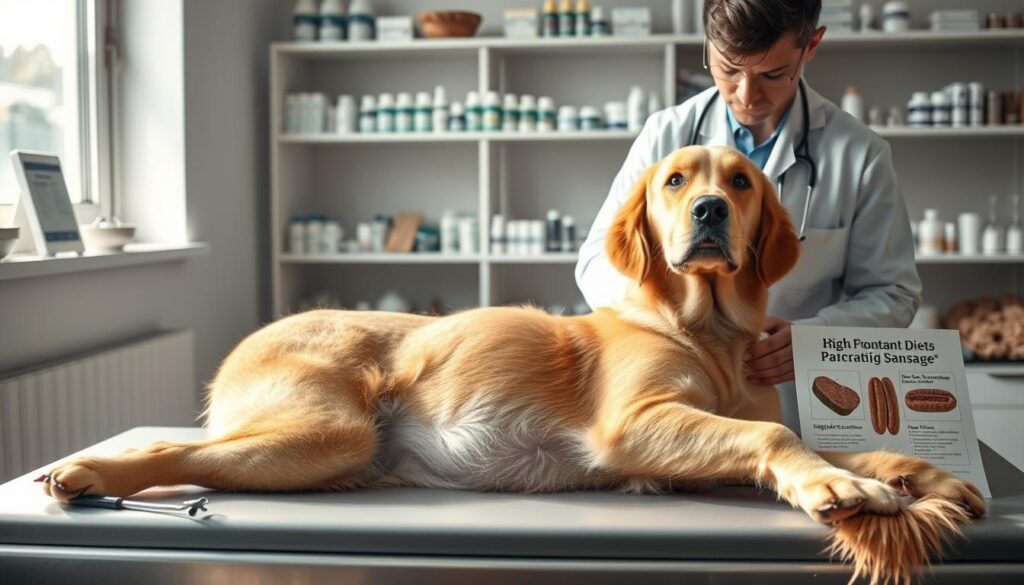
Pancreatitis is a serious problem in dogs from eating sausage. It’s when the pancreas gets inflamed because of too much fat. This makes it hard for the pancreas to work right, causing a lot of pain and sickness.
Signs of pancreatitis include:
- Vomiting and diarrhea
- Severe abdominal pain
- Loss of appetite
- Lethargy and weakness
- Dehydration
Some dog breeds are more likely to get pancreatitis. Miniature Schnauzers, Yorkshire Terriers, and Cocker Spaniels are at higher risk. Even a small amount of sausage can cause pancreatitis in these dogs. Some dogs have chronic pancreatitis, needing special diets for life.
Obesity and Weight Management Concerns
Many dogs in the U.S. are overweight, about 56%. Foods high in fat, like sausage, make this worse. A small piece of sausage is a big part of a small dog’s daily calories.
Being overweight is very bad for dogs:
| Health Problem | Impact on Your Dog |
|---|---|
| Diabetes | Requires insulin injections and dietary restrictions |
| Joint Problems | Arthritis and reduced mobility |
| Heart Disease | Weakened cardiac function |
| Respiratory Issues | Difficulty breathing during exercise |
| Shortened Lifespan | Obese dogs live 2-3 years less on average |
It’s hard to keep your dog at a healthy weight with fatty treats. The calories add up fast, making it hard to keep them active enough to stay thin.
Sodium Levels and Your Dog’s Health
Most sausages have 400 to 800 milligrams of sodium per serving. Some have even more. This is a big health risk for dogs that many owners don’t see. Dogs need some sodium, but not as much as humans. They get enough from their dog food.
Dogs need about 100 milligrams of sodium for every 100 calories of food. Even a small sausage can give them too much. Knowing this helps keep your dog healthy.
Too much sodium in dogs can cause problems. They might drink more water and go to the bathroom a lot. They could also vomit or have diarrhea. In bad cases, it can lead to shaking, seizures, and even be life-threatening.
Dogs with health issues are at even higher risk. If your dog has heart, kidney, or blood pressure problems, sausage is not safe. These conditions make them more likely to get sick from too much salt.
| Sodium Content Comparison | Milligrams per Serving | Dog Safety Rating |
|---|---|---|
| Beef Sausage | 650-800 mg | Unsafe |
| Pork Sausage | 400-600 mg | Unsafe |
| Chicken Sausage | 500-750 mg | Unsafe |
| Dog’s Daily Safe Limit | 100 mg per 100 calories | Recommended |
One small sausage piece might not hurt a healthy dog right away. But eating it often can cause long-term health issues. It makes their kidneys and heart work too hard, leading to damage.
- Watch for increased thirst in your dog
- Monitor changes in urination patterns
- Note any vomiting or digestive upset
- Observe your dog’s energy levels and alertness
- Report unusual symptoms to your veterinarian
The salt in sausage is a big danger for dogs. Vets always say not to give dogs processed meats because of the sodium. Keeping your dog safe means knowing that treats can harm them over time.
Harmful Ingredients and Additives in Sausage
Commercial sausages have many ingredients beyond just fat and salt. Your dog can’t safely handle these. It’s key to know what’s in the sausage for your pet’s health. Some ingredients can harm your dog, even in small amounts over time.
Garlic and Onion Toxicity
Garlic and onions are in many sausages. They belong to the Allium family, which has harmful compounds. These compounds damage red blood cells, leading to hemolytic anemia.
Dogs can’t break down these compounds like humans do. Their red blood cells break down faster than new ones form. Symptoms may not show right away. They can appear days after eating sausage. Look out for these signs:
- Weakness and lethargy
- Pale gums and mucous membranes
- Reddish-colored urine
- Increased heart rate
- Collapse in severe cases
Even a little garlic powder in sausage can harm your dog. There’s no safe amount of garlic for dogs. Over time, this can lead to chronic health issues.
Preservatives and Artificial Flavors
There’s more to worry about than garlic and onions in sausages. Commercial sausages have preservatives and additives for longer shelf life and taste. These can harm your dog’s health in different ways.
| Additive | Purpose | Potential Dog Health Concerns |
|---|---|---|
| Nitrates and Nitrites | Preserve color and prevent bacterial growth | May cause digestive upset and metabolic issues in dogs |
| BHA and BHT | Antioxidant preservatives for freshness | Linked to allergic reactions and sensitivities in dogs |
| MSG (Monosodium Glutamate) | Enhance meat flavor | Can trigger digestive problems and adverse reactions |
| Smoke Flavoring | Create traditional sausage taste | May irritate your dog’s digestive system |
Dogs process additives differently than humans. Their smaller size and metabolism make them more at risk. While these additives are safe for humans in small amounts, their safety for dogs is less studied.
Some dogs may be allergic to these additives. This can cause itching, skin issues, vomiting, or diarrhea. Your dog’s breed, age, and health can affect their sensitivity.
“Pet owners should understand that ‘safe for humans’ does not mean ‘safe for dogs.’ Our pets have different physiological needs and sensitivities.”
It’s important to read labels when choosing food for your dog. Opt for sausages with fewer additives. Better yet, choose plain, fresh meat for a safer diet.
Safe Sausage Alternatives for Dogs
Your dog deserves treats that are tasty and safe. Finding a dog-friendly sausage option lets you share special moments with your pet. Many alternatives offer a meaty experience without health risks.
Commercial dog sausage treats are a convenient choice. They are made with the right amount of protein, low fat, and no harmful seasonings. Brands like Bully Stick Company and Natural Farm offer safe sausage options. Your vet can help pick the best one for your dog.
You can also make homemade alternatives. Simple cooked lean meats work great:
- Chicken breast cut into sausage-like pieces
- Turkey strips without seasoning
- Lean beef chunks shaped like sausages
Dehydrated meat treats and freeze-dried options are also good. They offer concentrated protein and are safe to store.
When choosing safe sausage for dogs, read labels well. Look for products with few ingredients. Avoid those with salt, artificial colors, or too much fat.
For dogs needing less protein, sweet potato “sausages” and vegetarian dog treats are good. These alternatives keep your pet safe while you enjoy treats together.
When Sausage Might Be Acceptable for Your Dog
Your vet will tell you that the safest amount of sausage for your dog is none. But, many pet owners sometimes give their dogs a little bit of sausage. If you do, it’s important to know how to keep your dog safe.
This section will help you understand how to reduce risks if you give your dog sausage. But remember, this should only happen in rare cases.
Portion Control Guidelines
The 10% treat rule applies to sausage just like other foods. Your dog’s daily treats should not be more than 10% of their total calories. For a 20-pound dog eating about 500 calories a day, treats should be no more than 50 calories.
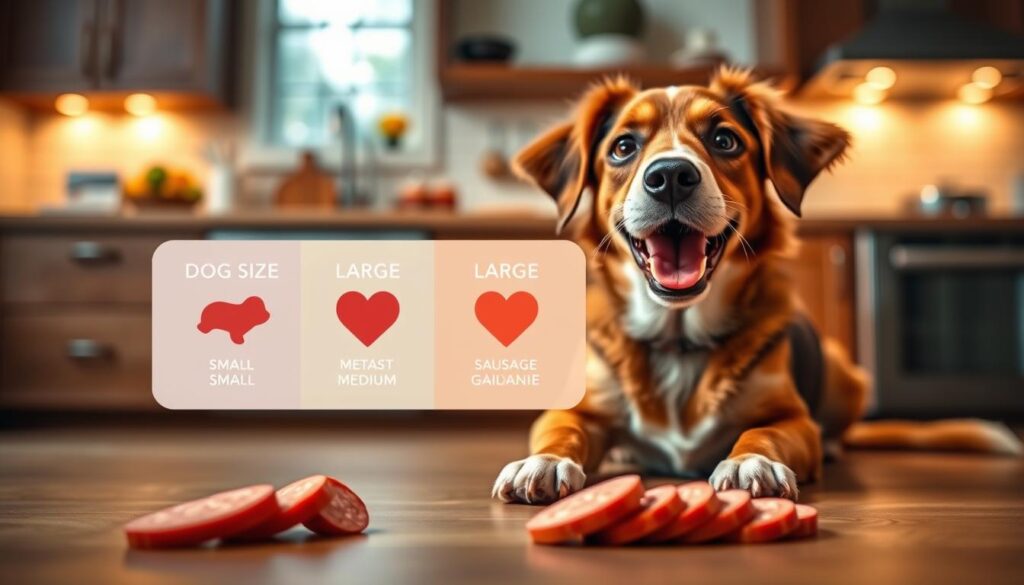
A healthy sausage for dogs is very small—about half an ounce or less. Think about your dog’s size when deciding how much to give:
- Small dogs (under 10 pounds): A piece no larger than your thumbnail, given very rarely
- Medium dogs (10-50 pounds): A piece roughly the size of a small dice cube, given very rarely
- Large dogs (over 50 pounds): A piece slightly larger than a dice cube, given very rarely
Giving your dog small pieces throughout the week can be risky. One small piece given once a month is safer than many small pieces.
Choosing the Least Harmful Options
Not all sausages are bad for dogs. If you must give your dog sausage, choose the right kind. Chicken or turkey sausage has less fat than pork or beef.
Fresh sausage is safer than cured or smoked sausage, which has more sodium and preservatives. Always read the ingredient labels when looking for safe sausage for dogs.
Avoid any sausage with garlic, onion, or too much salt. “Natural” or “organic” labels don’t mean it’s safe for dogs. These are just marketing terms.
| Sausage Type | Fat Content | Sodium Level | Safety for Dogs |
|---|---|---|---|
| Chicken Sausage (fresh, unseasoned) | Lower | Moderate | Safer Choice |
| Turkey Sausage (fresh, unseasoned) | Lower | Moderate | Safer Choice |
| Pork Sausage (any type) | High | High | Higher Risk |
| Beef Sausage (any type) | High | High | Higher Risk |
| Cured or Smoked Sausage | High | Very High | Highest Risk |
| Plain Cooked Ground Meat | Variable | None Added | Best Alternative |
Plain, unseasoned cooked ground chicken or turkey is the safest meat treat for your dog. It avoids the bad stuff in sausage. Your dog can’t tell the difference between sausage and plain meat, so it’s best to skip the sausage.
This advice is about reducing harm, not encouraging it. The best choice for your dog is to avoid human sausage and choose dog treats instead.
Signs Your Dog Has Eaten Too Much Sausage
It’s important to know the signs if your dog ate too much sausage. They can range from mild discomfort to serious health issues. The severity depends on how much sausage they ate, their size, and their sensitivity.
Your dog might show signs of stomach upset soon after eating sausage. Look for vomiting, diarrhea with blood, and a lot of drooling. They might also lose their appetite and show pain by hunching over or whimpering when touched.
Pancreatitis can happen 24 to 48 hours after eating sausage. Watch for vomiting, diarrhea, fever, and extreme tiredness. If your dog lowers their front end while keeping their rear up, it’s a sign of serious pain and needs immediate help.
Warning Signs to Monitor
- Vomiting or repeated vomiting
- Diarrhea with blood or unusual color
- Excessive thirst and urination
- Confusion or disorientation
- Tremors or shaking
- Lethargy and weakness
- Pale or yellowish gums
- Difficulty breathing
- Rapid heart rate
| Symptom Type | Timing | Urgency Level | Action Required |
|---|---|---|---|
| Mild vomiting or diarrhea | Within 2-4 hours | Same-day appointment | Contact your veterinarian |
| Severe diarrhea with blood | Within 2-6 hours | Emergency care | Visit emergency clinic immediately |
| Pancreatitis signs | 24-48 hours after eating | Emergency care | Seek immediate veterinary help |
| Seizures or collapse | 1-24 hours | Emergency care | Call 911 or emergency vet now |
| Garlic toxicity signs | Several days later | Same-day appointment | Schedule veterinary visit promptly |
| Lethargy and loss of appetite | 6-12 hours | Same-day appointment | Monitor and call your vet |
Sodium toxicity from sausage can cause a lot of thirst, urination, confusion, and shaking. In bad cases, it can lead to seizures or coma. Garlic or onion toxicity might not show up for days and can cause weakness, pale gums, and dark urine.
Tell your vet exactly what sausage your dog ate and how much. This helps them treat your dog right. Keep an eye on your dog for 48 to 72 hours after they ate sausage. Some problems can take time to show up, so watch closely.
Get immediate emergency care if your dog has seizures, collapses, can’t breathe, or has severe bleeding. For mild symptoms like vomiting, diarrhea, lethargy, or loss of appetite, get a same-day vet appointment. Quick action and watching your dog closely can prevent serious health issues.
Healthy Protein Sources for Your Dog
Your dog needs quality protein to build strong muscles and stay healthy. Choose lean meat treats that are nutritious without harmful additives. Knowing the best protein sources helps you make good choices for your pet.
There are many healthy protein options for dogs, each with its own benefits. The right choice depends on your dog’s age, size, and health. Let’s look at the best options to keep your dog healthy.
Lean Meats and Fish Options
Plain cooked chicken breast is a top choice for lean meat treats. It’s high in protein and low in fat. Most dogs find it tasty and easy to digest.
Turkey breast is similar to chicken. Serve it plain and cooked. Lean beef cuts, like sirloin, are good too. Just trim away visible fat before cooking.
Fish is great for your dog’s health. Salmon, whitefish, and canned sardines in water provide protein and omega-3 fatty acids. These fatty acids are good for skin, coat, joints, and brain function.
| Protein Source | Fat Content | Key Benefits | Preparation Method |
|---|---|---|---|
| Chicken Breast | Low | High protein, easy to digest | Boil or bake without seasoning |
| Turkey Breast | Low | Lean protein, digestible | Bake plain or boil |
| Salmon | Moderate | Omega-3 fatty acids, joint health | Bake or boil without oil |
| Lean Beef | Low (trimmed) | Iron, B vitamins, protein | Grill or bake, trim fat |
| Sardines (Canned in Water) | Moderate | Omega-3s, calcium, protein | Drain water, serve plain |
Always cook meat to safe internal temperatures to kill harmful bacteria. Never add oils, butter, or seasonings. Plain preparation keeps these treats safe and nutritious.
Serve these proteins in small portions. Follow the 10% treat rule. This means treats should make up no more than 10% of your dog’s daily calories. The rest should come from their regular dog food.
Commercial Dog Treats vs. Human Food
High-quality commercial dog treats offer real advantages. Companies formulate these treats to meet your dog’s nutritional needs. They undergo safety testing and quality checks.
When shopping for treats, read labels carefully. Look for named meat sources like “chicken” rather than “meat by-products.” Fewer ingredients generally means a better product. Check that nutritional profiles match your dog’s needs.
- Training treats: small, low-calorie options for frequent rewards
- Dental chews: designed to support oral health and clean teeth
- High-value rewards: more flavorful treats for special occasions
Some human foods work for dogs. Plain cooked meats, certain vegetables, and plain rice can be safe. Processed human foods like sausage are almost always inferior to treats made for dogs. Commercial options specifically designed for canine nutrition beat generic human foods every time.
“The best treats for your dog are those specifically formulated for their nutritional needs and safety requirements.”
Choose treats that fit your dog’s lifestyle and health status. Active dogs need different nutrition than senior dogs. Your veterinarian can recommend the best healthy protein for dogs suited to your pet’s individual needs.
What to Do If Your Dog Eats Sausage
Discovering that your dog ate sausage can cause panic. Your response should depend on several key factors. The amount your dog consumed, their body weight, the type of sausage, and your dog’s existing health conditions all play important roles in determining the next steps.
Start by assessing the situation carefully. Determine how much sausage your dog ate, what type it was, and when consumption occurred. A 60-pound dog eating one small piece of plain breakfast sausage faces different risks than a 10-pound Chihuahua consuming several seasoned links.
Immediate Assessment Steps
Take these actions right away when you discover your dog ate sausage what to do:
- Check the sausage packaging for ingredients, especially garlic and onion content
- Estimate the amount consumed as accurately as possible
- Note the time of consumption
- Watch for any immediate symptoms like vomiting or difficulty breathing
- Contact your veterinarian for professional guidance
When to Seek Veterinary Help
Call your vet immediately if your dog consumed a large amount, shows concerning symptoms, or has pre-existing conditions like pancreatitis or heart disease. Your veterinarian will ask for your dog’s weight, the amount and type of sausage eaten, and any symptoms you’ve observed.
| Situation | Recommended Action | Urgency Level |
|---|---|---|
| Small amount (less than 1 ounce) of plain sausage, no symptoms | Monitor at home, call vet for advice | Low to Moderate |
| Moderate amount with garlic or onion content | Contact vet immediately | Moderate to High |
| Large amount consumed or dog showing symptoms | Emergency veterinary visit | High |
| Dog with pancreatitis or heart disease history | Emergency consultation required | High |
Treatment Options Your Vet May Recommend
Treatment depends on the severity of the situation. Your vet might induce vomiting if consumption was recent, administer activated charcoal to reduce toxin absorption, provide IV fluids for hydration support, or recommend hospitalization for severe cases.
Home Care for Mild Cases
If your dog ate sausage and your vet clears them for home care, follow these guidelines:
- Withhold food for 12-24 hours to rest the digestive system
- Ensure fresh water is always available
- Gradually reintroduce bland food like boiled chicken and rice
- Monitor closely for worsening symptoms
- Follow all veterinary instructions carefully
Prevention Moving Forward
Protect your dog from future incidents by securing trash cans, educating family members about avoiding table scraps, and keeping sausage treats for dogs and other dangerous foods out of reach. Even if your dog has eaten sausage before without problems, this doesn’t guarantee future safety. Cumulative effects mean the next exposure could trigger serious health issues.
Your pet’s safety depends on consistent prevention and immediate action when accidents happen.
Stay vigilant about what your dog can access, and don’t hesitate to contact your veterinarian whenever you’re uncertain about sausage treats for dogs or other foods your pet might consume.
Conclusion
Sausage is not a good choice for your dog’s regular diet. The dangers are too great. Too much fat can cause pancreatitis and obesity. High sodium can harm your dog’s heart and kidneys.
Toxic ingredients like garlic and onion are very dangerous. Knowing these risks means you should avoid giving sausage to dogs.
Your dog might seem okay after eating a little sausage. But don’t think it’s safe. Feeding sausage regularly is not safe for dogs.
It’s not just about your dog liking the taste. It’s about their health. Choose treats that are good for them, not just tasty.
Commercial dog treats and lean cooked meats are better choices. They make your dog happy without the risks of sausage.
Knowing what’s best for your dog means understanding their health needs. Talk to your vet about the right treats for your dog. They can help you find safe options.
By learning about sausage and making smart choices, you’re a responsible pet owner. You’re protecting your dog’s health and happiness. You’re giving them the best care possible.
FAQ
Is sausage good for dogs?
No, sausage is not good for dogs. Dogs love sausage because of its fat and salt, but it’s not healthy. It can cause pancreatitis, obesity, and sodium toxicity. It also has harmful ingredients like garlic and onion powder.
Vets say no to sausage for dogs. It’s not worth the health risks. There are safer protein options available.
Can dogs eat sausage safely?
Dogs can eat a little sausage without immediate harm. But, it’s not safe for regular eating. Sausage has too much fat and sodium for dogs.
Garlic-seasoned sausages are especially bad. They can cause health problems over time. There’s no safe amount of sausage for dogs.
What are the benefits of sausage for dogs?
Sausage has no real health benefits for dogs. It has too much fat and salt. The protein in sausage is not enough to outweigh the risks.
Better options include plain cooked chicken or turkey. These provide protein without the dangers of sausage.
Is sausage bad for dogs due to fat content?
Yes, sausage is bad for dogs because of its fat. Most sausages have 20-30% fat, which is too much for dogs. This can cause pancreatitis and obesity.
Dogs with pancreatitis are at higher risk. Even a small amount of sausage can cause pancreatitis symptoms. Obesity is also a big problem, affecting many dogs.
How much sodium is in sausage, and is it dangerous for dogs?
Sausages have a lot of sodium, 400-800 milligrams per serving. This is too much for dogs. Dogs need much less sodium than humans.
Too much sodium can cause vomiting, diarrhea, and even sodium poisoning. Dogs with heart or kidney problems should never eat sausage.
Does sausage contain ingredients toxic to dogs?
Yes, many sausages have toxic ingredients for dogs. Garlic and onion powder can damage red blood cells. This can cause anemia and other problems.
Many sausages also have preservatives and artificial flavors. These can cause digestive issues and allergic reactions in dogs.
What are safe sausage for dogs alternatives?
There are safer alternatives to sausage for dogs. Commercial dog treats are a good option. They have the right amount of protein and no harmful ingredients.
You can also make your own dog treats. Use plain cooked lean meats. These treats are healthier and safer for dogs.
Can I give my dog a small piece of sausage occasionally?
Vets don’t recommend giving dogs sausage, but a small piece is okay sometimes. Make sure it’s only a small amount, about 10% of their daily calories.
Even a small piece of sausage is not safe for regular eating. It’s better to give them safer treats instead.
What are the signs of sausage poisoning in dogs?
Signs of sausage poisoning in dogs include vomiting, diarrhea, and lethargy. Pancreatitis symptoms are vomiting, diarrhea, fever, and lethargy.
Sodium toxicity symptoms are excessive thirst and urination, confusion, and seizures. Garlic or onion toxicity symptoms are weakness, pale gums, and reddish urine.
What should I do if my dog eats sausage?
If your dog eats sausage, watch for symptoms. If they show no symptoms, monitor them closely. Contact your vet for advice.
If your dog has a history of pancreatitis or shows severe symptoms, seek immediate vet care. Follow your vet’s instructions for treatment.
What does feeding sausage to dogs do to their health long-term?
Feeding sausage to dogs can lead to chronic health problems. Obesity, pancreatitis, and heart disease are common risks. It can also shorten their lifespan.
Regular sausage consumption can lead to behavioral problems. It’s not worth the risks to your dog’s health and happiness.
Should dogs with pancreatitis history ever eat sausage?
No, dogs with pancreatitis should never eat sausage. Sausage can trigger pancreatitis symptoms. It’s a serious condition that can recur.
For dogs with pancreatitis, a low-fat diet is essential. Avoiding sausage is the best choice for their health.
How do I prevent my dog from eating sausage?
To prevent your dog from eating sausage, manage their environment. Keep trash cans secure and out of reach. Don’t leave sausage or other dangerous foods out.
Teach your dog to ignore human food. Use positive reinforcement to teach them a “leave it” command. This will help prevent sausage consumption.
What does feeding sausage to dogs do to their health long-term?
Feeding sausage to dogs can lead to chronic health problems. Obesity, pancreatitis, and heart disease are common risks. It can also shorten their lifespan.
Regular sausage consumption can lead to behavioral problems. It’s not worth the risks to your dog’s health and happiness.