4 Ways to Get a Picky Dog to Eat – Vet-Reviewed
You bring home your dog’s favorite meal. You set down the bowl with hope. But your pup glances at it, walks away, and leaves you wondering what went wrong. This scene is familiar to many, as nearly one in five pet owners face dog appetite problems.
Picky eating in dogs is common. Your dog might refuse meals for health issues, behavioral choices, or the environment around mealtime. Understanding what’s driving your pup’s picky eating is key.
Not every dog is naturally food-motivated. Some smaller breeds care less about meals than others. This doesn’t mean something is wrong with your pet. It just means you need different strategies to help them eat well.
This guide covers four proven strategies to address picky eater solutions. You’ll learn how to set up feeding schedules that work. You’ll discover ways to make food more appealing. You’ll understand how activity level affects hunger. Most importantly, you’ll learn how to get a picky dog to eat while keeping their nutrition on track.
These vet-reviewed methods are practical and easy to use at home. You don’t need special equipment or expensive products. What you need is the right approach tailored to your dog’s specific needs. Let’s explore how to transform your dog’s eating habits and give you peace of mind.
Understanding Why Your Dog Won’t Eat Their Food
It’s worrying when your dog won’t eat. Before trying different foods, find out why. Dog appetite loss can be due to health issues or simple habits. Some dogs become picky overnight, while others do it gradually.
Your dog’s eating habits reveal a lot about their health and happiness. If they stop eating or only pick at meals, it’s a sign of a problem. Knowing why your dog won’t eat helps you take the right steps.
Medical Reasons Behind Loss of Appetite
Health problems often start with a change in eating habits. Kidney disease, liver issues, and stomach problems can make dogs less hungry. Food allergies, infections, pain, and hormonal changes also affect appetite.
If your dog suddenly stops eating or goes 24 hours without food, call your vet. Look out for these signs:
- Vomiting or diarrhea
- Lethargy or unusual tiredness
- Weight loss
- Bad breath or drooling
- Difficulty chewing
These symptoms mean serious health concerns that need vet care.
Behavioral Factors That Influence Eating Habits
Dogs learn from what works. If they refuse food and get treats, they learn to hold out for better rewards. This behavior grows as they find that not eating leads to more appealing options.
Stress affects eating. Changes like a new home, a new pet, or loud noises can make dogs less hungry. Some dogs eat less when they’re anxious or unsure.
The Role of Dental Health in Your Dog’s Appetite
Dental problems make eating painful. Gum disease, broken teeth, and infections hurt when chewing. This pain makes dogs avoid food, even when they’re hungry. Regular dental care is key to healthy eating.
| Dental Issue | Impact on Eating | Signs to Watch |
|---|---|---|
| Gum Disease | Makes chewing painful and uncomfortable | Bad breath, red or swollen gums, drooling |
| Broken Teeth | Creates sharp edges that cut the mouth | Pawing at mouth, favoring one side while chewing |
| Oral Infections | Causes swelling and sensitivity | Difficulty eating, reluctance to chew hard food |
Regular dental check-ups catch problems early. Cleaning teeth at home and feeding soft food when needed helps. Don’t think soft food alone solves dental problems. Your dog needs proper treatment.
Understanding why your dog won’t eat helps you work with your vet. Next, create routines and environments that support healthy eating.
How to Get a Picky Dog to Eat
Getting your picky dog to eat right needs a careful plan. It’s best to mix different strategies together. Your vet can help find the right feeding methods for your dog’s needs and personality.
It’s good to know that making picky dogs eat can be easy. Most picky eating comes from routine, environment, or food choices you can change. By understanding these, you can make a plan just for your dog.
https://www.youtube.com/watch?v=n_tx9bGPF30
Changing how your dog eats takes time and patience. It might take days or weeks to see results. You’ll need to try different strategies to find what works for your dog. This is normal and expected.
The next sections will cover four key areas that vets suggest:
- Setting up regular feeding routines and schedules
- Creating a calm and distraction-free eating space
- Making food more appealing through toppings and preparation methods
- Managing treats and increasing physical activity
These strategies work together to tackle different parts of picky eating. You don’t have to do everything at once. Start with the basics like schedules and environment, then add food enhancements. This way, your dog can adjust while you see what works best.
Consistency and patience are your strongest tools when addressing picky eating in dogs.
Every dog is different, with their own likes and needs. What works for one dog might not work for another. The important thing is to keep trying and adjust your plan based on your dog’s feedback.
Establish a Consistent Feeding Schedule
Creating a routine for mealtimes is a great way to get picky dogs to eat. Dogs love routine. When you feed them at the same times every day, they start to look forward to it. This makes them hungrier and more eager to eat what you give them.
Feeding your dog at the same times helps their stomach get ready for food. This natural process makes them truly hungry, not just nibbling at their food.
Setting Regular Meal Times
Most adult dogs do well with two meals a day, 8-12 hours apart. For example, you might feed them at 7 AM and 6 PM. It’s important to stick to these times every day, even on weekends.
Choose meal times that fit your life. You need to stick to it for a long time. Dogs appreciate a consistent schedule, which helps them develop good eating habits.
Removing Food Between Meals
Don’t forget to remove uneaten food after 15-30 minutes. This teaches your dog that meals are for a limited time, not all day.
Free-feeding, or leaving food out all the time, can make dogs picky. They might wait for better food or eat whenever they want. You need to be disciplined to change this.
| Feeding Approach | Dog’s Response | Long-Term Result |
|---|---|---|
| Food available all day | Selective eating, delayed appetite | Pickier eater over time |
| Scheduled meals (15-30 min) | Genuine hunger at mealtime | Improved eating habits |
| Inconsistent timing | Confused hunger signals | Unpredictable eating patterns |
When you take away the bowl after 30 minutes, your dog doesn’t go hungry. They learn to wait for the next meal. Most dogs start eating better in just a few days once they get used to this routine.
- Feed at the same times daily
- Leave food for maximum 30 minutes
- Remove uneaten portions completely
- Stay patient for 3-5 days of adjustment
- Avoid snacking between meals
This structured approach is the base for solving picky eating. Your dedication to a regular feeding schedule really helps your dog eat their meals.
Create an Optimal Feeding Environment
Where your dog eats is as important as what they eat. A calm eating area can turn a picky eater into a happy one. Dogs feel safer and more relaxed in a quiet spot, away from noise. Setting up a cozy eating area is a great way to help your dog enjoy meals.
Your dog’s appetite is linked to feeling safe while eating. Busy places, loud noises, and chaotic homes can make them anxious. Find a spot in your home where your dog feels most comfortable and make it their eating area.
- Choose a quiet location away from the main living areas
- Keep the space away from windows where outdoor activity might distract them
- Ensure no one disturbs your dog while eating
- Feed multiple dogs in separate rooms to prevent competition
- Pick a spot with good lighting and comfortable temperature
The way you place and height of their bowls affects their comfort. Elevated feeders are good for big dogs or those with joint problems. They help avoid neck and spine strain. Stainless steel or ceramic bowls are better than metal ones because they don’t make noise or smell.
| Feeding Setup Element | Benefit for Picky Dogs |
|---|---|
| Dedicated feeding location | Reduces anxiety and creates routine |
| Elevated food bowls | Improves comfort during eating |
| Separate feeding areas for multiple dogs | Eliminates competition stress |
| Quiet, low-traffic space | Minimizes distractions and noise |
| Stable, non-slip bowls | Prevents frustration during meals |
Some dogs like to eat alone, while others prefer company. Watch how your dog reacts to see what they prefer. The right eating setup, along with your consistent approach, helps your dog enjoy meals. They’ll focus on their food, not their surroundings.
Enhance Your Dog’s Food Appeal
Your picky eater needs food that excites their senses. Dogs rely heavily on smell when deciding whether to eat. By focusing on dog food palatability solutions, you can transform mealtime into something your dog actually wants. These practical techniques work without creating bad eating habits or throwing off your dog’s nutrition.
Adding Toppers and Mix-Ins to Kibble
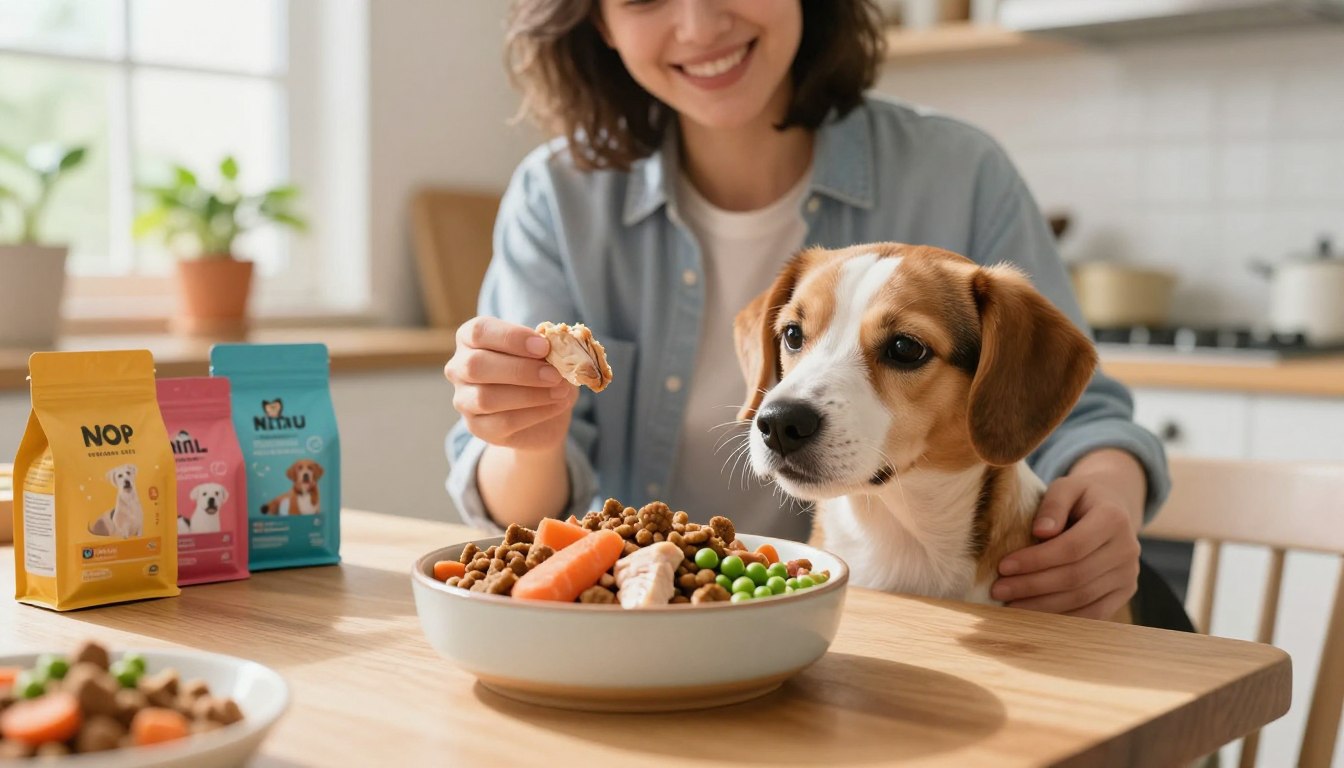
Plain kibble often leaves picky eaters unimpressed. Food toppers for picky dogs provide an easy way to boost appeal. Start by mixing small amounts into your dog’s regular food—about 10 to 20 percent of the meal.
Consider these picky eater dog meal ideas:
- Low-sodium chicken or beef broth
- Bone broth for added nutrients
- Small amounts of plain cooked chicken
- Dog-safe vegetables like green beans
- Commercial food toppers made for dogs
- High-quality wet food mixed with dry kibble
Remember to count these additions in your dog’s daily calories to prevent weight gain. Wet food blended into kibble increases both taste and aroma.
Warming Food to Release Aromas
Making dog food more appetizing becomes simple when you understand how smell drives eating. Warm food releases aromatic compounds that attract your dog’s nose. This works especially well for older dogs with weakened senses.
Try these safe warming methods:
- Add warm water to kibble
- Microwave wet food for 5 to 10 seconds
- Allow refrigerated food to reach room temperature
Never serve food that is too hot. Test the temperature with your finger before serving.
Rotating Food Flavors and Textures
Variety keeps meals interesting while preventing boredom. Different protein sources like chicken, beef, fish, and lamb offer distinct flavors. Dog food palatability solutions include switching between brands strategically.
When introducing new foods, transition gradually over 7 to 10 days. Mix increasing amounts of the new food with the old to prevent digestive upset. This approach helps you identify genuine taste preferences from simple stubborn behavior.
| Protein Source | Flavor Profile | Best For Dogs Who Prefer |
|---|---|---|
| Chicken | Mild and familiar | Sensitive stomachs |
| Beef | Rich and savory | Strong meat lovers |
| Fish | Bold and aromatic | Dogs with poor appetite |
| Lamb | Unique and earthy | Dogs bored with common proteins |
Quality ingredients form the foundation of tasty food. Production temperatures, kibble coating, and proper storage all influence how appealing your dog finds their meal. Combining these strategies creates lasting solutions for feeding reluctant eaters.
Limit Treats and Table Scraps
One big reason your picky dog might not eat their meals is treats and table scraps. These snacks can fill them up and make them lose interest in their main food. Learning how to manage treats is a key tip for picky dogs.
The rule is simple: treats should not make up more than 10% of your dog’s daily calories. For example, if your dog needs 500 calories a day, treats should be no more than 50 calories. This way, your dog stays hungry for their healthy meals and still gets rewards.
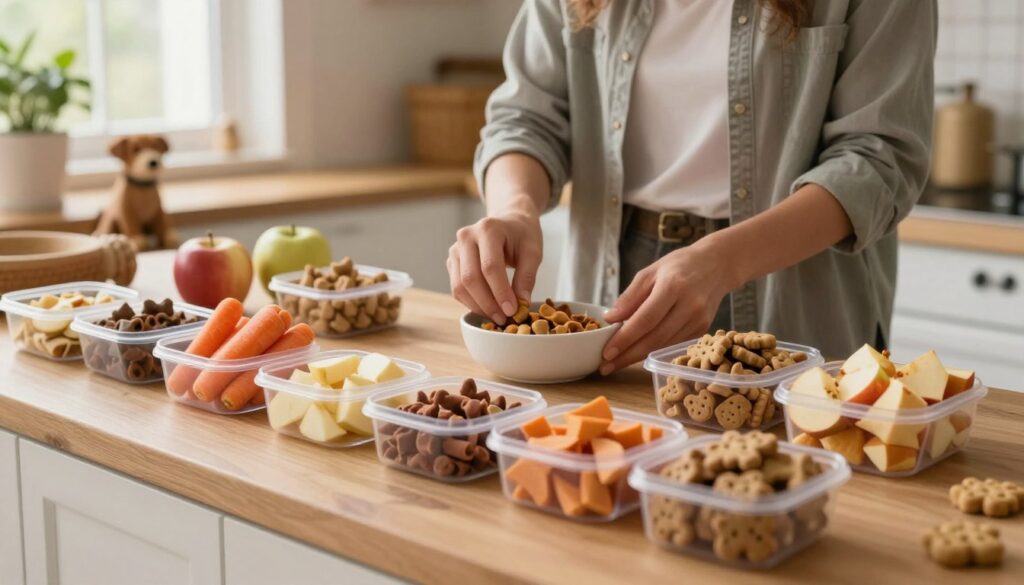
- Break treats into smaller pieces to extend reward value without extra calories
- Use your dog’s regular kibble as training rewards instead of commercial treats
- Substitute lower-calorie options like small vegetable pieces
- Track all treats given throughout the day by family members
Table scraps are more than just a problem with appetite. They can make your dog think dog food is not as good as human food. This can lead to begging and is hard to stop.
What seems like a tiny bite to you can represent a massive portion for a small dog. Feeding under the table can lead to too many calories and uneven nutrition for your dog.
Make clear rules about feeding in your home. Feed your dog before you eat. Keep them away from the dining area. Never feed them from your plate. This teaches them that their bowl is where they get valuable nutrition, not human food.
“Treats are wonderful training tools and expressions of love, but they must be carefully controlled to maintain your dog’s appetite for complete meals.”
Being consistent with these rules takes patience. But your picky eater will learn that their regular food is both necessary and rewarding.
Increase Physical Activity and Mental Stimulation
Your dog’s hunger isn’t just about the food. Exercise and mental challenges play big roles too. When your dog is active, they naturally want to eat more. A lazy dog might not feel hungry, but an active one does.
This part talks about how to make your picky eater love food more. You’ll find ways to make eating fun and rewarding for your dog.
Using Exercise to Build Appetite
Regular exercise is key to getting your dog hungry. Most dogs need 30 to 60 minutes of activity each day. You can break this into smaller sessions to keep them active.
Exercise and hunger are closely linked. When your dog moves, their body gets ready for food. Try these activities:
- Brisk walks or jogging for energetic breeds
- Fetch games that provide cardiovascular exercise
- Tug-of-war for strength and mental engagement
- Swimming for low-impact activity (great for older dogs)
- Playdates at dog parks for social and physical stimulation
Timing matters. Exercise your dog 30 to 60 minutes before meals. This helps them get hungry without upsetting their stomach.
Interactive Feeding Toys and Puzzle Feeders
Mental games are as important as physical ones for picky eaters. Some dogs get bored with eating. Make mealtime fun with interactive toys and puzzle feeders.
Puzzle feeders and toys make eating a game. Your dog will enjoy the challenge. Here are some popular ones:
| Feeding Solution | How It Works | Best For |
|---|---|---|
| Snuffle Mats | Fabric mats with hidden pockets where you scatter kibble | Dogs that love searching and rooting |
| Puzzle Feeders | Multi-step toys requiring your dog to move parts to access food | Smart dogs needing mental challenges |
| Treat-Dispensing Balls | Rolling toys that release kibble as your dog plays | Active dogs who learn quickly |
| Slow Feeder Bowls | Bowls with obstacles that make eating slower and more engaging | Dogs that need to slow down eating pace |
Hide kibble around the house or use it in training. This keeps your dog’s mind active and earns them food. It’s a win-win.
Many picky eaters aren’t picky at all. They’re just bored. Make mealtime exciting with interactive toys and games. It can turn reluctant eating into a fun daily event.
Choose High-Quality, Palatable Dog Food
Your picky eater might just not like the taste of their current food. The good news is that choosing appetizing dog food can really help. Before switching brands, remember that changing food too fast can upset their stomach. This can make them even more picky about eating.
Changing foods slowly is best. Start by mixing a little of the new food with their old food over seven to ten days. This helps their stomach adjust.
Dogs have different tastes, just like people. Their taste preferences come from when they were puppies. Sometimes, switching to premium dog food can solve the problem.
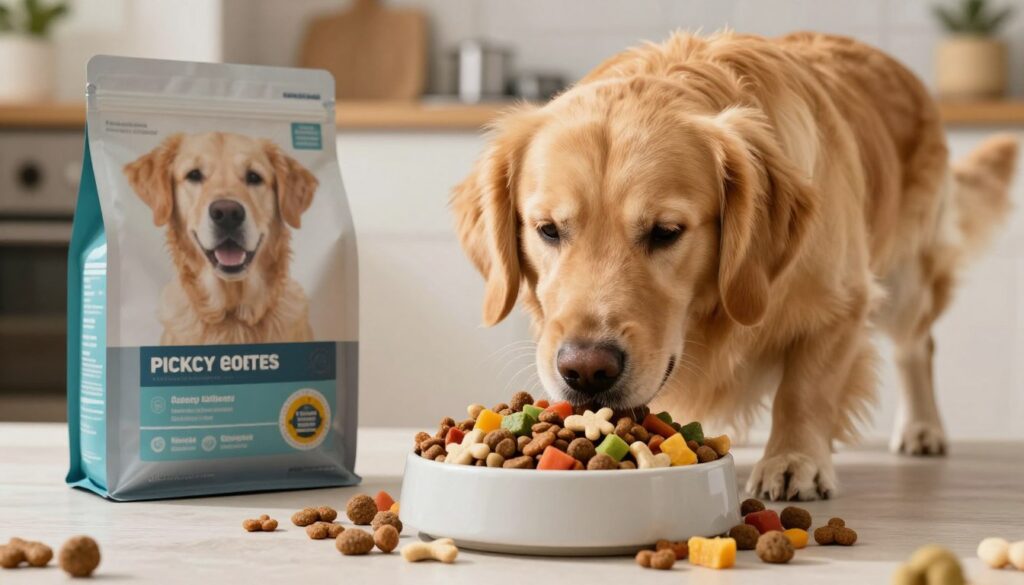
Choosing the right dog food involves several important factors. Dogs mostly use smell to taste food, so strong meat smells are more appealing. Look for these key ingredients in your dog’s food:
- Named meat proteins as the first ingredient (chicken, beef, or fish)
- Limited fillers and artificial additives
- Healthy fat content for energy and flavor
- No artificial colors or unnecessary ingredients
How the food is made also affects its taste. Lower-temperature processing keeps natural flavors and aromas alive. The fat coating on kibble and the size of the kibble pieces also matter. Some dogs prefer small, crunchy pieces, while others like larger, softer ones.
Keep your dog’s food fresh by storing it correctly. Use airtight containers in cool, dry spaces. Opened bags should be used within four to six weeks. Bad-tasting food will make your dog avoid meals.
Watch your dog’s reaction to new food. Look for signs of digestive comfort. Loose stools or gas can make them dislike the meal.
| Food Quality Factor | What It Means for Your Dog |
|---|---|
| Meat-Based Proteins | Stronger smell and taste that attracts picky eaters |
| Processing Temperature | Lower heat keeps natural flavors and aromas intact |
| Kibble Coating | Fat coating makes food more appealing at first bite |
| Kibble Size | Matches your dog’s size and chewing preference |
| Food Storage | Proper storage maintains freshness for up to six weeks |
Choosing the right dog food means reading labels carefully. Look for real meat names, not vague terms like “meat meal” or “by-products.” Avoid foods with too many fillers. If your dog refuses meals, it might be the food quality or they might just be waiting for better treats.
When to Seek Veterinary Help for Your Picky Eater
Feeding strategies for picky dogs can be very helpful. But, knowing when to see a vet is key. Your dog’s not eating might mean something serious is wrong. It’s important to tell the difference between just being picky and a real health issue.
If your dog won’t eat for more than 24 hours, or shows signs of being sick, call your vet. Puppies need help even faster, within 12 hours. If your dog’s eating habits change suddenly, it’s a big worry and needs vet attention.
Warning Signs That Require Immediate Attention
There are signs that mean your dog needs to see a vet right away. Look out for these:
- Complete refusal to eat for more than 24 hours
- Sudden, dramatic changes in eating habits
- Vomiting or diarrhea alongside appetite loss
- Weakness, lethargy, or lack of energy
- Visible weight loss or poor body condition
- Signs of pain when eating or near the food bowl
- Excessive drooling or pawing at the mouth
- Behavioral changes like hiding or unusual aggression
- Pale gums or other visible illness signs
Not eating for a long time is very dangerous. Small dogs and puppies are at high risk. A serious condition called fatty liver disease can happen if they don’t eat enough. Weighing your dog weekly can help catch weight loss early.
Diagnostic Tests Your Veterinarian May Recommend
Your vet will do tests to figure out what’s wrong with your dog. They start with a full physical exam. They check your dog’s body condition, how hydrated they are, and look for pain or lumps in the belly.
They also look at your dog’s mouth and teeth very carefully.
Common tests include:
| Test Type | What It Checks | Why It Matters |
|---|---|---|
| Complete Blood Count (CBC) | Red and white blood cells | Detects infections or anemia |
| Blood Chemistry Panel | Liver and kidney function | Reveals organ disease or dysfunction |
| Urinalysis | Kidney function and urine composition | Identifies diabetes, infections, or kidney issues |
| Fecal Examination | Stool samples for parasites | Rules out intestinal parasites affecting appetite |
| X-rays or Ultrasound | Internal organs and structures | Visualizes tumors, blockages, or abnormalities |
For more serious cases, tests like endoscopy, hormone tests, or biopsies might be needed. These tests give you peace of mind that you’re doing the right thing for your dog. Getting answers helps you keep your dog healthy and feel confident in your care plan.
Conclusion
Getting your dog to eat regular food is about knowing what they need and want. Create a good feeding schedule, make mealtime calm, and keep food interesting. This helps your dog enjoy eating again.
Managing a picky eater takes effort and patience, but it’s worth it. The tips in this article work best when used together. Start with a consistent feeding schedule and remove food between meals.
Make a quiet eating space for your dog. Add tasty toppers, warm the kibble, and change flavors to keep things exciting. Reduce treats and table scraps and encourage more exercise and play. These strategies need a mix of methods for the best results.
Your dog might test your patience at first. But, stay strong and keep following your plan.
Every dog is unique with their own tastes and habits. You might need to try different combinations to find what works for your pet. Most picky eating is due to behavior, not health issues, and responds well to these methods.
If your dog suddenly stops eating or shows illness signs, see your vet. The journey to better appetite is about more than food. It’s a chance to bond with your dog through thoughtful care.
Remember, getting a picky dog to eat is a long-term process. Your commitment shows you care about your dog’s health. By being consistent and understanding your dog, you create positive mealtime experiences. This strengthens your bond and improves your dog’s health and happiness for years.
FAQ
How common is picky eating in dogs?
About one in five pet owners deal with picky eaters. Picky eating can come from health issues or learned behaviors. It’s important to find the cause before trying to fix it.
Some dogs are naturally less interested in food. But if they won’t eat, it’s time to investigate.
What should I do if my dog stops eating suddenly?
If your dog stops eating for more than 24 hours, especially with vomiting or diarrhea, see a vet right away. Sudden loss of appetite can be a sign of a serious health issue.
Don’t wait to see if they start eating again on their own.
Can stress affect my dog’s eating habits?
Yes, stress from changes like moving or loud noises can make dogs less hungry. Some dogs might even refuse food to get attention.
This behavior is not just about being picky. It’s about learning to get what they want.
How does dental health impact my dog’s appetite?
Dental problems can make eating painful. This can lead to dogs avoiding their meals. Regular dental care is key to keeping them interested in food.
Switching to softer food is not enough. You need to treat the dental issues.
What is the best feeding schedule for a picky eater?
Dogs like routine. Feed them twice a day, with meals 8-12 hours apart. This helps them get hungry at the right times.
Keep the same schedule every day, even on weekends.
Why should I remove food between meals instead of leaving it out all day?
Free-feeding can make dogs picky. It teaches them to wait for better food. Put the food down, let them eat for 15-20 minutes, then take it away.
A healthy dog will eat when they’re hungry. They’ll learn to do so in a few days.
How does the feeding environment affect my dog’s appetite?
Dogs eat better in a calm, quiet place. Avoid feeding near loud noises or in busy areas. They should feel safe and relaxed while eating.
Choose a spot away from windows and where they won’t be disturbed.
Should I feed multiple dogs together or separately?
Feed dogs separately to avoid competition. This stress can make them less hungry. Some dogs prefer to eat with you, while others like their own space.
Watch your dog to see what they prefer.
What are the best toppers to enhance my dog’s kibble?
Safe toppers include low-sodium broth, bone broth, and small amounts of cooked chicken or meat. Dog-safe veggies like green beans are also good. Start with a little to avoid upset stomachs.
Remember to count these additions in your dog’s daily calories to prevent weight gain.
How does warming food help picky eaters?
Warming food makes it smell better. Dogs use their sense of smell to decide if they’ll eat. Use warm water, microwave wet food for a few seconds, or let it come to room temperature.
This trick works well for senior dogs who may have a weaker sense of smell.
How should I rotate between different dog food brands?
Gradually switch foods over 7-10 days to avoid upset stomachs. This variety can prevent boredom and ensure nutritional balance. It helps you see if your dog prefers certain flavors.
Proper rotation also ensures your dog gets different protein sources.
What is the 90/10 rule for treats?
Treats should make up no more than 10% of your dog’s daily calories. For example, if your dog needs 500 calories, treats should be no more than 50 calories. This rule helps keep your dog interested in their regular meals.
Why are table scraps problematic for picky eaters?
Table scraps teach dogs to beg and can fill them up before meals. They also provide inconsistent nutrition. Feed your dog their meal before you eat, and keep them out of the dining area.
Never feed from the table or your plate.
Can I use my dog’s regular kibble as training treats?
Yes, using kibble as treats is a good idea. It rewards your dog while showing them their regular food is valuable. Break treats in half or quarters and use low-calorie options like veggies to stay within the 10% treat limit.
How much exercise does my picky eater need?
Most dogs need 30-60 minutes of activity daily. This can be split into several sessions. Active dogs are naturally hungrier and more eager to eat.
Activities like walking, fetch, and swimming are great.
What is the best timing for exercise relative to meals?
Exercise 30-60 minutes before meals helps build an appetite. It avoids the risks of exercising on a full stomach. This timing helps your dog digest food better and makes them hungry when it’s time to eat.
How can puzzle feeders help my picky eater?
Puzzle feeders make mealtime fun and challenging. They come in various forms like wobble toys, puzzles, and treat-dispensing balls. For some dogs, the problem is not the food but the way it’s presented.
These interactive methods can change their attitude towards meals.
What makes dog food more palatable to picky eaters?
Dogs rely on smell more than taste. So, foods with strong meat smells are more appealing. High-quality dog food has named meat proteins, limited fillers, and no artificial ingredients.
The manufacturing process, kibble size, and flavor coating also affect how tasty it is.
How do I read dog food labels to identify quality?
Look for named meat proteins first, and avoid fillers and artificial ingredients. The manufacturing process is important too. Foods made with care often taste better.
Understanding the difference between premium and marketed foods helps you choose better for your dog.
How should I store dog food to maintain freshness?
Store food in airtight containers in a cool, dry place. Use opened bags within 4-6 weeks. Proper storage keeps food fresh and appealing.
Bad-tasting food can make your dog less interested in eating.
How long should it take to transition to a new dog food?
Transitioning should take 7-10 days to avoid stomach upset. Watch your dog’s response to the new food. Digestive issues can make them less interested in eating.
What are the red flags indicating my dog needs veterinary attention?
Warning signs include refusing to eat for more than 24 hours, sudden changes in eating habits, and eating problems with vomiting or diarrhea. Also, look for lethargy, weakness, weight loss, pain when eating, excessive drooling, and behavioral changes.
Why is sudden appetite loss more concerning than chronic pickiness?
Sudden loss of appetite in good eaters often means a health issue. Prolonged fasting can lead to serious problems like fatty liver disease. Chronic pickiness is less urgent but still needs attention.
What diagnostic tests might my veterinarian recommend?
Your vet will start with a physical exam and check for dental disease. They might do blood tests, urinalysis, fecal exams, and X-rays or ultrasound. More complex cases may need additional tests.
Can health issues like kidney disease or liver dysfunction cause picky eating?
Yes, health problems can make dogs less interested in food. These include kidney disease, liver issues, and gastrointestinal problems. It’s important to rule out health issues before assuming it’s behavioral.
How should I approach implementing these strategies for my picky eater?
Use a mix of strategies to help your picky dog eat better. Establish a consistent feeding schedule, create a calm eating environment, and make food more appealing. Limit treats and increase exercise and mental stimulation.
These strategies work best together. Be patient and consistent, as changes take time.
How long does it typically take to see improvements in my dog’s eating habits?
Changes take time, and it may take several days or weeks. Most dogs show improvement in 3-7 days with consistent effort. But it can take 2-4 weeks for complete changes.
Every dog is different, so you might need to try a few things to find what works best.
What should I do if my dog refuses to eat even after implementing these strategies?
If your dog still won’t eat after trying these strategies for weeks, or if they have other symptoms, see a vet. Most cases of picky eating are behavioral and can be helped. But a vet can check for any underlying health issues.