Do Cats Eat Potatoes? Feline Nutrition Explained
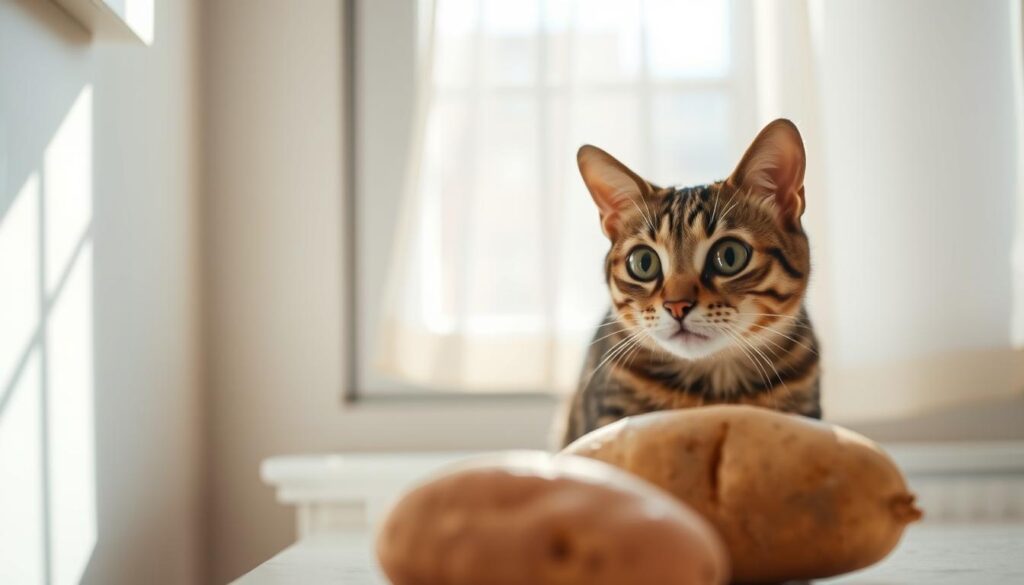
You watch your cat eye the dinner plate with keen interest. A piece of potato sits there, and your curious feline leans in for a closer sniff. This moment happens in countless homes across America. Pet owners naturally wonder what their cats can and cannot eat from their own meals.
The question of whether do cats eat potatoes crosses many minds when planning meals for both family and furry friends.
Your cat’s biology tells a different story than your own dietary needs. Cats are obligate carnivores. This means their bodies evolved to thrive on meat-based nutrition. They don’t require carbohydrates the way humans do.
Potatoes are starchy vegetables that belong to the nightshade family. They offer little nutritional value to your feline companion.
The curiosity your cat displays doesn’t mean potatoes belong in their bowl. Feline potato consumption raises important safety questions. Some potato preparations can harm your cat. Other forms might be safe in tiny amounts.
Understanding the difference matters for your pet’s health and safety.
This guide walks you through everything about feline potato consumption. You’ll learn why cooked potatoes differ from raw ones. You’ll discover which potato products pose serious dangers.
You’ll find out how to keep your cat safe if they eat potatoes by accident. Clear, science-based information helps you make smart choices for your cat’s diet and well-being.
Table of Contents
Understanding Feline Dietary Needs as Obligate Carnivores
Your cat’s body is different from yours. They are built to eat meat, not plants. This is why they need a diet rich in meat.
Cats have always been meat-eaters. Their ancestors hunted for food, not plants. This history is still in their genes today.
Why Cats Require Meat-Based Nutrition
Cats need certain nutrients found in meat. Meat gives them taurine for their heart and eyes. It also has vitamin A and arachidonic acid that cats can’t make from plants.
Cats’ digestive systems are short and made for meat. Their stomachs break down protein and fat well. But, they can’t digest a lot of starches.
- Cats need animal-based amino acids
- Meat provides essential vitamins cats require
- Short digestive tracts process protein quickly
- Plant foods pass through without full nutrient absorption
The Role of Carbohydrates in Cat Diets
Cats don’t need carbs like humans do. They can eat a little bit of carbs, but not a lot. This is important when talking about cats and potatoes.
Too many carbs can make cats gain weight. This can lead to serious health problems like diabetes and joint issues. Potatoes don’t give cats much nutritional value.
| Nutrient Need | Cat Requirement | Found Naturally In |
|---|---|---|
| Taurine | Essential (cannot produce) | Meat and fish |
| Vitamin A | Preformed type required | Animal tissues |
| Arachidonic Acid | Must come from diet | Meat-based sources |
| Carbohydrates | Non-essential | Limited benefit from plants |
Pet nutritionists now suggest diets rich in meat. Cats do best on diets that focus on animal proteins. Remember, cats are meant to eat meat, not starchy vegetables like potatoes.
Do Cats Eat Potatoes and Is It Safe?
Your cat might be curious about potatoes when you cook. But, it’s not a good idea to give them to your cat. Cats can eat some types of potatoes, but they’re not a great choice for them.
Cooked potatoes without any seasonings are okay for cats in small amounts. Your cat won’t get sick from eating a little bit of plain cooked potato. But, potatoes don’t have the nutrients your cat needs to stay healthy.
Cats need meat and certain nutrients that potatoes don’t have. Giving your cat potato treats is like giving them empty calories. Potatoes also don’t have taurine, which is important for your cat’s heart and eyes.
Raw potatoes are a big no-no for cats. They have solanine, a toxic substance that can hurt your cat. It’s very important to know the difference between cooked and raw potatoes for your cat’s safety.
| Potato Type | Safety Status | Best Practice |
|---|---|---|
| Plain Cooked Potatoes | Non-toxic in small amounts | Avoid as routine treat |
| Raw Potatoes | Contains harmful solanine | Never feed to cats |
| Seasoned Potatoes | Potentially dangerous | Always keep away |
| Plain Cooked Sweet Potatoes | Generally safe in tiny amounts | Not necessary for diet |
For most cat owners, potatoes aren’t needed in their pet’s diet. Your vet might suggest cooked potatoes in special cases. The best thing to do is keep all potatoes, except for a tiny bit of plain cooked potato, out of your cat’s food.
The Difference Between Cooked and Raw Potatoes for Cats
Knowing how cooking affects potato toxins is key to your cat’s safety. Cooking changes everything when it comes to whether potatoes are safe for cats. Raw potatoes are risky, but cooked ones can be given in small amounts. This section explains the main differences to help you choose the right food for your pet.
Why Cooked Potatoes Are Generally Safe
Can cats eat cooked potatoes? Yes, if they’re cooked right. Cooking breaks down harmful compounds in raw potatoes. Boiling, steaming, or baking reduces toxins, making them safer for cats.
But, cooked potatoes must be plain. Your cat can’t have:
- Butter or oils
- Salt or seasonings
- Garlic or onions
- Cheese or cream
Cut cooked potatoes into small pieces. Cats don’t chew like humans, so small sizes prevent choking. Mashed potatoes are best for them.
| Cooking Method | Safety Level | Solanine Reduction | Best Preparation |
|---|---|---|---|
| Boiling | High | 90%+ | Mashed with no added ingredients |
| Steaming | High | 85-90% | Diced into small pieces |
| Baking | Moderate to High | 70-80% | Plain skin removed |
| Microwaving | High | 85%+ | Mashed or finely chopped |
The Dangers of Raw Potatoes and Solanine Toxicity
Raw potatoes have solanine, a toxin that protects them from insects and fungi. Cats can’t safely process solanine, making raw potatoes dangerous.
Solanine is most concentrated in:
- Potato skins and outer layers
- Green-colored potatoes exposed to sunlight
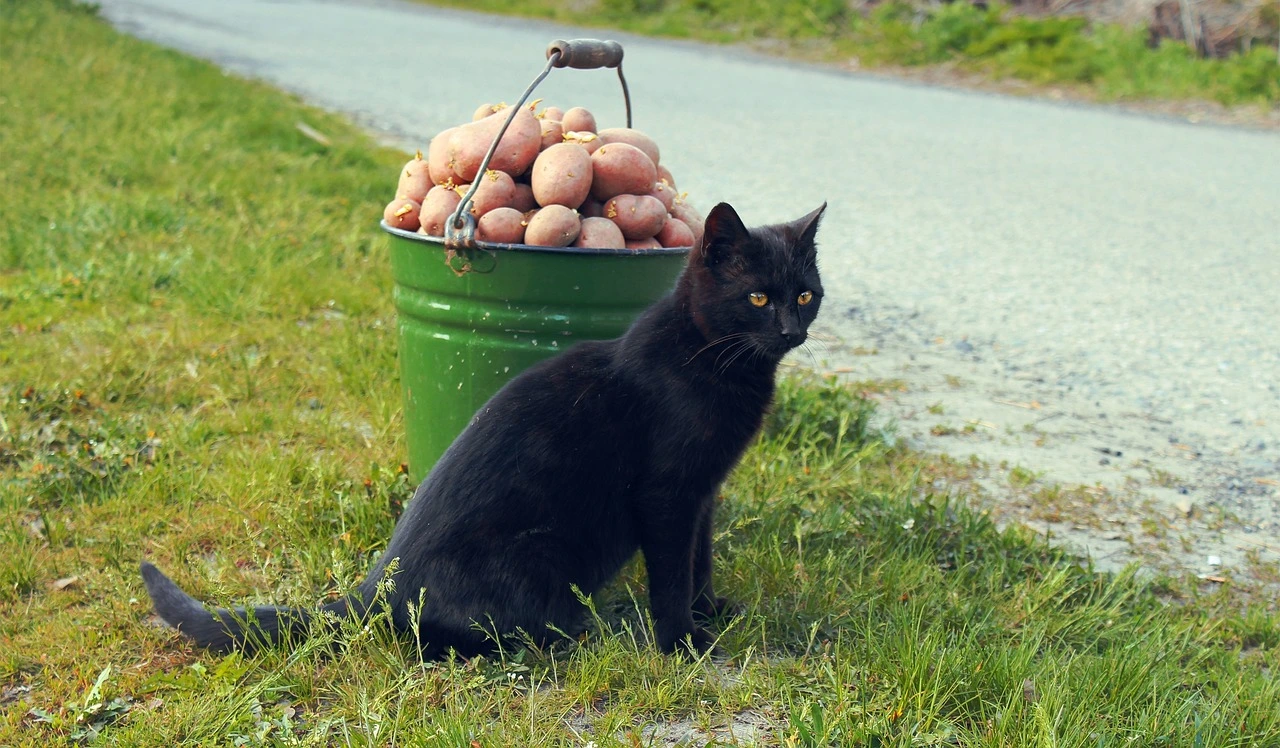
- Sprouted potatoes with visible buds
- Damaged or aged tubers
Even a little raw potato can harm your cat. Solanine attacks the nervous system and digestive tract, leading to serious health issues. Never let your cat have raw potatoes.
“The solanine in raw potatoes can interfere with your cat’s ability to absorb calcium and regulate nerve function.”
Are potatoes safe for cats when raw? Absolutely not. Cooking is what makes them safe. Heat breaks down solanine, making it harmless. This is why cooked potatoes are safe for cats, but raw ones are not.
Solanine Poisoning in Cats: Symptoms and Risks
Solanine is a dangerous neurotoxin in raw potatoes that can harm your cat. Knowing about potato toxicity in cats helps you spot warning signs early. This toxin attacks your cat’s nervous and digestive systems, making it a medical emergency.
If your cat eats raw potatoes, solanine gets into their blood. It starts damaging cells all over their body. The symptoms depend on how much potato they ate, their size and health, and the potato’s solanine level. Green or sprouted potatoes are especially risky because they have more toxin.
- Vomiting and diarrhea (often appear first)
- Excessive drooling and mouth irritation
- Lethargy and unusual tiredness
- Weakness in limbs and muscles
- Confusion or disorientation
- Tremors and uncontrollable shaking
ASPCA and AVMA say immediate veterinary care is needed for solanine poisoning. Even a little raw potato can be toxic. It’s not something to wait and see. Your vet can help with vomiting, charcoal, fluids, and care to help your cat get better.
Prevention is key. Keep all raw potatoes, skins, and plants away from your cat. This way, you can avoid potato toxicity in cats.
White Potatoes vs Sweet Potatoes: What Cat Owners Should Know
When thinking about potatoes for cats, remember that white and sweet potatoes are different. White potatoes belong to the nightshade family, while sweet potatoes come from the morning glory family. This difference is important for your cat’s safety and nutrition.
Both types of potatoes are often talked about by cat owners. The question is, can cats have potatoes? It depends on the type and how they are prepared. Let’s look at what you need to know before giving them to your cat.
Nutritional Comparison for Feline Health
Knowing the nutritional values of these potatoes is key. Sweet potatoes have beta-carotene, fiber, vitamins A and C, and potassium. But, your cat can’t process these nutrients like humans do.
Cats are meat-eaters. They need nutrients from meat, not vegetables. Your cat can’t turn beta-carotene into vitamin A. They need vitamin A from animal sources. Both white and sweet potatoes have too many carbohydrates for your cat.
| Nutrient | White Potato (Cooked) | Sweet Potato (Cooked) | Cat Need Level |
|---|---|---|---|
| Carbohydrates | High (17g per 100g) | Very High (20g per 100g) | Low – Not Essential |
| Fiber | Moderate (2.1g per 100g) | High (3g per 100g) | Low – Not Required |
| Vitamin A (Beta-carotene) | Minimal | Very High | Need Preformed Type Only |
| Potassium | Moderate (425mg per 100g) | High (337mg per 100g) | Low – Adequate in Meat Diet |
| Solanine Toxin (Raw) | Present | Absent | Must Avoid |
Feeding these starchy vegetables can cause weight gain and blood sugar problems in cats. Your cat gets all the nutrients they need from a balanced, meat-based diet.
Safe Preparation Methods for Both Varieties
If you decide to give potatoes to your cat, make sure to prepare them right. Both white and sweet potatoes need to be cooked thoroughly. Boiling, steaming, or baking are the best ways.
The potato must be completely plain. Never add seasonings, butter, oil, salt, or sugar. Remove the skin before cooking, as skins can be harder for your cat to digest. Peel the potato thoroughly to eliminate any remaining traces of the outer layer.
- Cook potatoes until soft and mashable
- Peel before or after cooking
- Cut into tiny, pea-sized pieces
- Cool completely before serving
- Never use leftovers with added ingredients
When feeding potatoes to cats, offer no more than one-half tablespoon once or twice per week at most. Even these small amounts should only be given after your veterinarian approves. Watch your cat closely for any digestive upset like vomiting or diarrhea. Stop immediately if problems develop. Some cats may also enjoy pumpkin as an alternative, which typically contains more fiber than sweet potato and may be easier on their digestive systems.
Potato-Based Foods That Are Dangerous for Cats
Plain cooked potatoes are okay for cats in small amounts. But, most potato dishes for humans are risky for cats. The danger comes from added ingredients and how they’re prepared. Knowing which foods are harmful helps keep your cat safe.
Many cats face health risks from eating potato foods meant for humans. The American Veterinary Medical Association found 30% of vet visits are due to toxic foods. Sharing your meal with your cat can be dangerous.
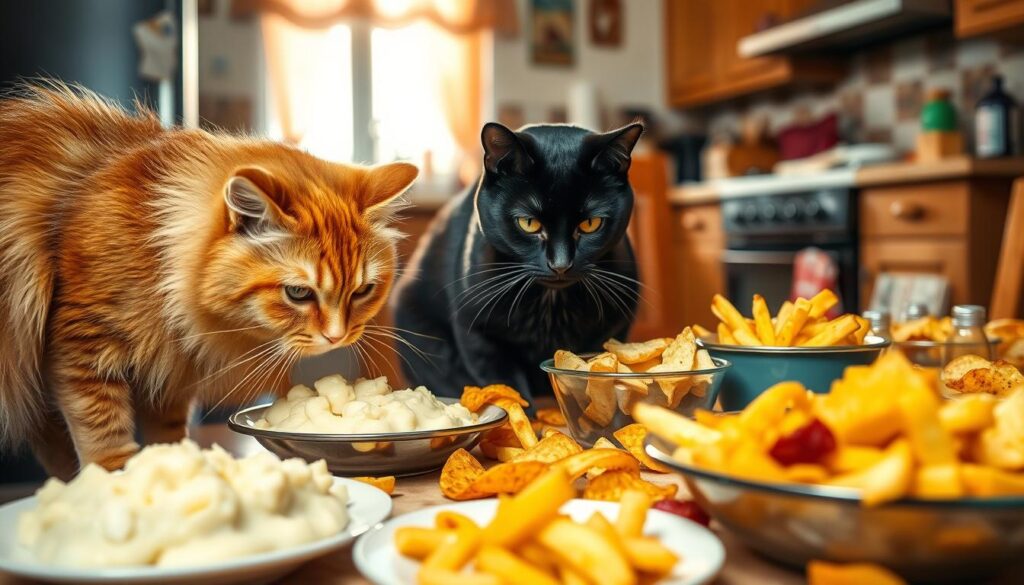
- French fries and potato chips — too much salt, unhealthy fats, and oils can cause pancreatitis and sodium poisoning
- Mashed potatoes — butter, milk, and cream can upset a cat’s stomach, especially if they can’t digest lactose
- Potato casseroles and gratins — onions, garlic, and chives are toxic and harm red blood cells
- Sweet potato pie and candied yams — too much sugar, marshmallows, butter, and spices like nutmeg and cinnamon are unhealthy or toxic
- Seasoned potato dishes — artificial flavors and preservatives can cause allergic reactions
Cats eating foods with onions and garlic are at the biggest risk. These can damage red blood cells and cause anemia. Even a little bit in dishes can be dangerous.
Make sure to keep all potato dishes out of your cat’s reach. Only plain, unsalted, cooked potatoes are safe. Even these should be given rarely and in very small amounts.
How to Safely Feed Potatoes to Your Cat
Before you start feeding potatoes to cats, you need to understand the right way to do it. Feeding your cat potatoes requires careful planning and attention to detail. Your veterinarian should approve this treat before you introduce it into your cat’s diet. When done correctly, can cats eat cooked potatoes safely in small amounts. The key is knowing the proper portions and preparation methods that keep your cat healthy.
Proper Portion Sizes and Frequency
The amount of potato you give your cat matters just as much as the type. All treats, including feeding potatoes to cats, should make up no more than 10% of your cat’s total daily calories. The remaining 90% should come from complete, balanced cat food that meets your cat’s nutritional needs.
For an average adult cat, the maximum safe amount is 1 to 2 teaspoons of cooked potato once per week. Even less is preferable for most cats. When introducing potatoes for the first time, start with just a bite or two. Watch your cat closely for 48 hours to check for any stomach upset or digestive problems before offering more.
- Week 1: One small bite only
- Week 2: One-half teaspoon if no symptoms appear
- Week 3+: Up to one-half tablespoon, once or twice weekly maximum
- Stop immediately if vomiting, diarrhea, or lethargy develops
Preparation Guidelines for Plain Cooked Potatoes
The way you prepare potatoes is critical for your cat’s safety. Always select fresh potatoes without green spots, sprouts, or soft areas. Wash the potato thoroughly under running water to remove dirt and any pesticide residue that might harm your cat.
- Peel away the entire skin where solanine concentrates
- Cut the potato into small chunks
- Cook by boiling or steaming until completely soft
- Never fry or use any oils or butter
- Serve plain with absolutely no salt, seasonings, garlic, or onions
- Cool to room temperature before offering to your cat
The texture should be soft and easy to chew, preventing any choking risk. Watch your cat eat and stay nearby during the meal. Stop feeding potatoes right away if your cat shows any signs of illness or refuses to eat the potato.
“Plain, cooked potatoes in tiny amounts can be an occasional treat, but they should never replace your cat’s regular, nutritionally complete diet.”
When to Avoid Feeding Potatoes to Cats Completely
It’s key to know if cats can have potatoes. But it’s even more important to know when to avoid them. Your cat’s health is a big factor in this decision. Some situations make potatoes a bad choice, no matter how they’re cooked.
Cats with diabetes or obesity should never eat potatoes. Potatoes have a high glycemic index, causing blood sugar to spike quickly. This is dangerous for diabetic cats, as they already struggle to control their blood sugar. For overweight cats, potatoes add too many calories and can upset their blood sugar levels.
Kittens should also avoid potatoes. Their growing bodies need animal-based proteins and fats, not empty carbs. Potatoes offer no nutritional value and can upset their sensitive digestive systems.
Other times to skip potatoes include:
- Cats on antibiotics, as starch can block drug absorption
- Cats with sensitive stomachs or inflammatory bowel disease
- Cats eating raw, green, or sprouted potatoes, due to solanine
- Cats with chronic digestive problems
Are potatoes safe for most cats? For about 95 percent of cats, the answer is no. They don’t add any nutritional value to a cat’s diet.
However, there’s one exception. If your vet recommends plain boiled potatoes as a bland diet during a short-term illness, it might be okay. But this is not for regular eating.
If you’re unsure about potatoes for your cat, talk to your vet. They can give you the best advice. Always check with your vet before adding new foods to your cat’s diet.
What to Do If Your Cat Eats Raw Potatoes
If your cat eats raw potatoes, act fast. Raw potatoes can be toxic to cats because they contain solanine. Knowing what to do quickly can prevent a serious situation.
Recognizing Emergency Symptoms
Symptoms of solanine poisoning can show up in 2 to 12 hours. Your cat might first show signs like vomiting and diarrhea. They could also seem very tired or confused.
Look out for these signs:
- Vomiting or retching
- Diarrhea or stomach upset
- Extreme lethargy or weakness
- Difficulty walking or loss of coordination
- Muscle tremors or twitching
- Excessive drooling or foaming at the mouth
- Dilated pupils
- Seizures in severe cases
Younger kittens are more at risk than adult cats. A small kitten eating a big piece of raw potato is in more danger than an adult cat eating a small piece. The danger depends on your cat’s size and how much potato they ate.
Steps to Take and When to Contact Your Veterinarian
If you think your cat ate raw potatoes, take these steps:
- Remove all raw potatoes from your cat’s reach
- Try to guess how much potato your cat ate
- Call your vet or an animal poison control center right away
- Tell them about the potato (was it green, sprouted, or normal)
- Give your cat’s weight and when they ate the potato
Your vet might suggest induced vomiting if it’s recent. They might give activated charcoal, IV fluids, and anti-nausea meds. They’ll watch your cat’s health closely.
If your cat eats cooked potatoes, the risk is much lower. Still watch them for 24 to 48 hours and call your vet if they show signs of illness. Cooked potatoes usually don’t need emergency care.
Don’t wait to see if symptoms show before calling for help. Solanine poisoning needs quick action to avoid serious problems and help your cat recover fully.
Conclusion
Whether cats and potatoes mix depends on basic biology. Cats are meant to eat meat, not plants. Cooked potatoes are not harmful in small amounts but don’t offer much nutrition for cats. Raw potatoes are toxic because of solanine.
It’s best to keep cats and potatoes apart. Cats need animal proteins and fats, not starchy vegetables. Most vets say adding potatoes or other veggies to a cat’s diet is pointless.
Even though plain, cooked potatoes might seem safe as an occasional treat, they don’t provide the nutrients cats need. High-quality, vet-formulated cat food is the best choice for your cat’s health and long life.
When you’re tempted to give your cat human food, remember the best gift is the right nutrition. Avoid potatoes, carrots, and other human foods. Instead, choose premium cat food that meets your cat’s specific needs.
If you’re unsure about a food for your cat, ask your vet. They can give advice based on your cat’s age and health. Your cat relies on you to make good nutrition choices.
Cats and potatoes don’t mix well, even if you mean well. Stick to meat-based diets and follow vet advice. This way, your cat will get the nutrition they need to thrive.