Cats Licking Each Other: What It Means and Why They Do It
Ever watched your cats groom each other and wondered what they’re doing? That moment feels heartwarming but also confusing. Cats might seem affectionate one minute and then act strange. The truth is, cats licking each other reveals a lot about their relationship and inner world.
Cats groom themselves or other cats for 30 to 50 percent of their waking hours. This is called allogrooming. According to Pamela Perry, DVM, grooming is more than just keeping fur clean. It’s a way for cats to communicate, bond, and show instinctive behaviors.
Understanding feline grooming behavior lets you peek into your cats’ emotional lives. Recognizing what these grooming sessions mean gives you insight into their relationships. You’ll see that their licking habits show trust, comfort, and social connection. This knowledge helps you spot problems early and strengthen your bond with your pets.
In this article, you’ll learn why cats lick each other. You’ll discover social bonding, communication, hygiene, stress relief, and hierarchy in multi-cat households. You’ll also explore health concerns that might cause excessive licking. By the end, you’ll see that cats licking each other is not just cute. It’s a complex social behavior with deep roots in feline psychology and survival instincts.
Understanding Allogrooming in Cats
When you see your cats licking each other, it’s called allogrooming. This is a natural way cats interact. It shows they’re being social and healthy. Let’s dive into why this grooming is so important for them.
What Is Allogrooming
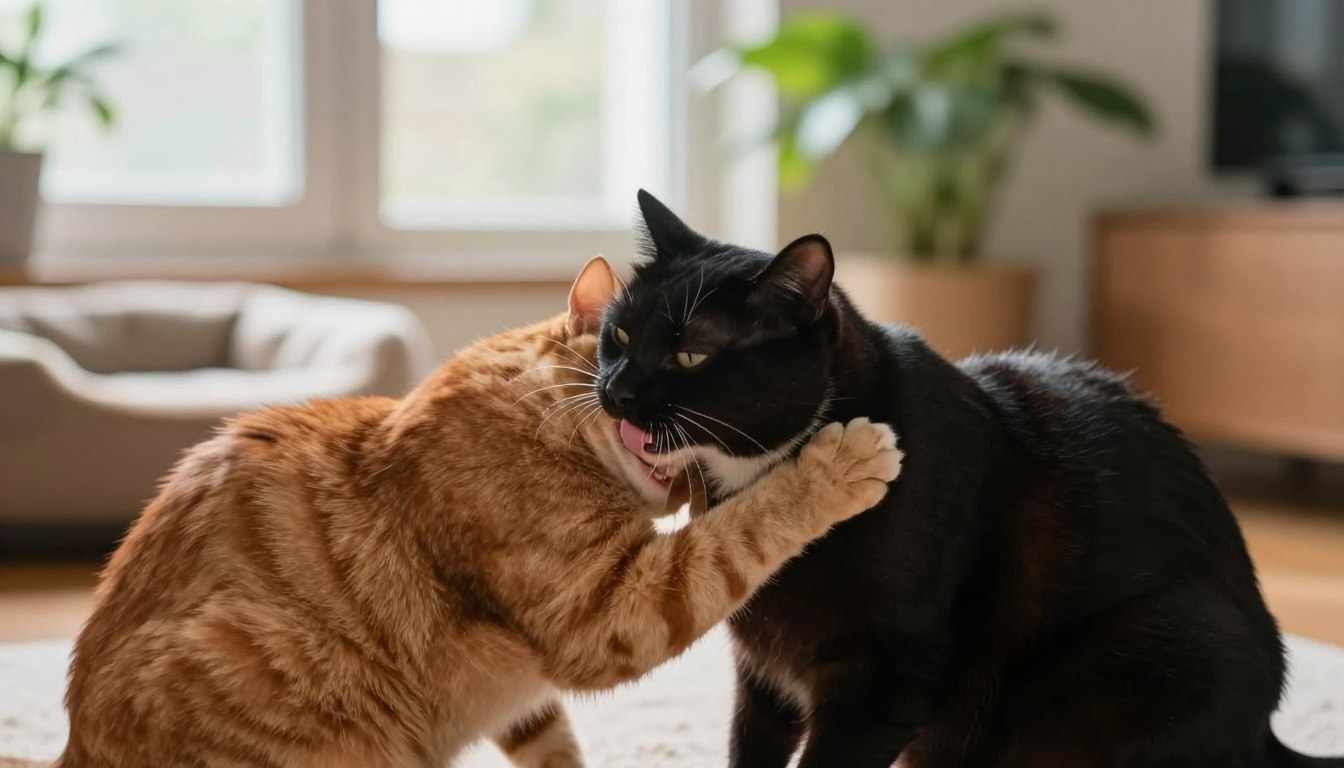
Allogrooming is when one cat grooms another with its tongue. They often focus on each other’s heads, necks, and ears. These spots are hard for them to reach on their own.
This grooming is different from self-grooming. It’s about more than just cleanliness. It’s a way for cats to bond and show affection.
This behavior is not just for cats. The American Journal of Veterinary Research found it in many social animals, like primates. When your cats do this, they’re strengthening their friendship.
How Common Is This Behavior
Is it normal for your cats to lick each other? Yes, it’s very common, especially in homes with more than one cat. Cats that live together or have a strong bond groom each other often.
The American Journal of Veterinary Research says familiarity is key. Cats raised together groom each other more. It shows they trust and feel comfortable with each other.
| Grooming Behavior Characteristics | Details |
|---|---|
| Body Areas Groomed | Head, neck, ears, and face regions |
| Most Common in Cats That Are | Raised together or closely bonded |
| Primary Purpose | Social bonding and affection |
| Frequency in Multi-Cat Homes | Regular and consistent |
| Extension to Other Species | Some cats groom humans or other pets |
Interspecies grooming isn’t just for cats. Some cats even groom humans or other pets. If your cats lick each other often, they’re just being their natural selves and showing affection.
Why Do Cats Lick Each Other
Watching your cats groom each other is fascinating. It’s not just about cleaning fur. It’s a way they communicate and bond. This behavior is key to their relationship and health.
Steve Dale, a Certified Animal Behavior Consultant, says grooming is how cats show love. When they lick each other, they’re doing allogrooming. This is more than just keeping clean.
There are many reasons why cats lick each other:
- They build social bonds and show love to their friends.
- They clean parts of their body they can’t reach by themselves.
- It releases happy hormones, making them feel calm.
- It helps them smell like family, showing they belong together.
- It helps them figure out who’s in charge at home.
- It can also mean they need help from a vet.
Knowing why cats lick each other helps you understand their needs. It’s not just one reason. It’s a mix of things that shows their emotional and physical health. This knowledge helps you care for them better and know when to see a vet.
Social Bonding and Affection Through Grooming
When your cats lick each other, they’re doing more than staying clean. This shows deep emotional connections between them. Grooming is a key way for cats to show trust and strengthen their bonds.
Certified behavior specialists say grooming is like humans hugging or holding hands. It’s a complex social ritual that deepens their emotional ties.
Building Trust Between Cats
Trust is the base of any cat relationship. When a cat lets another groom sensitive areas, it shows trust and confidence. This reveals how comfortable they are with each other.
This act of grooming is a sign of trust. Cats that groom each other often have stronger, more positive relationships.
- Grooming around the head and face shows high trust levels
- Regular grooming sessions indicate established friendships
- Cats feel safe when allowing grooming near sensitive areas
Creating a Shared Group Scent
Cats use scent more than sight to identify each other. When they lick each other, they share scents and create a group smell. This smell helps them know who’s in their group and who’s not.
This shared scent is like a family marker for your cat family. It helps maintain their group’s unity and keeps them safe from threats.
| Grooming Behavior | Social Purpose | Trust Level |
|---|---|---|
| Head and neck grooming | Expresses close bonding | Very High |
| Face grooming | Shows affection | High |
| Body grooming | Maintains group scent | Moderate to High |
| Ear grooming | Demonstrates care | High |
Your cats’ grooming habits show a world of feline communication. Through grooming, they build trust, strengthen bonds, and keep their family scent together.
Hygiene and Hard-to-Reach Areas
Your cats’ grooming routine is more than just a way to bond. Cats are very good at cleaning themselves, but they can’t reach everywhere. This is why they lick each other in places they can’t get to.
Think about where your cat can’t reach. The top of their head, behind their ears, and the back of their neck are tough spots. Their tongue and teeth are great for most of their body, but these areas are a challenge. Having a feline friend helps keep these areas clean.
Cats know they can’t clean everything themselves. So, they help each other out. This way, they can get rid of dirt, loose fur, and parasites from hard-to-reach spots. LeeAnna Buis notes that this mutual grooming serves functionality—cats help each other out in spots that are simply unreachable alone.
When you see one cat licking another’s head or neck, it’s a sign of good hygiene. This behavior shows how cats help each other stay clean and healthy.
- Removes dirt and debris from hard-to-reach spots
- Helps eliminate loose fur that could cause hairballs
- Reduces parasites and potential skin irritants
- Maintains overall coat health and cleanliness
Single cats might rub against furniture or your hand to clean themselves. But this doesn’t replace the deep clean another cat’s tongue can give. Having more than one cat in the house offers many grooming benefits.
Stress Relief and Emotional Comfort
When cats lick each other, they’re doing more than cleaning. It’s a way for them to relax and feel better. This act releases chemicals in their brains that help them calm down and feel less anxious.
Watching your cats groom each other can be very soothing. They might purr or look completely at ease. This shows that grooming is a natural way for them to feel good.
The Role of Endorphins in Grooming
Endorphins are released when cats groom each other. These chemicals make them feel happy and calm. It’s like their own natural way to relax.
Endorphins have many benefits:
- They help reduce stress and anxiety
- They lower heart rate and blood pressure
- They make cats feel happier and more content
- They help keep the peace in multi-cat homes
When cats groom, they look very happy. This is because endorphins make them feel good. It’s rewarding for both the cat doing the grooming and the one being groomed.
Maternal Instincts and Learned Behavior
Cats start grooming from a very young age. Mother cats groom their kittens right after birth. This teaches kittens that grooming means safety and love.
These early experiences shape how adult cats behave:
- Kittens with caring mothers groom more as adults
- Well-socialized kittens groom more as adults
- Grown cats groom each other to feel safe and loved
- Maternal bonding helps shape future social interactions
Grown cats grooming each other is like reliving their kitten days. It strengthens their bond and helps them feel comforted during tough times.
Hierarchy and Dominance in Multi-Cat Households
Having multiple cats at home makes understanding their grooming behavior more complex. Grooming isn’t always about showing love. It can show the social order in your home. Cats use grooming to talk about their place in the group.
In homes with many cats, the cat starting the grooming doesn’t always mean they’re lower. Sometimes, the top cat grooms a lower one to show they’re in charge. Dr. Bruce Kornreich, from Cornell’s Feline Health Center, says top cats groom to keep their status.
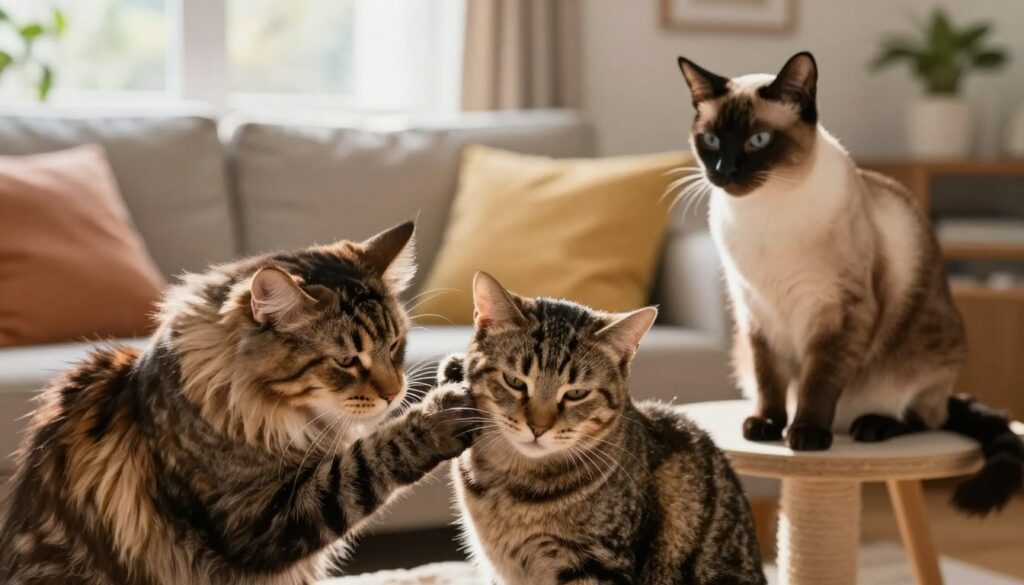
Knowing about grooming helps you see what’s going on at home. A cat grooming another might be showing confidence. On the other hand, a cat grooming others might be showing respect or wanting to be accepted.
Cats don’t have strict hierarchies like dogs do. LeeAnna Buis, a behavior specialist, says cat social structures are flexible and change with the situation. Your cats might have different rankings in different situations:
- One cat controls access to favorite sleeping spots
- Another takes priority at feeding time
- A third dominates play areas
Understanding these dynamics helps you understand your cats’ grooming better. It ensures a peaceful home for everyone.
Redirected Aggression and Conflict Resolution
Your cats may groom each other to avoid fights. This behavior is more than just cleanliness or affection. Studies from the Journal of Ethology show cats turn aggression into gentle licking when stressed. This shows how smart and emotionally aware your cats are.
When stressed or competitive, cats have a choice: fight or groom. Many pick the peaceful option by licking each other. This way, they release tension without hurting each other. In homes with many cats, grooming helps keep peace, especially when space is tight.
Using Grooming to Prevent Fights
You might see your cats in a tense standoff, growling or staring. Then, one starts grooming the other. This breaks the tension and stops a fight from happening. Your cats are using a smart way to solve conflicts right before you.
Grooming also helps after fights. Like humans apologizing, cats groom each other to make peace. This reconciliation grooming is gentler and more hesitant than usual grooming.
| Conflict Stage | Cat Behavior | What It Means |
|---|---|---|
| Rising Tension | Staring, tail twitching, ears back | Cats feel stressed or territorial |
| Prevention Attempt | One cat begins licking the other | Social grooming in cats redirects aggression |
| Tension Released | Both cats relax, may groom each other | Conflict avoided successfully |
| Post-Conflict | Gentle, frequent grooming sessions | Cats rebuild trust and friendship |
Understanding this behavior shows how emotionally smart your cats are. By watching these peaceful moments, you help them solve issues naturally. Social grooming in cats is a beautiful way to manage conflicts in shared spaces.
Why Cats Lick Each Other and Then Fight
Watching cats lick each other can turn into a fight is confusing. It seems like they’re happy grooming, then suddenly they start swatting and hissing. This change is common and usually not a big deal. Knowing why it happens helps you tell when they’re just setting boundaries or really fighting.
The main reason for this shift is overstimulation. Cats can get too much from grooming, just like some get tired of being petted. Your cat will show signs before things get out of hand. Look for these signs of discomfort:
- Ears flattening back against the head
- Tail twitching or lashing rapidly
- Body becoming tense and stiff
- Skin rippling along the back
- Quick head turns toward the grooming cat
Veterinary behaviorist Dr. Kat Pankratz, DVM, DACVB, says you can tell if cats are play fighting or really fighting. Play fighting is balanced, quiet, and doesn’t hurt anyone. Real fighting is intense, loud, and can hurt. Cats usually stop play fighting on their own without needing you to step in.
Some cats don’t like another cat’s scent on them. If a cat feels too groomed, they might hiss or gently swat to say “stop.” Jennifer Van de Kieft, a feline behavior expert, says cats show they’re uncomfortable by these clear signs.
| Grooming Sign | Meaning | What You Should Do |
|---|---|---|
| Cats purring while licking each other | Bonding and contentment | Let them continue |
| Ears back, tail twitching | Reaching overstimulation limit | Monitor closely for conflict |
| Quick swat or hiss | Setting boundaries | Separate briefly if needed |
| Continuous grooming followed by chasing | Anxiety or excessive grooming | Consult your veterinarian |
Cat anxiety can make grooming sessions too much. When cats lick each other too much, the other might get frustrated. This can quickly turn into a fight.
The main thing to remember is that cats licking each other and then fighting is normal. They’re just showing their limits and what they like. Most of the time, these moments pass quickly without harm. Pay attention to the signs, and you’ll understand what your cats are saying to each other.
Health Issues That May Trigger Excessive Licking
Your cats’ grooming habits tell you a lot about their health. Excessive licking often signals an underlying problem. Other cats in your home may also groom more, picking up on these changes.
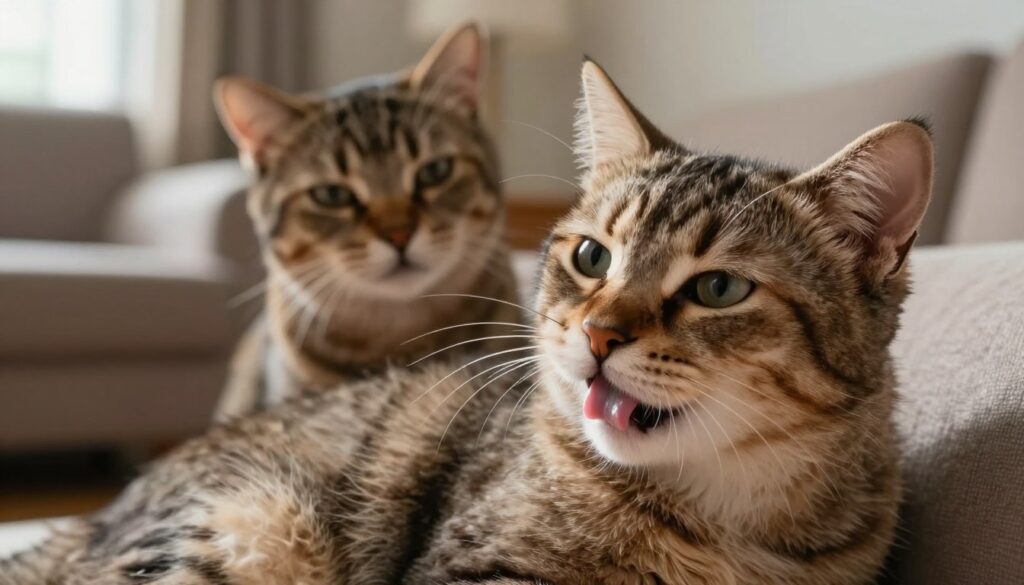
Excessive grooming can be due to allergies, parasites, skin infections, or other medical concerns. Your cats sense these issues through scent and behavioral changes. Ignoring these signs can lead to a health crisis.
Recognizing Signs of Allergies or Parasites
Watch for these red flags in your cats’ grooming patterns:
- Bald patches or missing fur on either cat
- Red, irritated, or inflamed skin
- One cat obsessively focusing on a specific body area
- Compulsive grooming that seems stressed rather than calm
- Excessive scratching alongside cat behavior licking
Common culprits include fleas, ear mites, food allergies, and environmental sensitivities. Cat saliva can cause secondary infections if your cat’s skin is already compromised from scratching or biting.
When to Contact Your Veterinarian
Trust your instincts about your cats’ health. Call your vet if you notice:
- Sudden increases in grooming frequency
- Persistent licking of one specific area
- Signs of pain or distress during grooming
- Visible wounds or skin damage
- Changes in appetite or behavior alongside grooming changes
A Petcube Cam helps you monitor your cats when you’re away. This makes it easier to catch concerning changes in their cat behavior licking patterns. Early intervention prevents complications and keeps your cats healthy and comfortable.
Understanding Cats Licking Each Other’s Private Areas
Watching your cats lick each other’s rear ends might make you feel uneasy. But this behavior is normal and vital for their communication and care. It shows you the complex social life of your cats.
Cats have a special way to detect scents called the Flehmen response. They use an organ in their mouths to read pheromones. By sniffing or licking each other’s anal areas, they learn about their health and feelings. It’s like they’re reading a chemical report about each other.
Grooming is a big part of this behavior, especially for kittens. They can’t clean themselves, so their mothers or siblings do it for them. This help can last into adulthood, especially for older or less mobile cats.
Even though this behavior is normal, it’s important to watch for health issues. Here are some key points to keep in mind:
- Look for signs of parasites or skin infections
- Make sure all cats get regular vet check-ups
- Keep your home clean to prevent health problems
- Watch for too much licking that’s not normal
- Use flea and parasite treatments regularly
| Aspect of Cats Licking Behavior | Purpose | Health Consideration |
|---|---|---|
| Anal gland scent marking | Information gathering about identity and health | Monitor for anal gland issues or infections |
| Grooming assistance | Cleaning hard-to-reach areas for kittens and older cats | Ensure cats maintain proper hygiene |
| Pheromone detection via Flehmen response | Reading chemical signals and communication | Normal behavior with no direct health risk |
| Social bonding through intimate contact | Strengthening relationships within cat groups | Prevents stress-related behavioral issues |
Bacteria in these areas can spread between cats, especially if one is sick. Keeping your home clean and taking your cats to the vet regularly is crucial. Your vet can catch and treat any problems early.
This behavior is a complex way for cats to communicate and care for each other. It’s not strange or inappropriate. It’s a natural part of their behavior that has evolved over time. By understanding this, you can better support your cats and be a more informed owner.
Monitoring Your Cats’ Grooming Behavior
Watching your cats closely helps you understand their bond and health. Their grooming habits show their emotional and physical state. Knowing what’s normal for them helps you notice any issues early.
Healthy cats groom each other briefly and calmly. They might purr during these moments. One cat usually starts, while the other enjoys the grooming several times a day.
Notice who starts grooming and if both cats participate. Look for signs of discomfort like ear flattening. Also, check for skin changes or hair loss.
Creating a Grooming Log
Keep notes on your cats’ grooming to share with your vet. Record when, who, and how long grooming lasts. This helps you spot patterns and changes.
| What to Monitor | Normal Signs | Concerning Signs |
|---|---|---|
| Grooming Duration | 5-15 minutes per session | Extended sessions over 30 minutes |
| Frequency | Several short sessions daily | Constant or completely absent |
| Body Language | Relaxed, purring cats | Tension, ear flattening, aggression |
| Skin Condition | Clean, healthy appearance | Redness, hair loss, scabs |
Tools like the Petcube Cam let you watch your cats when away. You see their real behavior without disturbing them. This shows how they interact privately.
Use products like the Petcube Fountain to keep your cats healthy. It filters water, removing bacteria and parasites. Healthy, hydrated cats groom better and bond stronger.
- Notice which cat usually starts grooming sessions
- Watch for mutual grooming versus one-sided attention
- Check for skin irritation in frequently groomed areas
- Track changes in grooming frequency or intensity
- Observe body language during and after grooming
Understanding your cats’ grooming habits doesn’t mean constant watching. Be the attentive owner who knows normal behavior and spots problems early. Your careful observation keeps your cats healthy and their bond strong.
Conclusion
Understanding why cats lick each other reveals a lot about their behavior. This act, called allogrooming, is more than just cleaning. It shows love, builds trust, and strengthens their bonds.
Cats groom for many reasons. They share scents and show their place in the family. They also groom to calm down and release happy hormones. Watching them groom is like seeing them talk on many levels at once.
Changes in grooming can mean something is wrong. Too much licking might be a sign of health issues. Knowing about their grooming helps you keep them healthy and happy.
Feline grooming is full of meaning. It’s not just a simple act. When cats groom each other, they communicate deeply. By understanding this, you can connect with your pets better and create a peaceful home for them.