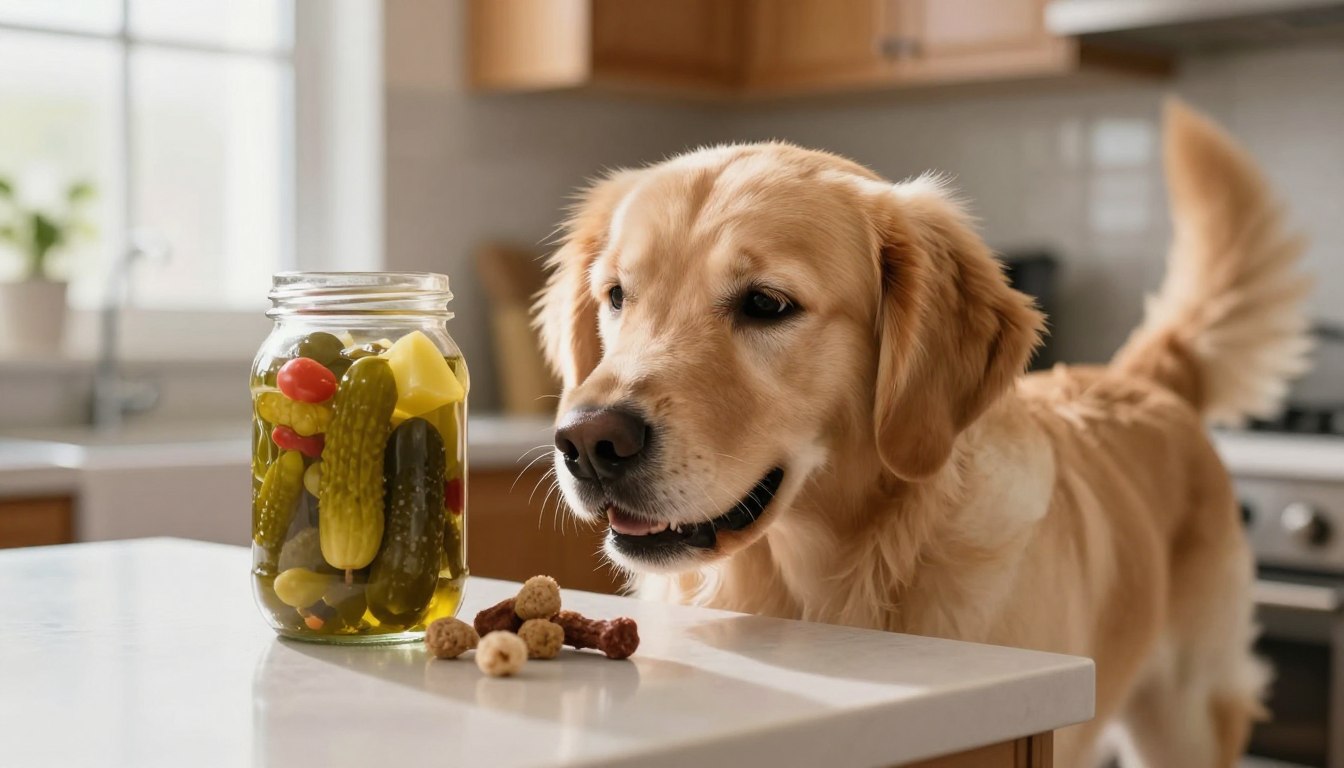
Can Dogs Eat Pickles? Safety Tips for Your Pet
You love your dog and want to share everything with them. This includes the foods you enjoy, like pickles. Your furry friend watches you with hopeful eyes, making you wonder: can dogs eat pickles?
The answer isn’t just yes or no. Pickles aren’t toxic to dogs, which is good news. Veterinary experts confirm this basic fact.
The real concern is the high levels of sodium, vinegar, and spices in pickles. Some pickles also have onions and garlic, which can upset your dog’s stomach. Dr. Charlotte Flint from Pet Poison Helpline says while pickles aren’t a major emergency, dogs might experience minor stomach problems. Large quantities can make these problems worse.
Your job is to understand the risks. You need to know when small amounts might be acceptable. This guide will help you make smart choices about sharing pickles with your dog. You’ll learn about the different types of pickles and which ones pose the biggest risks. Most importantly, you’ll discover safer alternatives that satisfy your dog’s curiosity without putting their health at risk.
Understanding Pickles and Your Dog’s Diet
Before we dive into whether dogs can have pickles, let’s first understand what pickles are. Pickles start as cucumbers that go through a special process. They soak in brine, vinegar, and spices to become the tangy snack we love. But this process can affect pickles and dog health in important ways.
The pickling process uses three key things:
- Brine (a saltwater solution)
- Vinegar for acidity
- Spices and seasonings for flavor
Fresh cucumbers are low in calories and have good stuff like beta-carotene. This is important for your dog’s health. Plain cucumbers have about four calories per spear, making them seem like a safe snack.
But, pickling changes everything. The brine adds a lot of sodium, which is different for dogs. Vinegar can upset their stomachs. And spices that taste good to us can bother their tummies.
| Component | Fresh Cucumber | Pickled Cucumber | Impact on Dogs |
|---|---|---|---|
| Sodium Content | Very Low | High (from brine) | Can cause dehydration and thirst |
| Acidity Level | Neutral | High (from vinegar) | May trigger digestive upset |
| Calories per Spear | 4 calories | 4 calories | Minimal nutritional value for dogs |
| Added Spices | None | Multiple varieties | Some can irritate canine digestion |
Dogs need a special diet that’s different from ours. They need the right mix of proteins, fats, and nutrients based on their size and age. Even though pickles and cucumbers seem similar, the pickling process changes them in ways that aren’t safe for dogs.
Knowing this helps you make better choices for your dog’s treats. It shows why fresh cucumbers are a safer choice than pickles.
Can Dogs Eat Pickles: The Short Answer
Whether pickles are safe for dogs is a bit complicated. Veterinarians say pickles aren’t toxic or poisonous. If your dog eats a pickle slice by accident, it’s not an emergency. But, it’s not a good idea to make pickles a regular snack.
Pickles are in a gray area when it comes to pet food. Just because something isn’t toxic doesn’t mean it’s healthy. It’s key to know the difference between “not toxic” and “recommended” when choosing treats for your pet.
What Makes Pickles Potentially Problematic for Dogs
Pickles can be a problem for dogs, even if they’re not toxic. The main issues are:
- High sodium levels that can lead to dehydration
- Vinegar content that upsets sensitive digestive systems
- Spices and seasonings not suited for canine health
- Garlic or onion additives that can be harmful
Different pickle types have different amounts of these ingredients. For example, dill pickles have more sodium than bread-and-butter pickles.
When Pickles Might Be Acceptable in Small Amounts
Can my dog have pickles sometimes? Plain, unsalted pickles in small amounts might be okay. A single pickle slice won’t hurt your dog right away. But, choose plain pickles without garlic, onions, or too many seasonings.
Prevention is the best way. Keep pickles away from your dog and give them safe snacks instead.
The Risks of Feeding Pickles to Dogs
It’s important to know the risks of dogs eating pickles to keep them safe and healthy. Pickles might look tasty to your dog, but they can be harmful. Your vet will tell you that giving pickles to dogs can be risky.
Different pickles have different ingredients, but most have things that are bad for dogs. These can affect dogs of all sizes and ages. Some problems happen right away, while others take time to show up.
High Sodium Content and Dehydration Concerns
Pickles have a lot of salt, which is bad for dogs. Dogs need much less salt than people do. Eating pickles can make dogs very thirsty and lead to serious health issues.
- One medium pickle can contain 300-500mg of sodium
- Dogs require only 100-150mg of sodium daily
- Excess salt causes increased thirst and urination
- Chronic sodium intake may lead to kidney problems
Harmful Spices and Additives in Pickles
Many pickles have ingredients that are bad for dogs. Garlic and onion powders are common in flavored pickles. These are toxic to dogs and can’t be safely processed by their bodies.
| Pickle Ingredient | Risk Level | Potential Effects |
|---|---|---|
| Garlic powder | High | Red blood cell damage, anemia |
| Onion powder | High | Hemolytic anemia, weakness |
| Mustard seeds | Moderate | Stomach irritation, vomiting |
| Hot peppers | Moderate | Gastrointestinal distress |
| Preservatives (sodium benzoate) | Low-Moderate | Digestive upset in sensitive dogs |
Vinegar Acidity and Digestive Issues
Vinegar makes pickles sour. This acidity can upset your dog’s stomach. It can cause inflammation and discomfort in their digestive tract.
- Vinegar disrupts stomach acid balance
- Dogs experience nausea and loss of appetite
- Diarrhea and vomiting become common responses
- Chronic exposure damages the intestinal lining
The dangers of dogs eating pickles include high sodium, harmful spices, and vinegar acidity. The size and age of your dog can affect how quickly problems show up. Always talk to your vet before giving pickles to your dog.
Different Types of Pickles and Their Safety for Dogs
Not all pickles are safe for dogs. Knowing the different types is key. Each type has its own ingredients that can be risky for pets. It’s important to learn about these differences before giving pickles to your dog.
The type of pickle you find in stores is crucial. Some can harm your dog, while others are too salty. Always check what’s in the jar before giving pickles to your pet.
| Pickle Type | Main Ingredients | Safety Level for Dogs | Key Concerns |
|---|---|---|---|
| Dill Pickles | Cucumbers, vinegar, salt, dill | Least Problematic | High sodium content |
| Bread and Butter Pickles | Cucumbers, sugar, spices, vinegar | Not Recommended | Added sugars and spice blends |
| Sweet Pickles | Cucumbers, sugar, artificial sweeteners | Dangerous | Xylitol toxicity risk |
| Spicy or Garlic Pickles | Cucumbers, garlic, onions, hot peppers | Strictly Avoid | Toxic ingredients to dogs |
Dill Pickles: The Safest Option
Dill pickles are the simplest type. They have cucumbers, vinegar, salt, and dill. Can dogs eat pickles of this type? Yes, but only in very small amounts. The main issue is the high sodium content, which can dehydrate dogs. Even though they’re safer, they’re still not the best treat for your pet.
Bread and Butter Pickles: Skip These
Bread and butter pickles have added sugars and spices. They include onion powder, which is toxic to dogs. The sugar can also cause weight gain and dental problems. Pickles for dogs should never include this variety.
Sweet Pickles: A Double Danger
Sweet pickles are risky because of their sugar and artificial sweeteners. Some use xylitol, which is very toxic to dogs. Even a little can cause serious health issues. Always check labels before giving sweet pickles to your dog.
Spicy and Garlic Pickles: Never Safe
Spicy and garlic pickles are never safe. Garlic, onions, and hot peppers are toxic to dogs. They can damage your dog’s red blood cells and cause serious illness. Keep these pickles away from your pet.
- Read pickle labels carefully before considering any taste
- Dill pickles are least harmful but still not recommended
- Avoid bread and butter, sweet, spicy, and garlic varieties
- Check for xylitol in ingredient lists
- Watch for spice blends that contain toxic ingredients
Knowing about pickle varieties helps protect your dog. When wondering if can dogs eat pickles, remember the type is crucial. Your dog’s safety is the most important thing.
Signs Your Dog Has Eaten Too Many Pickles
It’s important to watch your dog after they eat human foods. Pickles can cause reactions quickly or slowly. Your dog’s size, age, and health affect how bad the symptoms will be. A small dog might react more strongly than a big one.
Knowing the warning signs is key. Some symptoms might get better with rest and water. But, other signs need a vet visit fast. Being ready means you know what to do and when to get help.
Symptoms of Sodium Poisoning in Dogs
Too much salt from pickles can harm your dog. Sodium poisoning happens when dogs eat too many pickles. Watch for these signs:
- Vomiting and diarrhea
- Excessive thirst and frequent urination
- Loss of balance or coordination
- Muscle tremors or seizures
- Letharness or confusion
- Loss of appetite
Digestive Upset Warning Signs
Your dog’s stomach might not like pickles. Vinegar and spices can upset their stomach. Look for these signs:
- Stomach pain or discomfort
- Gas or bloating
- Nausea or retching
- Constipation or loose stools
- Drooling more than usual
If your dog shows serious symptoms, call your vet right away. Tell them about the pickle, how much your dog ate, and when. This helps your vet help your pet better.
Healthy Alternatives to Pickles for Your Dog
Wondering if your dog can have pickles? The good news is there are many safe snack options for them. Instead of pickled veggies with too much salt and vinegar, choose treats that are good for your dog. They’ll enjoy crunchy snacks that help keep them healthy.
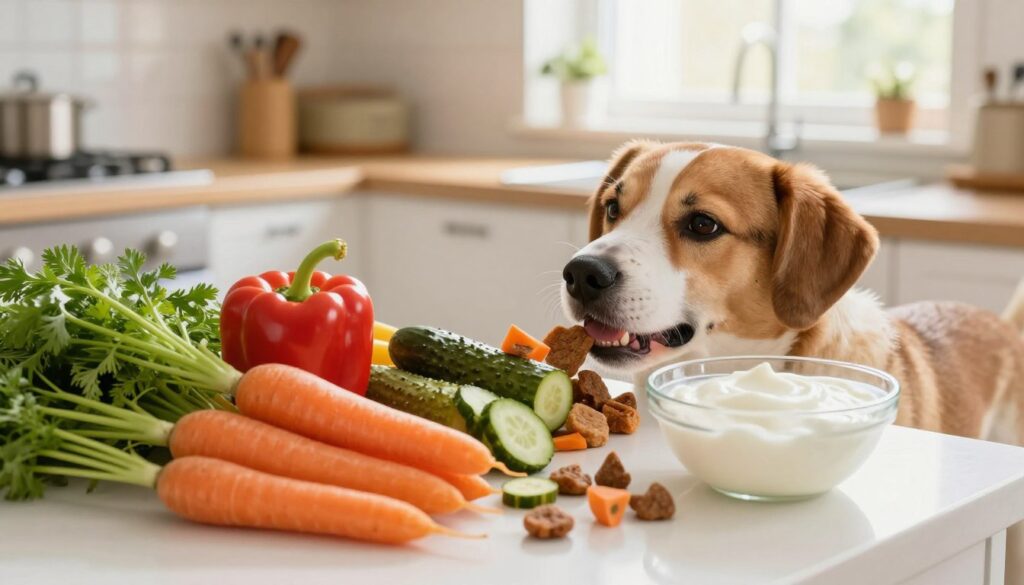
Understanding why pickles aren’t the best for dogs helps you find better choices. While plain pickles don’t have much nutrition, the snacks below do. They give your pet vitamins, minerals, and water they need. These snacks also meet your dog’s need for crunch without the pickle risks.
Best Snack Options for Your Pet
Fresh veggies and fruits are great substitutes for pickles. Here are some top picks:
- Fresh cucumbers – Raw cucumbers offer the same crunch as pickles but without salt or vinegar. They’re 96% water, helping keep your dog hydrated.
- Carrots – Crunchy and full of beta-carotene, carrots help your dog’s skin and coat. They also clean teeth naturally.
- Sliced apples – Sweet and full of vitamins, apples are good treats. Just make sure to remove seeds and cores first.
- Sweet potatoes – Cooked sweet potatoes are full of fiber and beta-carotene. They’re great for your dog’s digestive health.
- Spinach – Steamed or blanched spinach is packed with iron, calcium, and antioxidants. Your dog needs these nutrients.
| Alternative Snack | Key Benefits | Preparation Method | Frequency |
|---|---|---|---|
| Fresh Cucumbers | Hydrating, low-calorie, aids digestion | Wash and slice raw | Daily in moderation |
| Carrots | Beta-carotene, vitamins, teeth cleaning | Raw or lightly steamed | 3-4 times weekly |
| Apples | Vitamin C, fiber, natural sweetness | Core and seed removal essential | 2-3 times weekly |
| Sweet Potatoes | Fiber, beta-carotene, digestive support | Cooked and cubed | 2-3 times weekly |
| Spinach | Iron, calcium, potassium, antioxidants | Steamed or blanched | 2-3 times weekly |
These healthy snacks give your dog nutritious treats that boost their wellness. Unlike pickles, these snacks are full of nutrients. Your pet gets to enjoy tasty snacks without the salt or upset stomach.
Creating a Balanced Diet for Your Canine Companion
Your dog’s health starts with the food you give them every day. Before worrying about treats like pickles, learn what your dog needs to be healthy. A balanced diet includes proteins, fats, carbs, vitamins, and minerals. These nutrients keep your dog strong and healthy.
Dogs need different foods at different life stages. Puppies need more calories and nutrients to grow. Adult dogs need food to maintain their health. Senior dogs need less food to avoid gaining weight. Dogs with health issues might need special diets. Knowing your dog’s needs helps you choose the right food, including whether they should eat pickles.
Essential Nutrients Dogs Need
Quality dog foods that meet AAFCO standards provide all the nutrients most dogs need. These foods have the right amounts of:
- Protein for muscle growth and repair
- Healthy fats for skin and coat health
- Carbohydrates for energy
- Vitamins and minerals for immune function
- Water for hydration and organ function
Most dogs do well on quality commercial diets and don’t need supplements. But, puppies over six months, senior dogs, and dogs with health issues might need vet-recommended supplements. Remember, treats should never replace a dog’s main diet.
Proper Portion Control for Treats
Treats should not make up more than 10% of your dog’s daily calories. The rest should come from complete dog food. This rule applies to all treats, including human food.
| Daily Caloric Intake | Percentage from Dog Food | Percentage from Treats |
|---|---|---|
| 1,000 calories | 900 calories | 100 calories |
| 1,500 calories | 1,350 calories | 150 calories |
| 2,000 calories | 1,800 calories | 200 calories |
Following this guideline helps avoid nutritional imbalances. Every food choice affects your dog’s health. When considering whether dogs and pickles are okay, think if the treat fits within the 10% treat limit. Making good choices now supports your dog’s health and happiness for years to come.
What to Do If Your Dog Accidentally Eats Pickles
Discovering your dog ate pickles can be stressful. But, most of the time, a small amount won’t cause harm. The key is to stay calm and know what to do next.
Start by understanding what happened. Ask yourself these questions:
- How many pickles did your dog eat?
- What type of pickles were they?
- Did your dog drink any pickle brine?
- When did this happen?
- What ingredients are in the pickles?
Look at the pickle jar for the ingredient list. Watch out for garlic, onions, or xylitol. These are toxic to dogs and need vet help right away. If you can’t find the label, try to remember where the pickles came from.
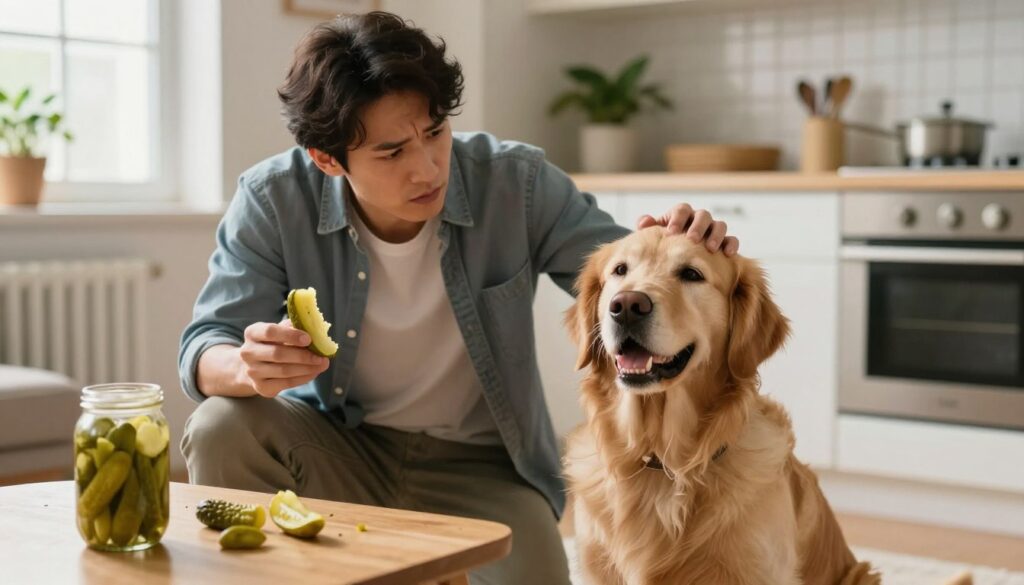
After knowing what your dog ate, remove any pickles. Give your dog fresh water to drink. This helps flush out salt from their system.
Now, watch your dog closely for signs of trouble. Most dogs show distress within a few hours. Look for these warning signs:
- Vomiting or repeated gagging
- Diarrhea or loose stools
- Excessive thirst or drooling
- Loss of appetite
- Lethargy or unusual tiredness
Mild stomach upset is common when dogs eat pickles, but serious symptoms need quick action.
| Symptom Severity | When to Call Your Vet | When to Seek Emergency Care |
|---|---|---|
| Mild digestive upset | Within a few hours if symptoms continue | Not needed |
| Moderate vomiting or diarrhea | Within 1-2 hours | If accompanied by lethargy |
| Seizures, loss of coordination, or bloody stools | Not applicable | Immediately call emergency vet clinic |
| Signs of toxic ingredient exposure | Not applicable | Call poison control immediately |
If you’re worried, call your vet or the ASPCA Animal Poison Control Center at (888) 426-4435. Have this info ready:
- Your dog’s weight
- The exact amount of pickles consumed
- The type of pickles (dill, bread and butter, spicy, etc.)
- Time of consumption
- All ingredients from the label
- Any symptoms your dog is showing
It’s always better to ask for help than to wait and worry. Knowing the risks helps keep your pet safe.
When in doubt about your dog’s health, contact a veterinary professional. Your peace of mind and your dog’s wellbeing are worth the call.
Most dogs recover from eating pickles without lasting harm. Your quick action and watchful care keep your furry friend safe and healthy.
Conclusion
After looking into whether dogs can eat pickles, we found out. Most pickles are not safe for dogs to eat often. The high salt can harm your pet’s health. Vinegar and additives can also upset their stomach.
Pickles aren’t as dangerous as chocolate or grapes. But, they’re still not a good choice for treats.
If you’re wondering if pickles are safe for dogs, plain dill pickles are the safest. You can give your dog a tiny piece sometimes. But, always check the ingredients first.
Look for pickles without garlic, onions, or too many spices. The salt is still a problem, so give only a little. Fresh, plain dill pickles are better than others.
Your dog doesn’t need pickles when there are healthier options. Carrots, green beans, and cucumbers are crunchy and safe. They also give your dog nutrients.
Apple slices and watermelon are tasty and healthy for your dog. These choices make your dog happy and healthy.
You want to share food with your dog because you love them. You now know how to make better choices for their diet. If you have questions, talk to your vet. They can help with what’s best for your dog.
Your dog will be healthier and happier with safe, nutritious treats. Not pickles.
FAQ
Are pickles safe for dogs to eat?
Pickles aren’t toxic like chocolate or grapes, but they’re not good treats. A small piece of plain pickle is unlikely to harm, but they have high sodium and vinegar. The safety of pickles depends on the type, amount, and your dog’s health.
If your dog eats a small amount, watch for symptoms. But, don’t give them pickles regularly.
Can my dog have pickles occasionally?
Even a tiny bit of plain dill pickle is risky. Pickles have a lot of sodium and acidity. If you give your dog a small taste, make sure it’s plain dill with no garlic or spices.
But, it’s safer to avoid pickles and choose healthier options.
What types of pickles are most dangerous for dogs?
Bread and butter pickles are risky because of their sugar and spices. Sweet pickles are especially dangerous because of xylitol, which is toxic to dogs. Garlic and spicy pickles are also off-limits.
Even without these dangers, pickles are still a concern because of their sodium.
What are the main health risks of feeding pickles to dogs?
Pickles can cause dehydration and upset stomachs in dogs. The vinegar can irritate their digestive system. Additives like garlic and xylitol are also harmful.
Regular pickle eating can lead to obesity and dental problems. Dogs may react differently based on their health and size.
What should I do if my dog eats pickles?
First, find out how much and what kind of pickles your dog ate. Check the label for harmful ingredients. Then, give your dog fresh water to help with sodium.
Watch for symptoms like vomiting or lethargy. If your dog shows severe signs, call your vet or the ASPCA Animal Poison Control Center.
What are the symptoms of sodium poisoning in dogs?
Symptoms of sodium poisoning include excessive thirst and vomiting. Dogs may also have diarrhea, weakness, and seizures. These symptoms can happen quickly, especially in small dogs.
If you see these signs, call your vet right away.
What digestive issues can pickles cause in dogs?
Pickles can upset a dog’s stomach, causing vomiting and diarrhea. The vinegar can irritate their digestive system. Dogs with digestive problems may react worse to pickles.
High sodium can also cause dehydration, making digestive issues worse. Watch your dog’s bowel movements and appetite after eating pickles.
Are fresh cucumbers a better alternative to pickles for dogs?
Yes, cucumbers are a great alternative to pickles. They’re crunchy and low in calories. Cucumbers have vitamins and water, making them refreshing for dogs.
Wash the cucumber before giving it to your dog. You can remove the skin if your dog has sensitivities.
What are other healthy snack alternatives to pickles?
Carrots, apples, and sweet potatoes are all good alternatives. They’re nutritious and safe for dogs. Green beans, watermelon, and blueberries also provide health benefits.
Even plain, unsalted popcorn can be a fun treat for dogs. These options are better than pickles for your dog’s health.
How much of my dog’s daily calories should come from treats?
Treats should not make up more than 10% of your dog’s daily calories. The rest should come from high-quality dog food. This helps prevent obesity and ensures your dog gets the nutrients they need.
For a dog eating 1,000 calories a day, treats should not exceed 100 calories. This is important for portion control.
What ingredients should I look for when choosing commercial dog food?
Look for dog food that meets AAFCO standards. It should have a specific protein source as the first ingredient. The food should also have healthy fats, fiber, and essential vitamins and minerals.
Avoid foods with fillers, by-products, and artificial additives. Your vet can help choose the best food for your dog.
Do dogs need vitamin supplements if they eat quality commercial food?
Most dogs eating high-quality commercial food don’t need supplements. However, some situations may require them. This includes puppies, senior dogs, and dogs with specific health issues.
Never give your dog supplements without your vet’s advice. Excessive supplements can be harmful.
How do I know if my dog has a sensitivity to acidic foods like pickles?
Dogs with acid sensitivity may vomit, have diarrhea, or drool excessively. They may also lose their appetite or have abdominal discomfort. Dogs with pre-existing conditions are more likely to react to acidic foods.
If your dog shows these symptoms, avoid acidic foods and consult your vet.
Can puppies eat pickles?
No, puppies should not eat pickles. Their digestive systems are sensitive, and pickles don’t provide the nutrients they need. Puppies have higher nutritional requirements and should stick to puppy food and healthy treats.
Are pickles safe for senior dogs?
No, senior dogs should avoid pickles. Their kidneys and digestive systems are more sensitive, and pickles can worsen health conditions. Senior dogs may also have dental problems.
Offer them soft, healthy treats instead. Always talk to your vet about your senior dog’s diet.
What should I do if my dog drinks pickle brine?
If your dog drinks pickle brine, it’s a serious situation. Pickle brine is very salty and can cause sodium poisoning. Remove the brine and offer fresh water to help dilute it.
Watch for symptoms like vomiting or lethargy. Call your vet or the ASPCA Animal Poison Control Center immediately.
Can dogs eat dill pickle flavored treats?
Be cautious with dill pickle-flavored treats. Check the ingredient list for harmful additives. Many commercial treats are safer than real pickles, but they’re not necessary for your dog’s health.
Stick to whole-food treats for your dog’s health.
How long does it take for pickle toxicity symptoms to appear?
Symptoms of pickle toxicity can vary. Digestive issues like vomiting may appear within 30 minutes to a few hours. Sodium poisoning symptoms can happen even faster, sometimes within 30 minutes to 4 hours.
Neurological symptoms like seizures may take longer to develop. If your dog shows concerning symptoms, contact your vet immediately.
What information should I provide to my veterinarian if my dog eats pickles?
When calling your vet about pickle consumption, have the following information ready: your dog’s weight, the type of pickles, and the amount consumed. Also, provide the time of consumption and any symptoms your dog is showing.
This information helps your vet assess the situation and provide guidance. If you can’t find the label, describe the pickles and any ingredients you remember.
Is there a safe amount of salt in pickles for dogs?
No, there’s no safe amount of pickle consumption for dogs. A single pickle slice has too much sodium for most dogs. The American Animal Hospital Association recommends dogs eat no more than 0.3% sodium by weight in their diet.
For a 50-pound dog, this means about 68mg of sodium per day. A single pickle slice exceeds this amount. It’s best to avoid pickles and choose low-sodium alternatives.
What is xylitol and why is it dangerous in pickles?
Xylitol is an artificial sweetener found in some pickles. It’s extremely toxic to dogs and can be fatal even in small amounts. It causes a rapid drop in blood sugar, leading to severe symptoms.
Xylitol can also damage a dog’s liver. Always check labels for xylitol, especially in “sugar-free” or “low-sugar” products.
How can I prevent my dog from eating pickles?
To prevent pickle consumption, store pickles in high cabinets or the back of the fridge. Keep jars sealed and clean up spills immediately. Educate family and guests about not feeding your dog pickles.
Provide healthy alternatives like cucumbers. Store dog-safe treats in easy-to-reach places to avoid temptation.
Can garlic or onion powder in pickles cause the same toxicity as fresh garlic or onions?
Yes, garlic and onion powder are just as toxic as fresh garlic and onions. The concentration may vary, but the harmful compounds are present. Always check the ingredient list for these additives.