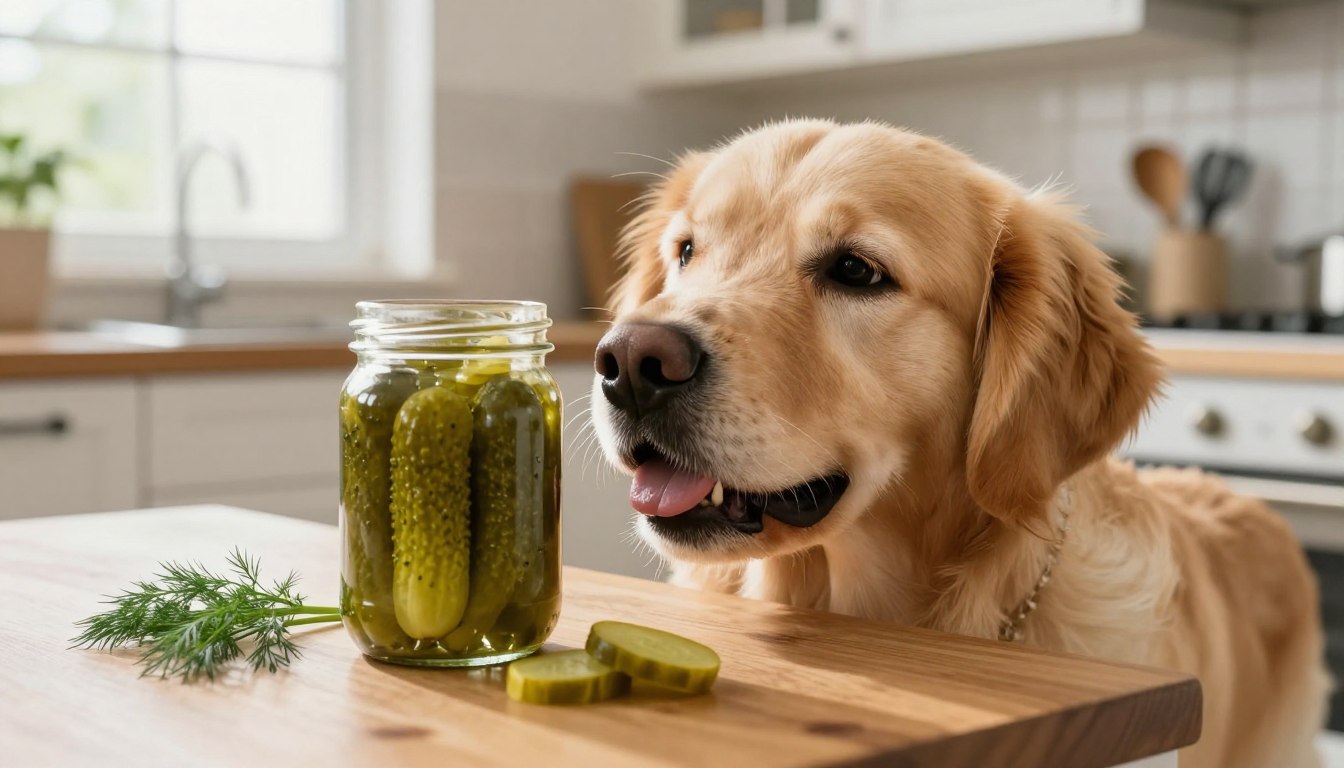
Can Dogs Eat Kosher Dill Pickles? Safety Facts
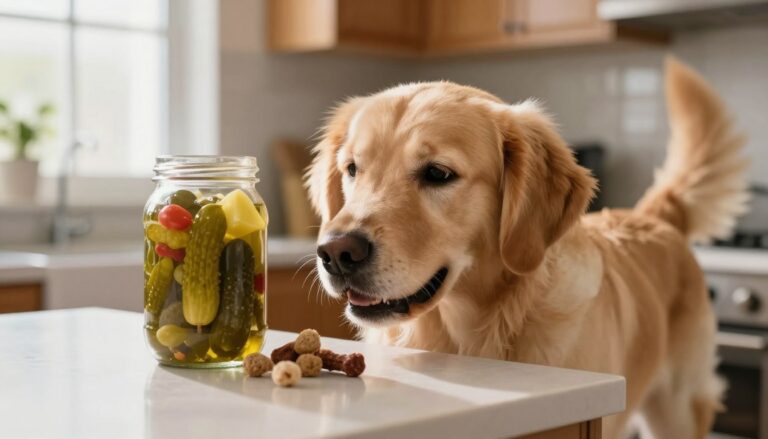
Your dog looks up at you with big, pleading eyes when you snack. You’re munching on a kosher dill pickle, and your dog wants some. It’s a common scene for dog owners. The question of whether dogs can eat kosher dill pickles seems simple. But the answer is more complicated than you might think.
Many people have jars of kosher dill pickles in their fridges. These tangy, crunchy snacks are loved by many. When your dog shows interest in your food, it’s natural to want to share. But, plain cucumbers are safe for dogs in small amounts. Kosher dill pickles, however, are not the same.
Are kosher dill pickles safe for dogs? No, they’re not. These pickles have ingredients that can harm your dog. High sodium levels are a big concern. Garlic and onions in the brine are toxic to dogs. These ingredients are not safe for your dog’s body.
One small pickle piece might not hurt your dog right away. But regular or large amounts can cause health problems. This article will explain the risks of kosher dill pickles for your dog. You’ll learn what ingredients to avoid and what to do if your dog eats one. Your pet’s safety and well-being are the most important things. Knowing these risks helps you make better choices for your dog’s diet.
Understanding What Makes Kosher Dill Pickles Different
Kosher dill pickles are known for their bold flavor and special making process. The term “kosher” means the way they’re made, not a religious label. They taste unique because of lots of dill and garlic. Knowing what’s in them is key when wondering if they’re safe for dogs.
The Traditional Ingredients in Kosher Dill Pickles
Kosher dill pickles have a few main ingredients that make them special. They usually include:
- Pickling cucumbers (the base)
- Vinegar (usually white or cider with 5% acidity)
- Water
- Canning salt (about 6 tablespoons per batch)
- Fresh or dried dill (in generous amounts)
- Mustard seed (approximately ½ teaspoon per jar)
- Garlic (½ to 1 clove per jar)
The salt in these pickles is a worry for pet owners. The garlic is especially important for dog safety. Store-bought pickles might have extra stuff not in homemade ones.
How Kosher Dills Are Made and Preserved
There are two main ways to make pickles. Fermented kosher dills use natural bacteria for flavor over weeks. Quick-pickled varieties use hot vinegar for faster pickling.
Cucumbers are washed and packed with dill, garlic, and mustard seed. A hot brine of vinegar, water, and salt is poured over them. The jars are then boiled to keep the pickles fresh. After 2-3 weeks, the pickles are at their best flavor.
The brining process makes the pickles very salty. This is why kosher pickle ingredients can be harmful to dogs. Knowing how they’re made helps spot potential dangers for pets.
Can Dogs Eat Kosher Dill Pickles Safely?
No, dogs should not eat kosher dill pickles. You might wonder if a small piece would hurt. But, these pickles are dangerous for pets because of added ingredients and how they’re preserved.
It’s not just a simple yes or no. Your dog’s size, how much they eat, and the pickle ingredients matter. A small piece might not poison your dog right away. But, it’s not safe to give them pickles on purpose.
Kosher dill pickles are especially risky. They have garlic and onions, which are toxic to dogs. They also have very high sodium levels. Dogs might like pickles because of their smell and crunch. But, that doesn’t mean they’re safe.
Even if your dog ate a small piece without getting sick, it’s still not safe. Eating pickles with bad ingredients can harm your dog over time. It’s not good to make pickles a regular or occasional treat for dogs.
- Kosher dill pickles contain toxic garlic and onions
- High sodium content poses health risks
- Dogs cannot process pickle ingredients like humans do
- Small accidental pieces may not cause immediate harm, but deliberate feeding isn’t advisable
The best thing is to keep kosher dill pickles out of your dog’s diet.
The Sodium Content Problem in Pickles for Dogs
Kosher dill pickles are a big health risk for dogs because of their sodium in pickles bad for dogs content. A single pickle can have over 1,000 milligrams of sodium. This is very dangerous for your pet.
Kosher dill pickles use a lot of salt for flavor and preservation. They use about 6 tablespoons of canning salt for 6 or 7 pint jars. This salt is great for humans but very bad for dogs.
How Much Sodium Is Too Much for Your Dog
Dogs need very little sodium to stay healthy. A 33-pound dog only needs about 200 milligrams of sodium each day. Eating just one pickle can give your dog five times their daily sodium in one bite.
Sodium is important for your dog’s body. It helps with fluid balance, nerve signals, and muscle movement. Too much sodium can cause serious problems.
| Dog Weight | Daily Sodium Need (mg) | One Pickle Content (mg) | Excess Times |
|---|---|---|---|
| 10 pounds | 60 | 1,167 | 19x over |
| 25 pounds | 150 | 1,167 | 7x over |
| 50 pounds | 300 | 1,167 | 3x over |
Smaller dogs are at a higher risk. A 10-pound puppy could get 19 times their daily sodium from one pickle. This is very important for their safety.
When to Contact Your Veterinarian
Look out for these signs of sodium poisoning in your dog:
- Excessive thirst and increased water drinking
- Frequent urination
- Vomiting or diarrhea
- Loss of appetite
- Lethargy and weakness
- Confusion or disorientation
- Seizures or tremors
If your dog eats multiple pickles or shows neurological symptoms, call your vet right away. If your dog eats one pickle and shows mild signs like increased thirst, call your vet within 24 hours. Sodium poisoning is a medical emergency that needs IV fluids to dilute sodium levels. Your vet may need to watch your dog closely to prevent brain swelling and other serious problems.
Knowing that sodium in pickles bad for dogs is a big danger helps you make better choices for your pet’s diet. It also helps you react quickly if accidents happen.
Dangerous Ingredients Found in Kosher Dill Pickles
Kosher dill pickles have ingredients that are harmful to dogs. Knowing which ingredients are toxic can help keep your pet safe. These ingredients make the pickles unsafe for dogs, even in small amounts.
The main harmful parts in kosher dill pickles include:
- Garlic – typically ½ to 1 clove per jar, which damages red blood cells in dogs
- Vinegar – containing at least 5% acidity that irritates stomach lining
- Mustard seed – approximately ½ teaspoon per jar, causing digestive upset
- Dill – in concentrated amounts beyond what’s naturally safe
- Sodium benzoate – a preservative found in many commercial varieties
- Calcium chloride – used to maintain crunchiness and firmness
The vinegar’s high acidity is a big worry. It can upset your dog’s stomach and cause digestive issues. Dogs with sensitive stomachs should stay away from these foods.
Mustard seed might seem harmless, but it can cause vomiting and diarrhea in dogs. Even a little dill can be a problem when it’s in pickle form. Commercial pickles have extra preservatives and spices that add to the danger.
Even natural ingredients can be dangerous in the amounts found in kosher dill pickles. The mix of harmful ingredients makes these pickles bad for your dog’s diet.
What Happens If Your Dog Ate a Kosher Dill Pickle
Discovering that your dog ate a kosher dill pickle can be scary. But, one small piece usually doesn’t harm them much. What you do in the first few hours is crucial for your dog’s safety and health.
Immediate Steps to Take
Stay calm and gather details about what happened. Ask yourself: How much pickle did your dog eat? Was it a small piece or more? When did it happen? Did your dog drink the juice or just eat the solid part?
Next, remove any pickles from your dog’s reach. Check the pickle jar for ingredients like garlic, onions, or xylitol. These can be harmful to dogs.
Give your dog fresh water to drink. This helps dilute sodium in their system. Keeping them hydrated is important for the next 24-48 hours.
Watch your dog for signs of distress. If they act normally, they’re probably okay. Keep an eye on any changes in their behavior, eating, or drinking.
Monitor these areas carefully:
- Energy levels and playfulness
- Eating habits and appetite
- Drinking more or less water than usual
- Bathroom habits
- Signs of upset stomach
When to Contact Your Veterinarian
Call your vet right away if your dog shows concerning symptoms. Emergency situations need immediate care, not waiting.
| Contact Your Vet During Business Hours | Seek Emergency Care Immediately |
|---|---|
| Your dog ate one small pickle piece | Your dog consumed multiple pickles |
| No symptoms appear within 2 hours | Vomiting or diarrhea develops |
| Your dog is a large adult breed | Your dog is a puppy or small breed |
| Your dog has no existing health issues | Your dog has kidney or heart disease |
| Your dog seems normal and acts fine | Your dog shows disorientation or seizures |
Give your vet all the details. Tell them your dog’s weight, how much pickle they ate, when it happened, and any symptoms. This helps your vet know what to do next.
“Early communication with your veterinarian is always the safest choice when your dog ate kosher dill pickle, especially if you’re unsure about the amount or ingredients involved.”
Treatment depends on what your dog consumed and their condition. Your vet might recommend observation, IV fluids, or activated charcoal. Most dogs recover fully with the right care and monitoring.
Why Garlic and Onions in Pickles Are Toxic to Dogs
Kosher dill pickles have a hidden danger for dogs. Each jar has ½ to 1 clove of garlic, which is harmful. Garlic and onions belong to the Allium family. All of these plants are toxic to dogs and should not be in their diet.
Garlic and onion toxicity affects dogs because of chemistry. These plants have compounds called thiosulfates. Dogs can’t digest these, which damages their red blood cells.
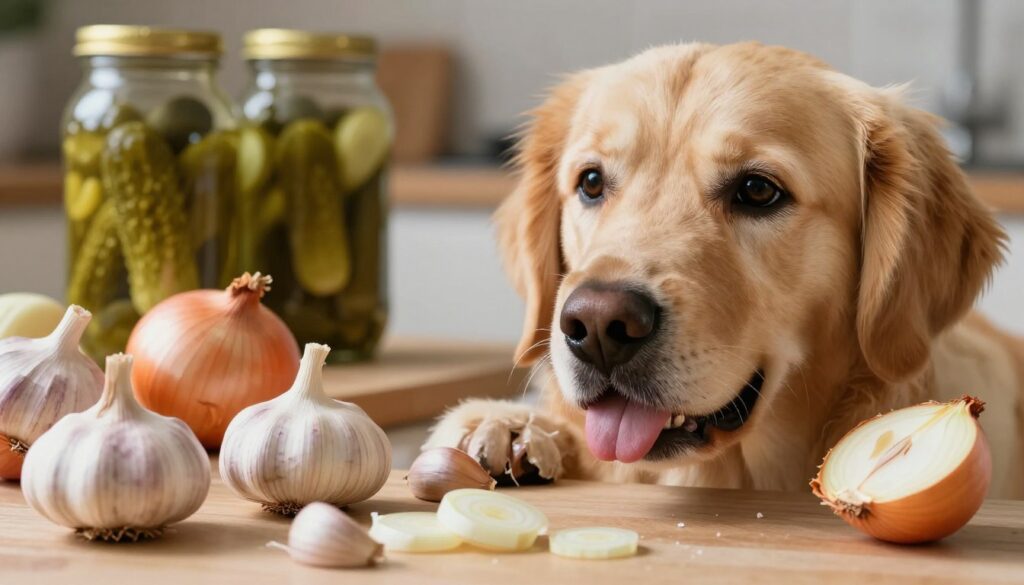
Garlic is especially dangerous because it’s very potent. It’s about five times more toxic than onions for dogs. Even a little bit can be harmful, especially if dogs eat it often.
Garlic toxicity happens when dogs eat 15-30 grams per kilogram of body weight. The problem is that it builds up over time. Even a small amount of garlic can be dangerous for dogs.
| Symptom | When It Appears | Severity |
|---|---|---|
| Weakness and lethargy | 2-4 days after exposure | Mild to moderate |
| Pale gums | 3-5 days after exposure | Moderate |
| Orange to dark red urine | 3-7 days after exposure | Moderate to severe |
| Increased heart rate | 2-5 days after exposure | Moderate |
| Vomiting | 1-3 days after exposure | Mild to moderate |
| Collapse | 5-7 days after exposure | Severe |
Since garlic flavor spreads through the pickle brine, every piece is toxic. Symptoms may not show right away. Your dog might seem okay for days before showing weakness and lethargy.
- Watch for pale gums as an early warning sign
- Monitor your dog’s urine color for orange or dark red discoloration
- Note any changes in breathing or heart rate
- Report vomiting or loss of appetite to your veterinarian
Garlic and onion toxicity adds up over time. Even a small amount can cause serious problems. If your dog has eaten other Allium family vegetables, pickles are even more dangerous. Veterinarians advise keeping pickles away from dogs.
Are Pickles Healthy for Dogs in Any Amount?
You might wonder if pickles are good for your dog. It’s important to know what they offer and what your dog needs. Looking at both sides helps answer this question.
Nutritional Value Versus Health Risks
Pickles have some nutrients, but they’re not enough to make them safe for dogs. A kosher dill pickle has about 20 calories. They also have vitamins A and C, fiber, potassium, calcium, and iron.
Fermented pickles have probiotics, which help with digestion in humans. Dogs might benefit from these too. But, the high sodium levels are a big problem.
One pickle has over 1,167 milligrams of sodium. This is way too much for a dog. There are safer ways to get the same nutrients:
- Vitamin A from carrots and sweet potatoes
- Vitamin C from dog-safe fruits like apples
- Probiotics from plain yogurt or veterinary supplements
- Fiber from green beans or pumpkin puree
Plain, unsalted cucumbers are a better choice for dogs. They offer crunch without the sodium risk. So, are pickles healthy for dogs? No, the risks outweigh any benefits.
Special Considerations for Puppies and Kosher Pickles
Puppies are different from adult dogs. Their bodies are still growing and more sensitive to harmful things. It’s important to keep them safe from kosher pickles.
When you ask “can puppies have kosher pickles,” the answer is no. Puppies can’t handle the sodium in pickles well. Their digestive systems are also more sensitive to acidic foods. Even a small piece of pickle can harm a puppy.
The size of your puppy matters when it comes to toxic exposure. A small puppy eating a tiny pickle can face big risks. A 5-pound puppy is at greater risk than a 50-pound dog from the same pickle.
Puppies love to explore by eating things they find. Make sure your home is pickle-free. Store kosher dill pickles in high cabinets where puppies can’t reach them.
Teaching your puppy good eating habits is key. Never give them pickles as treats. Instead, offer nutritious puppy foods and safe dog treats.
If your puppy eats any pickle, call your vet right away. Young dogs can get very sick from toxins quickly. Quick vet care is crucial for their recovery.
| Age Group | Kidney Development | Digestive Sensitivity | Risk Level from Pickles |
|---|---|---|---|
| 8-12 weeks old | Very Immature | Extremely Sensitive | Critical |
| 3-6 months old | Still Developing | Very Sensitive | High |
| 6-12 months old | Mostly Developed | Moderately Sensitive | High |
| Adult Dogs (1+ years) | Fully Mature | More Resilient | Moderate |
Kosher dill pickles are too salty for puppies. High salt can cause vomiting, diarrhea, and dehydration. The acidity in pickles also hurts their developing digestive systems.
Your puppy needs the right food for growth. Giving them pickles instead of quality puppy food can harm their development. Choose puppy food that has the right nutrients.
- Keep all pickles in secure storage away from curious puppies
- Never use pickles as training treats or rewards
- Teach your puppy to avoid people food entirely
- Call your vet immediately if your puppy eats any pickle
- Focus on nutritious, puppy-approved snacks instead
Knowing why puppies can’t have kosher pickles helps protect them. The risks from sodium, garlic, onions, and acidity are too high. Keep pickles away and offer safe alternatives for a healthy life.
Safe Alternatives to Pickles for Your Dog
Your dog loves crunchy snacks, but pickles are not safe. Luckily, there are many safe options that taste great. These snacks are good for your dog and don’t have the bad stuff in pickles.
Healthy Crunchy Snacks Dogs Can Enjoy
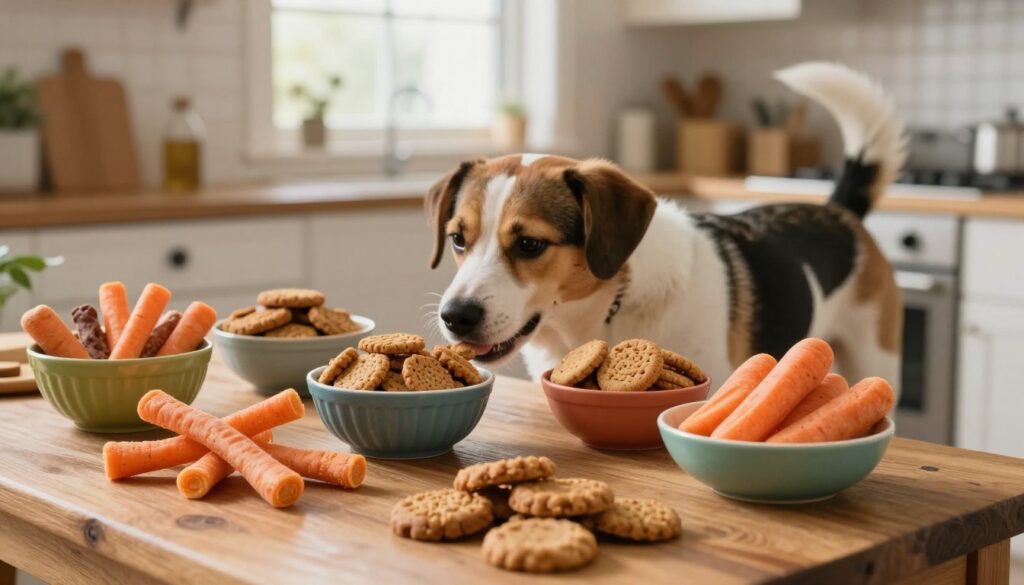
Fresh cucumbers are a great choice because they’re what pickles start with. Cut them into fun shapes for your dog. They’re crunchy and safe.
Other yummy snacks include:
- Carrots (raw or lightly steamed)
- Celery sticks (cut small to avoid choking)
- Bell peppers (seeds removed)
- Green beans (raw or cooked)
- Broccoli florets (in small amounts)
Safe fruits like apple and pear slices are also good. For store-bought treats, try freeze-dried meats or dehydrated sweet potatoes. Dental chews help keep their teeth clean.
Vegetables That Are Actually Good for Dogs
Many veggies are better than pickles. They’re full of fiber, vitamins, and minerals. These help keep your dog healthy.
| Vegetable | Key Benefits | Preparation |
|---|---|---|
| Pumpkin | Helps with digestion and regular bowel movements | Cooked or canned, no added sugar |
| Sweet potatoes | Full of vitamins A and C for immune health | Cook and cut into small pieces |
| Zucchini | Low-calorie and hydrating for weight management | Serve raw or lightly steamed |
| Spinach | Packed with nutrients and antioxidants | Offer in moderation, cooked is easier to digest |
| Peas | Provide protein and fiber for energy | Serve fresh, frozen, or cooked |
| Cauliflower | Vitamin-rich and supports immune function | Cook and cut into bite-sized florets |
Always start with small amounts of new foods to watch for any issues. Vegetables should not make up more than 10% of your dog’s diet. Avoid onions, garlic, mushrooms, and raw potatoes as they are toxic.
A healthy dog diet balances quality proteins with nutrient-rich vegetables that support long-term wellness.
These safe snacks let your dog enjoy crunchy foods without harm. You’re making healthy choices that keep your dog happy and safe.
Understanding Pickle Brine and Its Effects on Dogs
Pickle brine is the liquid where pickles are stored. It’s much more dangerous than you might think. The brine has lots of salt, vinegar, and compounds from garlic and spices. If your dog drinks pickle juice, they could face serious health problems.
The brine is made from vinegar, water, and lots of salt. As pickles sit in it, flavors and spices mix into the liquid. The longer pickles stay, the more harmful the liquid becomes.
Even small amounts of pickle juice can harm your dog. The brine has too much salt for dogs. A little bit can be very dangerous, especially for small dogs. Their bodies can’t handle such high salt levels.
What Happens When Dogs Consume Pickle Brine
If your dog drinks pickle brine or licks up spilled juice, watch for these signs:
- Excessive thirst and drinking
- Increased urination
- Vomiting or diarrhea
- Lethargy or weakness
- Loss of appetite
Drinking a lot of pickle juice can lead to sodium ion poisoning. This is a serious condition that needs vet help. Your dog’s kidneys and heart can get hurt from too much sodium.
Prevention and Immediate Action Steps
Keep pickle containers closed and out of reach. Clean up spills right away. Make sure dogs can’t get to the jars.
If your dog drinks pickle brine, give them fresh water. Watch them for 24 hours for any signs. Call your vet if your dog drank a lot or shows bad signs. Treatment depends on how much they drank and their health.
Don’t underestimate the danger of pickle brine. It’s even more dangerous than whole pickles because dogs absorb it quickly.
Expert Veterinary Advice on Dogs and Pickled Foods
Your vet is the best person to talk to about your dog’s diet. If you’re thinking about giving your dog kosher dill pickles, talk to your vet first. They say it’s best to avoid pickled foods for dogs because they can be harmful.
Vets look at foods to see if they’re good or bad for dogs. Pickles don’t have any good stuff for dogs and can be dangerous. They have too much salt, bad ingredients like garlic and onions, and preservatives. Your vet can tell you why these things are bad for your dog’s health and kidneys.
- How much pickle did your dog eat?
- What time did the consumption occur?
- What type of pickle was it?
- Is your dog showing any current symptoms?
- What is your dog’s medical history?
Dogs can react differently to pickles, depending on their size, age, and health. Some dogs might not get sick, but others can get very ill. Dogs with kidney, heart, or high blood pressure problems should never eat pickled foods.
Your vet can help you find safe treats and foods for your dog. Talk to them about your dog’s diet to make sure you’re making the best choices for their health.
Conclusion
Your dog’s health is in your hands, especially when it comes to their diet. Kosher dill pickles are not good for them. They have too much sodium, over 1,000 milligrams per pickle, which is way too much for dogs.
Garlic and onions in pickles are also bad for dogs. These ingredients are toxic. Pickles are too acidic and don’t have the nutrients dogs need. Even a small amount can be harmful.
While a small bite might not be a big deal, don’t give pickles to your dog on purpose. Keep them away from your dog. Puppies and dogs with health issues are more at risk from salty foods.
If your dog eats a pickle, watch for signs of trouble. Call your vet if you see anything odd. This is important for your dog’s safety.
But, there are safe treats for your dog. Fresh cucumbers, carrots, and green beans are great. They’re crunchy and nutritious, without any risks.
These treats let your dog enjoy tasty snacks that are good for them. You don’t have to worry about poisoning your pet with these healthy options.
For advice on treats and human foods, talk to your vet. They know what’s best for your dog. By avoiding pickles and choosing safe snacks, you keep your dog healthy and happy.
FAQ
Can dogs eat kosher dill pickles safely?
No, kosher dill pickles are not safe for dogs. A tiny piece might not harm them right away. But, they contain too much sodium, garlic, and other seasonings that can harm your dog.
Even if your dog likes the smell and crunch of pickles, they’re not safe to eat.
What are the main ingredients in kosher dill pickles that are dangerous for dogs?
Kosher dill pickles have cucumbers, vinegar, water, salt, and dill. They also have mustard seed and garlic, which is toxic to dogs.
The “kosher” term means they’re made with garlic, not because they’re religiously approved. This makes them dangerous for dogs.
How much sodium is in a kosher dill pickle, and why is it dangerous for dogs?
One kosher dill pickle has over 1,000mg of sodium. Dogs only need about 200mg a day.
This means one pickle gives a dog five times too much sodium. Too much sodium can cause vomiting, diarrhea, and even seizures in dogs.
What happens if my dog eats a kosher dill pickle?
Stay calm and watch your dog closely. If they ate a pickle, remove any more pickles and give them water.
Call your vet if your dog ate a lot of pickles, is small, or shows symptoms like vomiting or seizures.
Why is garlic in kosher dill pickles toxic to dogs?
Garlic is toxic to dogs because they can’t digest it properly. It damages red blood cells, leading to anemia.
Garlic is five times more toxic to dogs than onions. Symptoms of garlic poisoning include weakness, pale gums, and vomiting.
Are there any health benefits to pickles that make them worth the risk for dogs?
No, pickles don’t offer enough benefits to outweigh the risks. They have some vitamins and fiber, but not enough to make them safe for dogs.
There are safer ways to get these nutrients, like from carrots or yogurt. Fresh cucumbers are also a better choice for dogs.
Are puppies at greater risk from kosher dill pickles than adult dogs?
Yes, puppies are more at risk because their bodies are still developing. They can’t handle as much sodium as adult dogs.
Puppies are also more likely to get sick from pickles. If a puppy eats a pickle, call your vet right away.
What safe alternatives can I offer my dog instead of pickles?
You can give your dog fresh cucumbers, carrots, and other veggies. They’re safe and tasty for dogs.
Try giving them dog-safe treats like freeze-dried meat or dehydrated sweet potatoes. These treats are good for their teeth and taste great.
Is pickle brine dangerous for dogs?
Yes, pickle brine is very dangerous for dogs. It has a lot of sodium and garlic.
Even a little bit of brine can harm a dog, especially small ones. Keep pickle jars closed and clean up spills right away.
What does a veterinarian recommend regarding dogs eating kosher dill pickles?
Vets say no to giving dogs kosher dill pickles. They’re too salty and can be toxic.
Some dogs are at higher risk, like puppies and dogs with health problems. If your dog eats a pickle, call your vet.
What are the signs that my dog has consumed too much sodium from pickles?
Signs include too much thirst, vomiting, and diarrhea. They might also seem tired or confused.
If your dog shows these signs, call your vet. They might need special care.
Can my dog have regular pickles if they don’t contain garlic?
No, regular pickles are still too salty for dogs. They can upset a dog’s stomach and cause health problems.
Stick to fresh cucumbers or other safe veggies for your dog. They’re better for them than pickles.
What should I do if my dog shows symptoms after eating a kosher dill pickle?
Call your vet right away if your dog is sick. Tell them how much your dog ate and what symptoms they have.
Your vet might need to see your dog or do blood tests. They’ll help your dog feel better.
Are kosher dill pickles toxic to all dogs equally, or do some dogs tolerate them better?
Some dogs might not get sick from pickles, but it’s not safe for any dog. Puppies, small dogs, and dogs with health problems are at higher risk.
Even if your dog seems fine after eating a pickle, it’s still dangerous. Garlic can build up and harm them over time.
How can I prevent my dog from accessing kosher dill pickles?
Keep pickles and jars out of your dog’s reach. Use tight lids and clean up spills fast.
Don’t leave pickles where your dog can get them. Teach family and friends not to give pickles to your dog.
Can I give my dog small amounts of pickles regularly without harm?
No, don’t give your dog pickles at all. Even a little bit can be harmful over time.
Stick to safe treats like cucumbers or carrots. They’re better for your dog than pickles.
What other pickled foods should I avoid giving my dog?
Avoid all pickled foods, like onions and peppers. They’re too salty and can be toxic.
Stick to fresh veggies and dog-safe treats. They’re safer for your dog than pickled foods.
How does a dog’s digestive system differ from humans in processing pickle ingredients?
Dogs can’t digest garlic and onions like humans do. They’re more sensitive to sodium and vinegar.
Dogs have shorter digestive tracts, which means harmful compounds can be absorbed quickly. This makes pickles dangerous for them.