Can Dogs Have Bacon? A Complete Guide to Keeping Your Pup Safe
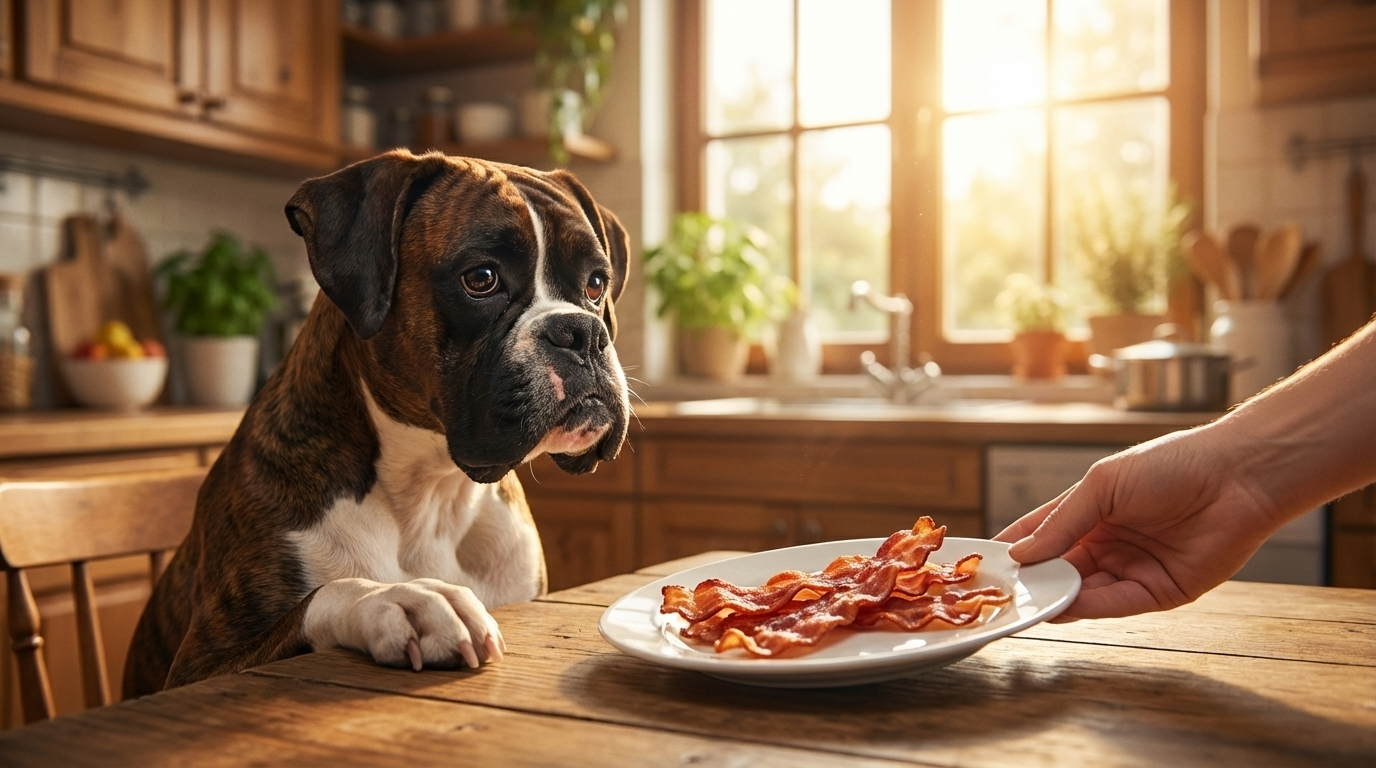
There’s nothing quite like the sizzle of bacon hitting a hot skillet on a lazy Sunday morning. And if you’ve ever cooked bacon while your dog watches from across the kitchen with those irresistible puppy-dog eyes, you know exactly how tempting it is to slip them a piece. That hopeful stare is hard to resist, but before you reach down with a crispy strip, it’s important to understand what bacon actually does to your dog’s body.
So, can dogs have bacon? The short answer is no. While a tiny piece of plain, cooked bacon won’t necessarily poison your dog, bacon is generally unhealthy and best kept off your pup’s plate entirely. It’s one of those human foods that seems harmless on the surface but carries real risks to your dog’s long-term health and wellbeing.
Let’s explore why bacon is problematic for dogs, what to do if an accident happens, and what safer alternatives can satisfy your dog’s cravings without putting them at risk.
Table of Contents
The Primary Health Hazards: Why Bacon Is Risky for Dogs
High Fat Content and Pancreatitis Risk
The biggest concern when a dog eats bacon is the extremely high fat content. A single slice of cooked bacon contains roughly 9–12 grams of fat, an enormous amount for an animal that typically needs far less daily fat than we do.
When dogs consume high-fat foods, their pancreas works overtime to produce digestive enzymes. In susceptible dogs, especially older dogs, overweight dogs, or breeds prone to pancreatitis like Schnauzers and Poodles, this can trigger acute pancreatitis, a life-threatening inflammation of the pancreas. The symptoms appear suddenly and can be severe: extreme abdominal pain (often causing a hunched-back posture), vomiting, diarrhea, lethargy, and loss of appetite.
Even without triggering acute pancreatitis, the high fat content contributes to obesity, which is one of the leading health problems affecting dogs today. Excess weight puts strain on joints, heart, and metabolic function, shortening your dog’s lifespan and reducing quality of life.
Excessive Sodium: A Hidden Danger
Beyond fat, bacon is loaded with salt. A typical slice contains 150–300 milligrams of sodium, roughly 10 times what a medium-sized dog needs in a day.
When dogs consume high-sodium foods, they become dehydrated and suffer from electrolyte imbalances. In extreme cases, excessive salt consumption can lead to sodium ion poisoning, a serious condition causing tremors, seizures, confusion, and potentially death. Even if your dog doesn’t eat enough bacon to trigger poisoning, high salt intake stresses the kidneys and contributes to high blood pressure and heart disease over time.
Harmful Additives: Nitrates and Nitrites
Most commercial bacon is cured with sodium nitrite, a preservative that gives bacon its pink color and distinctive flavor. While nitrites are considered safe for human consumption in moderate amounts, they’re concerning for dogs.
Sodium nitrites can cause oxidative damage to red blood cells, potentially leading to methemoglobinemia, a blood disorder that reduces the blood’s ability to carry oxygen. Symptoms include lethargy, pale gums, and difficulty breathing. Dogs are more sensitive to these compounds than humans, making this an additional reason to keep bacon off their menu.
Immediate Digestive Disruption
Beyond the long-term health risks, many dogs experience immediate gastrointestinal upset after eating bacon. The rich, fatty food can overwhelm a dog’s digestive system, causing vomiting, diarrhea, and abdominal discomfort within hours of consumption.
Specific Varieties: Understanding the Risks
Raw Bacon: Never a Safe Choice
If you’re wondering whether can dogs eat raw bacon might be safer than cooked bacon, the answer is a resounding no. Raw bacon carries a much higher risk of bacterial contamination, particularly Salmonella and E. coli. Dogs have stronger stomach acid than humans and can handle some bacterial exposure, but raw pork products still pose a genuine infection risk, especially for puppies, senior dogs, or dogs with compromised immune systems.
Turkey Bacon: The “Healthier” Mirage
Many pet owners consider can dogs have turkey bacon as a leaner alternative. While turkey bacon does contain less fat than pork bacon, it’s still processed and heavily salted. The sodium content is comparable to regular bacon, and it still contains curing agents and preservatives. Swapping pork bacon for turkey bacon doesn’t meaningfully reduce the health risks.
Bacon Grease and Bacon Fat: The Most Dangerous Form
Here’s where many people make a critical mistake: bacon grease might seem like an “ingredient” rather than bacon itself, but is bacon grease good for dogs? Absolutely not. In fact, concentrated bacon fat is even more dangerous than the solid meat because it’s pure fat with no other nutritional value.
A tablespoon of bacon grease contains roughly 15 grams of fat, enough to trigger pancreatitis in a small dog. Pouring bacon grease over kibble or using it as a flavor enhancer is one of the quickest ways to cause a pancreatic emergency.
Ham and Other Pork Products
The same rules apply to ham and other processed pork products. While plain, unseasoned cooked pork (with fat trimmed away) is technically safe in small amounts, most commercial ham products are extremely high in salt and preservatives. Stick to plain, cooked pork if you want to offer any pork at all.
Real-Life Story: When Breakfast Went Wrong
Sarah had always been careful about what she fed her Golden Retriever, Rocky. But one Sunday morning, while making breakfast for her family, she left a plate of cooked bacon on the kitchen counter for just two minutes while she answered the phone.
That was all it took. Rocky, ever the opportunist, jumped up and devoured four strips of bacon in the time it took Sarah to say goodbye.
At first, Sarah thought everything was fine. Rocky seemed normal throughout the morning. But by that afternoon, his behavior changed dramatically. He refused his regular dinner, which was completely unlike him. By evening, Rockycouldn’t seem to find a comfortable position, he kept moving between his bed and the living room rug, hunched in a posture that Sarah later learned was a classic sign of abdominal pain.
When vomiting started at 10 PM, Sarah rushed Rocky to the emergency vet clinic. After bloodwork and imaging, the diagnosis was acute pancreatitis triggered by the high-fat bacon meal. Rocky spent three nights hospitalized on IV fluids, pain medication, and a prescription diet. The emergency vet bill came to $3,200, and Max was one of the lucky ones who recovered fully.
I never imagined a few pieces of bacon could cause such a serious problem,” Sarah told the vet during follow-up. “Rocky looked fine, and I didn’t think it was that much food. I just didn’t know.
Sarah’s story illustrates an important truth: pancreatitis doesn’t always announce itself immediately, and even a small amount of bacon can have serious consequences in susceptible dogs.
The Emergency Protocol: What to Do If Your Dog Eats Bacon
If your dog gets into bacon despite your best efforts, here’s how to assess the situation:
Determine the risk level:
- A single small piece for a large dog is likely low-risk and may cause no symptoms.
- Multiple pieces or bacon grease for a small dog is higher-risk and warrants careful monitoring.
- Any amount for a dog with a history of pancreatitis is an emergency.
Monitor your dog for 24–96 hours depending on size:
- Small dogs (under 25 lbs): Watch for 24–48 hours
- Medium dogs (25–60 lbs): Monitor for 48–72 hours
- Large dogs (over 60 lbs): Observe for 72–96 hours
Warning signs requiring immediate vet attention:
- Persistent vomiting or retching
- Severe lethargy or unwillingness to move
- Abdominal pain (hunching, whining, reluctance to jump)
- Loss of appetite lasting more than a few hours
- Diarrhea, especially with blood
- Difficulty breathing or pale gums
Contact your vet or Animal Poison Control (888-426-4435) if symptoms develop or if your dog consumed a large quantity. Don’t wait to see if symptoms improve on their own.
Vet-Approved Alternatives: Safer Treats That Still Satisfy
If your dog loves the savory flavor of bacon, there are much safer ways to indulge that craving:
Lean proteins: Boiled, unseasoned chicken breast, plain cooked turkey (no skin), or baked white fish like cod provide that rich, meaty satisfaction without the fat and sodium risks.
Commercial bacon-flavored treats: Brands like Blue Buffalo, True Acre Foods, and Milk-Bone make bacon-flavored dog treats specifically formulated to be safe and nutritionally appropriate. These give your dog the bacon taste they crave without the health hazards.
Crunchy vegetables: Carrots, green beans, and apple slices (seeds removed) are low-calorie, crunchy alternatives that many dogs enjoy.
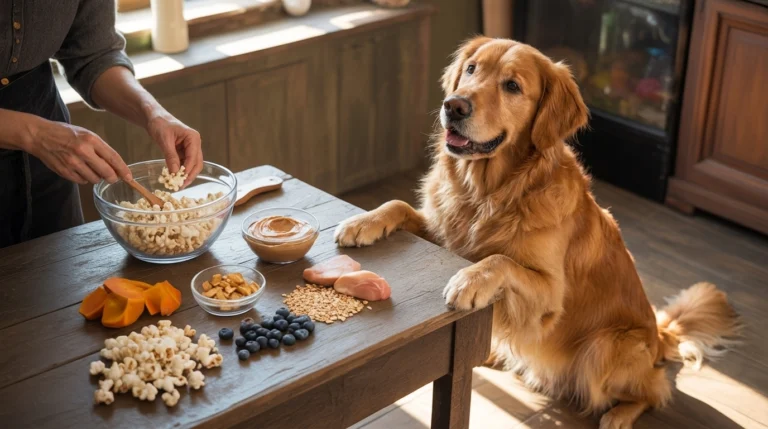
Homemade options: Plain cooked ground turkey mixed with a small amount of pumpkin puree makes an excellent, nutritionally balanced treat.
The Verdict: Why Bacon Doesn’t Belong in Your Dog’s Diet
Every veterinarian will tell you the same thing: bacon has no place in a dog’s regular diet. The combination of high fat, excessive salt, processed additives, and pancreatitis risk makes it one of the least suitable human foods for dogs.
Your dog’s taste preferences don’t matter more than their health. A balanced, nutritionally complete dog food, combined with safe, dog-appropriate treats, is the foundation of longevity and quality of life.
The puppy-dog eyes will always be tempting. But every time you resist that urge and offer a safe alternative instead, you’re adding months and years to your dog’s life.
Frequently Asked Questions
Can one piece of bacon hurt my dog? A single small piece of plain cooked bacon is unlikely to cause poisoning in a large dog, but it carries unnecessary risk. For small dogs or puppies, even one piece could trigger stomach upset or worse.
Is cooked bacon safer than raw bacon? Cooked bacon is slightly safer in terms of bacterial contamination, but it’s actually worse health-wise due to higher fat concentration and potential for pancreatitis. Raw bacon poses additional food poisoning risks and should never be given to dogs.
What if my dog has existing heart disease or pancreatitis? Bacon is absolutely off-limits for dogs with these conditions. The sodium and fat content could trigger a life-threatening crisis. Always consult your vet before giving any human food to a dog with underlying health conditions.
Is bacon grease ever safe for dogs? No. Bacon grease is pure fat and poses an extreme pancreatitis risk. Never cook your dog’s food in bacon grease or drippings.