Can Cats Have Potatoes? What’s Safe and What’s Not
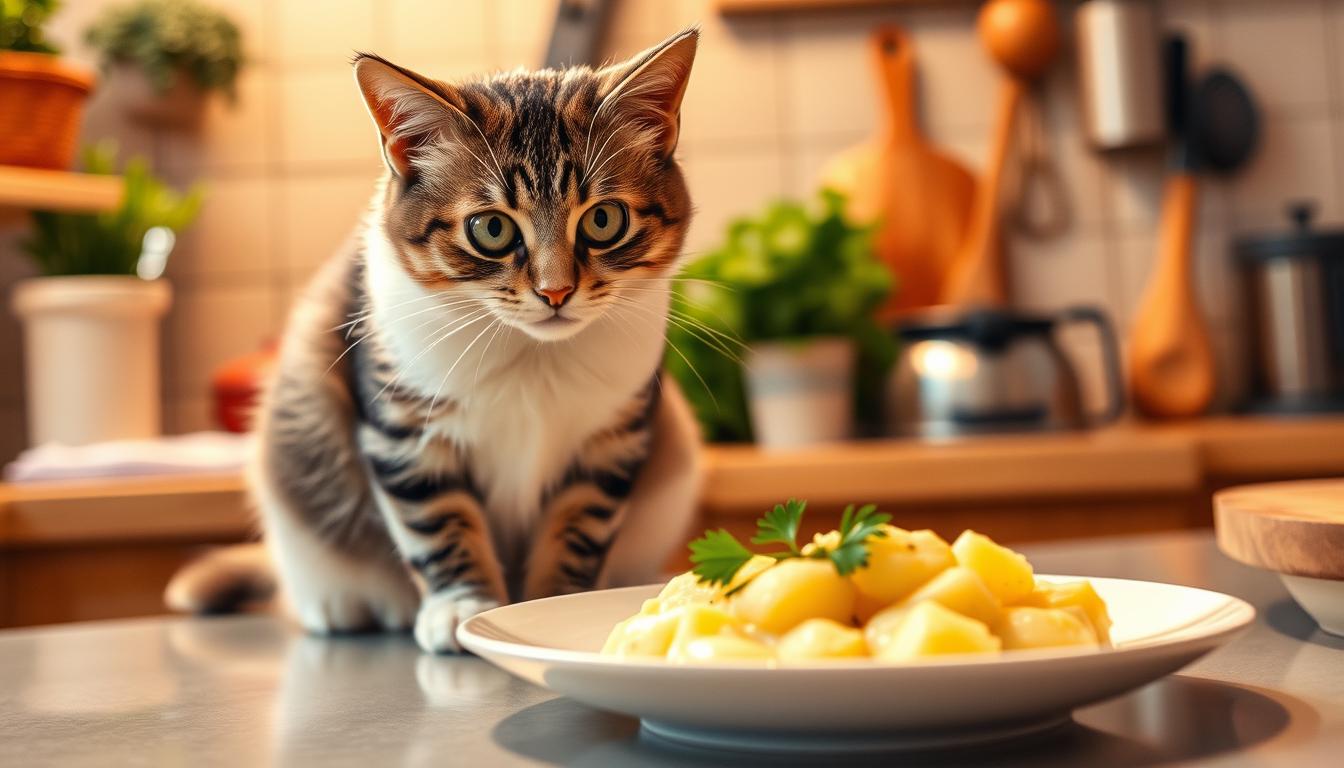
You love your cat and want to share your food with them. When your cat sits next to you at dinner, it’s hard to resist. You might wonder: can cats have potatoes?
The answer is not just yes or no. Potatoes are tricky for cats. Cooked potatoes are okay sometimes, but they’re not essential. Raw and green potatoes, however, are dangerous and should be avoided.
As a cat owner, you need to know about cats and potatoes. This knowledge helps keep your pet safe and lets you make smart food choices. You’ll learn which potatoes are safe, how much to give, and which ones to avoid.
Knowing your cat’s diet needs is key. Cats are meat-eaters by nature. This fact is important when deciding to give them potatoes or other non-meat foods.
Understanding Your Cat’s Dietary Needs as an Obligate Carnivore
Your cat’s body is very different from yours. They are built to thrive on meat, not like humans. This is why foods like potatoes shouldn’t be in their diet. Their digestive system, metabolism, and nutritional needs show they are meant to be carnivores.
Vets and pet nutritionists stress that cats are not small humans. This is key when choosing what to feed them.
Why Cats Require Meat-Based Nutrition
Your cat needs meat to survive, not just as a preference. They are obligate carnivores, needing animal proteins for nutrients. Their digestive system is short and efficient for meat processing.
Taurine is crucial for your cat. They can’t make it like other animals. They need it from meat for heart, vision, and immune health.
- Taurine supports heart muscle function
- Taurine maintains healthy vision and eyesight
- Taurine strengthens immune system responses
- Taurine aids reproductive health
The Role of Carbohydrates in Feline Diets
Your cat doesn’t need carbs. Unlike humans, they get energy from meat proteins and fats. The ASPCA says their digestive system isn’t made for plants.
Plant foods like potatoes have no essential role in your cat’s diet. Some veggies can add vitamins and minerals. But meat should always be the main focus of their diet.
Remember, just because something won’t harm your cat right away doesn’t mean it’s good for them. Stick to meat-based nutrition for their diet.
Can Cats Have Potatoes
Yes, cats can eat potatoes, but with some rules. Cooked potatoes for cats are safe if plain and without seasonings. It’s good to know that while cooked potatoes are not toxic, they shouldn’t be a staple in your cat’s diet.
Plain boiled, mashed, or baked white potatoes are okay as treats. Even instant mashed potatoes are fine if they don’t have butter, salt, or other additives. Remember, can cats eat potatoes doesn’t mean they should have them all the time—only as rare treats in small amounts.
Cats might be curious about potatoes because they smell good or look interesting in your meal. Cats are meat-eaters, but they might try different human foods. When cats eat potatoes, they don’t get much nutritional value. Potatoes have calories but not the balanced nutrition your cat needs.
Here’s what you should know about offering potatoes for cats:
- Always cook potatoes thoroughly before offering them
- Remove all seasonings, butter, and salt
- Serve only plain white or sweet potato pieces
- Keep portions very small
- Offer them rarely, not as daily treats
The main worry with potatoes for cats is how they’re prepared and in what amount. Too many calories from low-nutrition foods can upset your cat’s diet. Your cat’s regular food is made to give them all they need, so treats should not replace these essential nutrients.
The Difference Between Cooked and Raw Potatoes for Cats
Cats and potatoes have a big difference when it comes to cooking. Your cat’s body is not like yours, and what’s safe for you can be dangerous for them. It’s important to know the difference between cooked and raw potatoes to keep your cat healthy.
Raw potatoes are a big risk for cats, but cooked ones are safer. The main reason is how your cat’s body handles these foods and the harmful compounds they contain.
Why Raw Potatoes Are Toxic to Cats
Raw potatoes have compounds that can harm your cat. Cats can’t digest raw starch well, leading to stomach problems. The starch in raw potatoes is hard for cats to digest.
Raw potatoes also have another risk. Keep them away from curious cats. Be careful with potato peels or scraps in trash, as cats might eat them.
Understanding Solanine and Its Dangers
Solanine is a chemical in potatoes that helps protect them from pests. It’s found in the skin, sprouts, and green parts of potatoes. Knowing about solanine poisoning is key to keeping your cat safe.
The good news is that heat destroys solanine. Cooking potatoes at high heat breaks down this toxin. It also makes the starch easier for cats to digest. Cooked potatoes are much safer for your cat.
| Potato Type | Solanine Content | Digestibility | Safety for Cats |
|---|---|---|---|
| Raw Potatoes | High (Dangerous) | Indigestible | Toxic – Avoid Completely |
| Cooked Potatoes (Boiled/Baked) | Minimal (Safe) | Moderately Digestible | Safe in Small Amounts |
Never give raw potatoes to your cat. Solanine poisoning can be very serious. Always cook potatoes well and remove the skin before giving them to your cat.
Safe Ways to Feed Potatoes to Your Cat
Feeding potatoes to cats safely needs careful preparation. Choose plain boiled, mashed, or baked white potatoes as treats. Cooked potatoes are safe for cats when prepared right.
Preparing potatoes for cats involves several steps. Start with fresh potatoes and wash them well to remove dirt and pesticides. Peel the skin off before cooking, as solanine is in the outer layer. Cook the potatoes by boiling, baking, or steaming until they’re soft.
- Boiling until soft and fully cooked
- Baking at a standard temperature until tender
- Steaming until completely cooked through
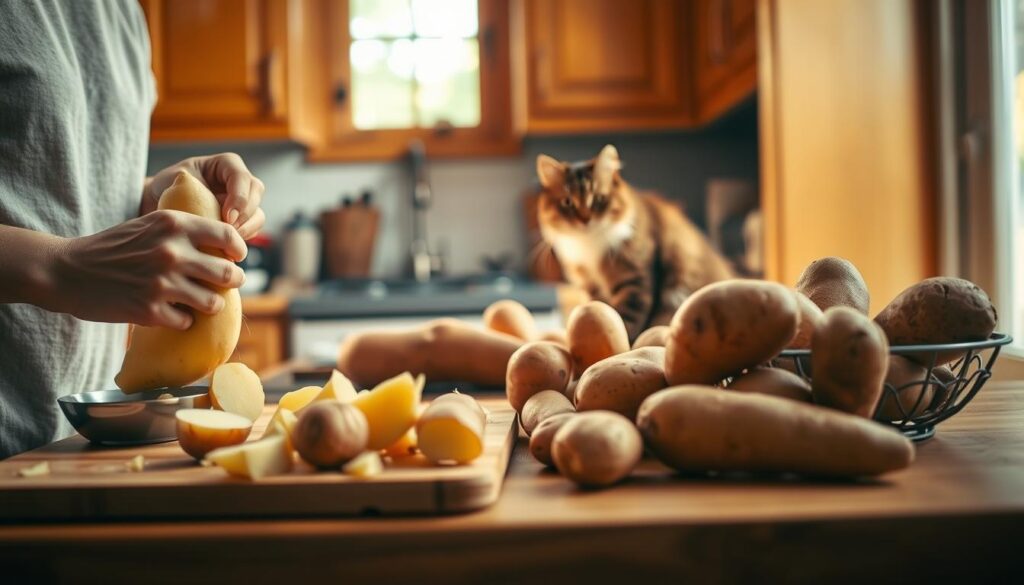
When preparing potatoes for cats, serve them plain. Avoid adding butter, oil, salt, garlic, or onions. These can harm your cat’s health.
Cool the potatoes to room temperature before serving. Cut them into small pieces, like a pea. Plain instant mashed potatoes are okay, but homemade is better for controlling ingredients. Start with small amounts and watch for any reactions.
Cats diet potatoes are best as rare treats. Keep portions small and watch your cat’s response before giving more.
How Much Potato Can Your Cat Safely Eat
It’s important to know how much potato is safe for your cat. The right amount helps keep them healthy. Potatoes can be a safe snack, but only if you control the amount.
Understanding your cat’s caloric needs is key. This helps you choose the right foods for them.
The Ten Percent Treat Rule for Cats
Vets say treats should not be more than 10 percent of your cat’s diet. This rule helps keep your cat’s nutrition balanced. Too many treats can lead to health problems.
This 10 percent rule is for all treats, not just potatoes. If your cat has other snacks, the potato portion must be smaller. The rest of their calories should come from balanced cat food.
Calculating Daily Caloric Intake for Your Feline
Adult cats need 200 to 300 calories a day. This depends on their size, age, and activity level. To find 10 percent, multiply their daily calories by 0.10.
| Cat Weight | Daily Calorie Needs | 10% Treat Allowance | Potato Serving Size |
|---|---|---|---|
| 8 pounds | 200 calories | 20 calories | 1 small cube |
| 10 pounds | 250 calories | 25 calories | 1-2 small cubes |
| 12 pounds | 300 calories | 30 calories | ½ tablespoon |
A medium potato has about 160 calories. So, a small piece—like one or two small cubes or half a tablespoon—is okay for your cat.
First, give your cat a tiny bit of potato. Watch how they react. Wait 48 hours to see if they have any stomach issues. If they’re fine, you can give them a bit more.
- Start with only one small cube of cooked potato
- Wait 48 hours before offering more
- Limit potato treats to once or twice weekly
- Keep total treat calories under 10 percent of daily intake
- Track all snacks throughout the day
What About Green Potatoes and Potato Skins
Green potatoes and potato skins are very dangerous for your cat. Potatoes turn green when they’re exposed to light, which means they’re toxic. This green color means they have a lot of solanine, a harmful substance.
Your cat should never eat any green potato. This includes green skin or green inside the potato.
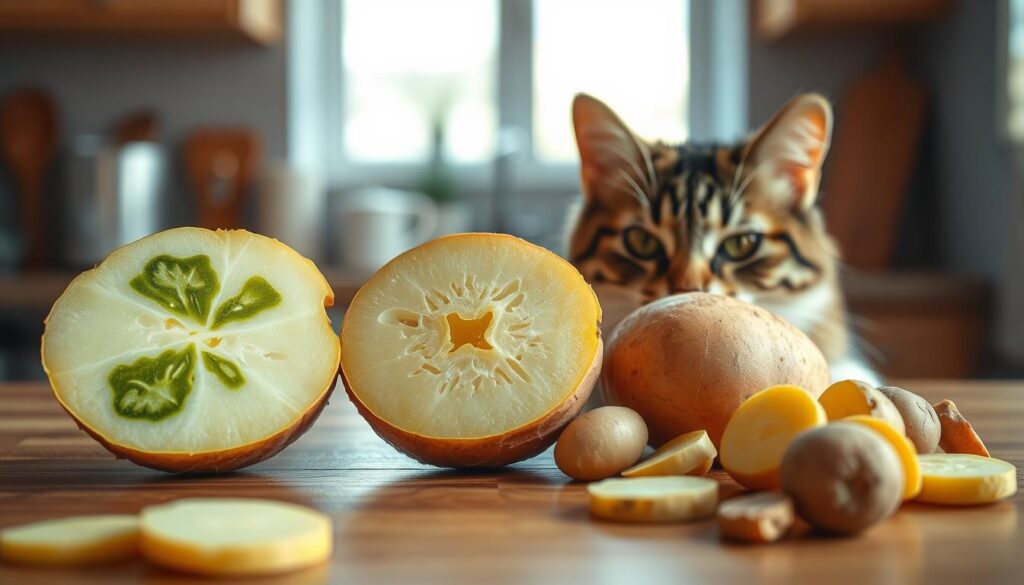
It’s important to keep an eye on potato skin safety for cats. Potatoes, even regular ones, have more solanine in their skin than in the rest. So, always peel potatoes before cooking them for your cat.
Don’t let your cat near potato scraps. They might look in garbage cans or compost bins for them. Make sure these places are off-limits to your cat.
Potato sprouts are especially dangerous. They have a lot of solanine. Make sure to remove and throw them away safely.
Here’s what you need to remember about potatoes and tubers:
- Never feed your cat green potatoes in any form
- Always remove and discard potato skins before cooking
- Cut away all green portions and sprouts completely
- Store potatoes in dark, cool places away from your cat
- Dispose of potato scraps securely where cats cannot access them
While cooked potato flesh is okay for cats in small amounts, these parts are still very dangerous. They should stay away from your cat.
Can Cats Eat Sweet Potatoes and Other Potato Varieties
When looking at different potatoes and cats, you might wonder if sweet potatoes are better than white potatoes. The answer is not simple. Both are safe when cooked plain, but they have different nutrients. Knowing these differences helps you choose the best treats for your cat.
Comparing White Potatoes and Sweet Potatoes
White potatoes, like russet, red, and yellow, have little sugar and taste neutral. Sweet potatoes, on the other hand, have more carbs and sugars.
Sweet potatoes are good for humans because of beta-carotene and fiber. But, cats can’t use these nutrients like humans do. Cats need meat for their nutrients, not plants.
| Nutrient | White Potatoes (per 100g cooked) | Sweet Potatoes (per 100g cooked) | Cat Suitability |
|---|---|---|---|
| Carbohydrates | 17g | 20g | Cats don’t require carbs |
| Natural Sugars | 0.9g | 4.2g | Higher sugar less ideal |
| Fiber | 2.1g | 3g | Minimal benefit for cats |
| Protein | 2g | 1.6g | Insufficient for cats |
Why Sweet Potatoes Are Less Ideal for Cats
Sweet potatoes have more sugar and carbs than white potatoes. This can lead to weight gain in cats, especially indoor ones. Even small amounts of sweet potatoes can add up quickly.
Some cats might get upset stomachs from sweet potatoes more than white potatoes. The fiber in sweet potatoes can upset some cats’ stomachs. Also, sweet potatoes don’t offer much nutritional value for cats compared to white potatoes.
You might see sweet potatoes in dog treats or food and think they’re good for cats too. But, dogs and cats have different nutritional needs. Dogs can eat plant-based foods, but cats need meat.
- Small amounts of cooked plain sweet potatoes won’t harm your cat
- The ASPCA lists cooked sweet potatoes as non-toxic
- Your cat gains minimal nutritional benefit from sweet potatoes
- Better treat options exist for your feline companion
- Weight management becomes more difficult with high-sugar treats
If you want a vegetable treat for your cat, look beyond potatoes. White potatoes are slightly better for cats because they have less sugar. But, meat-based treats are still the best choice for your cat’s health and happiness.
Potato-Based Products Your Cat Should Avoid
Plain cooked potatoes are safe for cats, but not all potato products are. Many snacks and dishes have ingredients that are harmful. It’s important to know which ones to avoid to keep your cat healthy.
Potato chips are a big no-no for cats. They have too much sodium, which can upset your cat’s body balance. The salt makes them thirsty and can harm their kidneys. Plus, chips have seasonings like onion or garlic powder, which are toxic. They can also cause choking because cats don’t chew well.
Fried potatoes, like French fries, are also bad. They’re too fatty and can lead to obesity and pancreatitis. The salt and seasonings make them even worse.
Here are some potato dishes to avoid:
- Potato chips and flavored crisps
- French fries and waffle fries
- Tater tots and hash browns
- Potato salad with mayonnaise, onions, and mustard
- Loaded baked potatoes with sour cream, cheese, and bacon
- Processed potato products with preservatives and additives
Processed potatoes often have bad stuff like preservatives and artificial flavors. Potato salad is bad because of the mayonnaise, onions, and mustard. Loaded baked potatoes are risky because of the butter, sour cream, cheese, and chives.
If you want to give potatoes to your cat, make sure they’re plain. Cook them without any seasonings or additives. Never give your cat human food, even if it seems safe.
Signs of Potato Poisoning in Cats
Knowing the warning signs of potato poisoning in cats is crucial. If your pet eats raw or green potatoes, act fast. Solanine toxicity affects your cat’s digestive and nervous systems. Recognizing symptoms early and seeking vet care is key to your cat’s health.
Symptoms to Watch For
Potato poisoning symptoms in cats can range from mild to severe. They usually appear within a few hours to 24 hours after eating raw potatoes or green parts. Your cat might seem uncomfortable or act differently than usual.
Look out for these emergency symptoms:
- Vomiting or excessive drooling
- Diarrhea and loss of appetite
- Abdominal pain (hunched posture or reluctance to move)
- Lethargy and weakness
- Tremors or difficulty walking
- Rapid heart rate
- Confusion or disorientation
- Difficulty breathing or temperature changes
Some cats might only have mild stomach upset that goes away. Others could have serious reactions needing immediate medical help. Your cat’s size, age, and health play a big role in how severe the poisoning is.
When to Contact Your Veterinarian
If you think your cat ate raw potatoes, green potatoes, or potato skins, call your vet or animal poison control center right away. Don’t wait for symptoms to show. Early treatment can prevent serious problems and save your cat’s life.
Be prepared to tell your vet:
- How much potato your cat ate
- What type (raw, green, with skin)
- When your cat ate it
- Your cat’s weight
- Any symptoms you’ve noticed
Your vet might induce vomiting, give activated charcoal, or start IV fluids. They’ll keep an eye on your cat’s vital signs until the toxins are gone. Quick action is crucial for your cat’s recovery.
Why Potatoes Appear in Commercial Cat Food
You might be surprised to see potatoes on your cat’s food label. Cats don’t need potatoes or carbs to live, but pet food makers add them for reasons. Knowing why potatoes are in cat food helps you choose better for your cat.
Potatoes are a non-grain carbohydrate in many grain-free cat foods. They help make kibble and hold ingredients together. They also add minerals like potassium and vitamin C.
The potato starch in cat food is cooked at high temperatures. This removes any harmful compounds. The starch becomes easy for cats to digest, making it safe for them.
Good manufacturers focus on meat proteins in cat food. They make sure the food has the right carbs. Giving your cat potatoes as treats can mess with their diet.
- Meat proteins should appear as the first ingredients
- Potatoes should rank lower on ingredient lists
- High-temperature cooking eliminates safety concerns
- Manufactured formulas maintain nutritional balance
When picking cat food, choose ones where meat is the main ingredient. If potatoes are there, they should be lower on the list.
Conclusion
Your cat can eat potatoes, but only if they are prepared correctly. Plain, cooked, and peeled white potato flesh is safe for cats in small amounts. But, raw potatoes, green potatoes, and potato skins are toxic because they contain solanine.
Remember, cats are meat-eaters. Their diet should mainly include meat-based foods. Potatoes don’t have the nutrients cats need. They are not as good as real meat treats. If you do give potatoes, make sure they are only 10% of your cat’s daily calories.
Your cat’s health is the most important thing. They should eat high-quality, complete cat food most of the time. Treats should be given carefully. If your cat eats something bad or you have questions, call your vet. They can help keep your cat healthy and happy.
FAQ
Can cats have potatoes at all, or are they completely off-limits?
Cats can have potatoes, but with some rules. Cooked, plain, and peeled potatoes are okay in small amounts as treats. But, potatoes shouldn’t be a big part of their diet. Raw, green, or with skins are toxic and must be avoided.
Are potatoes toxic to cats?
Plain cooked potatoes are not toxic, but some forms are. Raw, green, or with skins have solanine, which is harmful. Cooked and peeled potatoes are safe in small amounts. Cooking at high heat breaks down solanine, making them safe for cats.
What is solanine and why is it dangerous to cats?
Solanine is a natural toxin in potato plants. It’s found in small amounts in potatoes but more in the skin and green parts. It can cause stomach problems and other serious health issues in cats. Cooking potatoes well removes solanine, making them safe.
Why are obligate carnivores like cats eating potatoes at all if they don’t need them?
Cats need animal proteins and amino acids from meat. They don’t need carbs like potatoes. But, some plant foods can add vitamins and minerals. Giving plain cooked potatoes as treats is okay, but they shouldn’t replace meat.
What’s the difference between raw and cooked potatoes for cats?
Raw potatoes are harmful to cats because of solanine and indigestible starch. Cooked potatoes are safe because heat breaks down solanine. Never give raw potatoes to cats.
How should I prepare potatoes to make them safe for my cat?
Wash potatoes well, peel them, and cook them without adding anything. Cool and cut them into small pieces. Serve them plain. Use plain instant mashed potatoes without seasonings.
How much potato can I safely give my cat?
Treats should not make up more than 10% of your cat’s daily calories. For a 200-300 calorie cat, that’s 20-30 calories from treats. A medium potato has 160 calories, so give about half a tablespoon or one to two small cubes. Start with small amounts and limit treats to once or twice a week.
Why is the 10% treat rule important for cats?
Cats need a balanced diet with the right amounts of proteins, fats, vitamins, and minerals. Treats can upset this balance and cause health problems. The 10% rule applies to all treats, not just one type.
What should I never feed my cat regarding potatoes?
Never give raw, green, or with skins, potato sprouts, or eyes. Avoid potato chips, french fries, potato salad, loaded baked potatoes, tater tots, hash browns, or any processed potato products.
Are green potatoes poisonous to cats?
Yes, green potatoes are more poisonous than regular potatoes. Green color means high solanine levels. Any green potato should be thrown away.
Why should I keep potato skins away from my cat?
Potato skins have more solanine than the flesh. Peeling is essential. Be careful with where you throw away potato peelings to avoid your cat eating them.
Can cats have sweet potatoes, and are they better than regular potatoes?
Cats can eat cooked sweet potatoes, but they’re not the best choice. Sweet potatoes have more sugar and carbs. They’re not as good for cats as white potatoes.
What’s the difference between white potatoes and sweet potatoes for cats?
White potatoes are safer for cats than sweet potatoes. White potatoes have less sugar and are better for cats. But, neither is as nutritious as meat for cats.
Why do some commercial cat foods contain potatoes if cats don’t need them?
Pet food makers use potatoes for texture and some nutrients. They’re used in grain-free foods. But, the main ingredients are still meat.
Does seeing potatoes in my cat’s food mean I should give more potatoes as treats?
No, adding more potatoes can upset your cat’s diet. Stick to meat-based treats and your cat’s regular food.
What are the symptoms of potato poisoning in cats?
Symptoms include vomiting, diarrhea, and lethargy. They can appear within hours to a day after eating potatoes. If you suspect poisoning, call your vet.
When should I call my veterinarian about potato ingestion?
Call your vet if your cat eats raw, green, or with skins. Even if they seem fine, get advice. Have info ready like how much was eaten and when.
What treatment might my cat need if they’ve consumed toxic potatoes?
Treatment might include vomiting, activated charcoal, and IV fluids. Your vet will decide based on how much was eaten and your cat’s health.
Are all cat treats better options than potatoes?
Not all, but meat-based treats are better. Look for high protein, low carb, and no toxic ingredients. Treats should be 10% of your cat’s daily calories.
Can potatoes ever cause allergic reactions in cats?
Rarely, cats might have allergies or sensitivities to potatoes. Start with small amounts and watch for signs. If problems occur, stop giving potatoes.
Is it safe to leave cooked potatoes where my cat can access them?
No, it’s hard to control how much your cat eats. They can get too many calories. Give them small, measured portions directly.
What should I do if my cat shows interest in raw potatoes?
Keep raw potatoes away from cats. They’re toxic. If your cat eats raw potatoes, call your vet. Store raw potatoes safely.
How can I tell if my cat has eaten something toxic?
Look for sudden changes, vomiting, diarrhea, and lethargy. If you think your cat ate something bad, call your vet. Don’t wait for symptoms.
Can kittens eat potatoes?
No, kittens need special nutrients for growth. Potatoes are not as nutritious. Stick to kitten food for their diet.
Can senior cats safely eat potatoes?
Senior cats might be okay with small amounts of cooked potatoes. But, they need nutrient-rich foods for their health. Ask your vet before giving potatoes to seniors.
Should I consult my veterinarian before offering potatoes to my cat?
Yes, talk to your vet before giving new foods, like potatoes. They can advise based on your cat’s health and needs.
Are there better treat alternatives to potatoes for my cat?
Yes, meat-based treats are better for cats. Look for high protein, low carb, and no toxic ingredients. These treats are more nutritious and tasty for cats.