Best Large Breed Puppy Food for Healthy Growth
Bringing a large breed puppy home is a joy. You watch them grow stronger every day. You see their big paws and wonder how big they’ll get.
Feeding them right is a big challenge. Large breed puppies grow fast. Their bones and joints develop quickly.
Without the right food, they face serious health problems. Hip dysplasia, joint issues, and bone disorders are common. They need proper care from the start.
Choosing the right puppy food is key. A quality formula supports their growth and protects their health. You want them to grow into strong, healthy adults.
This guide will help you understand what matters. You’ll learn about the nutrients they need. You’ll find the best food options and learn how to feed them at each stage.
Your puppy relies on you to make good nutrition choices. Let’s make sure you have all the info you need.
Understanding Large Breed Puppy Nutritional Needs
Your large-breed puppy’s first year is crucial. They grow fast and need special nutrients to avoid health problems. This rapid growth puts a lot of stress on their bones and joints.
Feeding them the right food is key. It helps control their growth and prevents issues like hip and elbow dysplasia. Their bones and joints must grow in harmony. If not, it can cause permanent damage.
Rapid Growth and Developmental Challenges
Large-breed puppies can grow 100 pounds in a year. This fast growth is a big challenge. Their bones must grow strong and hard at the right pace.
Too fast, and their joints can’t handle the weight. Too slow, and their development is delayed. This can lead to serious problems.
Common growth-related problems include:
- Hip dysplasia (abnormal hip socket development)
- Elbow dysplasia (joint instability)
- Osteochondritis dissecans (cartilage damage)
- Bone and joint inflammation
- Premature arthritis in adult years
Many pet parents don’t know how important their puppy’s nutrition is. Overfeeding or the wrong food can harm their growth. This can lead to lasting damage later on.
Essential Nutrients for Bone and Joint Health
Your puppy’s food must have the right nutrients. They need high-quality proteins, healthy fats, and minerals for strong bones. Antioxidants and carbohydrates are also important.
Think of these nutrients as building blocks:
| Nutrient | Purpose | Why It Matters for Large Breeds |
|---|---|---|
| High-Quality Protein | Builds and repairs muscle tissue | Supports controlled growth without excess |
| DHA & EPA | Develops brain and eye function | Creates neural pathways for proper coordination |
| Calcium | Hardens bones and teeth | Must be balanced to prevent overgrowth |
| Phosphorus | Works with calcium for bone strength | Maintains proper mineral balance |
| Vitamin D | Helps body absorb calcium | Regulates growth rate through mineral uptake |
| Antioxidants | Protects immune system cells | Reduces inflammation during rapid growth |
| Easy Carbohydrates | Provides steady energy | Prevents hypoglycemia in growing puppies |
Calcium-to-Phosphorus Ratio Requirements
The most important thing is the calcium-to-phosphorus ratio in your puppy’s food. This ratio is between 1.2:1 and 1.8:1 for large-breed puppies. It’s crucial for bone growth.
Vitamin D also plays a key role. It helps the body absorb calcium. Together, these nutrients fuel bone growth at the right pace. Too much calcium can cause bones to harden too fast. Too little can slow down bone development.
This is where pet parents often make mistakes. Dr. Tiffany Tupler says there’s a lot of misinformation about large breeds. Many pet parents buy the wrong food thinking it has extra protein or calcium. This isn’t always true.
Your puppy doesn’t need more nutrients. They need the right balance of nutrients. Look for labels that specifically state the calcium-to-phosphorus ratio. This ensures the food supports controlled growth, not just extra supplementation.
Understanding these nutritional foundations helps you make informed choices about your puppy’s diet. The right food supports healthy development without compromising your puppy’s long-term health.
Why Large Breed Puppies Need Specialized Food
Your large breed puppy has a unique growth challenge. Standard puppy foods are not enough for them. These foods often have too much energy for your puppy’s needs.
Puppy food has less energy per unit weight. This is because too much energy can cause them to grow too fast. This can lead to orthopedic problems, especially in big dogs.
Large breed puppies grow for 18 to 24 months. Smaller breeds grow in just 9 to 12 months. This means your puppy needs the right food to avoid joint problems.
PetMD says special diets are key for healthy growth. They prevent hip and elbow dysplasia and other issues. Your puppy’s food choices today affect their health later.
Dr. Veronica Higgs says large breeds need puppy food for up to two years. This ensures they grow bones and joints properly. It’s based on science, not marketing.
- Specialized formulas control energy density for steady growth
- Balanced calcium and phosphorus prevent skeletal problems
- Joint-supporting supplements protect developing cartilage
- Controlled nutrition prevents accelerated bone development
Choosing specialized large breed puppy food is a smart health choice. It keeps your dog mobile and happy for years.
Key Ingredients to Look for in Large Breed Puppy Formulas
Choosing the right food for your large breed puppy is key. Ingredients are listed by weight, so the first three are most important. Look for formulas that help your puppy grow fast while keeping their joints and organs healthy.
The best puppy foods have balanced nutrients for your puppy’s needs. They should have high-quality proteins for muscle growth, healthy fats for brain and vision, and minerals for strong bones and teeth.
High-Quality Protein Sources
The first ingredient should be real meat like chicken, turkey, salmon, or lamb. These are better than vague terms like “meat meal” or “animal by-products.” Your puppy needs 22-32% protein for muscle growth without too many calories.
Quality proteins give your puppy essential amino acids. Choosing foods with real meat as the first ingredient helps your puppy’s muscles and tissue grow strong.
DHA and Omega-3 Fatty Acids
DHA (Omega-3 Fatty Acid) is key for brain and vision development, found in fish oil. PetMD suggests looking for DHA in labels for brain and eye health, especially in the first year.
Healthy fats like EPA support your puppy’s brain and healthy inflammation. They also keep the skin and coat healthy, which is great for your puppy’s overall health.
Glucosamine and Chondroitin for Joint Support
Large breed puppies often face joint problems. Glucosamine and chondroitin are vital for cartilage and joint fluid health. They help prevent hip and elbow dysplasia common in bigger dogs.
Also, look for:
- Gut-friendly probiotics for healthy digestion
- Antioxidants like Vitamin E, C, and Beta-carotene for a strong immune system
- Easily digestible carbohydrates for stable energy
- Pre- or probiotics for a healthy gut and better nutrient absorption
Now you know how to read ingredient panels and choose the best food for your large breed puppy.
Best Large Breed Puppy Food: Top Recommendations
Choosing the right puppy food is crucial for your large breed dog’s growth. Your puppy needs a diet that supports healthy bones and joints. It should also prevent too-rapid growth. The best large breed puppy foods have quality ingredients and balanced nutrition for growing dogs.
When shopping for puppy food, look for brands that understand large breed needs. These brands create formulas with controlled calcium and phosphorus levels. They also add important nutrients like glucosamine for joint support. Your puppy deserves the best start in life.
The top-rated options in the market offer different benefits for your growing pup. Some focus on premium ingredients. Others provide budget-friendly choices without skipping nutrition. You’ll find options for puppies of all sizes and ages.
Here are the recommended large breed puppy foods you should consider:
- Formulas with real meat as the first ingredient
- Foods with proper calcium-to-phosphorus ratios (around 1.2:1)
- Brands that include omega-3 and DHA for brain development
- Options with joint-support ingredients
- Puppy foods without artificial preservatives or colors
Your large breed puppy grows faster than adult dogs. This rapid growth demands specialized nutrition you won’t find in regular puppy formulas. The food you pick now affects your dog’s health for years ahead. Take time to read labels and compare options carefully.
Many veterinarians recommend specific brands based on your puppy’s size and breed. Ask your vet which option works best for your individual dog. Your puppy’s needs might differ based on his genetics, activity level, and health background.
Premium Large Breed Puppy Food Options for Optimal Development
Your large breed puppy needs special food for healthy growth and strong bones. The right food is key for your puppy’s early months. We’ve gathered info on three top large breed puppy formulas that vets often recommend.
Hill’s Science Diet Large Breed Puppy Formula
Hill’s Science Diet is known for its science-backed nutrition. This formula is made for large breed puppies. It has controlled calcium and phosphorus levels for bone health. It also has natural ingredients and DHA for brain and eye health.
- Balanced mineral content for skeletal health
- Small kibble size appropriate for larger puppies
- Antioxidants for immune system support
- Highly digestible protein sources
Royal Canin Giant Puppy Dry Dog Food
Royal Canin focuses on breed-specific nutrition. Their Giant Puppy formula is for dogs over 100 pounds at maturity. It has precise mineral balance and digestive support for giant breeds.
- Tailored macronutrient profile for giant breeds
- Enhanced digestibility for sensitive puppies
- Supports immune development
- Helps maintain ideal growth rate
Purina Pro Plan Large Breed Dry Puppy Food
Purina Pro Plan uses real chicken as the first ingredient. It has advanced nutrition science. It includes glucosamine and chondroitin for joint health during growth.
- Real chicken as primary protein source
- Added joint-supporting compounds
- Omega fatty acids for coat health
- Appropriate calorie density for growth
| Brand | Key Feature | Best For | Special Ingredients |
|---|---|---|---|
| Hill’s Science Diet | Science-backed formula | General large breed growth | DHA, controlled minerals |
| Royal Canin Giant | Breed-specific nutrition | Giant breeds over 100 lbs | Precise mineral balance |
| Purina Pro Plan | Joint support focus | Active large breed puppies | Glucosamine, chondroitin |
Each option offers quality nutrition for your puppy. Your vet can help pick the best one for your puppy’s needs and growth rate.
Feeding Guidelines and Portion Control for Growing Puppies
Getting your large breed puppy’s feeding routine right is crucial for their health. Feeding puppies on a consistent schedule helps with digestion, energy, and growth. Your puppy’s age determines how often they need to eat, and a regular feeding pattern is key for proper development.

Most puppies need different meal frequencies based on their age. Puppies between 8 and 12 weeks should eat 3 small meals per day to support their growth and small stomach. As they grow to 3 to 6 months, you can switch to 2–3 meals per day as their stomach gets bigger. After 6 months, they can eat 2 meals per day, which is their lifelong eating pattern.
Keeping meal times consistent helps with potty training and reduces overeating risk. Feeding your puppy at the same times each day helps their digestive system learn when to expect meals. Dr. Nell Ostermeier says: “Choose a schedule that is convenient for you and your family so that you can stick to the routine—if you create a routine, the puppies will follow.”
Reading Feeding Guides and Portion Sizes
NBC Select advises looking for brands with feeding guides on packaging. These guides help determine the right portions for your puppy’s weight and size. Dr. Nicole Savageau notes: “The important thing is whatever puppy food someone chooses, the instructions for how to feed based on their weight will be on the bag itself.”
Every brand is different with calorie density and feeding recommendations. Make sure the total amount fed matches the day’s total calories based on the bag. Don’t guess at portions. Use a measuring cup for accurate amounts. Your puppy’s feeding guide is just a starting point; you’ll need to watch how your puppy responds and adjust as needed.
Monitoring Your Puppy’s Body Condition
Assess if your puppy is getting the right portions by checking their body condition. Run your hands along their ribs—you should be able to feel them without seeing them prominently. When you look at your puppy from above, they should have a visible waist. Large breed puppies need to stay lean during growth since extra weight puts stress on developing bones and joints.
| Puppy Age | Daily Meals | Key Focus | Portion Adjustment |
|---|---|---|---|
| 8–12 weeks | 3 meals per day | Support rapid growth and digestion | Follow bag guidelines for weight |
| 3–6 months | 2–3 meals per day | Transition to larger stomach capacity | Increase portions gradually |
| 6+ months | 2 meals per day | Establish adult feeding pattern | Stabilize portions based on activity |
Adjusting Portions as Your Puppy Grows
Your puppy will go through growth spurts where they need more food. Watch for increased appetite or activity levels—these are signs to bump up portions slightly. Split your daily food amount across multiple meals so their digestive system can handle it properly. If your puppy gains weight too quickly or becomes less active, reduce portions to keep them lean and healthy.
- Measure food with cups, not by eye
- Check feeding guides on each new bag of food
- Feel your puppy’s ribs weekly to monitor body condition
- Increase food during growth spurts or high activity
- Decrease portions if your puppy starts gaining excess weight
- Keep feeding times consistent every day
Work with your veterinarian to monitor your puppy’s growth curve at regular checkups. They can help you make feeding adjustments that keep your large breed puppy on the best developmental path for strong bones and joints.
Ingredients to Avoid in Your Large Breed Puppy’s Diet
Choosing the right food for your large breed puppy is key. Many commercial puppy foods have ingredients that look good but aren’t good for your dog. Knowing what to avoid in pet food labels helps you make better choices for your puppy’s health.
Dr. Abel Gonzalez says: “Stay away from foods with too much corn and soy, artificial colors, flavors, or preservatives. They don’t add much nutritional value.” This advice is important because not all ingredients on pet food labels are good for your puppy.
Artificial Colors and Preservatives
Synthetic dyes in puppy food are just to catch your eye, not to feed your dog. Colors like Blue 2, Red 40, Yellow 5, and Yellow 6 don’t help your puppy. But, they make the food look better to you.
Chemical preservatives are another worry. AAFCO has rules for pet food ingredients, but BHA, BHT, and ethoxyquin are still questionable. Instead, look for natural preservatives like tocopherols and ascorbic acid. They keep food fresh without health risks.
- Avoid foods with artificial flavors that mask low-quality base ingredients
- Look for natural preservatives on ingredient labels
- Understand that bright colors serve marketing, not nutrition
Excessive Fillers and By-Products
Not all fillers are bad, but too much is a sign of poor nutrition. Whole grains are good when used right. But, using corn gluten meal, wheat gluten, and soy as cheap protein is not good.
Avoid foods with too much corn, soy, meat by-products, artificial colors, or preservatives. They don’t offer much nutrition and can upset your puppy’s stomach. Look for specific names like “chicken meal” or “beef fat” instead of vague terms.
Dr. Tiffany Tupler warns about false claims for large breed puppies. Some products may have the wrong supplements. Ingredient splitting, like listing corn as “corn,” “corn gluten meal,” and “ground corn” separately, hides the true amount of allergens.
| Poor Quality Ingredient | Reason to Avoid | Better Alternative |
|---|---|---|
| Corn, wheat gluten, soy | Common allergens with inferior protein | Named meat sources like chicken or beef |
| Meat by-product meal | Vague sourcing and low quality | Named meat meals like chicken meal |
| Animal fat | Unspecified source and oxidation risk | Named fat sources like chicken fat |
| Artificial preservatives (BHA, BHT) | Potential health concerns | Tocopherols or ascorbic acid |
Good puppy food for large breed dogs should have most protein from named meat sources. It should include whole-food ingredients, use natural preservatives, and avoid unnecessary additives. Reading labels carefully helps protect your puppy’s growth and health.
Transitioning Your Large Breed Puppy to New Food
Switching puppy food too quickly can upset your large breed dog’s stomach. Their stomach needs time to adjust to new ingredients and nutrients. A gradual transition plan helps protect their digestive health while introducing a new formula.
The best approach is a structured seven-day transition period. Start slowly to let your puppy’s system adjust to the change without stress or discomfort.
| Transition Days | New Food Percentage | Old Food Percentage | Purpose |
|---|---|---|---|
| Days 1–2 | 25% | 75% | Initial introduction to new formula |
| Days 3–4 | 50% | 50% | Equal blend for gradual adjustment |
| Days 5–6 | 75% | 25% | New food becomes predominant |
| Day 7 | 100% | 0% | Complete transition to new food |
This simple 7-day transition plan helps your large breed puppy adjust to new food gradually. Mix the foods thoroughly so your puppy cannot pick out preferred pieces. Keep feeding times and locations consistent throughout the transition period.
Watch for signs of discomfort as you switch foods. Normal signs include good appetite, firm stools, and active behavior. Concerning symptoms include soft stools, vomiting, or loss of appetite lasting more than one or two days.
Monitoring Your Puppy During the Transition
Pay close attention to your puppy’s response to dietary changes. Keep a simple log of eating habits and bathroom consistency each day.
- Check stool consistency daily
- Monitor energy levels and playfulness
- Observe appetite at each meal
- Watch for signs of gas or bloating
- Note any behavioral changes
Some puppies with sensitive stomachs need extended time. If your puppy shows discomfort, slow the transition to 10-14 days instead. Return to the previous ratio for a few more days if digestive upset occurs.
When to Seek Professional Support
Puppies may need professional support if you notice consistent digestive issues that persist beyond two days, sudden weight loss or poor appetite that lasts several days, excessive itching or possible food allergies, or abnormal growth or lethargy affecting normal activity.
- Persistent diarrhea lasting more than 48 hours
- Repeated vomiting episodes
- Signs of allergic reactions (itching, swelling)
- Refusal to eat the new food
- Lethargy or unusual behavior changes
Avoid introducing other dietary changes during your transition period. Do not add new treats, table food, or supplements while your puppy adjusts. Keep fresh water available at all times to support healthy digestion.
If your puppy refuses the new food, try warming it slightly or adding a small amount of low-sodium broth to increase appeal. Contact your veterinarian if problems continue beyond the transition period or worsen over time.
Budget-Friendly Options for Quality Large Breed Puppy Nutrition
Feeding a large breed puppy doesn’t have to be expensive. You can find great nutrition at good prices if you know what to look for. It’s more important to consider the cost per feeding than the bag’s price. Many affordable formulas give your puppy the nutrients they need without the high cost.
Smart shopping can help you save money on puppy food. Buying bigger bags saves money, using autoship services can save 5-15%, and shopping during sales can lead to big savings. PetMD recommends IAMS as a budget-friendly option, showing that mid-priced foods can offer better value than expensive ones.
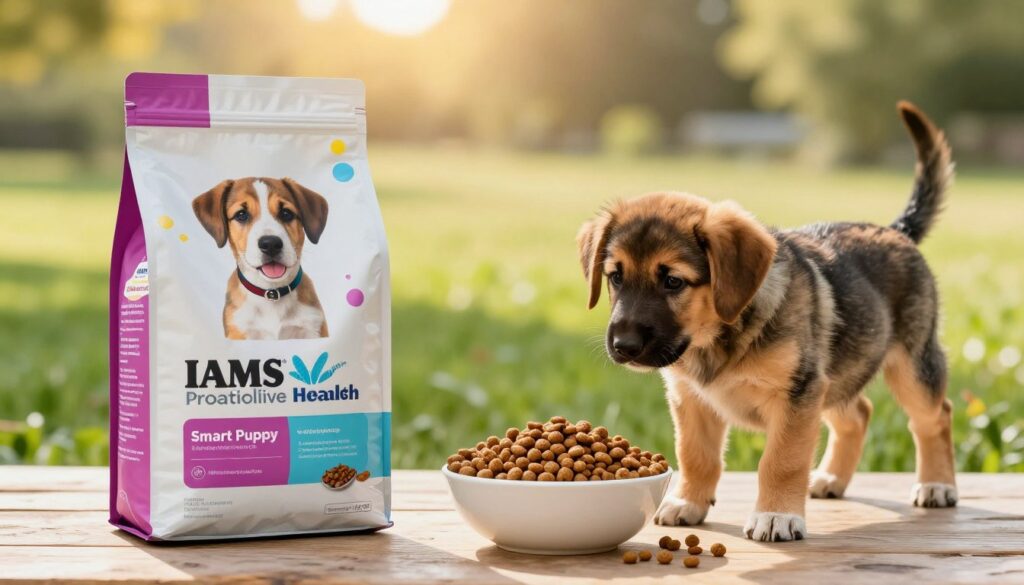
IAMS Proactive Health Smart Puppy
This formula is both affordable and recommended by vets. It starts with chicken, which is key for muscle growth. It also has ground whole grain corn and other grains for energy that supports growth in large breed puppies.
Your puppy gets omega-3 fatty acids for brain and vision health at about 380 calories per cup. A note to consider: the kibble is larger than some, which might need soaking for very young puppies under eight weeks old.
The formula includes chicken by-product meal along with whole meat proteins. While by-products are not as high-end as whole chicken, they are nutritious and packed with protein and minerals. This mix keeps costs down while still meeting nutritional standards.
Dr. Ostermeier from NBC Select says you likely won’t need extra supplements if you’re feeding fortified food. This formula supports bone development in large breeds with the right calcium-to-phosphorus ratio. Customers give it 4.7 stars, showing it’s a reliable and affordable choice.
Value Without Compromising Quality
You can save money in some areas without harming your puppy’s health. Skip fancy packaging, exotic proteins, and expensive brands. Your puppy needs good nutrition, not fancy marketing.
Don’t skimp on these important things:
- AAFCO compliance certification
- Right calcium-to-phosphorus ratios for large breeds
- Named meat proteins as main ingredients
- Full vitamin and mineral support
Quality puppy food is a health investment. Poor nutrition can lead to costly health issues. Good nutrition during puppyhood can save you from expensive vet bills, making affordable quality formulas a smart choice.
When to Switch from Puppy Food to Adult Formula
Deciding when to switch your large breed puppy to adult food is crucial. Unlike smaller breeds, large and giant breeds grow for longer. Their bones keep developing well past their first birthday, making the timing of this switch key to their health.
Large breed dogs, weighing 50 to 100 pounds, usually switch to adult food between 12 to 18 months. Giant breed puppies, over 100 pounds, may need puppy or junior formulas until 18 to 24 months. Dr. Ostermeier advises giant breed puppies to consult a vet for the right food and timing.
Large and giant breed dogs need special puppy formulas due to mineral and energy differences. Royal Canin Giant Puppy is for 2-8 months, then switch to Royal Canin Giant Junior for muscle support up to 24 months. This ensures your puppy gets the right nutrition at each stage.
Signs Your Puppy Is Ready for Adult Food
Look for these signs your puppy is ready for adult food:
- Your puppy has reached or nearly reached their expected adult height
- Growth rate has noticeably slowed down
- Your puppy falls within the appropriate age range for their breed size
- Your veterinarian confirms skeletal maturity through physical examination
Breed-Specific Transition Guidelines
| Breed | Adult Weight Range | Typical Transition Age |
|---|---|---|
| Golden Retriever | 55-75 pounds | 12-15 months |
| Labrador Retriever | 55-80 pounds | 12-15 months |
| German Shepherd | 50-90 pounds | 12-18 months |
| Great Dane | 110-175 pounds | 18-24 months |
| Mastiff | 100-230 pounds | 18-24 months |
Switching to a large breed adult formula is more important than switching to generic adult food. Your dog still needs joint support, controlled calcium levels, and the right caloric density. These formulas help maintain bone health and reduce joint disease risk.
How to Make the Transition Smoothly
Follow the same 7-day transition protocol you used for earlier dietary changes:
- Days 1-2: Mix 75% puppy food with 25% adult formula
- Days 3-4: Mix 50% puppy food with 50% adult formula
- Days 5-6: Mix 25% puppy food with 75% adult formula
- Day 7 onward: Feed 100% adult formula
Keep feeding schedules consistent during the transition. Watch your dog’s body condition closely, as adult foods have different calorie levels. Be ready to adjust the transition pace if you notice any digestive changes.
Why Timing Matters
Switching too early can harm your puppy’s skeletal development and increase joint disease risk. Switching too late means extra calories, weight gain, and unnecessary expense. Your vet is key in making this decision, assessing your puppy’s development through physical exams and growth charts.
Some vets recommend X-rays to confirm growth plate closure in giant breeds before switching to adult food. This advanced approach ensures your puppy is truly ready. Schedule a vet consultation to determine the right timing for your puppy.
Common Health Issues and How Proper Nutrition Helps
Large-breed puppies grow very fast, which brings unique health challenges. Their bones and joints grow quickly in the first 12-18 months. This makes them prone to serious orthopedic conditions. The right food is key to preventing these problems early on.
Knowing about these health risks helps you choose better food for your puppy. Good nutrition can lessen the impact of genetic conditions. It also keeps your puppy healthy for a long time. Large and giant breeds need special food to avoid growing too fast.
Hip and Elbow Dysplasia Prevention
Hip and elbow dysplasia occur when joints don’t form right. Genetics play a part, but nutrition and growth speed are also important. If your puppy grows too fast, its joints can’t keep up with bone growth.
Dr. Nicole Savageau says that too much calcium or too fast growth can lead to joint problems. Too many calories make puppies gain weight too quickly, stressing their joints. Too much calcium also messes up bone formation.
You can lower the risk of dysplasia by:
- Feeding controlled portions to keep a lean body
- Choosing puppy food with balanced calcium and phosphorus
- Avoiding adult dog food during the growth phase
- Including glucosamine and chondroitin for joint support
- Limiting strenuous exercise until full maturity
Puppies on special large breed formulas have much lower dysplasia rates than those on regular or adult food.
Osteochondritis Dissecans and Growth Rate Control
Osteochondritis Dissecans (OCD) is a painful condition where cartilage separates from bone. Your large breed puppy’s shoulders, elbows, and knees are most at risk. This happens when growth speeds outpace the blood supply to developing cartilage.
Proper nutrition prevents OCD by controlling growth. Large-breed puppies need specific nutrients to avoid orthopedic diseases. Controlled energy density and balanced minerals support bone and cartilage development.
Key prevention strategies include:
- Select puppy food designed for large breeds
- Measure portions carefully using feeding guidelines
- Include antioxidants that support tissue health
- Provide appropriate protein without excess calories
- Monitor your puppy’s body condition monthly
| Health Condition | Primary Cause | Nutritional Prevention | Treatment Cost |
|---|---|---|---|
| Hip Dysplasia | Rapid growth, excess weight | Controlled calories, balanced minerals | $3,000-7,000 per hip |
| Elbow Dysplasia | Joint instability, calcium imbalance | Proper calcium-phosphorus ratio | $2,000-5,000 per elbow |
| Osteochondritis Dissecans | Excessive growth speed | Lower energy density formula | $1,500-4,000 per joint |
Quality large breed puppy food costs about $50-100 a month. This small investment can save thousands in vet bills. Specialized nutrition is the best health insurance for your growing dog.
While you can’t eliminate genetic risk completely, proper nutrition can greatly reduce the impact of these painful conditions. Your choices in puppyhood set the stage for your dog’s lifelong health and mobility.
Conclusion
Choosing the right puppy food is key for a lifetime of health and happiness. Your large breed puppy needs your help to grow strong and healthy. By picking a good food and feeding it regularly, you support their growth well.
You now know how to read dog food labels. You can find quality ingredients like chicken and fish meal. You also know what to avoid, like artificial colors and too many fillers.
Understanding the importance of calcium and phosphorus for bones is crucial. You can ask your vet about your puppy’s specific needs. Brands like Hill’s Science Diet, Royal Canin, and Purina Pro Plan have research-backed formulas. Your vet is your best partner in keeping your puppy healthy.
Investing in good nutrition for your puppy is not just an expense. It’s a foundation for their long, happy life. Follow the expert advice in this guide. Talk to your vet for personalized advice for your puppy. Choose a formula that meets AAFCO standards and fits your budget. Consistent, proper feeding is key during your puppy’s growth period. Your dedication will show in a healthy, energetic adult dog.
FAQ
What makes large breed puppy nutrition different from regular puppy food?
Large breed puppies need special food because they grow fast. Their food must have the right amounts of calcium and phosphorus. This helps their bones and joints grow right.
Feeding them the right amount of food is key. Too much can hurt their joints. Look for puppy food made just for big dogs.
Why is the calcium-to-phosphorus ratio so important in large breed puppy formulas?
The right balance of calcium and phosphorus is very important. It helps their bones grow strong. Too much calcium can harm their bones.
Good puppy food for big dogs keeps this balance right. This helps prevent bone problems later on.
What are the essential nutrients I should look for in large breed puppy formulas?
Look for puppy food with good protein, DHA, and omega-3s. These help their brain and body grow. Also, make sure it has glucosamine and chondroitin for their joints.
Good puppy food also has antioxidants and the right fats. This keeps their skin and coat healthy. Choose food with named proteins like chicken or beef.
Which brands offer the best large breed puppy food options?
Hill’s Science Diet and Royal Canin are great for big puppies. They have special formulas for their growth. Purina Pro Plan also offers good food for big puppies.
These brands have the right nutrients for big puppies. They help your puppy grow strong and healthy.
How much should I feed my large breed puppy daily?
How much to feed depends on your puppy’s size and age. Check the food’s label for feeding guidelines. Feed them three to four times a day until they’re six months old.
Then, switch to two meals a day. Always measure the food to avoid overfeeding. Your vet can help with the right amount for your puppy.
What ingredients should I avoid in my large breed puppy’s diet?
Stay away from artificial colors and preservatives. They don’t help and can cause problems. Also, avoid foods with too many fillers and by-products.
Choose foods with named proteins like chicken or fish. Avoid foods with vague protein sources. Good puppy food should have the right nutrients for big puppies.
How do I transition my large breed puppy to a new food?
Start by mixing the new food with their old food. Start with 25 percent new food and 75 percent old food. Slowly increase the new food over seven to ten days.
Watch for any digestive issues. If problems arise, slow down the transition. Always talk to your vet before changing foods.
Are there quality budget-friendly options for large breed puppy food?
Yes, you can find good food without spending a lot. IAMS Proactive Health Smart Puppy is a good choice. It’s affordable and still has the right nutrients.
Always check the food’s quality and nutrient balance. Look for AAFCO standards and the right mineral ratios. Compare ingredients and analysis to find the best value.
When should I switch my large breed puppy from puppy food to adult formula?
The switch depends on your puppy’s breed size. Large breeds usually switch between 12 to 18 months. Giant breeds might take longer, up to 24 months.
Your vet can tell you when to switch. Switching too early or late can affect your puppy’s growth. Always follow your vet’s advice.
How does proper nutrition help prevent hip and elbow dysplasia?
Proper nutrition helps prevent joint problems by controlling growth. Good puppy food supports slow growth, which is better for their joints. It also has the right nutrients for strong bones and joints.
While genetics play a role, good food can greatly reduce the risk of these problems. It’s important for your puppy’s long-term health.
What is osteochondritis dissecans and how does feeding affect it?
Osteochondritis dissecans (OCD) is a joint problem in growing puppies. It happens when cartilage doesn’t form right. Feeding the right food helps prevent this by controlling growth.
Good puppy food controls calcium intake and balances minerals. This reduces the risk of OCD. Overfeeding can increase the risk of this condition.
Should I give my large breed puppy supplements if I’m feeding quality puppy food?
Usually, you don’t need supplements with good puppy food. Most premium foods have the right amounts of nutrients. Adding extra can upset the balance.
Always talk to your vet before adding supplements. They can recommend if your puppy needs extra nutrients.
How do I know if my large breed puppy is growing at the right rate?
Your vet can check if your puppy is growing right. Look for steady weight gain and a visible waist. You should be able to feel their ribs without pressing too hard.
Puppies growing too fast can have joint problems. Those growing too slow might not get enough nutrients. Always talk to your vet about your puppy’s growth.
What role does DHA play in large breed puppy development?
DHA is important for brain and eye development. It helps with learning and vision. Most good puppy foods have DHA from fish oil or algae.
DHA is especially important in the first few months. It helps your puppy’s brain and eyes develop well. This reduces the need for extra supplements.
How does protein quality affect my large breed puppy’s development?
Good protein is key for muscle and bone growth. Choose foods with named proteins like chicken or fish. Avoid generic terms like “meat meal”.
Good puppy food should have 22-24 percent protein. This helps your puppy grow without getting too fat. It also means they digest food better and have healthier stools.