Best Dog Food for Large Breed Puppies
Watching your large breed puppy grow is exciting and worrying at the same time. Those oversized paws and gangly legs tell a story about what’s happening inside your puppy’s body. Your puppy is going through one of the most important phases of life. What you feed your puppy right now will shape their health for years to come.
Large breed puppies face real nutritional challenges that smaller dogs don’t experience. Your puppy might weigh 50 to 100 pounds as a full-grown dog. Breeds like Golden Retrievers, German Shepherds, and Greyhounds grow fast. Some of these puppies can gain up to 150 pounds by just 18 months old. This rapid growth is both a blessing and a risk.
The best dog food for large breed puppies isn’t just regular puppy food. Standard puppy formulas don’t have the right balance for dogs destined to be large. Your puppy needs specialized nutrition to develop strong bones and healthy joints. The wrong diet during these critical months can lead to problems that last a lifetime.
Most large breed puppies need special food for at least the first year. Some breeds benefit from it for up to two years. This guide will help you pick the best dog food for large breed puppies. You’ll learn what nutrients matter most. You’ll discover real product recommendations from trusted brands. You’ll get advice from veterinary experts. By the end, you’ll know exactly what to look for when choosing food for your growing puppy.
The choice you make today about the best dog food for large breed puppies isn’t just about feeding your pet. It’s an investment in your dog’s future. It’s about ensuring your puppy can run, play, and enjoy life without pain or mobility issues.
Table of Contents
Understanding the Unique Nutritional Needs of Large Breed Puppies
Large breed puppies grow differently than smaller dogs. A Chihuahua grows up in about 10 to 12 months. But, a German Shepherd or Labrador Retriever takes 18 to 24 months to fully develop. This means they have special dietary needs from the start.
Large breed puppies need different food than regular puppies. Their bodies grow at a unique pace. Feeding them right is key to their health and happiness.
The Science Behind Rapid Growth in Large Breeds
Your large breed puppy can grow up to 150 pounds in 18 months. This fast growth puts a lot of stress on their bones and joints. Their skeleton must grow strong enough to support their adult weight.
During this time, their growth plates are soft and at risk. If they grow too fast, their bones can expand before the supporting tissues are ready. This can lead to problems like hip dysplasia and elbow dysplasia.
Vets say it’s more important to manage growth speed than to grow fast. Your feeding guide should aim for steady growth, not just quick weight gain.
Why Standard Puppy Food Isn’t Enough for Giant Breeds
Standard puppy food is made for small breeds that grow fast. But, it’s not right for large breed puppies. It can make them grow too quickly for their bones.
Regular puppy foods have too much protein and calories for large breeds. They need:
- Controlled calories to avoid too-fast growth
- Right amounts of calcium and phosphorus for strong bones
- Moderate protein from good sources
- Important nutrients for joint health
A good feeding guide for giant breed puppies meets these needs. It helps them grow steadily without harming their bones. Choosing the right food now can save on vet bills and prevent pain later.
Critical Nutrients: Calcium and Phosphorus Balance for Healthy Development
Your large breed puppy needs the right mix of calcium and phosphorus for strong bones and joints. These minerals work with vitamin D to build your puppy’s skeleton. Getting this balance right is crucial for your puppy’s nutrition.
Many new puppy owners think “more minerals mean stronger bones.” But this is wrong for large breed puppies. Too much calcium and phosphorus can cause serious bone problems. This can lead to hip and elbow dysplasia.
Quality puppy food makers know this. They keep calcium and phosphorus levels lower in large breed formulas. This helps protect your puppy’s long-term health.
Understanding the Mineral Ratio
The calcium-to-phosphorus ratio is as important as the amounts. AAFCO guidelines set specific ranges for large breed puppies:
- Calcium levels should be controlled and moderate
- Phosphorus must be balanced with calcium intake
- Vitamin D supports calcium absorption and utilization
- The ratio prevents mineral imbalances that stress growing bones
When you read puppy food labels, beware of claims about “extra calcium for strong bones.” This is a warning sign for your large breed puppy. Choose foods with controlled mineral levels for healthy growth in your puppy’s first year.
The Importance of Controlled Caloric Intake for Large Breed Puppy Growth
Your large breed puppy needs the right food to grow strong and not too fast. Too much weight can hurt their joints and bones. Many owners feed too much, thinking bigger is better. But, about 53% of dogs in America are overweight, and large breeds are at higher risk.
Large breed puppy food has fewer calories than regular puppy food. It gives your puppy the nutrients they need without too much fat. Your puppy needs energy for muscle growth, but from quality ingredients, not just calories.
Preventing Obesity While Supporting Muscle Development
Too much weight can hurt your puppy’s growing joints. Their chubby cheeks might look cute, but they’re a sign of future joint problems. Keeping them lean and muscular is key to avoiding permanent damage.
Look for these signs of a healthy body:
- You can feel ribs without pressing hard
- Waist is visible from above
- Belly doesn’t sag or hang
- Puppy moves without difficulty
Understanding Energy Requirements for Growing Giant Breeds
Your Mastiff, Newfoundland, or German Shepherd puppy needs lots of nutrition. Their energy needs change as they grow. Young puppies need more calories than older ones.
Adjust your puppy’s food based on:
- Current age and weight
- Activity level and exercise routine
- Body condition scoring each week
- Growth rate and development stage
Portion control is key, not just total calories. Feed smaller amounts more often. This helps with muscle growth and prevents obesity during their growth phase.
Best Dog Food Large Breed Puppies: Top Formulas Reviewed
Choosing the right food for your large breed puppy is crucial. The best dog food large breed puppies need has the right nutrients, quality proteins, and supportive ingredients. This section reviews six top-rated large breed puppy formulas to help you find the perfect food for your puppy.
Each formula was evaluated for ingredient quality, nutritional balance, and what veterinarians recommend. You’ll find options for every budget and preference, from grain-free to fresh food alternatives.
| Product Name | Key Ingredient | Special Features | Best For |
|---|---|---|---|
| Blue Buffalo Life Protection Formula Large Breed Puppy | Real Chicken | LifeSource Bits with antioxidants, optimal calcium levels | Puppies needing quality nutrition with antioxidant support |
| Nutro Natural Choice Large Breed Puppy | High-Quality Chicken | Promotes healthy muscle development, wholesome grains | Owners seeking natural ingredients and muscle growth |
| Wellness Large Breed Complete Health Puppy | Deboned Chicken & Salmon Meal | Joint health vitamins, balanced nutrition | Puppies requiring joint support and quality proteins |
| Diamond Naturals Large Breed Puppy Formula | Lamb & Rice | Probiotics included, budget-friendly pricing | Budget-conscious owners wanting quality ingredients |
| American Journey Grain-Free Large Breed | Chicken & Sweet Potato | Grain-free, digestible carbohydrates, balanced nutrition | Puppies with sensitivities or grain-free preferences |
| Nom Nom Beef Mash | Fresh, Human-Grade Beef | Nutrient-dense, fresh ingredients, steady growth support | Premium buyers seeking fresh food alternatives |
Blue Buffalo Life Protection Formula is known for its LifeSource Bits technology. These cold-formed antioxidant blends keep nutrients fresh. The formula also has the right calcium and phosphorus for large breed development.
Nutro Natural Choice Large Breed Puppy is a vet favorite. It has high-quality chicken as the first ingredient for muscle growth. It’s great for those who want natural nutrition.
Wellness Large Breed Complete Health Puppy offers deboned chicken and salmon meal for quality proteins. It also has vitamins for joint health, perfect for preventing developmental issues in large breeds.
Diamond Naturals Large Breed Puppy Formula is affordable without sacrificing quality. It has probiotics for digestive health and lamb and rice for puppies with chicken sensitivities.
American Journey Grain-Free Large Breed is good for puppies with sensitivities. It has chicken and sweet potato for easy digestion without grains. It’s a balanced option for puppies needing grain-free food.
Nom Nom Beef Mash is a premium fresh food choice. It has human-grade ingredients for nutrient density. It’s a good investment for those who value freshness over convenience.
- Compare ingredient quality across brands
- Check calcium and phosphorus ratios
- Review protein sources and percentages
- Look for added beneficial supplements like DHA and glucosamine
- Consider your budget and feeding preferences
The best puppy kibble for large breeds depends on your priorities. Look for premium nutrition, affordability, grain-free options, or fresh food. Use this comparison to find the best dog food for your puppy. These six options are proven choices backed by pet parents and veterinarians.
DHA and Omega Fatty Acids for Brain and Vision Development
Your large breed puppy needs more than strong bones and muscles to thrive. Brain development and vision maturation happen during the first year of life. This is when your puppy learns commands, navigates new environments, and builds a bond with your family. DHA for large breed puppies supports these critical developmental stages in ways that standard puppy formulas cannot match.
DHA, also called docosahexaenoic acid, is an omega-3 fatty acid found naturally in fish oils and certain algae sources. Quality large breed puppy foods include DHA specifically because it plays a major role in brain tissue formation and retinal function. When you choose a formula containing DHA for large breed puppies, you’re investing in your puppy’s intelligence, trainability, and sensory abilities from day one.
Look for DHA on ingredient labels as a meaningful addition, not just a trace amount for marketing purposes. The best dog food for large breed puppies lists DHA content prominently because this nutrient truly sets quality formulas apart from basic options.
How DHA Supports Cognitive Function in Growing Puppies
When your puppy’s diet includes adequate DHA for large breed puppies, you’ll notice real differences in learning speed and behavior. Your puppy learns new commands faster during training sessions. Problem-solving becomes easier. Memory retention improves. Your puppy adapts more quickly to new situations and environments.
DHA also supports sharp vision development. Your puppy needs strong eyesight for tracking movement, navigating obstacles, and exploring safely. This nutrient helps retinal development throughout your puppy’s growth period.
- Faster learning during training sessions
- Better problem-solving abilities
- Improved memory and focus
- Enhanced adaptability to new environments
- Sharp vision development for active play
Premium large breed puppy formulas from brands like Royal Canin, Hill’s Science Diet, and Purina Pro Plan include DHA because research supports its role in cognitive and visual development. When you feed your puppy food with DHA for large breed puppies, you’re supporting the neural pathways that make your dog a responsive, intelligent companion throughout life.
Glucosamine and Chondroitin: Supporting Joint Health from Day One
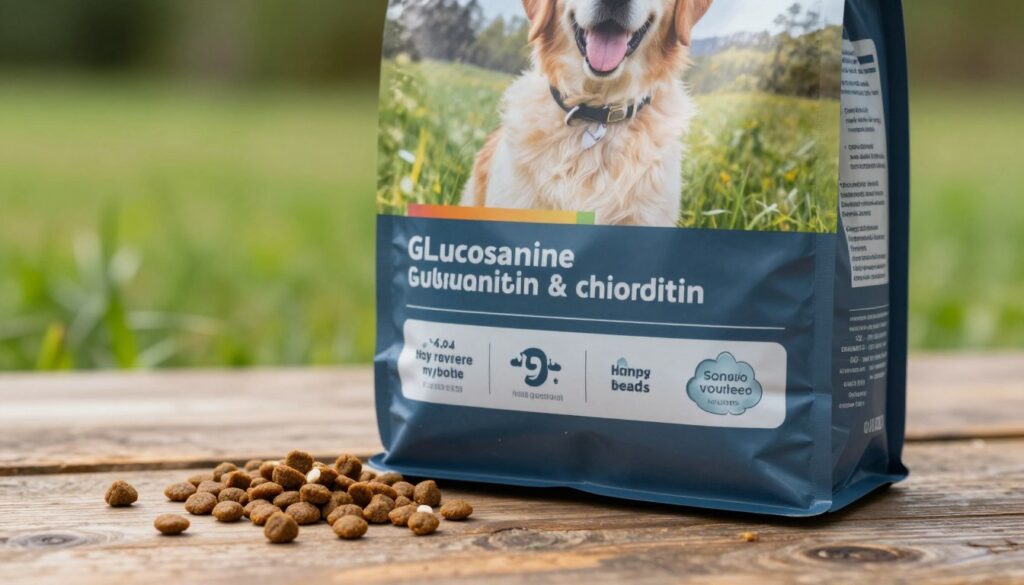
Your large breed puppy’s joints face a lot of stress as they grow fast. Their bones, cartilage, and connective tissues must handle a heavy body while still growing. That’s why it’s important to choose puppy food for big dogs with glucosamine and chondroitin from the start.
Glucosamine and chondroitin are found in cartilage. They help build and keep the cushioning tissue in your puppy’s joints moving smoothly. Without enough support, your dog’s joints can face serious problems later.
- Glucosamine helps make cartilage and fix damage in growing joints
- Chondroitin keeps cartilage flexible and able to absorb shock
- Together, they slow down enzymes that break down cartilage tissue during growth
Choosing high-quality puppy food for big dogs with these ingredients is a smart investment. It helps your dog’s joints grow strong and stable. Studies show that large breed puppies with joint support have fewer hip problems and other joint diseases.
Make sure to check the labels for the right amounts of glucosamine and chondroitin. Look for foods that list these ingredients clearly. Starting early support means fewer joint issues, less pain, and a better life for your dog for 10-15 years.
Protein Quality Matters: Choosing High-Quality Puppy Kibble for Large Breeds
When picking puppy food for big dogs, protein quality is key. Your large breed puppy needs strong muscles and a healthy body. The protein in their food builds muscles and supports their body.
Not all proteins are the same in your puppy’s body. This is why knowing about protein sources is crucial. It’s especially important for German Shepherds and Labs.
Protein quality means how well your puppy can digest and use it. Their body breaks down protein into amino acids. These amino acids help rebuild muscle and support growth.
Real meat sources give your puppy complete amino acids. Their body can absorb and use these amino acids well. This is better than lower-quality alternatives.
Real Meat vs. By-Products: What to Look For
Reading ingredient lists helps you spot quality protein sources. Look for specific meat names in the first three ingredients. Real meat sources include deboned chicken, lamb meal, or salmon.
These named ingredients tell you what your puppy eats. Avoid vague terms like “meat by-products” or “animal digest.” These unclear labels hide low-quality protein sources.
Here’s what separates quality from inferior options:
- Named meat sources — deboned chicken, lamb, fish — provide complete amino acid profiles
- Meat by-products — lack transparency and contain inconsistent nutrient levels
- Quality foods — list specific meat in the first three ingredients
- Inferior products — bury protein sources lower or rely on plant proteins
Premium brands like Blue Buffalo feature real deboned chicken as the first ingredient. They don’t use chicken or poultry by-product meals. This ensures your puppy gets maximum nutrition from every meal.
Optimal Protein Levels for German Shepherds and Labs
Large breed puppies need a lot of protein for muscle development. Puppy food for German Shepherds and Labs should have at least 25 percent protein. Many quality formulas have between 25 to 30 percent protein.
This level supports lean muscle growth without growing bones too fast. A common mistake is thinking more protein means faster growth. But too much protein can harm joint health and increase orthopedic risks.
| Protein Source Type | Quality Level | Digestibility | Amino Acid Profile |
|---|---|---|---|
| Deboned Chicken or Lamb | Premium | High | Complete |
| Meat Meal (Named) | High | High | Complete |
| Fish or Salmon | Premium | High | Complete |
| Meat By-Products | Low | Low | Incomplete |
| Animal Digest | Low | Low | Incomplete |
When choosing puppy food for big dogs, focus on protein quality over quantity. Your puppy’s body uses quality protein better. Choose foods with specific meat sources first and keep protein levels between 25 and 30 percent. This balanced approach supports strong muscles and protects joints from stress.
Feeding Guidelines and Schedules for Large Breed Puppy Nutrition
Your giant breed puppy needs a structured feeding schedule to grow properly without gaining weight too fast. Unlike smaller breeds that can graze throughout the day, large breed puppies thrive on regular, predictable meal times. A solid giant breed puppy feeding guide helps you control portions and monitor your puppy’s development at every stage.
Establishing consistent feeding times allows you to track how much your puppy eats and prevent overeating. This approach reduces the risk of bloat, a serious condition that affects deep-chested large breeds. Scheduled meals give you better control over nutrition than free-feeding methods.
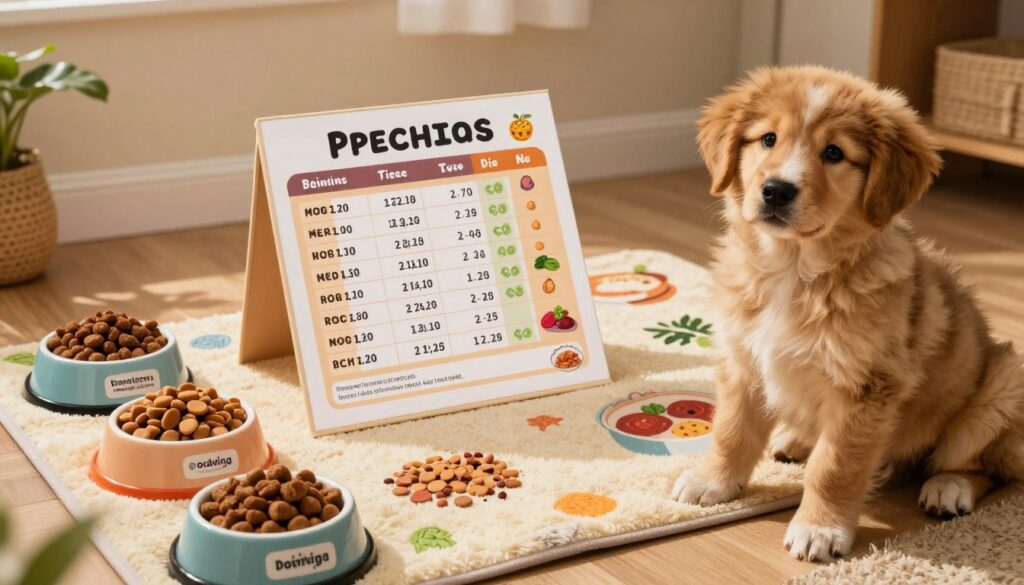
Follow this age-based feeding schedule as part of your giant breed puppy feeding guide:
| Puppy Age | Meals Per Day | Feeding Frequency | Key Focus |
|---|---|---|---|
| 8-12 weeks | 4 meals | Every 4-5 hours | Small stomach capacity, high energy needs |
| 3-6 months | 3 meals | Every 6-8 hours | Growing digestive capacity, steady growth |
| 6-12 months | 2 meals | Every 12 hours | Approaching adult size, continued development |
Large breed puppies should gain 2-4 pounds weekly depending on their expected adult size. Weigh your puppy every week during rapid growth phases to catch any problems early. Regular weigh-ins help you spot if your puppy is growing too fast or too slow.
Use feeding charts on your puppy food packaging as your starting point. Adjust portions based on your individual puppy’s body condition, activity level, and growth rate. Brands like Royal Canin Large Breed Puppy and Hill’s Science Diet Large Breed Puppy provide clear feeding instructions based on your puppy’s weight and age.
Prevent bloat by following these practical steps:
- Divide daily food into multiple smaller meals instead of one large meal
- Avoid intense exercise for at least one hour after feeding
- Use a slow-feeder bowl if your puppy gulps food quickly
- Keep fresh water available between meals
- Monitor your puppy for signs of discomfort after eating
Never skip scheduled meals or switch to free-feeding with large breeds. This approach makes it impossible to monitor intake accurately and increases bloat risk. Consistency in timing and portion sizes supports healthy development and prevents obesity-related problems.
Your giant breed puppy feeding guide should evolve as your puppy grows. Transition between meal frequencies gradually over 3-5 days. Watch your puppy’s response and adjust portions if needed. By following a structured feeding schedule, you give your large breed puppy the best foundation for a healthy, active life.
Common Health Concerns and How Diet Can Help Prevent Them
Large breed puppies face health challenges that regular food can’t solve. What you feed them affects their health for life. Diseases like developmental orthopedic diseases can cost a lot to treat. But, the right food can prevent most of these issues.
Genetics play a role, but you can control nutrition. The right mix of nutrients protects growing bones and joints. Too much can cause bones to grow too fast, stressing developing tissues.
Puppies grow fast in their first year, making them prone to skeletal problems. The right puppy food helps them grow at a safe rate. This way, they reach adult size over 18-24 months, avoiding rush growth.
Hip Dysplasia and Developmental Orthopedic Disease Prevention
Hip dysplasia occurs when the hip joint doesn’t develop right. Look out for signs like limping, bunny-hopping, and trouble getting up. They might also not want to climb stairs or play as much.
Feeding too much can make bones grow too fast. This can damage joints. The right puppy food controls growth, helping your puppy grow without joint problems.
Keeping your puppy lean is key for their whole life. Too much weight stresses joints and can lead to weight issues later. Bloat, a serious problem in deep-chested breeds, can be avoided by feeding smaller meals more often.
| Health Concern | Primary Nutritional Risk | Prevention Strategy |
|---|---|---|
| Hip Dysplasia | Excess calcium and rapid growth | Controlled-growth large breed formula |
| Elbow Dysplasia | Imbalanced mineral ratios | Proper calcium-to-phosphorus ratio |
| Obesity | Excessive calories | Appropriate portion control |
| Bloat | Single large meals | Multiple smaller feedings daily |
Work with your vet to watch your puppy’s growth. Regular check-ups help catch problems early. The right puppy food and vet advice can ensure your dog lives a long, healthy life.
Reading Labels: AAFCO Standards and What They Mean for Your Puppy
Learning about AAFCO standards helps you pick the best food for your puppy. The Association of American Feed Control Officials sets rules for food quality. When you see the AAFCO statement, you know the food is good for your puppy.
Check the back or side of every package for the AAFCO statement. It tells you if the food meets standards or was tested in real life. Foods for big puppies need special rules for calcium and phosphorus.
The guaranteed analysis shows protein, fat, fiber, and moisture percentages. These numbers help you compare different foods. Look for named meats like chicken or beef in the first five ingredients.
What to Look For on the Label
- AAFCO statement for large breed puppies
- Calcium levels between 0.8-1.6% on a dry matter basis
- Phosphorus levels between 0.6-1.2% on a dry matter basis
- Named meat as the primary protein source
- Omega-3 and omega-6 fatty acids listed
- Absence of artificial colors and flavors
- Inclusion of probiotics for digestive health
Avoid foods with artificial stuff and vague ingredients. AAFCO-compliant foods usually don’t need extra supplements. Too much calcium can harm your puppy’s growth.
Understanding the Guaranteed Analysis
The guaranteed analysis shows minimum protein and maximum fat, fiber, and moisture. To compare foods, remove moisture to see the dry matter. This makes comparing easier.
| Nutrient | Why It Matters | AAFCO Large Breed Requirement |
|---|---|---|
| Protein | Supports muscle and tissue growth | Minimum 22% on as-fed basis |
| Calcium | Builds strong bones when balanced | Maximum 1.6% on dry matter basis |
| Phosphorus | Works with calcium for skeletal health | Maximum 1.2% on dry matter basis |
| Fat | Provides energy and supports skin health | Minimum 8% on as-fed basis |
| Fiber | Aids digestive health | Maximum 5% on as-fed basis |
Talk to your vet about your puppy’s food choice. Bring the label to your vet appointment. This ensures your puppy gets the best nutrition for growth.
Reading labels well makes you a smart shopper. You’ll ignore marketing tricks and focus on nutritional science. AAFCO standards help you pick safe and healthy food for your puppy.
Conclusion
Choosing the right dog food for large breed puppies is crucial. These puppies grow fast, which can stress their bones and joints. The right food can help prevent future health problems.
When picking dog food, look for certain things. Make sure it meets AAFCO standards for large breeds. It should have the right amounts of calcium and phosphorus. Choose foods with high-quality proteins like chicken or fish.
Also, check if the food has DHA for brain health, glucosamine for joints, and probiotics for digestion. The guide has options that meet these criteria, fitting different budgets and needs.
The age of your puppy is also important. Large breeds need puppy food for 12 to 18 months. Some, like Great Danes, might need it until 24 months. When it’s time to switch to adult food, do it slowly over 7 to 10 days.
Always talk to your vet before changing your puppy’s diet. They can help choose the best food for your puppy’s growth.
Now you know how to pick the best food for your puppy. Look at the recommendations and start following the feeding tips. Keep an eye on your puppy’s growth and health. Stay in touch with your vet. The choices you make now will affect your dog’s health for years to come.
FAQ
Why can’t I feed my large breed puppy regular puppy food?
Regular puppy food is made for small dogs. It can make big dogs’ bones grow too fast. This can hurt their joints and cause problems like hip dysplasia.
Large breed puppies need food that helps them grow slowly and healthily. This food has the right amount of calcium and phosphorus for them.
What is the ideal calcium-to-phosphorus ratio for large breed puppies?
Large breed puppies need no more than 1.8% calcium and 1.6% phosphorus. This is to prevent hip and elbow problems. Too much calcium and phosphorus can hurt their joints.
Quality puppy food has the right amounts of these minerals. It helps your puppy grow strong without joint problems.
How much should my large breed puppy weigh at different ages?
Large breed puppies grow 2-4 pounds a week. This depends on their breed. For example, German Shepherds grow 2-3 pounds weekly.
They usually reach full size between 18-24 months. This means they need puppy food for a longer time than small dogs.
What is DHA and why does my large breed puppy need it?
DHA is an omega-3 fatty acid. It helps your puppy’s brain and eyes grow. It’s important for their development.
Quality puppy food has DHA. It helps your puppy learn and see better. Look for foods with real DHA, not just a little bit.
Why should I choose puppy food with glucosamine and chondroitin?
Glucosamine and chondroitin help your puppy’s joints. They are the building blocks of cartilage. This helps your puppy move smoothly.
These ingredients help prevent joint problems. They are better than treating problems later. Your puppy will be healthier and happier.
How do I identify high-quality protein sources in puppy food?
Look for named meats like “deboned chicken” or “salmon” in the first ingredients. Real meat is better for your puppy’s muscles.
Avoid vague terms like “meat by-products.” They are not as good for your puppy. Choose foods with real meat sources.
What is the optimal protein percentage for large breed puppies?
Large breed puppies need 25-30% protein. But too much can hurt their joints. Choose foods with the right amount of protein.
Quality matters more than quantity. A food with 27% protein from named meat sources is better than one with 32% from by-products.
How often should I feed my large breed puppy?
Feed your puppy four times a day until they are 12 weeks old. Then, three times a day until they are 6 months old.
After that, feed them twice a day. This helps prevent bloat and ensures they get the right amount of food.
How can proper nutrition help prevent hip dysplasia?
Hip dysplasia is a joint problem. Nutrition plays a big role in preventing it. Puppies need the right amounts of calcium and phosphorus.
Quality puppy food helps prevent hip dysplasia. It ensures your puppy grows at the right rate. Watch for signs of joint problems and talk to your vet.
What does the AAFCO statement on puppy food mean?
AAFCO sets standards for pet food. They have different standards for large breed puppies. Look for the AAFCO statement on the label.
It means the food meets the necessary nutritional standards. Choose foods specifically formulated for large breed puppies.
Should I supplement my large breed puppy’s diet with additional calcium?
No, you don’t need to add extra calcium. Quality puppy food has the right amounts. Adding too much can harm your puppy’s joints.
Always talk to your vet before adding supplements. They can help determine if your puppy needs them.
What should I look for when choosing between different large breed puppy food brands?
Look for specific meat sources, like “deboned chicken.” Check for beneficial ingredients like DHA and glucosamine. Avoid artificial additives.
Compare different brands based on these criteria. Your vet can also help you choose the best food for your puppy.
How can I tell if my large breed puppy is getting too fat?
Your puppy should have a lean body. You should be able to feel their ribs but not see them. Excess weight can hurt their joints.
Watch for signs like difficulty moving and increased panting. Adjust their food portions if needed. Talk to your vet if you’re concerned.
When should I transition my puppy from puppy formula to adult dog food?
Most large breed puppies need puppy food for 12-18 months. Giant breeds may need it until 24 months. The exact time depends on your puppy’s growth.
Transition to adult food gradually, as advised by your vet. This helps prevent joint problems caused by rapid growth.
What is the difference between grain-free and grain-inclusive large breed puppy formulas?
Grain-inclusive formulas have grains like brown rice. Grain-free formulas use peas or potatoes instead. The choice depends on your puppy’s needs.
Look for quality protein sources and the right amounts of calcium and phosphorus. Your vet can help if your puppy has sensitivities.
Can I feed my large breed puppy adult dog food to slow their growth?
No, adult dog food is not suitable for large breed puppies. It lacks essential nutrients for their development. Consult your vet for the right food.
They can help adjust your puppy’s diet to prevent rapid growth. This is safer than switching to adult food.
What is bloat and how can feeding practices help prevent it?
Bloat is a serious condition where the stomach twists. It’s common in large breeds. It can be life-threatening.
Feed your puppy smaller, more frequent meals. Avoid exercise after eating. Use slow-feeder bowls. These steps can reduce the risk of bloat.
How do I read ingredient lists to evaluate large breed puppy food quality?
Ingredients are listed by weight. Look for specific meat sources and beneficial ingredients. Avoid artificial additives.
Check the guaranteed analysis panel for nutrient percentages. Calculate dry matter basis percentages to compare different foods. Quality puppy food will have named meat sources and beneficial ingredients.
Are there fresh food options available for large breed puppies?
Yes, there are fresh food options like Nom Nom. They offer complete and balanced nutrition for puppies. Fresh foods are often more digestible and palatable.
However, they must meet AAFCO standards for large breed puppies. Fresh food can be expensive. Quality puppy kibble is also a good option.
How much does it cost to feed a large breed puppy properly?
The cost varies depending on the brand and quality. Budget-friendly options like Diamond Naturals are available. Premium brands like