
Can Dogs Eat Shrimp Tails? A Complete Guide to Seafood Safety for Your Pup
Your dog’s nose twitches as the aroma of shrimp fills the kitchen. Maybe it’s dinner night, or you’re prepping a special meal, and suddenly you’re wondering: Can dogs eat shrimp tails? It’s a question that comes up surprisingly often in pet parenting forums and veterinary clinics across the country.
The truth is, this isn’t a simple yes-or-no answer. While shrimp can be a nutritious addition to your dog’s diet when prepared correctly, shrimp tails for dogs requires careful consideration. And if you’ve been asking yourself “is shrimp bad for dogs?” or “can dogs have shrimp at all?”—you’re asking the right questions. Understanding the nuances will help you make informed decisions about what makes it to your pup’s food bowl.
Let’s explore what the research actually shows about shrimp and your four-legged friend.
Table of Contents
The Nutritional Profile: Why Shrimp Appeals to Pet Owners
Before we dive into the safety concerns, it’s worth understanding why pet owners are interested in shrimp in the first place. Shrimp isn’t just a tasty treat humans enjoy—it actually has legitimate nutritional appeal for dogs.
Shrimp is exceptionally high in protein while remaining low in fat and calories. A single medium shrimp delivers approximately 1-2 grams of lean protein without the heavy fat content found in some other protein sources. This makes it attractive for pet owners managing their dog’s weight or those looking for alternative protein options.
Beyond protein, shrimp contains essential nutrients including:
- Vitamin B12 – crucial for neurological function and red blood cell production
- Niacin – supports energy metabolism and skin health
- Phosphorus – works alongside calcium for strong bones
- Omega-3 fatty acids – promote coat health and reduce inflammation
- Taurine – an amino acid that supports heart health, particularly important for large breed dogs
Perhaps most notably, shrimp shells contain glucosamine, a compound widely recognized for supporting joint health and cartilage integrity. This is why many pet joint supplements include shrimp extract. For aging dogs or breeds prone to arthritis, this benefit is genuinely valuable.
The Safety Question: Can Dogs Have Shrimp Without Risk?
This is where the conversation gets more complex. While raw shrimp itself isn’t toxic to dogs, the question “can dogs have shrimp?” really hinges on how it’s prepared and served.
The Primary Concern: Choking Hazards
The most significant risk with shrimp tails for dogs involves the physical structure of the shell. Shrimp tails are hard, brittle, and don’t soften easily during digestion. For dogs that gulp their food without thorough chewing—particularly small breeds—an intact shrimp tail poses a legitimate choking hazard.
Consider this: a dog’s swallowing reflex is incredibly fast. If your pup doesn’t chew properly, they can aspirate a shrimp tail into the airway, creating an immediate emergency situation. Even if it passes the throat safely, the tail can lodge in the esophagus, stomach, or intestines, potentially causing a blockage.
Secondary Concern: Sharp Edges and GI Irritation
The sharp, shell-like edges of shrimp tails can irritate the delicate lining of your dog’s digestive tract. While minor irritation might cause temporary stomach upset, more significant scratching could lead to inflammation or micro-tears in the esophagus or stomach lining.
The Raw Food Question
This brings us to another consideration: if you’re wondering “is shrimp bad for dogs?” when served raw, the answer involves bacterial concerns. Raw shrimp can harbor pathogens like Salmonella or Listeria, which can cause serious gastrointestinal illness in dogs. While dogs have stronger stomach acid than humans, they’re not immune to foodborne pathogens.
Fried Shrimp and Other Preparation Concerns
A question we hear frequently: “Can dogs eat fried shrimp?” The short answer is no—and here’s why.
Fried shrimp is typically breaded and cooked in oil, often with added salt and seasonings. For dogs:
- Oil and fat can cause pancreatitis, a painful inflammation of the pancreas
- Salt in excess can lead to dehydration and electrolyte imbalances
- Garlic and onion (common seasonings) are actually toxic to dogs
- Breading and flour add empty calories and digestive stress
Even if your dog seems fine after eating a small piece of fried shrimp, it’s simply not a safe or healthy choice. The preparation method matters as much as the ingredient itself when it comes to your dog’s health.
Safe Shrimp for Dogs: How to Do It Right
So if raw shrimp poses bacterial risks and fried shrimp is off-limits, what’s the safe approach? The answer is simpler than you might think.
The Preparation Method That Works
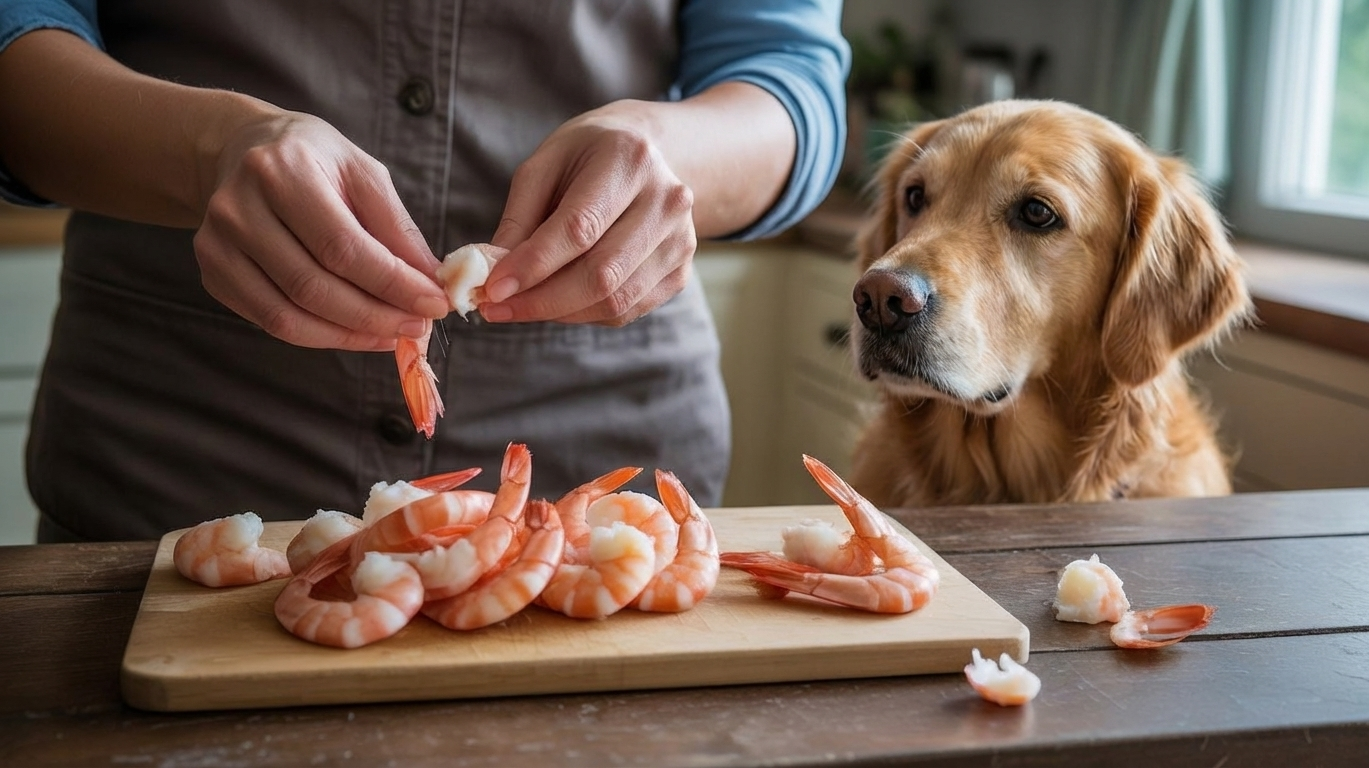
Always serve shrimp plain, cooked, and without the shell or tail. Steaming is the gold standard—it preserves nutrients without adding fats or seasonings. Boiling is acceptable as an alternative. The key is keeping it completely plain: no salt, no butter, no garlic, no onion, no seasoning whatsoever.
Cooking eliminates bacterial pathogens and softens the shrimp, making it easier for your dog’s digestive system to process. Removing the shell and tail eliminates the choking and GI irritation concerns entirely.
Appropriate Serving Sizes
When asking “can dogs have shrimp?” from a quantity perspective, remember that treats should comprise no more than 10% of your dog’s daily caloric intake. Use these guidelines:
- Extra-small dogs (2–20 lbs): ½ medium shrimp, once or twice weekly
- Small dogs (21–30 lbs): 1 medium shrimp, once or twice weekly
- Medium dogs (31–50 lbs): 2 medium shrimp, once or twice weekly
- Large/extra-large dogs (51+ lbs): 3–4 medium shrimp, once or twice weekly
Start with smaller amounts to assess tolerance, especially if your dog hasn’t had shrimp before.
Potential Health Risks: What Pet Owners Should Monitor
Even when prepared correctly, it’s important to watch for signs that shrimp isn’t working for your individual dog.
Allergies and Intolerances
While true shellfish allergies are relatively uncommon in dogs, they do occur. Signs of an allergic reaction include:
- Itching or hives
- Facial or throat swelling
- Difficulty breathing
- Vomiting or diarrhea
Intolerance is more common than allergy. Your dog might experience digestive upset the first time they have shrimp simply because their system isn’t accustomed to it. Always introduce new foods gradually and monitor for 24-48 hours before offering more.
Digestive Upset
Some dogs experience loose stool, diarrhea, or vomiting after eating shrimp, even when prepared properly. This doesn’t necessarily mean an allergy—it may simply mean shrimp isn’t the right treat for your particular pup. Every dog is unique.
When to Contact Your Veterinarian
Seek immediate professional help if you notice:
- Persistent vomiting or retching
- Blood in vomit or stool
- Inability to defecate or severe constipation
- Abdominal pain (restlessness, hunched posture, whining)
- Difficulty swallowing or breathing
- Lethargy or collapse
These could indicate choking, blockage, or severe allergic reaction—all requiring emergency care.
The Bottom Line: Is Shrimp Worth Including in Your Dog’s Diet?
So, circling back to our original question: can dogs eat shrimp tails? The answer is nuanced.
Shrimp meat itself—prepared plain and cooked, without the shell—is a nutritious, safe treat that many dogs enjoy and benefit from. The glucosamine, omega-3 fatty acids, and lean protein make it a legitimate addition to a well-rounded diet.
However, shrimp tails specifically should be avoided. The risks they pose—choking, intestinal blockage, and GI irritation—outweigh the glucosamine benefit, especially when you can get similar joint support from supplements or other sources.
Is shrimp bad for dogs? Not inherently—but improper preparation (frying, seasoning, serving with shells) or inappropriate portions certainly can be problematic.
The Practical Approach
If you want to offer can dogs have shrimp as a regular treat:
- Remove all shells and tails completely
- Cook plain—no seasonings, oils, or butter
- Cut into appropriate sizes for your dog’s mouth
- Serve only 1-2 times per week in the quantities listed above
- Watch for any signs of digestive upset or allergic reaction
Your dog doesn’t need shrimp to thrive—there are plenty of other excellent protein sources. But if you enjoy sharing shrimp with your pup, doing it safely and in moderation is absolutely possible.
Final Thoughts: Prioritizing Your Dog’s Safety
Pet parenting means making informed choices about what goes into your dog’s body. When you’re wondering “can dogs eat shrimp tails?” or “is shrimp bad for dogs?”—you’re already thinking like a responsible owner.
The safest approach? Stick with plain, cooked shrimp meat without the shell, offer it occasionally in small portions, and always consult your veterinarian before introducing new foods to your dog’s diet, particularly if your pup has existing health conditions, is a senior, or is prone to food sensitivities.
Your dog’s health and happiness are worth those extra few minutes of preparation.