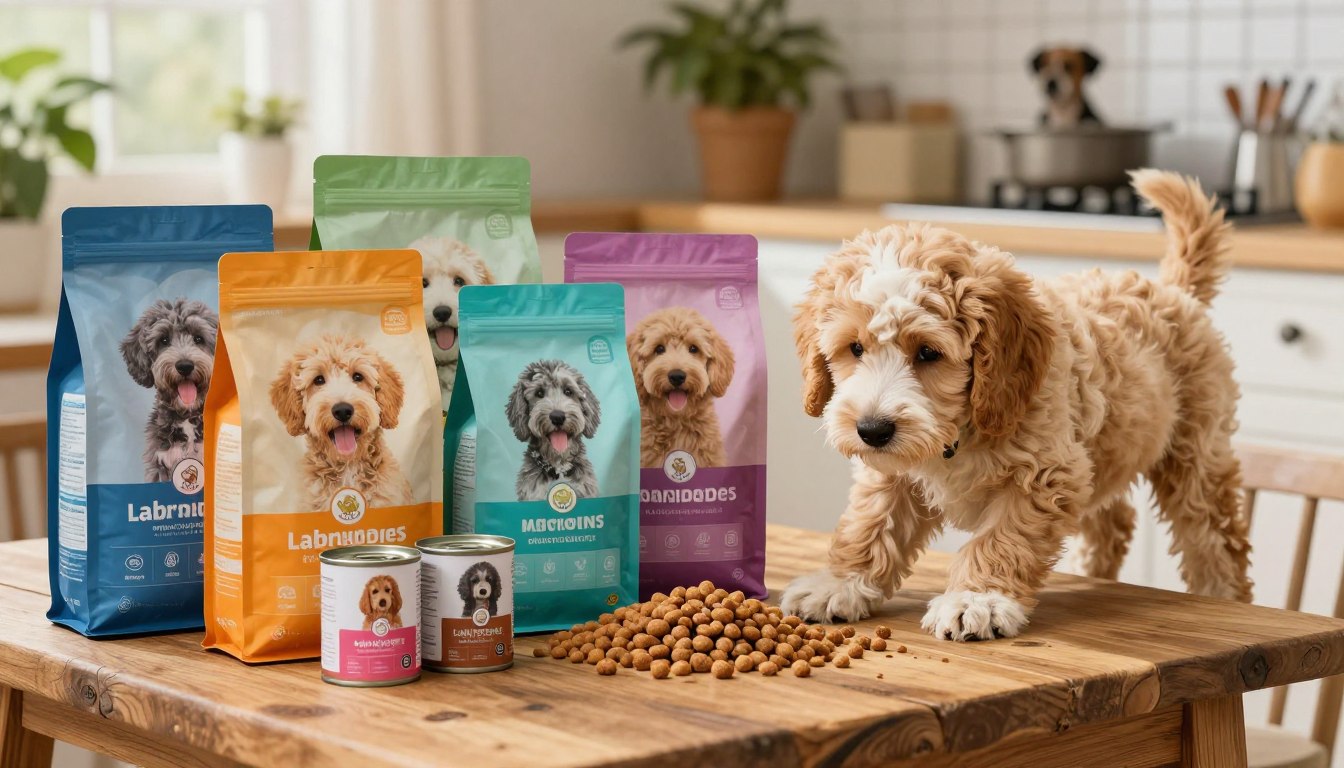
7 Best Puppy Foods for Labradoodles in 2026
Bringing a Labradoodle puppy home is a joy. You watch them grow and learn. Their early months shape their life.
Labradoodles come in three sizes. Standard ones are 21+ inches tall and 42+ lbs. Medium ones are 17-20 inches tall and 26-45 lbs. Miniature ones are 14-16 inches tall and 18-28 lbs. Their size affects how much food they need.
Labradoodles have three coat types. The wool coat is curly and hypoallergenic. The fleece coat is wavy and hypoallergenic. The hair coat sheds like a traditional dog coat. Each coat type needs different nutrition.
Labradoodles face health challenges like hip and elbow dysplasia, ear infections, and allergies. The right food can help prevent these issues. It supports strong bones and a healthy digestive system.
Your Labradoodle puppy needs at least 60 minutes of exercise daily. They burn calories fast and need food that fuels their energy. Finding the right balance is crucial.
This guide helps you find the seven best puppy foods for your Labradoodle in 2026. You’ll learn about the nutrients important for their growth and development.
Table of Contents
Understanding Labradoodle Puppy Nutritional Needs
Your Labradoodle puppy needs specific nutrients to grow strong and healthy. These dogs need a balanced diet, especially in their first year. Knowing what they need helps you choose the best food for their growth.
A proper diet supports bone growth, coat health, and energy levels. When checking puppy food labels, look for products that meet AAFCO standards for growth. AAFCO ensures the food has the right balance for your Labradoodle’s size.
Protein Requirements for Growing Labradoodles
Protein builds muscle and supports your puppy’s development. Young Labradoodles need 22-32% protein in their diet. High-quality protein sources include chicken, beef, fish, and lamb.
- Look for named meat sources as the first ingredient
- Avoid generic “meat meal” or “by-products”
- Choose foods with multiple protein sources for variety
- Ensure the food lists digestible protein levels
Essential Fatty Acids for Coat Development
Your Labradoodle’s fluffy coat needs omega-3 and omega-6 fatty acids. These nutrients make fur soft and healthy. Fish oil, flaxseed, and chicken fat provide these fatty acids.
Look for foods with fish oil or fish meal. These ingredients give your puppy the fatty acids for a shiny coat. Fatty acids also boost the immune system and eye development.
Calcium and Phosphorus Balance for Bone Growth
Your puppy’s bones develop rapidly during the first year. Calcium and phosphorus are key for strong bones and teeth. The right balance is crucial.
This balance prevents skeletal problems. Too much calcium can cause issues in large breed puppies. Too little affects bone formation. Your Labradoodle might have weak bones or growth problems.
| Mineral | Puppy Requirement | Why It Matters |
|---|---|---|
| Calcium | 1.0-1.8% dry matter | Builds strong bones and teeth |
| Phosphorus | 0.8-1.6% dry matter | Works with calcium for bone strength |
| Calcium:Phosphorus Ratio | 1 to 1.4:1 | Maintains proper mineral balance |
When shopping for puppy food, check the guaranteed analysis section. This shows calcium and phosphorus levels. Make sure the ratio is safe. Foods meeting AAFCO standards already have the right balance, but it’s good to double-check.
Large breed puppy foods deserve special attention. Labradoodles grow fast, stressing their bones. Proper calcium levels prevent bone problems. Your puppy needs consistent nutrition for healthy bone development.
Best Puppy Food for Labradoodles
Choosing the right food for your Labradoodle puppy is crucial. It affects their growth, energy, and health. You need a food that fits your puppy’s needs, whether they’re small or big.
The best puppy food for Labradoodles has quality ingredients and the right balance of nutrients. Premium options are better than cheap kibbles. Veterinarians say fresh food is best because it’s easy for puppies to digest.
- Human-grade fresh ingredients from trusted sources
- High protein content supporting muscle development
- Essential fatty acids for coat health and brain function
- Balanced calcium and phosphorus for strong bones
- Whole food carbohydrates without fillers
Fresh food is pricier than kibble. But, it’s worth it for your puppy’s health. You’ll see the difference in their energy, coat, and digestion.
| Food Type | Price Range | Processing Level | Nutrient Retention | Best For |
|---|---|---|---|---|
| Fresh Food | $8-15 per day | Minimal | High bioavailability | Optimal growth and health |
| Gently Cooked | $5-10 per day | Low-temperature processed | Good nutrient preservation | Balanced budget and quality |
| Premium Kibble | $2-5 per day | High heat processing | Moderate bioavailability | Convenient daily feeding |
| Standard Kibble | $0.50-2 per day | High heat processing | Lower bioavailability | Budget-conscious owners |
Your Labradoodle puppy needs food made for their growth stage. Board-certified nutritionists create the best food for Labradoodles. It meets their nutritional needs, no matter their size.
Fresh food is the top choice for growing Labradoodles. It has the right nutrients for your puppy’s growth years. Investing in it now helps your puppy stay healthy for life.
Premium Fresh Food Options for Labradoodle Puppies
Fresh food diets give your Labradoodle puppy top-notch nutrition. They offer whole ingredients without fillers or artificial additives. Your puppy gets real meat, organs, and veggies in every meal.
Choosing fresh food means investing in meals made just for puppies. These options have the right mix of protein, fats, and vitamins your growing pup needs. Many brands let you customize based on your puppy’s age and size.
The Farmer’s Dog Pork Recipe
The Farmer’s Dog offers 36% protein and 28% fat to help your Labradoodle’s muscles grow. It uses human-grade pork and pork liver as main proteins. Omega-3 fish oil supports brain and coat health.
This recipe is great for puppies sensitive to chicken. Meals are lightly cooked to keep nutrients in. The Farmer’s Dog delivers meals right to your door, in the right sizes for your pup.
Ollie Chicken Dish with Carrots
Ollie’s chicken formula has 31% protein, 12% fat, and 50% carbs to keep your puppy active. It includes human-grade chicken, chicken liver, and carrots. Carbs come from whole foods, not grains.
Ollie is known for custom meal plans for your puppy’s needs. Meals are tailored for age, weight, and activity level. Spinach adds antioxidants for immune system health.
Open Farm Gently Cooked Puppy Food
Open Farm Gently Cooked has 42% protein, 35% fat, and 15% carbs. It uses humanely raised chicken and wild Pacific salmon for amino acids. Ocean whitefish meal adds omega fatty acids for skin and coat health.
The gently cooked at low temperatures to preserve nutrients method ensures your puppy gets the most nutrition. Open Farm’s formula is good for all life stages, including large breed puppies. It supports bone and joint health during growth.
| Brand | Protein | Fat | Carbs | Key Ingredients | Special Features |
|---|---|---|---|---|---|
| The Farmer’s Dog | 36% | 28% | Balanced | Human-grade pork, pork liver, omega-3 fish oil | Lightly cooked, convenient portions |
| Ollie Chicken Dish | 31% | 12% | 50% | Human-grade chicken, chicken liver, spinach, carrots | Customized meal plans, antioxidant-rich ingredients |
| Open Farm Gently Cooked | 42% | 35% | 15% | Humanely raised chicken, wild Pacific salmon, ocean whitefish meal | Gently cooked at low temperatures, suitable for large breed puppies |
Each fresh food option has special benefits for your Labradoodle’s diet. Think about your puppy’s taste and any dietary sensitivities when choosing. Fresh food needs proper storage and portion control for balanced nutrition all day.
Top Dry Kibble Choices for Labradoodle Puppies
Dry kibble is easy and affordable for your growing Labradoodle puppy. It gives balanced nutrition for healthy growth in the first months. Your puppy needs proteins, fats, and carbs for strong bones and energy.
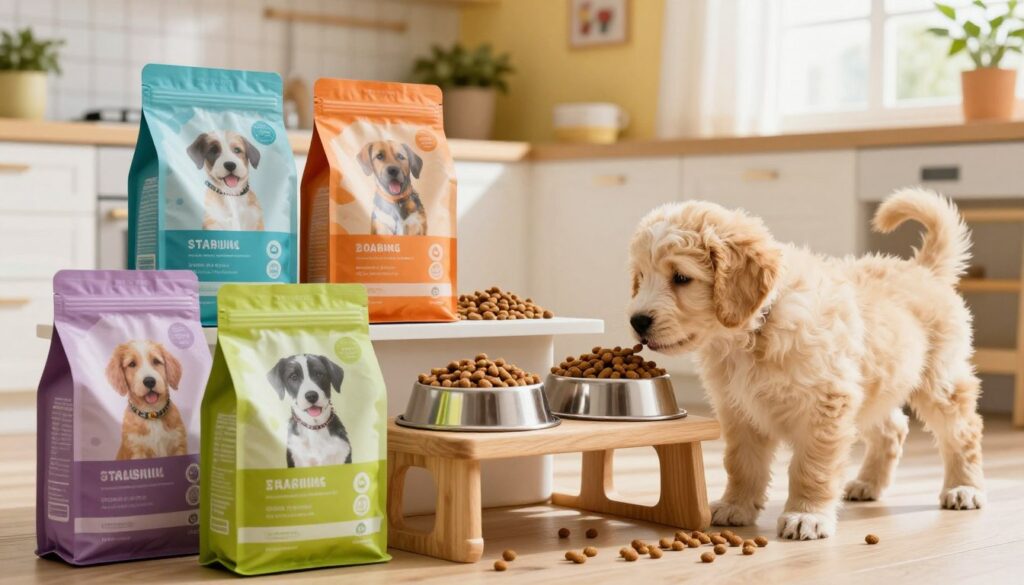
When picking dry food, choose products with real meat proteins and the right nutrients. The best ones offer steady nutrition that’s easy to store and fits your schedule.
| Kibble Brand | Protein | Fat | Carbs | Key Ingredients | Special Benefits |
|---|---|---|---|---|---|
| American Journey Large Breed Puppy | 33% | 13% | 45% | Deboned chicken and chicken meal | Proper calcium/phosphorus balance for large breeds, contains glucosamine and chondroitin |
| Taste of the Wild Pacific Stream Puppy | 30% | 17% | Not specified | Smoke-flavored salmon | Affordable, contains probiotics |
| Merrick Grain Free Puppy | 32% | 17% | 44% | USDA certified deboned chicken | Grain-free formula with quality protein sources |
| Premium Meat-Based Formula | 29% | 17% | 46% | Contains beef, lamb, beef meal, salmon meal, menhaden fish meal | Five meat sources providing over 300% more protein than fresh meats |
American Journey Large Breed Puppy is great for Labradoodles. It has deboned chicken and chicken meal for large breeds. It also has glucosamine and chondroitin for joint health.
Taste of the Wild Pacific Stream Puppy is affordable and has smoke-flavored salmon. It also has probiotics for a healthy gut. It’s perfect for those who want quality without spending a lot.
Merrick Grain Free Puppy has 32% protein and 17% fat. It uses USDA certified deboned chicken. It’s a good choice for a grain-free diet without losing nutritional value.
Consider a premium meat-based formula. It has beef, lamb, beef meal, salmon meal, and menhaden fish meal. These five sources give 29% protein, 17% fat, and 46% carbs. They help with muscle growth and energy.
- Check ingredient lists for named meat sources rather than vague protein descriptions
- Ensure the food lists meat as the first ingredient
- Look for AAFCO certification for complete and balanced nutrition
- Compare protein percentages across brands for your puppy’s size and activity level
- Start with smaller quantities when switching kibble to avoid digestive upset
Your Labradoodle puppy needs kibble that supports growth without excess calories. Quality dry food delivers nutrition consistently while being economical for your household.
Grain-Free vs Grain-Inclusive Diets for Labradoodles
Deciding between grain-free and grain-inclusive puppy food is key. It depends on what your Labradoodle needs at different ages. Their digestive system grows fast in the first year. The right food helps them grow well and avoids upset stomachs.
Both diets have benefits for Labradoodle puppies. Your choice should match your puppy’s needs, how active they are, and any digestive issues.
Benefits of Ancestral Grains
Ancestral grains are great for growing Labradoodles. They include barley, oats, quinoa, and spelt. These grains give steady energy and fiber for a healthy gut.
- Supply B vitamins for energy metabolism
- Contain prebiotics that feed good gut bacteria
- Cost less than grain-free alternatives
- Easy for most puppies to digest
- Support consistent weight gain
Grain-inclusive foods are good for Labradoodles without grain sensitivities. They keep your puppy’s energy steady all day. Ancestral grains help with brain and muscle growth.
When to Choose Grain-Free Options
Choose grain-free puppy food if your Labradoodle has grain sensitivity. Look for itchy skin, loose stools, or vomiting after eating grain-based foods.
- Your puppy has diagnosed grain allergies
- Digestive issues improve without grains
- Family history includes food sensitivities
- Your vet recommends grain-free diets
Grain-free foods use potatoes, peas, and legumes for carbs. These work for some puppies. Always talk to your vet before switching to grain-free. They can tell if your puppy really needs this change.
Budget-Friendly Puppy Foods That Don’t Compromise Quality
Feeding your Labradoodle puppy doesn’t have to be expensive. You can find affordable options that are both nutritious and high-quality. Your puppy needs a balanced diet with the right mix of protein, fat, and carbs to stay healthy and strong.
Search for puppy formulas that offer great value and meet your Labradoodle’s needs. Many brands have options that are both affordable and nutritious.
- Formulas featuring smoke-flavored salmon that are rich in omega fatty acids for coat health
- Dry kibble with a small kibble size suitable for puppies and their developing teeth
- Foods containing species-specific probiotics to support digestive wellness
- Recipes balancing 30% protein, 17% fat, and 45% carbs for steady growth
Diamond Naturals Chicken Dinner is a great affordable choice. It has 43.2% protein and 31.8% fat, with only 17% carbs. It’s high in chicken protein and includes prebiotic fiber for digestion. Plus, it has superfoods like cranberries, quinoa, and blueberries. This brand also offers a wet food option, giving your puppy variety without breaking the bank.
Smart shoppers can find puppy foods that are both affordable and of high quality. Your Labradoodle’s growth stage requires the right nutrition. These affordable options show you can feed your puppy well without spending a lot.
Addressing Common Labradoodle Puppy Health Concerns Through Diet
Your Labradoodle puppy’s diet is key to avoiding health problems. The right food helps prevent digestive issues, supports bone growth, and lowers food allergy risks. Choosing the right puppy food keeps your puppy healthy and strong.
Managing Sensitive Stomachs and Digestive Issues
Many Labradoodle puppies have sensitive stomachs or digestive problems early on. You can help by picking foods with limited ingredients and high-quality proteins. Foods with probiotics and digestive enzymes also help gut health.
- Choose foods with easily digestible proteins like chicken or turkey
- Avoid puppy food with excessive fillers or artificial additives
- Introduce new foods slowly over 7-10 days
- Look for added probiotics on the ingredient label
Supporting Hip and Joint Development
Labradoodles can be at risk for hip dysplasia. They need the right balance of calcium and phosphorus. Quality puppy food formulas provide this balance for strong bones and joints.
- Feed puppy-specific formulas with balanced minerals
- Avoid overfeeding, which can stress developing joints
- Include glucosamine-rich foods when appropriate
- Monitor growth rate with your veterinarian
Preventing Food Allergies Early
Starting your Labradoodle on high-quality food can prevent allergies. Introduce different proteins slowly and watch for signs of sensitivities like itching or ear infections.
- Rotate protein sources under veterinary guidance
- Select food without common allergens like corn or soy
- Keep a food diary to track any reactions
- Work with your vet if allergies develop
Feeding Guidelines and Portion Control for Labradoodle Puppies
Feeding your Labradoodle puppy the right amount is key. They need more calories than adult dogs because they’re always growing. Getting the portions right helps them grow healthy and not too big or too small.
The size of your puppy affects how much food they need. Miniature Labradoodles need less than Medium or Standard ones. Smaller breeds grow faster and need food changes sooner.
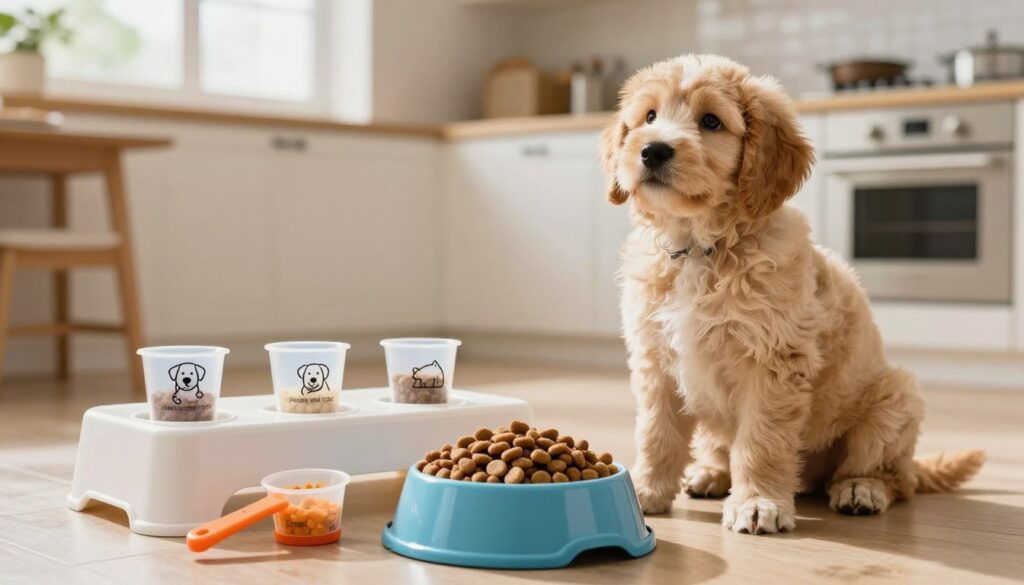
Labradoodles are very active and need lots of exercise. They burn more calories, so you might need to give them more food on busy days. Companies like Ollie and The Farmer’s Dog can help with meal plans based on your puppy’s needs.
Daily Feeding Schedule by Age
Young puppies need to eat often to keep their energy up and avoid low blood sugar.
- 8-12 weeks old: Feed 4 times daily
- 3-6 months old: Feed 3 times daily
- 6-12 months old: Feed 2 times daily
- 12+ months old: Transition to adult feeding schedule
Portion Size Guidelines by Labradoodle Size
| Labradoodle Size | Weight Range | Daily Caloric Needs (8-12 weeks) | Daily Caloric Needs (3-6 months) | Portion Per Meal (fresh food) |
|---|---|---|---|---|
| Miniature | 14-16 inches, 18-28 lbs | 400-500 calories | 600-700 calories | 1/2 to 3/4 cup |
| Medium | 17-20 inches, 26-45 lbs | 600-800 calories | 900-1,100 calories | 3/4 to 1 1/4 cups |
| Standard | 21+ inches, 42+ lbs | 1,000-1,200 calories | 1,400-1,700 calories | 1 1/2 to 2 cups |
Tips for Accurate Portion Control
Use a kitchen scale for exact measurements, especially with fresh food. Don’t guess the portions. Check your puppy’s body condition weekly by feeling their ribs. They should be easy to feel without pressing too hard.
A healthy puppy should have a visible waist when viewed from above and a tucked abdomen from the side.
AAFCO standards ensure complete and balanced nutrition for growth. Look for this certification on all food labels to guarantee your puppy receives proper nutrients during development.
Watch your puppy’s weight every month. Growth charts from your vet help track their progress. Adjust portions based on growth rate and activity level. Active puppies might need 10-15 percent more food than less active ones.
Conclusion
Choosing the right food for your Labradoodle puppy is key to a healthy life. They need good nutrition for strong bones, a shiny coat, and a strong immune system. This article reviewed seven options, from fresh food to dry kibble, to help you decide.
Your puppy’s digestive health is just as important as their growth. Some puppies do well with grain-inclusive diets, while others need grain-free options. Watch how your puppy reacts to each food to find the best one.
Feeding guidelines and portion control are crucial for your puppy’s weight. Too much food can cause joint problems and obesity. Too little can slow their growth. Adjust their portions as they grow and talk to your vet about their needs. Good nutrition in the early months leads to a long, happy life.
FAQ
What are the most important nutritional requirements for your Labradoodle puppy?
Your Labradoodle puppy needs a diet rich in high-quality protein for muscle growth. They also need essential fatty acids for a healthy coat. Plus, balanced calcium and phosphorus for bone growth.
Puppies require about 22-24% protein and 8-15% fat. They also need vitamins, minerals, and antioxidants for immune system development.
How much protein should your Labradoodle puppy be eating daily?
Your puppy should eat food with at least 22-24% crude protein. This supports healthy muscle and tissue development. Choose puppy food for large breed puppies for optimal protein levels.
What role do essential fatty acids play in your puppy’s coat development?
Essential fatty acids, like omega-3 and omega-6, are key for a healthy coat and skin. They help grow your puppy’s fluffy or wavy coat. Look for puppy foods with fish oil, flaxseed, or chicken fat.
Why is the calcium and phosphorus balance important for your Labradoodle’s bone growth?
The right calcium-to-phosphorus ratio is crucial for bone growth. It prevents developmental orthopedic disease and joint problems. Choose food specifically for large breed puppies to ensure the right mineral balance.
What makes The Farmer’s Dog Pork Recipe a suitable choice for your Labradoodle puppy?
The Farmer’s Dog Pork Recipe offers human-grade ingredients like real pork and vegetables. It’s fresh, easy to digest, and doesn’t have artificial preservatives. It’s great for puppies with sensitive stomachs.
How does Ollie Chicken Dish with Carrots benefit your puppy’s development?
Ollie Chicken Dish with Carrots provides fresh, vet-formulated nutrition. It has lean chicken protein and nutrient-rich vegetables. It’s customized for your puppy’s age, weight, and health, ensuring optimal growth.
What advantages does Open Farm Gently Cooked Puppy Food offer your Labradoodle?
Open Farm Gently Cooked Puppy Food has humanely raised proteins and organic ingredients. It’s prepared at lower temperatures to preserve nutrients. It includes probiotics for digestive health and no artificial preservatives.
What should you look for when choosing dry kibble for your Labradoodle puppy?
Look for named meat proteins as the first ingredients. Avoid artificial preservatives and choose large breed puppy formulas. Ensure the kibble has the right calcium, phosphorus, and fat levels.
What are the benefits of ancestral grains in your puppy’s diet?
Ancestral grains like quinoa and oats provide complete proteins and essential amino acids. They’re less likely to cause allergies. These grains improve digestibility and provide sustained energy for growth.
When should you choose grain-free options for your Labradoodle puppy?
Choose grain-free food only if your puppy shows signs of grain sensitivity. However, many vets recommend grain-inclusive diets for puppies. Always consult your vet before switching to a grain-free diet.
How can you find budget-friendly puppy food without sacrificing quality for your Labradoodle?
Look for established brands with transparent ingredient lists and AAFCO certification. Brands like Taste of the Wild offer quality at reasonable prices. Buy larger bags and use subscription services for discounts.
How do you know if your Labradoodle puppy food is meeting their nutritional needs?
Your puppy’s food is good if they grow steadily, have a shiny coat, and lots of energy. Check their stool consistency and overall health. Regular vet check-ups are key to ensuring they’re getting the right nutrition.
What’s the difference between puppy formula and adult dog food for your Labradoodle?
Puppy formulas have more protein and fat for growth. Adult food has lower nutrients for maintenance. Feeding puppy food too long can lead to joint problems, so timing is crucial.
When should you transition your Labradoodle from puppy food to adult formula?
Transition your puppy to adult food at 12 months for large breeds. Some may need it until 18 months. Consult your vet for the best timing based on your puppy’s growth.
How important is AAFCO certification when choosing your Labradoodle puppy food?
AAFCO certification ensures your puppy food meets nutritional standards. Look for labels saying “complete and balanced nutrition” or evidence of AAFCO feeding trials. It’s crucial for your puppy’s growth.
Should you supplement your Labradoodle puppy’s commercial food with additional vitamins?
High-quality commercial puppy food usually doesn’t need supplements. But, consult your vet before adding any. Excessive supplements can harm your growing puppy.
What role does your puppy’s individual metabolism play in food selection?
Your puppy’s metabolism affects how they process nutrients. Some gain weight easily, while others are naturally lean. Adjust portions and formulas based on your puppy’s response to different foods.
How can you identify high-quality ingredient sourcing in your puppy food?
Look for specific meat sources like chicken or beef. Avoid generic terms like “meat meal.” Research the manufacturer’s sourcing and quality standards for better products.
What are common signs your Labradoodle puppy isn’t tolerating their current food?
Signs include chronic diarrhea, vomiting, itching, hair loss, dull coat, and lethargy. If you notice these, consult your vet. Keep a food diary to help identify problematic ingredients.
How do environmental factors affect your Labradoodle puppy’s nutritional needs?
Climate and activity level impact nutritional needs. Cool climates may require more calories, while warm ones may need less. Adjust portions and food selection based on your puppy’s environment and activity level.