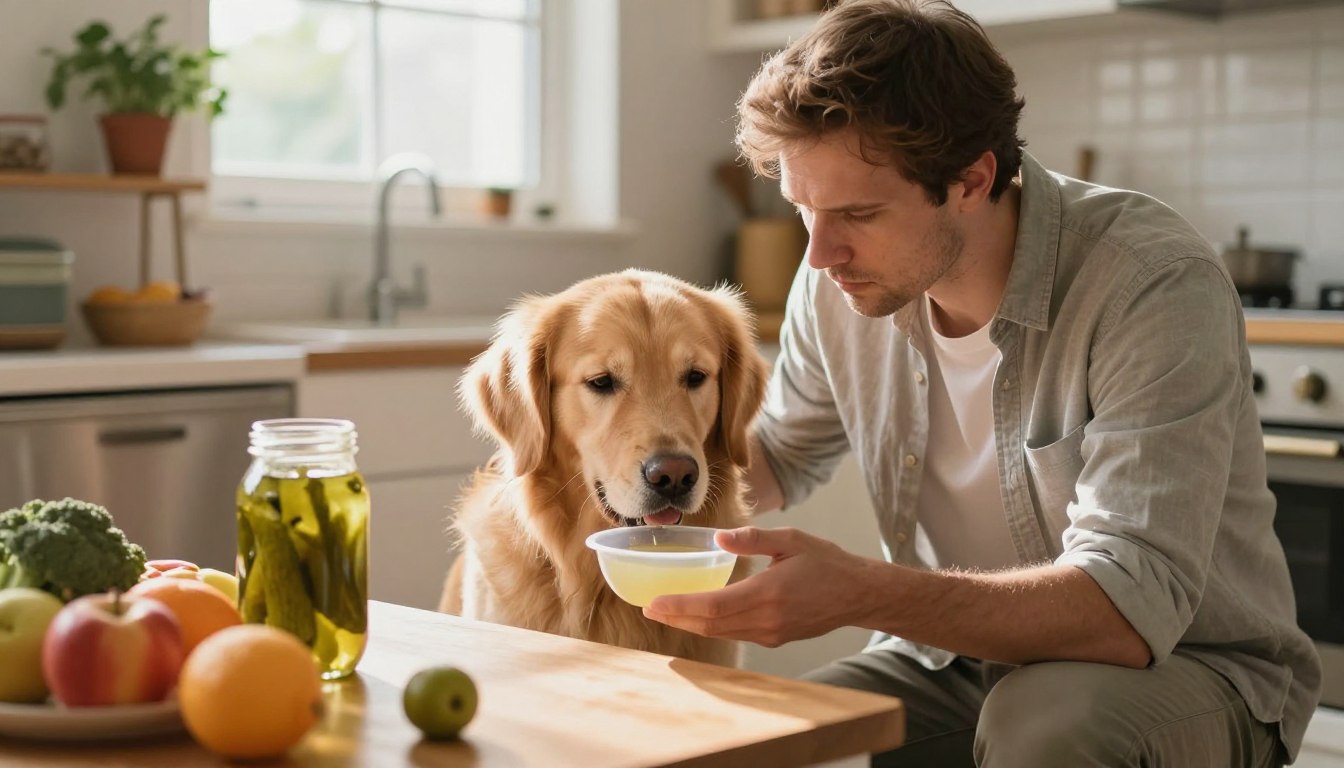
Can Dogs Have Pickle Juice? Risks & Advice
You love your dog and want to share snacks and treats with them. When you enjoy a pickle or pickle juice, your dog looks at you hopefully. It’s natural to wonder if it’s safe for dogs to have pickle juice.
Pickle juice might seem like a harmless treat. Your dog might not get sick from a small lick. Veterinarians say pickle juice isn’t toxic to dogs. But, there are hidden risks.
The main risk is sodium in pickle juice. Pickle brine is mostly salt and preservatives. This high sodium can harm your dog’s health. Vinegar and spices can also upset their stomach.
Your dog relies on you to make safe choices about their food and drinks. This guide will explain why vets advise against pickle juice for dogs. You’ll learn what happens if your dog accidentally drinks some. And, you’ll find healthy alternatives to satisfy their cravings without risks.
Can Dogs Have Pickle Juice
The short answer is no—you should not give pickle juice for dogs as a regular treat or beverage. Pickles themselves aren’t toxic to dogs, but pickle juice is a different story. It has high levels of sodium, vinegar, and seasonings that dogs can’t handle.
To understand if dogs can drink pickle juice, we need to look at what’s in it. Pickle juice is mostly salt water, vinegar, and spices. Dogs don’t need this, and it can harm their organs and digestion.
If your dog accidentally eats a pickle or gets some juice, it’s usually okay. Small amounts won’t hurt them. This is good to know, as many owners worry after small incidents.
Vets don’t see pickle juice as a big danger in small amounts. But, they still advise against giving it to dogs. The brine in pickle juice can cause problems, and it’s not good for your dog’s health.
- Pickle juice contains excessive sodium
- Vinegar acidity can upset digestion
- Various spices may cause digestive distress
- No nutritional value for dogs
- Better alternatives exist for hydration and treats
Your dog needs clean water and the right food. Pickle juice can harm their health by adding too much salt and acid.
Understanding Pickle Juice and Its Ingredients
Thinking about pickle juice safety for dogs means knowing what’s in it. It’s not just salt water. It has preservatives, seasonings, and acids to keep pickles good. Each part can be a health risk for your dog. Knowing this helps keep your dog safe.
High Sodium Content in Pickle Brine
The salt in pickle juice is a big worry. Pickles soak in brine with 1,000 to 1,500 milligrams of sodium per serving. This is way more than dogs need, which is about 100 to 200 milligrams a day.
Too much salt can harm your dog. Their kidneys have to work hard to get rid of it. This can stress their system and lead to serious health problems.
Vinegar Acidity Levels
Pickle juice is very acidic, with a pH level between 3 and 4. This acidity can upset your dog’s stomach and esophagus. Dogs with sensitive stomachs are at higher risk.
The vinegar can mess with your dog’s digestion. It can cause immediate discomfort and long-term digestive problems. This is especially true for dogs with stomach issues.
Common Spices and Additives
Pickle recipes often include spices and additives that are dangerous for dogs. Check your pickle jar’s label for:
- Garlic powder (toxic to dogs)
- Onion powder (harmful to canine health)
- Mustard seeds (causes stomach irritation)
- Dill seeds (can irritate the digestive tract)
- Peppercorns (digestive upset)
- Preservatives and flavor enhancers
Even mild spices can be harmful to your dog’s health. It’s important to know that commercial pickles have many questionable ingredients.
What Happens If a Dog Drinks Pickle Juice
It’s important to know what happens if your dog drinks pickle juice. This depends on how much they drink, their size, and how they react to salt and acid. Drinking pickle juice can cause different reactions in dogs, from mild to severe.
Pickle juice has a lot of salt that can upset your dog’s body. Their body tries to balance it by pulling water from tissues and making them thirsty. This is why dogs often drink a lot of water after drinking pickle juice.
Pickle juice doesn’t mix well with a dog’s digestive system. The acid in the vinegar and spices can irritate their stomach. This can cause stomach problems.
Immediate Physical Reactions
After drinking pickle juice, your dog might show these signs:
- Drooling and lip-licking
- Nausea and vomiting
- Diarrhea
- Loss of appetite
- Excessive water consumption
More Serious Symptoms
Drinking a lot of pickle juice can lead to serious problems. Your dog might feel tired, confused, shaky, and have trouble balancing. In the worst cases, it can cause seizures that are very dangerous.
| Amount Consumed | Dog Size | Expected Symptoms | Severity Level |
|---|---|---|---|
| Few licks | Any size | Mild thirst, minor stomach upset | Low |
| 1-2 tablespoons | Small breeds (under 20 lbs) | Vomiting, diarrhea, excessive drinking | Moderate |
| 1-2 tablespoons | Large breeds (over 50 lbs) | Mild gastrointestinal upset | Low to Moderate |
| More than 2 tablespoons | Any size | Seizures, ataxia, severe dehydration | High |
Drinking pickle juice can harm dogs, especially small ones. Their small size makes them more vulnerable to salt. Even healthy dogs can struggle with the salt in pickle brine.
Spotting these signs early is key. It helps you get your dog to the vet fast. The situation can get worse quickly, so acting fast is crucial for your dog’s safety.
The Dangers of Pickle Juice for Dogs
It’s crucial for dog owners to know the risks of pickle juice for their pets. Pickle juice is not safe for dogs and can cause serious health issues. The ingredients in pickle juice can harm your dog’s health in many ways.
Sodium Poisoning and Dehydration Risks
Pickle juice has too much sodium, which is harmful to dogs. Too much salt can lead to hypernatremia, or high blood sodium levels. This makes your dog drink more water, but they can still become dehydrated at a cellular level.
The risks include:
- High blood pressure in dogs of all ages
- Neurological symptoms like seizures or tremors
- Brain dysfunction and confusion
- Potential organ damage with repeated exposure
Small breeds are at a higher risk. A small amount of pickle juice can be dangerous for them because it’s a bigger part of their body weight.
Digestive System Upset
Pickle juice can upset your dog’s stomach in several ways. The vinegar is too acidic and can irritate the stomach lining. Salt can disrupt the balance of good bacteria in the gut. Spices can cause inflammation in the stomach.
Your dog may experience:
- Vomiting and diarrhea
- Stomach pain and cramping
- Loss of appetite
- Pancreatitis in susceptible dogs
Toxic Ingredients to Watch For
Some pickles contain ingredients that are toxic to dogs. Garlic and onions can damage red blood cells, leading to anemia. Sweet pickles may have xylitol, which can cause liver failure in dogs.
Dangerous ingredients include:
| Ingredient | Health Risk to Dogs | Severity |
|---|---|---|
| Garlic | Red blood cell damage and anemia | Serious |
| Onions | Hemolytic anemia | Serious |
| Xylitol | Liver failure and death | Critical |
| Excessive spices | Gastrointestinal distress | Moderate |
If your dog eats a lot of pickle juice, you need to get them to the vet right away. These problems are not just minor side effects. They are serious medical emergencies that need professional help.
Different Types of Pickles and Their Safety for Dogs
Not all pickles are the same. Knowing the differences helps you see the risks if your dog eats them. Each pickle type has its own dangers for dogs. Whether dogs can have pickle juice depends on the type.
Most pickles have sodium and vinegar in common. But, spices, additives, and sweeteners vary a lot. These changes affect how safe or dangerous a pickle is for dogs.
- Dill pickles contain basic ingredients with moderate sodium levels
- Bread and butter pickles include added sugar and sometimes more vinegar
- Sweet pickles have high sugar content that poses additional concerns
- Spicy or garlic pickles contain ingredients potentially toxic to dogs
- Kosher pickles typically have very high sodium concentrations
No pickle juice is safe for dogs, but some are worse than others. Knowing the differences helps you make better choices in emergencies. All pickles have sodium and vinegar, but extra ingredients can make some more dangerous.
Knowing about different pickles helps you talk to your vet if your dog eats pickle juice. This knowledge prepares you for what to do next, based on the ingredients in each type.
Dill Pickle Juice and Dogs
Dill pickles are very common in American homes. When it comes to giving pickle juice to dogs, dill is the safest choice. This is because dill pickles usually have fewer harmful additives than sweet or spicy ones.
Dill pickle juice is still a concern because of its sodium. But it doesn’t have dangerous ingredients like garlic or xylitol found in other pickles.
Knowing the difference between dill pickles and others helps you decide what’s best for your pet. While dill pickles are safer, they shouldn’t be a regular part of your dog’s diet.
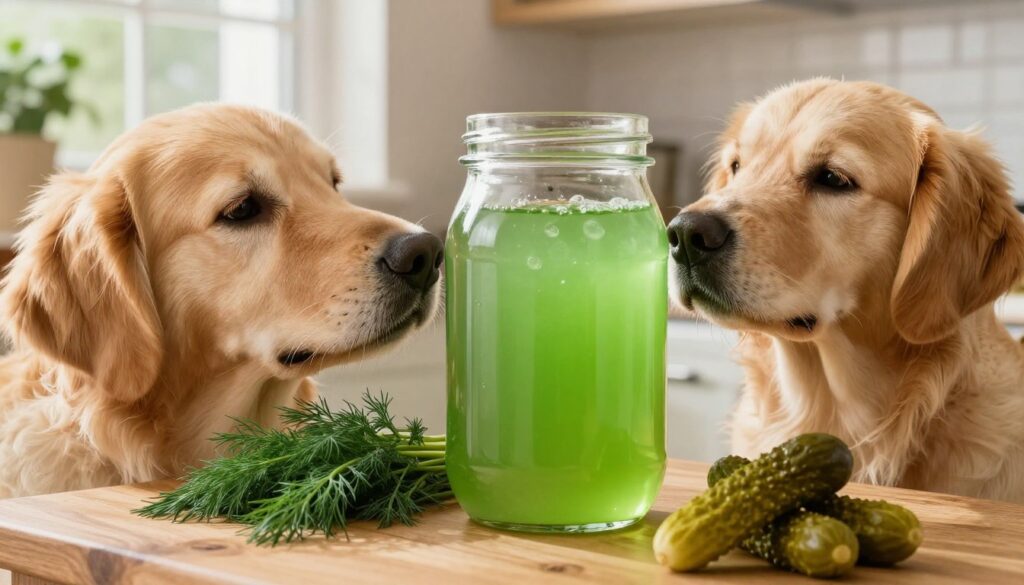
Sodium Levels in Dill Pickles
Dill pickle brine has a lot of sodium, which worries vets. A single serving of pickle juice for dogs can have 800 to 1,200 milligrams of sodium. The right amount of sodium depends on your dog’s size:
- Small dogs: 100 milligrams daily
- Medium dogs: 500 to 1,000 milligrams daily
- Large dogs: 1,500 milligrams daily
Even a small amount of dill pickle juice can be too salty for your dog. It can meet or even exceed their daily sodium needs.
Occasional Consumption Guidelines
If your dog accidentally drinks a little dill pickle juice, it’s less risky than other types. Vets say dill pickles are safer because they usually don’t have harmful spices.
Here are some tips if you want to give your dog pickle treats:
- Never give your dog pickle juice
- Give a tiny piece of dill pickle (not juice) very rarely
- Always check the ingredients for garlic or extra spices
- Fresh cucumber is a better choice
It’s important to read labels carefully, even for simple dill pickles. Some brands add extra ingredients that can be harmful to your pet.
Sweet and Spicy Pickle Varieties to Avoid
Some pickles can be very harmful to dogs. It’s important to know which ones to keep away. Sweet, spicy, and garlic-based pickles are the biggest dangers for dogs.
Sweet pickles, like bread-and-butter pickles, have added sugars. These sugars can cause weight gain, dental issues, and diabetes in dogs. Many of these products also have xylitol, a sweetener that’s toxic to dogs. It can lead to low blood sugar and liver damage.
Spicy and garlic pickles are also risky. They contain garlic, onions, and hot peppers that harm dogs’ red blood cells. This can cause anemia, leading to weakness, pale gums, and fast breathing. It’s crucial to know these ingredients are dangerous for dogs.
| Pickle Type | Dangerous Ingredients | Health Risks |
|---|---|---|
| Sweet Pickles | Added Sugar, Xylitol | Obesity, Hypoglycemia, Liver Damage |
| Bread-and-Butter Pickles | Sugar, Spices, Garlic | Weight Gain, Toxicity, Anemia |
| Spicy Pickles | Chili Peppers, Garlic, Onions | GI Distress, Anemia, Mouth Irritation |
| Hot Pickles | Jalapeños, Habaneros, Cayenne | Severe Stomach Pain, Pancreatitis |
Hot peppers in spicy pickles can cause stomach pain and mouth irritation. Some dogs might get pancreatitis, which is an emergency. If your dog eats these pickles, call your vet right away. These dangers can be very serious.
- Never leave sweet pickles within your dog’s reach
- Check all labels for xylitol content
- Avoid sharing spicy or garlic pickle juice with your pet
- Call poison control if consumption occurs
Keeping your dog safe means knowing which pickles to avoid. Make sure to keep these dangerous pickles away from your pet.
Signs Your Dog Has Consumed Too Much Pickle Juice
It’s important to know the signs if your dog has had too much pickle juice. Dogs can face serious health problems when they drink pickle juice. Spotting these signs early can help your dog recover faster.
Immediate Symptoms to Monitor
Keep a close eye on your dog for the first few hours after they drink pickle juice. Symptoms can show up quickly or take a few hours. Look for any changes in their usual behavior.
Early signs include:
- Drinking a lot of water
- Going to the bathroom more often
- Drooling or constant lip-licking
- Restlessness or discomfort
- Stomach gurgling sounds or loose stools
Moderate symptoms need more attention. These signs mean your dog needs help from a vet:
- Vomiting more than once
- Diarrhea that’s watery or bloody
- Not wanting to eat
- Being very tired or lethargic
- Swelling in the legs or paws
Severe symptoms are a sign of a serious problem. You should get emergency vet care right away. Don’t wait:
- Tremors or muscle twitching
- Stumbling or loss of coordination
- Seizures or convulsions
- Being very tired or unresponsive
- Hard breathing or trouble breathing
- Can’t stand or collapse
| Symptom Severity | Time Frame | When to Contact Vet | Example Signs |
|---|---|---|---|
| Mild | Within 15-60 minutes | Monitor at home, contact vet if worsens | Increased thirst, slight drooling |
| Moderate | Within 1-4 hours | Call veterinarian for guidance | Vomiting, diarrhea, lethargy |
| Severe | Within 4-12 hours | Seek emergency care immediately | Seizures, ataxia, unresponsiveness |
When to Contact Your Veterinarian
It can be hard to know when to call your vet. If you’re unsure, it’s always best to call. Remember, it’s better to be safe than sorry when it comes to your dog.
If your dog shows mild symptoms, like drinking a lot of water, you can watch them at home. Make sure they always have fresh water. Call your vet if the symptoms get worse or new ones appear.
If your dog shows moderate symptoms, you should call your vet. Have this information ready when you call:
- Your dog’s current weight
- The amount of pickle juice they drank
- The type of pickles
- The time they drank it
- All symptoms they’re showing
Severe symptoms need emergency care. Don’t wait for the vet’s office to open. Call an emergency animal hospital or your vet’s emergency line right away. Dogs can get very sick from pickle juice, and fast treatment is key.
Remember, sodium poisoning in dogs can be very dangerous. Always get vet advice if you’re worried about your dog drinking pickle juice. It’s the best way to keep them safe.
Healthy Alternatives to Pickle Juice for Dogs
Wondering if can dogs have pickle juice? The answer is no. But, there are tasty, refreshing treats your dog can enjoy. Many whole foods offer the same appeal as pickles without the dangers of sodium and vinegar.
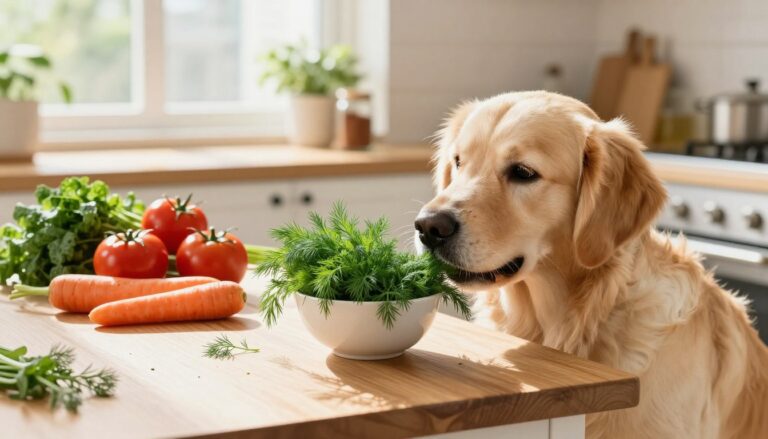
If your dog likes crunchy textures, fresh vegetables are a great choice. Clean water is the best for hydration. You can make it more fun by adding ice cubes or using a pet water fountain. These changes encourage your dog to drink more without risks.
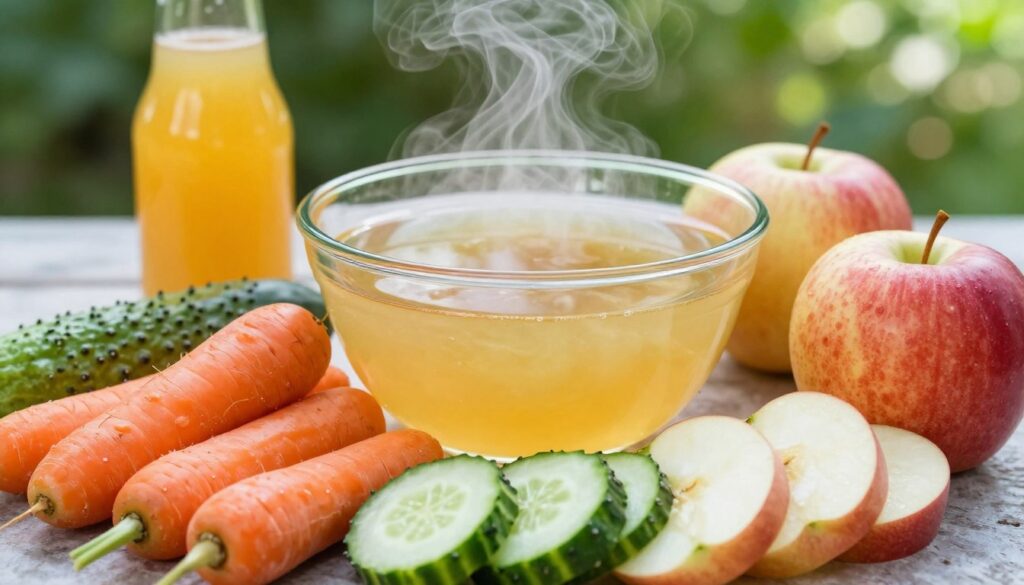
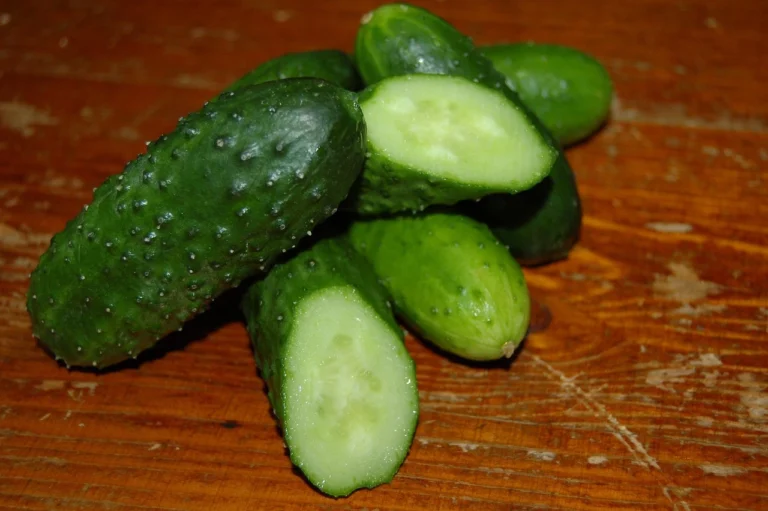
- Fresh cucumbers — Plain raw cucumbers provide hydration and crunch without sodium
- Carrots — Packed with vitamins, minerals, antioxidants, and beta-carotene
- Sliced apples — Rich in vitamins and minerals (remove seeds and core first)
- Sweet potatoes — Excellent source of fiber and beta-carotene
- Spinach — Delivers minerals and antioxidants for overall wellness
Switching from pickle juice to these alternatives shows you care about your pet’s health. Your dog gets variety, flavor, and satisfying treats. These whole-food options support your dog’s nutrition, making snack time fun and beneficial.
Crunchy Vegetables Dogs Can Safely Enjoy
Instead of pickle juice, give your dog crunchy veggies for fun and health. These veggies offer great texture and hydration. They’re better than pickle juice because they’re full of nutrients without the bad stuff.
Fresh Cucumbers as a Pickle Alternative
Fresh cucumbers are a safe choice for dogs. They’re like pickles but without the harmful stuff. Cucumbers are mostly water, making them great for keeping dogs hydrated.
They’re also low in calories and packed with vitamins and minerals. To make them safe for your dog:
- Wash them well under running water
- Cut them into sizes that fit your dog
- Keep the peel on for extra fiber and nutrients
- Always watch your dog to avoid choking
Carrots and Sweet Potatoes
Carrots and sweet potatoes are super good for your dog. Raw carrots are crunchy and help clean teeth. They’re full of nutrients that improve eye health and digestion.
Carrots give your dog:
- Beta-carotene for better eyesight
- Fiber for a healthy gut
- Antioxidants to boost the immune system
Sweet potatoes are better cooked for your dog. They’re easier to digest when cooked right. You can serve them by:
- Baking, boiling, or steaming without salt or butter
- Cutting into small cubes for your dog’s size
- Cooling them down before giving them to your dog
Sweet potatoes are full of fiber, vitamins, and minerals. They support your dog’s overall health.
| Vegetable | Key Benefits | Preparation Method | Serving Size |
|---|---|---|---|
| Fresh Cucumbers | Hydration, Low Calories, Vitamins K & C | Wash and cut into rounds or spears | Small pieces for tiny dogs, larger spears for big dogs |
| Raw Carrots | Beta-carotene, Fiber, Teeth Cleaning | Cut into sticks or rounds, serve raw or steamed | Size-appropriate pieces based on breed |
| Sweet Potatoes | Dietary Fiber, Vitamins A & C, Minerals | Bake, boil, or steam without seasonings | Small cubes, cooled before serving |
Other safe crunchy options for your dog include apples (without seeds and core), steamed spinach, blueberries, broccoli, green beans, and watermelon. These veggies and fruits add variety to your dog’s diet without the risks of pickle juice.
Supporting Your Dog’s Overall Health and Nutrition
Deciding what to feed your dog is more than just about pickle juice. Your pet’s diet affects their whole life, from being a puppy to being an older dog. Every treat, snack, and meal you give them can either help or hurt their health. Knowing how to balance their diet is key to making good choices about their food.
Your dog’s main food should be high-quality dog food made for their life stage. Puppies, adult dogs, and senior dogs all need different nutrients. Most dog foods meet nutritional standards, but they work best as the main part of your dog’s diet.
Vets suggest the 90/10 rule for your dog’s health. Their main food should be 90% of their daily calories. The other 10% can be from treats, snacks, and extras. This keeps their diet balanced and prevents too many treats.
When picking treats, think about their nutritional value. Do they add good vitamins and minerals, or just empty calories? Questions about pickle juice safety for dogs apply to all treats. Ask if the treat fits into your dog’s daily calorie needs.
- Puppies need more protein and fat for growth and development
- Adult dogs need balanced nutrition to stay at a healthy weight
- Senior dogs need lower calories but more quality protein for muscle
- Dogs with health issues need special diets
Every food choice is important. Choose treats that help your dog’s health, not harm it.
Conclusion
So, can my dog drink pickle juice? The answer is no. Dogs and pickle juice don’t get along. While it’s not as harmful as chocolate or grapes, it doesn’t offer any benefits to your pet.
Your dog could face health issues from drinking it. These can range from mild stomach problems to serious sodium poisoning. It’s not worth the risk.
This article has shown why dogs shouldn’t have pickle juice. The salt in pickle brine can lead to dehydration and electrolyte imbalances. The vinegar can upset your dog’s stomach.
Many pickles contain garlic or xylitol, which are toxic to dogs. Even dill pickles, the safest choice, still pose risks. If your dog accidentally drinks some, make sure they have plenty of water.
For larger amounts or pickles with harmful ingredients, see a vet right away. It’s better to say no to pickle juice. There are many safe treats for your dog.
Try fresh carrots, sweet potatoes, and cucumbers for new flavors and textures. Dog-specific treats are also great. These options keep your dog healthy and happy.
You now know how to make better choices for your dog’s diet. Keep them thriving for years to come.
FAQ
Can dogs have pickle juice?
Pickle juice isn’t toxic like chocolate or grapes, but it’s not safe for dogs. It has too much sodium, vinegar, and additives. A small lick might not hurt, but don’t give it to your dog on purpose.
What makes pickle juice dangerous for dogs?
Pickle juice has a lot of sodium, vinegar, and spices. These can harm your dog’s stomach and overall health. Dogs can’t handle the high amounts in pickle juice.
How much sodium is in pickle juice and is it safe for dogs?
Pickle brine has 800-1,500 mg of sodium. Dogs should only have 100 mg to 1,500 mg of sodium a day. Too much can be harmful.
What immediate symptoms appear if my dog drinks pickle juice?
Signs include a lot of thirst, vomiting, and diarrhea. Your dog might also act restless or uncomfortable. These are signs to watch for.
What are the serious health dangers of pickle juice for dogs?
Serious risks include sodium poisoning and damage to the digestive system. It can also cause seizures or even death. Pickle juice has harmful ingredients like garlic and onions.
Are dill pickles safer than other pickle varieties for dogs?
Dill pickles are safer because they don’t have garlic or onions. But, they still have too much sodium. It’s best to avoid giving them to your dog.
What pickle varieties are most dangerous for my dog?
Sweet pickles are dangerous because of their sugar and xylitol. Spicy pickles can also cause stomach problems. Any pickle with garlic or onions is bad for dogs.
What warning signs indicate my dog needs emergency veterinary care after pickle juice consumption?
Look for tremors, loss of coordination, and seizures. These are signs of a serious problem. Get help right away.
What should I do if my dog accidentally consumes pickle juice?
Watch for signs like vomiting and diarrhea. If your dog is acting strange, call your vet. For big amounts, get help fast.
What are the best healthy alternatives to pickle juice for my dog?
Give your dog cucumbers, carrots, and sweet potatoes. These are safe and nutritious. They also make your dog happy.
Can I give my dog fresh cucumbers as a substitute for pickled cucumbers?
Yes, cucumbers are a great choice. They’re safe and hydrating. Just make sure to cut them up right.
How do I know if a pickle product contains dangerous ingredients like garlic or xylitol?
Always check the ingredients. Look for garlic, onions, and xylitol. If you’re unsure, don’t give it to your dog.
What’s the 90/10 rule for dog treats and why does it matter?
Treats should only be 10% of your dog’s diet. This keeps them healthy. Too many treats can be bad.
How should I evaluate whether a treat is safe and nutritious for my dog?
Ask if the treat is good for your dog. Look for nutrients, not just taste. Choose treats that are safe and healthy.
What vitamins and minerals do fresh vegetables provide for my dog?
Vegetables like cucumbers and carrots are full of vitamins and minerals. They’re good for your dog’s health. They also make them happy.
Can dogs and pickle juice coexist safely in my home?
Yes, if you keep them away from each other. Store pickles safely. This keeps your dog safe.
What’s the difference between sodium poisoning symptoms and other digestive upset in dogs?
Sodium poisoning gets worse over time. It starts with thirst and ends with seizures. Other upset might just cause vomiting.
Is it ever appropriate to give my dog pickle juice intentionally?
No, it’s not safe. Pickle juice is bad for dogs. There are better treats out there.
What should I tell my veterinarian if my dog consumes pickle juice?
Tell them how much your dog ate and what kind of pickles. Also, mention any symptoms. This helps your vet help your dog.
Can dogs develop an addiction or preference for salty foods like pickles?
Dogs might like salty foods, but it’s not good for them. Stick to healthy treats to keep them safe.
What role does water play in treating a dog after pickle juice consumption?
Water helps dilute sodium. But, for serious cases, your vet might need to do more. Don’t wait if your dog is really sick.
Should I be concerned about pickle juice residue on shared utensils or surfaces?
A little bit of residue is okay, but clean well. This keeps your dog safe from temptation.
Can I use pickle juice as a training treat for my dog?
No, it’s not good for training. Use safe treats instead. They’re better for your dog’s health and training.
What’s the difference between canned pickles and fresh-packed pickles in terms of sodium content?
Both have similar sodium levels. The problem is the brine, not the packaging. Avoid pickles for your dog’s health.
How can I prevent my dog from accessing pickles at family gatherings or restaurants?
Tell everyone to keep pickles away from your dog. Keep them safe at home and at restaurants. This keeps your dog healthy.